What’s in the box? Christmas toddler tray activities; sensory tub

img_1528

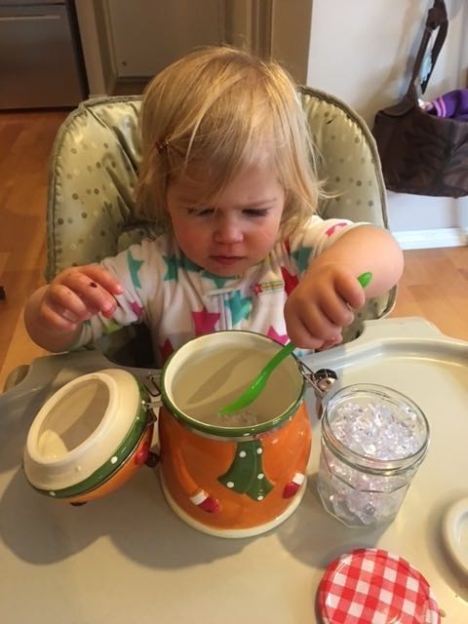
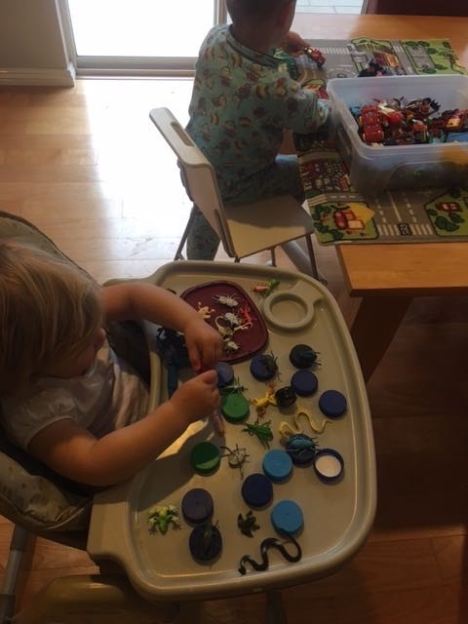
Each day throughout December our older children work on a gift or craft of their choice, however these are often not toddler friendly, so we started this “What’s in the box?” tradition a couple of years ago. Each day the younger children search the house for the sparkly red box that houses an activity for them to play with during highchair/table time while their brothers and sisters are happily wielding needles or hot glue guns and crafting away.

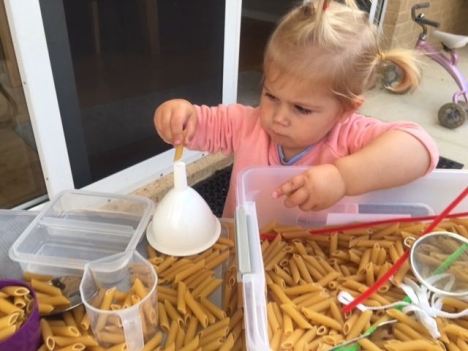
I will post new ideas for these as I present them, but here is one to get you started. (Last year’s ideas start here.) The young ones simply love sensory tubs and I find of all the activities I prepare for them, these are the ones that keep them occupied for the longest times and for day after day. Include something to tip and pour and manipulate with lots of containers to open, shut and fill. Objects to search for and sort and a variety of scoops and utensils for tonging, spooning, scooping and pouring go down a treat. I will add couple of these to this tub once the initial interest has worn off somewhat.

I have many ideas for sensory tubs on this blog so simply type the term “sensory tub” into the search bar to find them. Once you get the idea of how these are put together it doesn’t take too much imagination to create a Christmas version for your little ones.

img_1772With rice and other messy fillers it is a good idea to spread a sheet or mat under the play area to catch the spills. At the end of play time it can be lifted up and simply poured back into the container without a lengthy pack-up, which will quickly dampen enthusiasm for sensory play in the future. I also find that the children always want to take the materials out of the main tub and work next to it rather than in it. Instead of fighting this continuously I now place a large shallow tray (or lid from the tub itself) next to the main tub so that they can set out the material as they please without creating a horrendous mess outside of the box itself.

I also use sensory tubs for mat time rather than in the highchair as the children need to be able to move around and see what is inside the tub without dropping items they are playing with out of reach. Be wary of choking hazards and perhaps hold off introducing sensory tubs to children too young to resist putting items into their mouth.


A Christ-centred Christmas

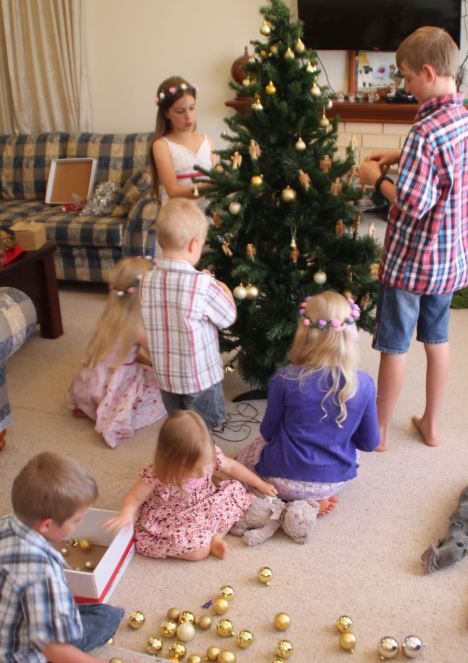
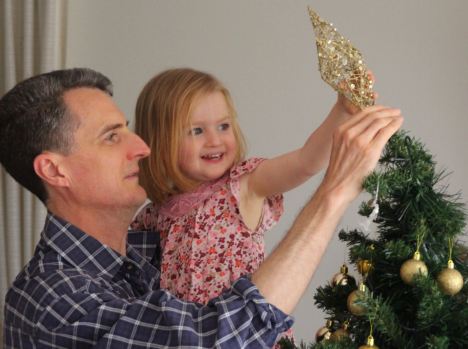
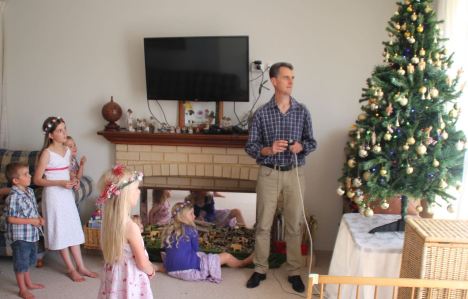
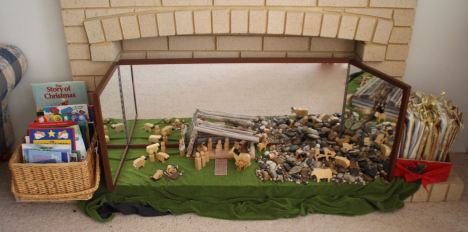
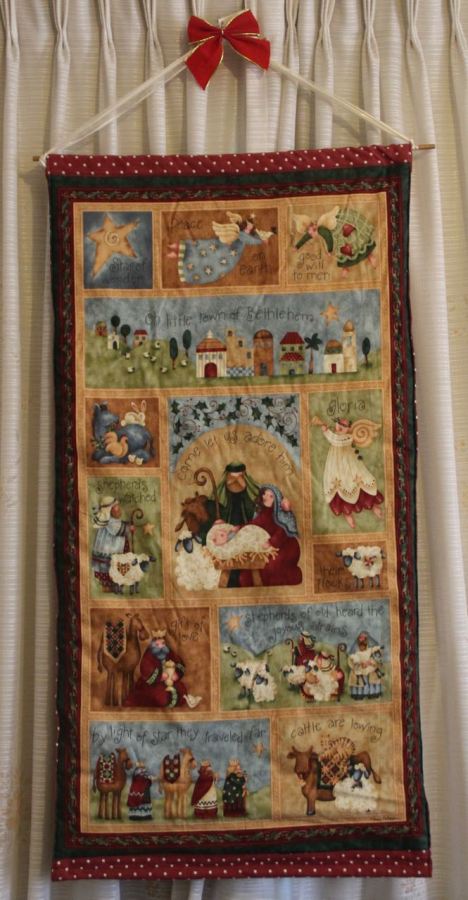
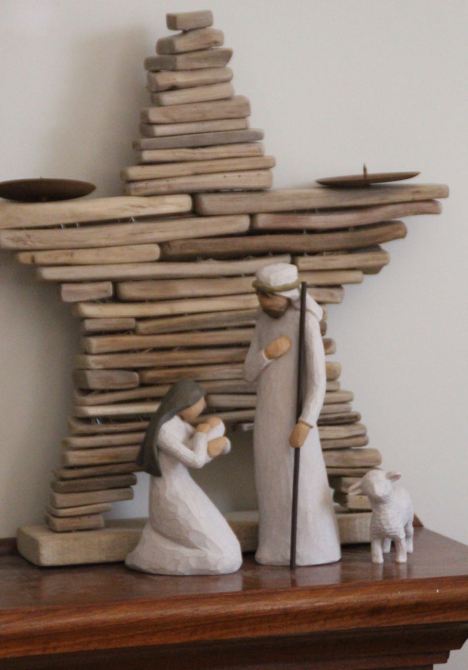
Each year we endeavour to keep Christmas centred around blessing others and keeping our hearts focussed on Jesus. We have many family traditions that we repeat yearly to build memories and make the Christmas period a special time for our children without it being about Father Christmas (Santa) or the presents they will get.img_1710We usually decorate the house on the weekend closest to the 1st of December but this year we have some busy times coming up so we decided to get an early start. Our Christmas tree is decorated fairly sparingly because it will become our Jesse tree come the start of December as we add a symbol each day. This year we will be reading from Ann Voskamp’s book “Unwrapping the Greatest Gift” and opening a corresponding symbol to hang on the tree as part of our daily reading.img_1744 One tradition we like is to have the youngest child in the family place the star on top of the tree once the decorating is done.img_1758Watching Daddy as he turns on the tree lights for the first time. The children tell us that one of the things they love to do through December is to lay on the floor in the dark each evening and listen to our Christmas stories while watching the Christmas tree lights. img_1752We have collected several nativity sets over the years and have looked hard for those that can be handled by little fingers without being easily broken. This year we have bought out the same sets again but presented them a little differently with this large mirror I found secondhand as a backdrop. With the rocks and small stones to manipulate and create with, along with our wooden blocks, the children have enjoyed setting up all sorts of arrangements already, even if I do have to take out the occasional truck or car at the end of a day of play in Bethlehem.

To the right we have our golden bags filled with a Christmas book for each day of December. Over the years I have been building our collection by adding a few new titles each Christmas. The children take turns choosing and opening one bag each night to find the story we will share before bed.

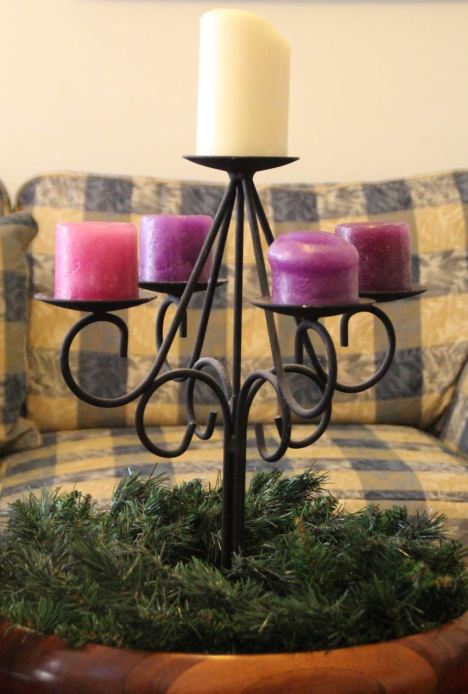
We now have so many books (mostly secondhand) that we have a basket of Christmas stories available to read whenever the children wish as well as the wrapped titles. These stories are packed away throughout the rest of the year and old favourites are treated with joy as they come out for the Christmas season. img_1761We try to make as many of our decorations as possible about the real meaning of the season. We want people to walk into our house and be able to see that we love God. While everything is not beautiful, perfectly coordinated or particularly fancy, the children love setting it out and we like the festive feel it gives the room.(Not that we have anything against beautiful or fancy – I think Christmas decorations make wonderful Christmas gifts!!)img_1762 Our advent wreath and candles are lit each evening as we read and count down the days to Christmas day, when the white candle symbolising the birth of Jesus is lit. img_1753We have delivered a knock and run nativity to different neighbours for a couple of years now and enjoyed blessing them in secret. This year someone is blessing us with pieces to add to this beautiful nativity. Whoever you are, we love it and NO, the children are not allowed to play with this one!!

Our Blessing Buddies will be appearing soon for a Christian alternative to the Elf on the Shelf and the usual Christmas crafts and daily activities will be starting in a couple of weeks. Keep an eye out back here for lots of ideas for What’s in the box? toddler activities and ways to bless others throughout December. I would love it if you would share your favourite Christmas traditions with me – I am always on the lookout for new ideas.


Invitation to play

img_1626

Once again our pretend play home-corner had become a sadly neglected play choice. Time for a change! Toy rotation is a marvellous thing – I simply packed away the play materials that have been out for some time and pulled out a few items the children haven’t seen in a while. Placing them out in an attractive invitation to play makes all the difference. Even the older children were itching to get in there and have a play once these “new” items were in view and the little ones are now happily “cooking” away.

Activity bags for family travel


If you have travelled with young children then you know that preparation is essential for a relaxing holiday. While we don’t want to take a truckload of toys and activities, some are certainly necessary for those long car or plane rides or to pull out for quiet time in the afternoon to give everyone some down time.

Before our recent holiday involving quite a few hours of flying and driving, I spent some focus time with each child sewing up these simple drawstring backpack bags. We added pockets to the front and as a surprise I also added matching pencil cases and smaller drawstring bags for activities inside. The kids chose their own material and learnt some valuable sewing skills at the same time. They really enjoyed the project and it helped build some excitement and anticipation for the holiday to come. I filled the bags with activities but kept them secret and by the time we left they were looking forward to seeing the contents as much as the holiday itself!

img_1562

The 9 to 12 year olds received:

  • a visual diary with their initial on the front in stick-on jewels, with a mechanical pencil.
  • a lined notebook (again with their initial in jewels) with a pencil, 4 colour pen and sharpener. (The notebook was the girl’s favourite item.)
  • some new books
  • travel game set
  • modelling clay
  • an open-ended puzzle. This puzzle can fit together in multiple patterns and be used to make picture scenes as well. It was more for the middle ages but all of the children had a go at some stage or other.
  • a roll of alfoil. There are heaps of things you can sculpt in aluminium foil and you will be surprised at how long it will keep the kids going; have a google for ideas before you go and perhaps include a couple of pictures to get the ideas flowing.
  • a matching pencil case with textas.

img_1569

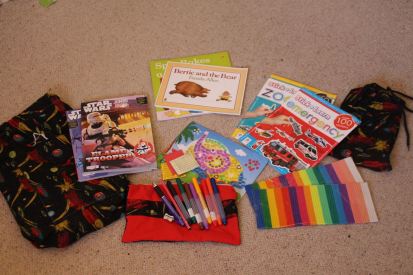
The 4 t0 8 year olds received:

  • modelling clay
  • sticker activity books
  • some new reading books
  • colouring-in books
  • a mosaic sticker activity
  • pencil case with pens, pencils, textas, sharpener

img_1572

The 2 1/2 year old received:

  • some new books
  • sticker books
  • water drawing book. (These come with a pen that you fill with water and as you draw on the card pages the colours come out. Later, as the pages dry, the colours fade away and they can be re-used. I can see that these will wear out with a few weeks of use but they were loved by all the children up to the second eldest. In fact a couple of the older kids spent a long time doing it on several different occasions.)
  • crayons and paper. (Good quality crayons are a must. Cheap crayons don’t make a dark, vibrant mark on the paper and frustrate little ones who can’t press hard enough to make a good line. My little one loves textas because they are so easy to draw with but keeps ruining them by pressing too hard, banging them to make dots  or leaving the lids off. She doesn’t enjoy coloured pencils for the reason above. She did however love using these as they left a nice dark line and the $10 investment was worth it.)
  • mini magnetic drawing board.
  • magnetic pictures and metal tin. (This turned out to be her favourite activity and she went back to it over and over again. Not what I would have guessed!)
  • velcro balls. (I can’t remember the brand name of these but they are sticky all over with velcro style hooks and can be pulled apart and molded. Not a big hit though.)

If you are travelling with children younger than this, take a look at these posts for more ideas:

travelling with little ones – plane trips

travelling with young children 

travelling with toddlers

The obedience roller-coaster

img_5936-1

Meeting and spending some time with the Ezzos was a highlight for the children.

We have just returned home from a week away at a national parenting conference run by Growing Families Australia. It was a week of wonderful family memories, special events and outings, great teaching and time spent getting to know other like-minded families. We have come home so encouraged and inspired to stay the course with our parenting. We have also come home somewhat poorer, with mounds and mounds of dirty washing and VERY OVER-TIRED AND MISBEHAVING CHILDREN! One week of late nights, missed naps, little to no routine and too many treat foods have taken their toll. Was it worth it? Absolutely yes!

In a way, these breaks from our usual routine and environment underscore the necessity for the schedules and daily systems that we have in place. It highlights the need for daily consistency in our parenting and gives us a glimpse of what it would be like all the time if we didn’t do what we normally do. It can be easy in the day to day grind of Motherhood to feel like we are getting nowhere, but those little, repetitive, daily steps are building the young people of Godly character that we will eventually launch out into the world.

It’s amazing really to see how quickly behaviour deteriorates when the backbones of our parenting are removed. Particularly for the younger toddlers and children, the daily routine is a must. The good news though is that it only takes a couple of days to get everything back to where it was, but only because the hard work has already been put in.

When we first start out though, it isn’t so easy. It takes a lot of hard work, persistence, training and consistency to instil the behaviours and values we want our children to have. And we have to keep on doing it; day after day, year after year. So Mothers, do not grow weary in doing good (Gal 6:9) because we are doing a worthwhile work.


img_1557-1

My toddler is not impressed with having Mummy back in charge. Her routine started again today and for this tired little one, table time was hard to face. (She dumped her activity on the floor because she wanted something else!)

So, having said that, what do I do with my cranky and disobedient children?

  1. Stay home for a couple of days – no stimulation, no visitors, no outings. Rest and recuperation only.
  2. Focus on regaining lost sleep – early bedtimes and long naps.
  3. Get back into routine. Start playpen time, room time, mat time, highchair time and all those other scheduled times in my day that bring order and stability while teaching valuable skills such as focussing and concentrating.
  4. Detox – get back into healthy eating and let their bodies settle back down.
  5. Remove all the choices – holidays are filled with choices, from buffet line dinners to kids club activities. My toddler quite enjoys directing every moment of her day and is not giving back control to Mummy without a fight.
  6. Give good instructions – eye contact, Yes Mum and all the other little strategies that help children choose to obey.
  7. Use isolation as our prime consequence for now. If the children cannot behave in a respectful and kind manner, they will simply not be free to spend time with others until they can.

I could wade back in with strict consequences for wrong behaviour but in this context it probably won’t work too well and isn’t necessary. With a few days of implementing the strategies above, most of the children’s behavioural problems will have disappeared and I can start work on the few that are left.

For more ideas, see my consequences series that starts here.


Task Orientated or People Orientated?

img_0936

I am a task-orientated person. As a choleric/melancholy I can fairly easily get this family vehicle going and keep it going. I enjoy planning and schedules and all the tools and techniques that make life run more smoothly. The danger however lies in my focus becoming all about getting “stuff” done (organizing my vehicle and making it run more smoothly) while neglecting to fill up the tank – the love tanks of my children that is.

The concept of the 5 love languages in brief is that we each give and receive love in 5 ways; quality time, acts of service, words of encouragement, physical touch and gift giving. Each time we do or say something that meets one of these areas we are giving our children a love tank top-up.

As the children come to ask me questions, show me their latest creation or tell me their latest dream in every miniscule detail it can be easy to see these interruptions as things that slow down my vehicle (interrupting my plan for the day) and react by brushing them aside, missing an opportunity to add a little top up to their love tank.

img_1059

Instead of listening with my full attention, I might keep my eyes on the computer and make vague listening noises in their general direction, or perhaps tell them to come back and tell me at the end of room time, or to save it for their evening “talking time” around the dinner table. In the end it all amounts to the same message; what I am doing is more important than you.

If I keep neglecting to top up their tanks they will get emptier and emptier and eventually this usually leads to a major catastrophe. This equivalent of a tire blow-out or radiator overheating brings the family vehicle to a violent stop and requires lots of time and attention to get things moving again.

In the end, if I take a look at the time involved, it would have been far quicker and a lot easier for everyone if I had used those few minutes along the way to give a little love. Five minutes to hear their dream retell, 2 minutes to listen attentively and admire the latest creation, seconds to notice the job well done that they are desiring to show me. What it takes is for me to slow it down a gear and cruise along in 4th instead of tear along in 5th being too busy to notice the needs. The vehicle keeps moving, everything eventually gets done and life is happier for everyone. Instead, the tanks are empty and we are stranded on the side of the road trying to fill up an empty and leaking tank.

Ensuring you have a special date or another event planned on a regular basis will take care of filling the love tank to some extent, but one burst of filling doesn’t make up for the continual lack of filling that has gone on all through the week. It’s like pouring in premium oil but forgetting the fuel.

img_1003

Of course different children have different needs and some require less time that others. A quick tank top-up for one may be as simple as spending 10 minutes tidying out the drawers of their desk for them; an act of service. For another, bringing home a new pink toothbrush tops them up; gift giving. Making sure I start my 4 year old’s day with a cuddle, give him a piggy-back to nap time, tickle him on the way past in the afternoon and have a quick rock on the rocking chair before bed is the continual topping up he needs as a physical touch boy. Writing a ‘well done, I see you are working very hard’ message as I correct another child’s maths for the day gives them the words of encouragement boost they are needing. All of these things take mere minutes and don’t stop the vehicle from ticking along nicely.

The quality time children are the ones that do take time. They need the little top-ups along the way plus MORE. But if you are continually topping up then it reduces the need for the huge fill-up of a bottomless tank that seems to leak right on out again as soon as you finish.

I often get asked how I manage 7 children. This sums up the danger – I could easily become nothing but a manager. I need to proactively set myself into relational mode, change down a gear and use the little moments to keep topping up along the way.

A couple of strategies for task orientated personalities:

  • Write focus time and planned extra minutes into your routine so that it becomes a task. You are less likely to feel like you are wasting time that you should be spending doing something else. Plan extra moments at transition periods so that you have the few minutes here and there to give a little top-up.
  • Ensure that you have focus time with your toddlers early in the day. You might sit them on your lap for a story, have a cuddle in the rocking chair or do a puzzle together to top them up before expecting them to do a long alone period like playpen time. Several smaller timeslots through the day is often more effective than one marathon session for little ones. Older children will wait if they know their time is coming.
  • Deal with the heart needs as they arise rather than waiting for the engine to overheat later. Sometimes you will need to pull the vehicle over, come to a complete stop and deal with the issues.
  • Give full eye contact – you’ll be surprised at how little time it actually takes to hear the interruption in full when you stop and focus.
  • If you really can’t stop, ask them to put the timer on for 20 minutes (or whatever time will work) and come back to you when they hear it beep. They know you won’t forget and you can’t make an excuse the next time.
  • Give the child who constantly interrupts during room time (or any other period when they should be alone) 3 interrupt tokens – after they use up their 3 chances there is no coming back unless it is an emergency.
  • Find activities that you like to do with the children and use them as one-on-one time. I like to sew, bake, build a Duplo house or other tasks that feel like we are getting somewhere. I can’t stand playing cars on the floor! It’s got to be something the child enjoys too of course.
  • Special dates on planned occasions. There are many ways to do these that do not have to be too expensive or difficult to put together. I have a post on that here.

Guest post: Chore charts

IMG_4685

Kristy’s last post for a little while (but not for good I hope) is about her favourite chore system. Here she is…

I am a huge fan of this particular chore chart. My son was good at doing chores, but I felt I was always having to remind him and check he had not lost focus on what he was doing. This chart stays in my kitchen and the photos are what he needs to achieve in a certain time-frame. Angela gave us the idea to use photos of their actual stuff as it’s great to show them the standard you would like a chore to be completed to.

He comes into the kitchen after each job has been completed and then checks what else needs to be done. He moves it over to the completed side when done. This saves me telling him anything. It also gives me an indication of progress; if he has not come and reported a job done after 5 minutes has passed it generally means he is off doing something else.

It has taken me a month to get this going properly. He now does it off his own back, I am free of constant reminding him to do things and I can now add more jobs into his day at another time. At Office works you can make a collage that splits a print into 9. Then I just laminated, cut out and used velcro dots.

For more information on age-appropriate chores for children and a number of different chore systems see this post.

Guest post: Sensory tub play centres


IMG_3388

Kristy is back again today to share about loose play centres or sensory boxes as they are sometimes known. These are a great idea for free play times for toddlers. It gives them an attractive area to play in with many open-ended possibilities while providing a boundary for play at the same time. Depending on the material you have out, it may be helpful to spread out a mat or sheet underneath to catch the spills. Once playtime is finished it can simply be gathered up and tipped back in to the tub to save on clean-up time.

Here’s Kristy…

I’m also inspired by Angela’s idea of using the water table as a loose play centre for children to explore. So far it has become an Iceland and a posting table with pipe cleaners, colanders, pop sticks, gems and bottles with all different opening sizes.

It is now a rice table where my children are loving pouring, filling, scooping and shaking. After the rice table I am going to again copy Ang’s idea and create a pom-pom and tong loose play centre. I love watching my children explore, try new things with what is available, and just have the opportunity to learn at their own pace.

Why our children stay in “big church” with us.

Our church has a huge Sunday School programme. Many dedicated and passionate people give up their time to serve there and seek to teach the children who attend about God in the best way they can. We however choose to keep our 7 children in the adult church service with us. This is a controversial decision and not one we came to quickly or lightly. I came across an article by John Piper and his wife today at desiringgod.org that summarises some of the reasons we have for doing so. I would encourage you to head over and take a look.


Guest post: Busy Bags

IMG_4311

Kristy is back again to tell us about her experiences with busy bags. Over to her…

I am a HUGE fan of busy boxes. Thanks to Ang’s blog I have been able to get some wonderful age appropriate ideas for both my nearly 2 yo and 4 yo. I remember reading Ang’s blog with her little girl about the same age as mine and hearing how she can stay in a playpen for up to 45 minutes happily playing. How do you do this I thought?

IMG_4147

As I read on, I realised where I was going wrong. I was not giving my little girl age appropriate toys. She at the time was 18 months and I was still putting baby toys into her playpen and couldn’t work out why she was getting bored.

IMG_3859

When I read about the boxes Ang created for her baby at about the same age and what to put inside them, it made such a huge difference. Instead of resenting the playpen, my little girl would dive into it, knowing that she would be entertained for the next 40 minutes or so. IMG_4576

That’s when I thoughtfully and purposefully made 4 busy boxes/crates for her to rotate through mat time and playpen time with. Then after a month I would redo them all again as she would develop so quickly.

IMG_4150

I also had a look on Ang’s blog for the types of activities I could do with my children during highchair time/table time. It took me one week to buy a whole lot of cheap plastic boxes, collect items around the house and buy a few things to put in these busy boxes for both my children.

IMG_3343

With my 4yo I use the same activity but Angela suggested making little goals for him to complete/find instead of just playing with it. It was a lot of work to set them up at first, but it has payed off hugely. I love having a range of go-to boxes/activities for table time.

IMG_4011

For a whole bunch of ideas from Kristy’s latest busy bag swap that she organised, take a look here.

IMG_3246