Montessori style hands-on maths workjobs: Counting 1 to 10

Following on from yesterday’s post about teaching children to count to 5, here are some ideas for extending counting to 10. Again, all you need is 10 of some kind of container, something to count and numerals to order (or already marked on the containers.) If the child is required to order the numerals themselves, then including a number strip to follow means that they can do it independently without already knowing the order.

Kinesthetic learners learn best through hands-on activities, however all young children need plenty of experience with manipulating concrete materials to develop early maths concepts. Workjobs are explained to the child (catering to auditory learners), demonstrated to the child (visual learners) and then completed by the child (hands-on or kinesthetic learners.) There is no need to use dry math work books in the early stages when these basic concepts can be so easily developed with materials that are enjoyable to use and simple to make.

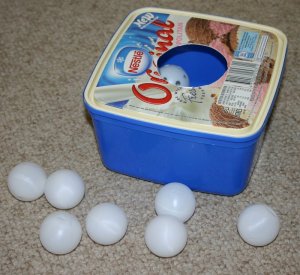
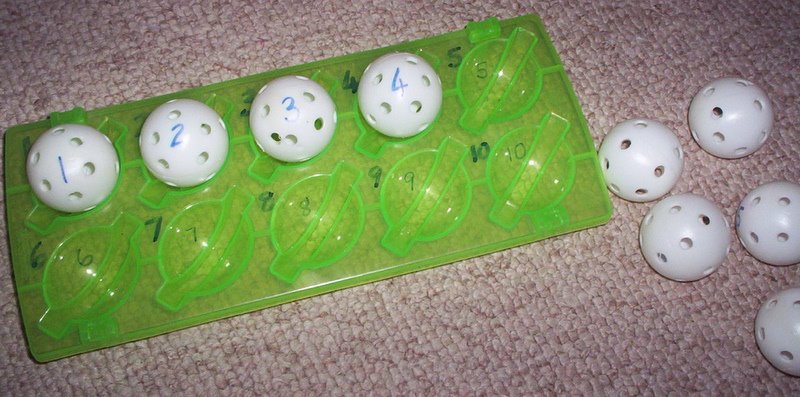
For children who do not yet recognise their numerals, this workjob is very simple and requires them only to match the number on the plastic balls to the corresponding number on the iceblock tray. I would then alter it into a counting activity by using plain ping-pong balls (no holes) with dots or tiny stickers on each one to count and match to the correct number.
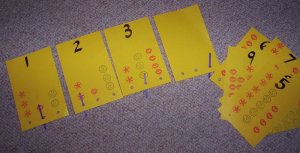
In this activity the child counts the number of stamps and pokes a matchstick through the hole underneath the correct group. The card is self-checking because when you turn over to the back, there is a circle around the correct hole.
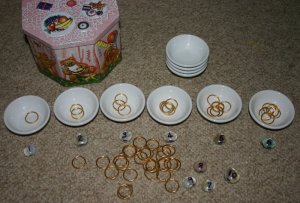
This "Princess rings" activity is a favourite of my girls. 10 tiny white jewellery bowls are set out then jewels with the numerals 1 to 10 are placed in order next to each bowl and the rings are counted into each bowl. The rings come from the wedding favours section of my local discount store. We made up all sorts of extra stories about how the princesses shared their rings out and had a lot of fun with this. Sometimes a good story adds so much to the fun of the activity!
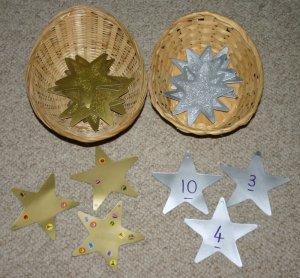
The child orders the silver stars (bought from a party supplies shop) from 1 to 10 then counts the stickers on each golden star before matching them to their pair.
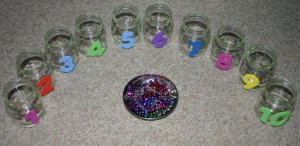
Foam stickers on baby food jars and some cheap party bead necklaces cut into lengths make this a bright and attractive counting activity. After ordering the jars from 1 to 10 the child counts the number of beads on each string and drops them into the correct jar. Not a good one for absolute beginners as the beads are quite small and it is easy to miss-count as the higher numbers are reached.

Homeschooling activities for toddlers: Pasta play

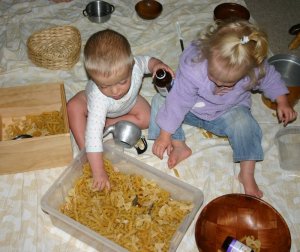
Cleaner than water and sand – but just as much fun – pasta play is a great activity for busy toddlers. Useful for mat time and any time that you need to keep little ones happily occupied. If you have trained your toddlers to stay on a designated area for blanket time (mat time) then they will happily spend time tipping, pouring, filling, scooping, posting and otherwise manipulating pasta shapes.

All you need is a couple of bags of dry pasta, a variety of containers and a bunch of scoops and ladles and you are all set. Spread a sheet out on the floor to catch the dropped pasta and clean-up is a breeze. Simply collect up all the accessories into a container or tub of some sort, flick the pasta onto the sheet and pick it up by the four corners. If you will be using it regularly then find a container big enough to put the sheet bundle straight into (rather than tipping the pasta off the sheet) and you are all picked up in seconds. Of course, teaching little ones to help pack up is an important skill and if everything is being tossed into an open container then it is an easy matter for them to help you clean up.

Yes, they will probably have a bit of a chew as well, but it is just pasta! Keep an eye on them as always because  pasta could pose a choking hazard for toddlers but all in all, this is a very easy activity to set up and by simply changing the containers and accessories you put with it you can renew interest and keep the activity fresh.

It works well as a sensory table activity and can be adapted and set up as a Montessori tray activity for practical life posting, scooping, sweeping, pouring etc. The photo above shows pasta play set up at my sensory table in two plastic crates, however for toddlers I prefer the sheet method as they tend to spread it far and wide around the sensory table.

Make your own baby and toddler toys – ball posting

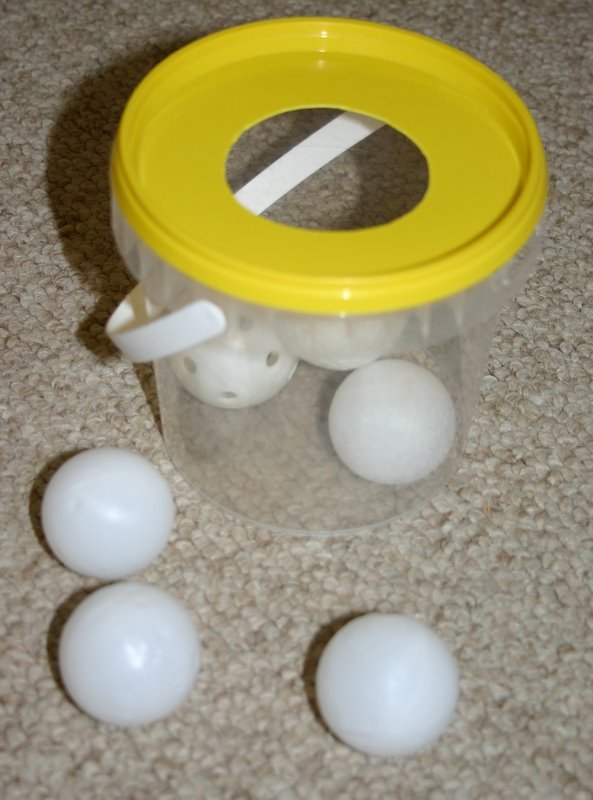
Ball posting is another very basic activity for babies and toddlers. Plonking the balls in through the hole and learning how to shake them back out again is absorbing and clear containers add to the interest. Ball posting is great for  playpen time and mat time, but not as good for table time or highchair time simply because the balls fall off and roll away.

DESCRIPTION:

  • The child posts the balls through the hole and tips them back out again by shaking the container.

CATEGORY/SUBJECT AREA:

  • Practical life

CONCEPT/SKILL:

  • Fine motor development

EQUIPMENT & MATERIALS:

  • Container with lid (cut a hole into the lid slightly larger than the balls)
  • Balls or other objects to post and shake out again

Please see my articles titled “Workjobs and Learning Styles” and “Brief Montessori Overview” for more information.

Make your own baby and toddler toys: posting bottles

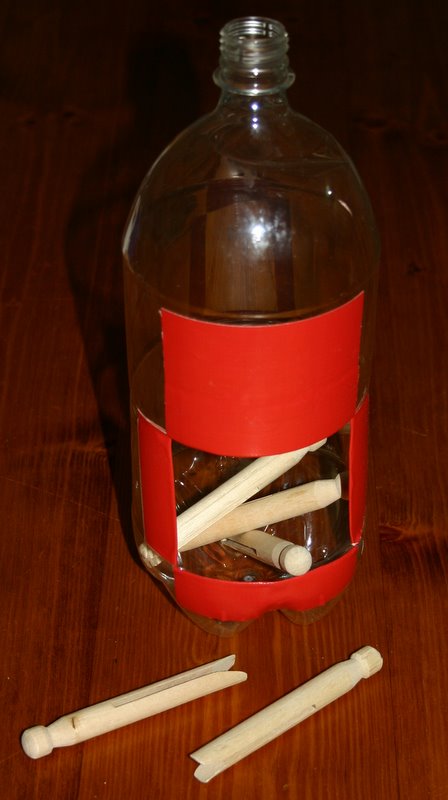
Babies and toddlers just love to put things inside small spaces and empty containers out. It is great fine motor practise and they will often concentrate for amazing lengths of time if the challenge level is just right. If a child is frustrated by their inability to do the task, simply change the activity for now and re-introduce it a little later. It should have an element of difficulty, but not so difficult that they cannot be successful. This is a great activity for highchair time, playpen timemat time or table time.

DESCRIPTION:

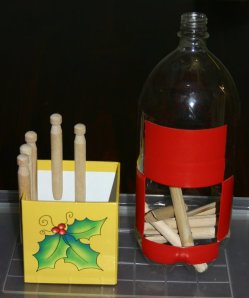
  • The child posts the dolly pegs into the lid of the bottle and pulls them back out the bottom.

CONCEPT/SKILL:

  • Fine motor development

EQUIPMENT & MATERIALS:

  • Large plastic bottle with hole cut into the front. (Tape hole to cover sharp edges)
  • Dolly pegs or any other suitable object to post into the top of the bottle (regular pegs, wooden peg halves, popsticks etc.)

In this example the solid bottle adds a different dimension and the pegs are shaken out once posted.

The posting bottle can be combined with other skills. Sliding the dolly pegs on and off the edge of a sturdy cardboard box is a complete activity in itself. My children usually enjoyed taking the pegs off the box but did not choose to put them back on again. When they were finished with the activity we slid them back on to the box together as part of the packing up process and they happily practised this skill.

Please see my articles titled “Workjobs and Learning Styles” and “Brief Montessori Overview” for more information.

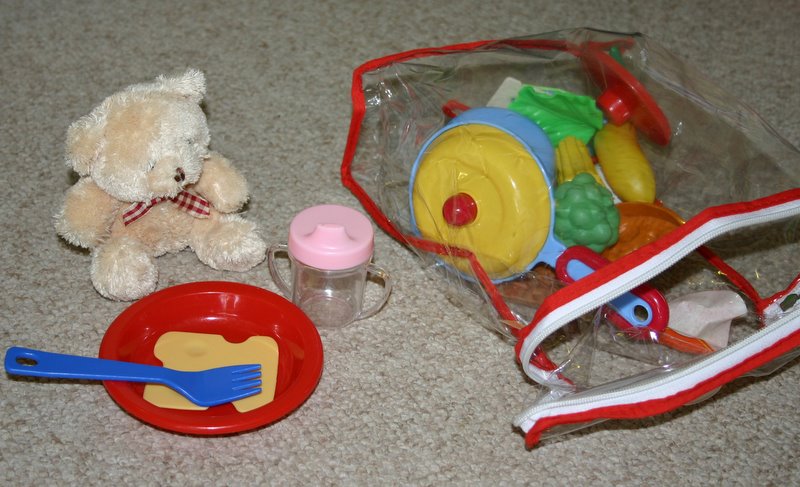
Make your own toddler toys: teddy food play


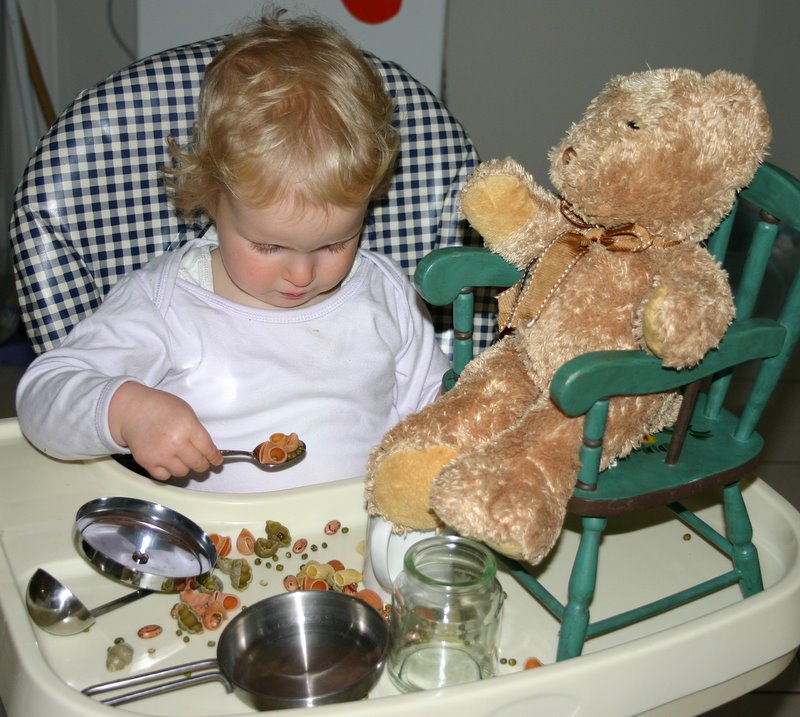
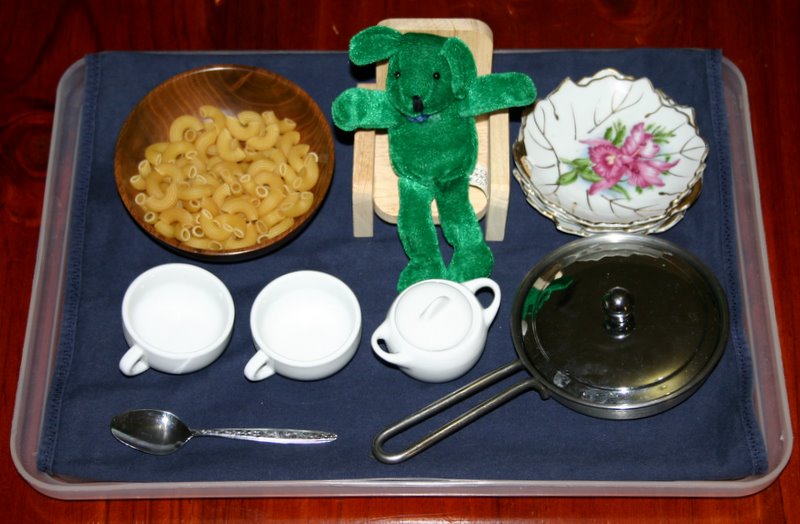
Teddies, cooking equipment and food are such an easy activity to put together for toddlers. Little boys and girls love to pretend cook and feed their willing teddy companions. I use this kind of activity for highchair time, mat timeplaypen time or as a table activity and it’s open-ended nature lends itself to long periods of concentration.

It is easily updated and kept fresh by simply adding some different containers, cooking equipment, food or teddy. It can be a “new” activity every week without much work on your behalf.

Simply look around the house, gather up some interesting containers, plates, cups, cutlery and the like, some kind of “food”, a teddy and you are set. Keep in mind the age of the child and choking hazards. Beans, pasta and jewels are best used under supervision or not at all if a child is very tempted to stick them in ears, noses and mouths or anywhere else they shouldn’t be!

Sometimes I use doll-house sized teddies and doll-house furniture so the teddies can eat at the table, go to sleep in a little bed afterwards and even sit on the couch to relax. I have used plastic food, felt food, wooden food, dry pasta and beans, jewels and rocks and even pictures of food glued onto card from junk mail.

As soon as your little one has begun use their imagination (pretend play) you can introduce this activity. For the very little children, you might even sit and play with it with them first, teaching by your example what to do with each item. Children with older siblings have had this modelled extensively, but a first child will not always know how to play unless you show them. They will of course work it out for themselves, but if you want a young child to use this kind of activity enthusiastically for an extended time, some modelling will go a long way to extending their play.


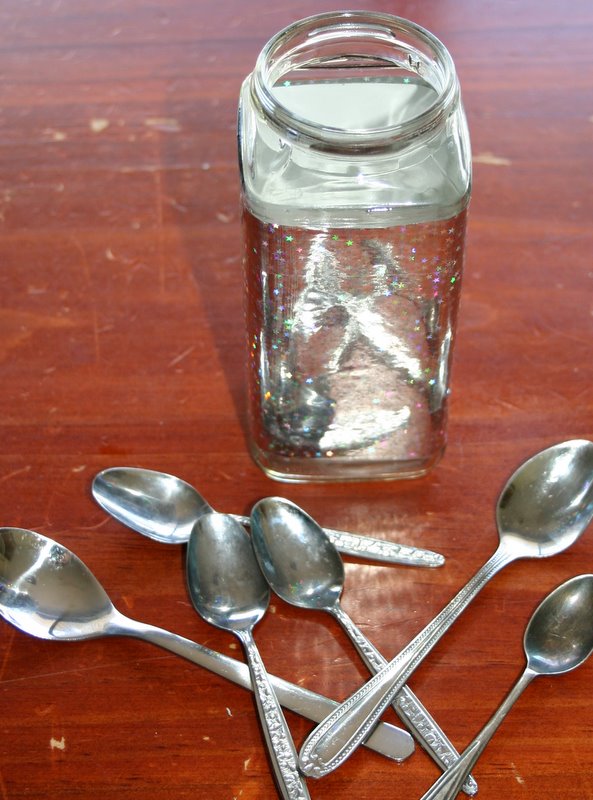
Make your own toddler toys: Jar of spoons

I love this kind of activity. It takes approximately 30 seconds to put together and older babies and toddlers love it! Obviously being glass, care must be taken so that it will not drop onto a hard surface. I use my jar for highchair time, in the playpen or for mat time as these all occur over carpeted floors. You may prefer to replace the glass with something metal but make sure it makes a great sound as that is part of the attraction.

DESCRIPTION:

  • The child drops the spoons into the jar which makes a satisfying jangle and tips them back out again. That’s it!

CATEGORY/SUBJECT AREA:

  • Baby and toddler toys – beginning posting

CONCEPT/SKILL:

  • Fine motor development
  • Concentration

EQUIPMENT & MATERIALS:

  • 1 jar
  • a bunch of small spoons

Felt boards

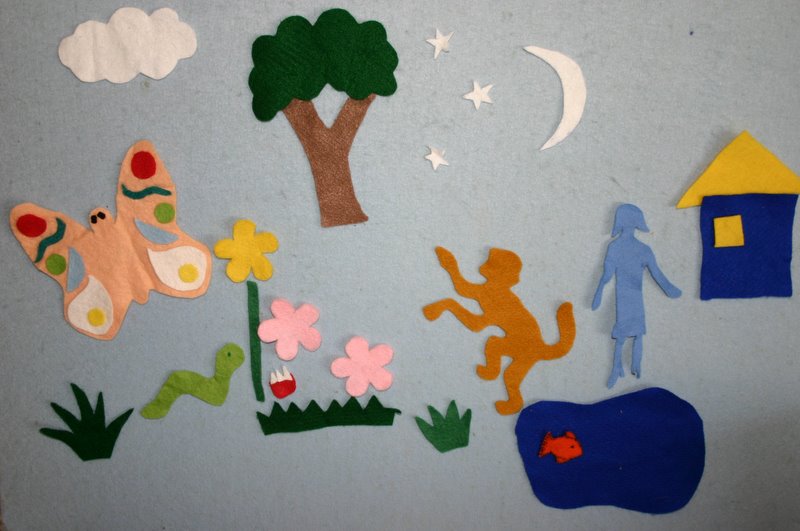
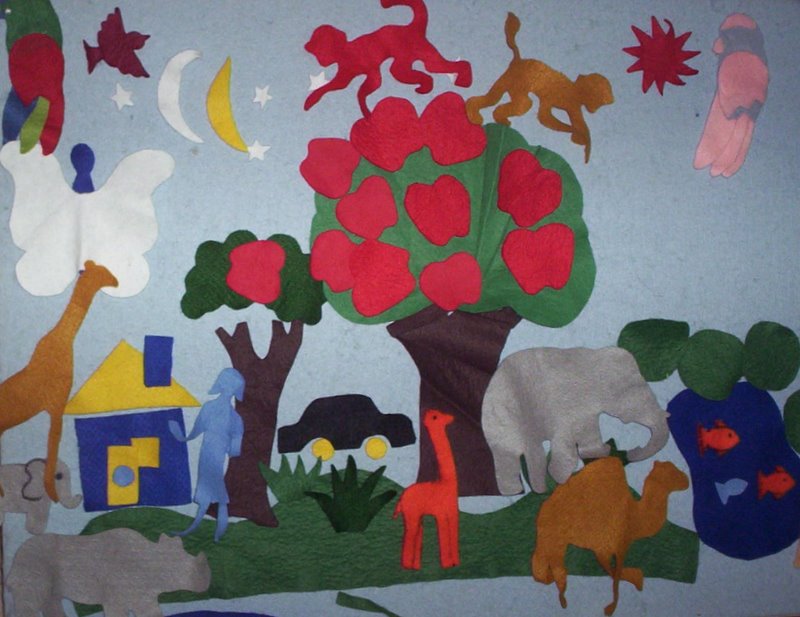
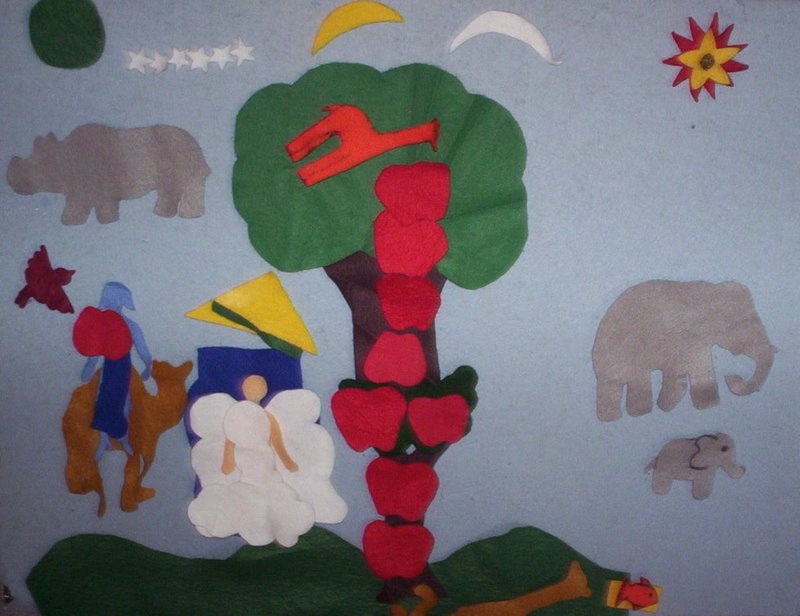
Felt boards are an excellent independent activity. They make great table activities (although usually they use it up against the wall rather than actually at the table) and if you have a small version can also be used for highchair time. They require no special skills and are completely open-ended. Language development is enhanced as children create and tell their own stories using the pieces provided and they will keep a child’s attention for an extended period of time. The children in my family have enjoyed using the felt board and still choose to do so even as they grow older.

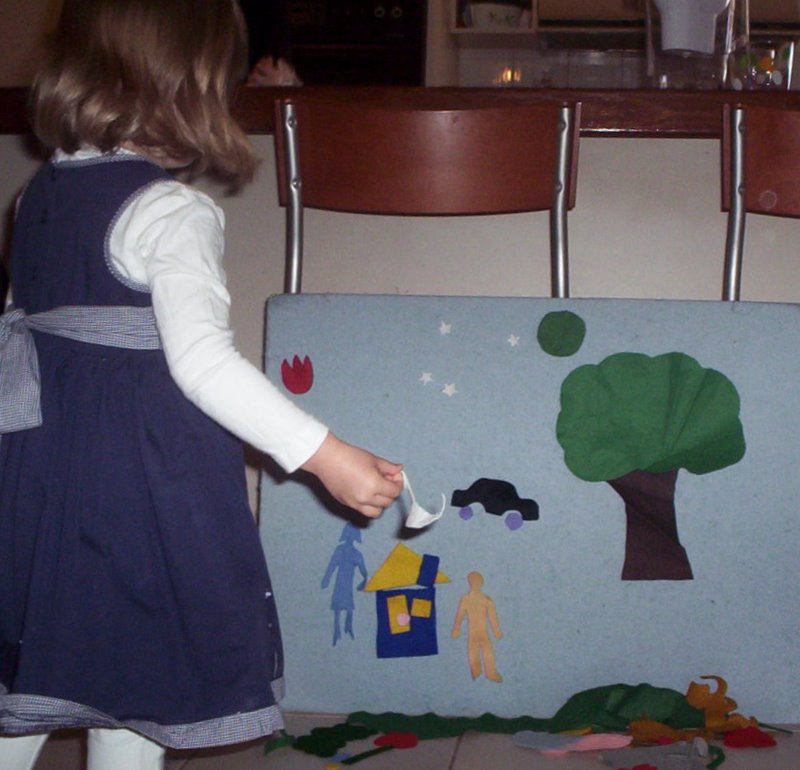
I made this felt board at Uni as a mini assignment and almost failed because the lecturer thought it was too big to be easily portable!! Now I use it all the time and love the fact that it is large enough for one child to set up a large scene or even for two children to play side by side.

To make a felt board, all you need is a very light piece of plywood or very strong piece of card. Box card is no good as it usually has corrugations and will tend to crease along these. Mine is strong card and has stood the test of time, although the corners are getting a little dog-eared now. If I was making it again I’d go for thin, light wood. Buy a large enough piece of felt to cover the board, with enough overlap to stretch around and glue (hot glue gun is ideal) to the back.

Use your imagination to cut out any number of felt shapes. You may like to have a mixture of animals, people and recognizable characters, as well as an assortment of shapes for building houses, gardens and whatever the child thinks up (i.e. squares, circles, triangles, grassy clumps, stems, petals, tree trunks, leaves, circles for flower centres etc. The possibilities are endless)

Basic colouring books are a great source of simple shapes that you can trace and transfer onto the felt pieces to cut out. I also have several sets of felt figures that go with specific stories which allow the children to re-tell these favourites to themselves.

It is helpful to have the board on a slight lean to help the pieces to stick and some people even stick Velcro dots (hook side) on the back side of each piece for extra grip.

That’s it! Easy to make and hours of play for your child. As with most of these activities, start simple. Put out a few basic shapes to begin with, or just the garden pieces, or animals and fences etc. Older children like to have them all at once and create complicated scenes but the toddlers will be more focussed with less to choose from and rotating pieces to keep their interest levels high.

Toddler activities: Tissue box posting


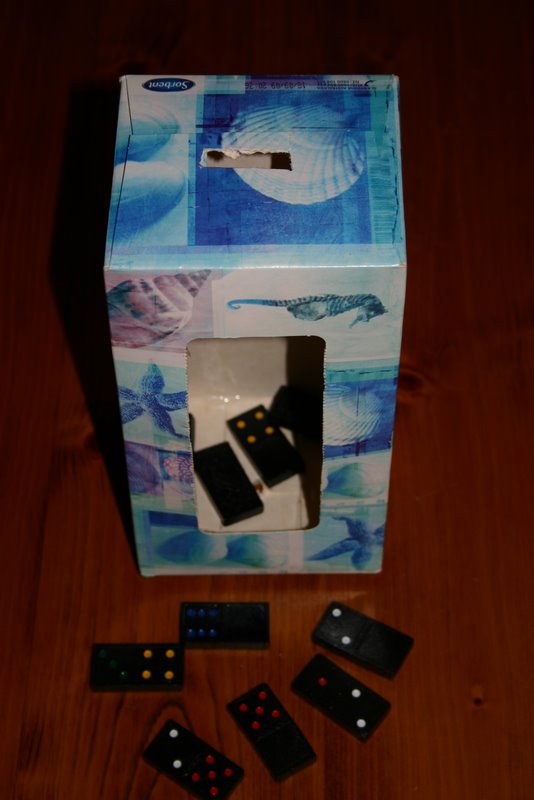
This is a very quick and easy toddler activity to put together and all for free! All you need is an empty tissue box and something to post. Most of us have something lying around that will do; pegs, long Duplo blocks, cutlery, old credit cards, dominoes, popsticks or whatever you can find.

Make sure that the material does not pose a choking hazard, demonstrate what to do and let them at it! For the younger child, simply make the posting hole larger. An older toddler will enjoy the challenge of having to place the item in exactly the right position to get it in.

A great activity to use for mat time, playpen time, or even highchair time if the child is tall enough to be able to see the top of the box.

DESCRIPTION:

  • posting given object (in this case dominoes) through a slot in the top of a tissue box.

CATEGORY/SUBJECT AREA:

  • practical life – posting

CONCEPT/SKILL:

  • fine motor development; hand-eye coordination
  • concentration and focussing skills

EQUIPMENT & MATERIALS:

  • tissue box
  • dominoes or alternative material to post (pegs, long Duplo blocks, cutlery, old credit cards, popsticks etc.)

Please see my pages titled “Workjobs and Learning Styles” and “Brief Montessori Overview” for more information.

Mat time on the go

In my previous post on mat time I wrote about how to use and introduce mat time to your little ones, including the benefits that mat time brings to you and your child. Mat time allows you to go anywhere and place a simple boundary on the ground for your child to play quietly in while you can relax knowing they are safe, quiet and happy.

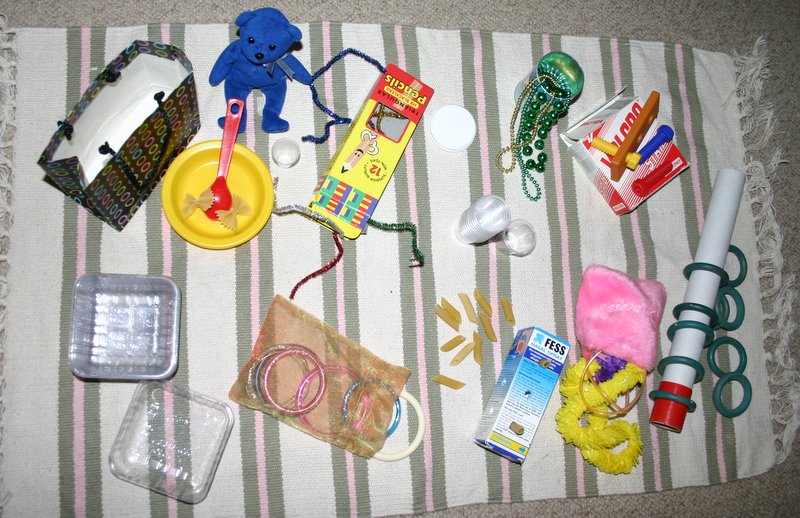
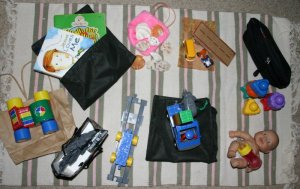
How do you cater for mat time when you are out and about though? I like to keep an activity bag in the car or near the front door with some special toys inside that are used only for this purpose to keep interest levels high when I do pull them out. I don’t have enough commercial toys to put a whole bunch out of circulation so I like these toys to be simple hand-made activities or items that won’t be missed. I have a small mat that also stays in the bag, acts as the boundary and gives the children something comfortable to sit on.

I put everything into little bags, containers or boxes as this doubles the interest factor. Once we have finished with the toys I do have to spend a few minutes returning everything to its own container but as I don’t use them all the time, I’m happy to do that.

I use the following categories to help me come up with ideas of what to include:

  • books
  • vehicle (dinky car, Duplo)
  • stacking toy (plastic containers, cups, bowls)
  • containers to open and shut (bags, boxes, zippers, flaps, press-studs, drawstring, handbags)
  • something to wear (hats, necklaces, bangles, scarves )
  • something textured or unusual to handle, tip or put into the containers (shells, rocks, pegs)
  • construction (Mega-blocks, Duplo, magnetic blocks, stickle bricks, train tracks)
  • pretend play (teddies, dollies, bottles, dishes, cups, clothes, food)
  • posting toy (a hole in the top of a small cardboard box with something to post like noodles, blocks, pipe cleaners, straws or pegs)
  • household (I wander through the house looking for items they are currently interested in like hair brushes, hats, shoes, cleaning cloth, tea towel, hair clips)

With a small amount of preparation and some training at home, you can have a toddler who happily sits down for an extended length of time to focus and play quietly with their own toys. Perfect for Grandma’s trinket filled house or a coffee date with the girls.

Mat time

Mat time training allows you to go anywhere and place a simple boundary on the ground for your child to play quietly in while you can relax knowing they are safe, quiet and happy. It is wonderful for those situations where a roving, noisy toddler is simply not welcome or could even be dangerous. It teaches children sitting and focussing skills and is excellent training for future learning situations that require extended concentration.

¨       The difference between room time and mat time is that there can be interaction during mat time (as long as the child stays on the mat) and mat times happen in sight of you, wherever you are working.

¨       Start with several smaller time slots throughout the day and work up to longer time periods at a single time in the day.

¨       Plan something to do that allows you to train during this time without becoming distracted. Remember, the purpose of the short time period to start with is to finish while it is going well and praise, praise, praise! Do not be tempted initially to extend the time in this training phase because it is going well and leave it until a problem happens – end on a good note.

¨       If a child tries to get off the mat immediately say “It’s mat time, stay on the mat” and gently but firmly move them back onto the mat.

¨       If the child is consistently getting off (and you are sure they understand the expectation to stay on) you may choose to put them into their cot. They can be bought back out after a short time to try again or if still getting off the mat, you may choose to have them finish the remainder of their mat time in the cot (or some other isolation area), with or without their toys.

¨       During the initial training period, you may choose to extend the time by joining the child on the mat once their capacity for independent play is exhausted. Be wary of letting them become dependent on you for entertainment.

¨       Further consequences can also be used once training is established and a child is still deliberately disobeying.

¨       Provide a few toys, not a lot. Better to change half way through than add too many at the start. Young children become overwhelmed with too many choices and end up unable to focus on anything.

¨       Toys that “accidentally” come off the mat are not returned. Use your discretion!

¨       Introduce packing away from first use – demonstrate first, do it with the child, then expect the child to pack away independently once they have mastered the skill of doing so with help.

¨       In order for a child to pack up independently, toys must be organised very simply e.g. open crates. Do not expect a toddler to pack toys into bags and boxes.

¨       Start when you know you will be able to be home for a few days in a row and consider introducing the mat several times each day for small time increments. Once you are ready to extend the time, once a day for a longer period may be sufficient.

¨       For young children, consider doing it through the weekend until well established

¨       Have it at a similar time each day

¨       Consider having some special toys that only come out for mat time or take other toys out of general circulation so they become interesting again.