Highchair time: home-made toddler activities – pasta play

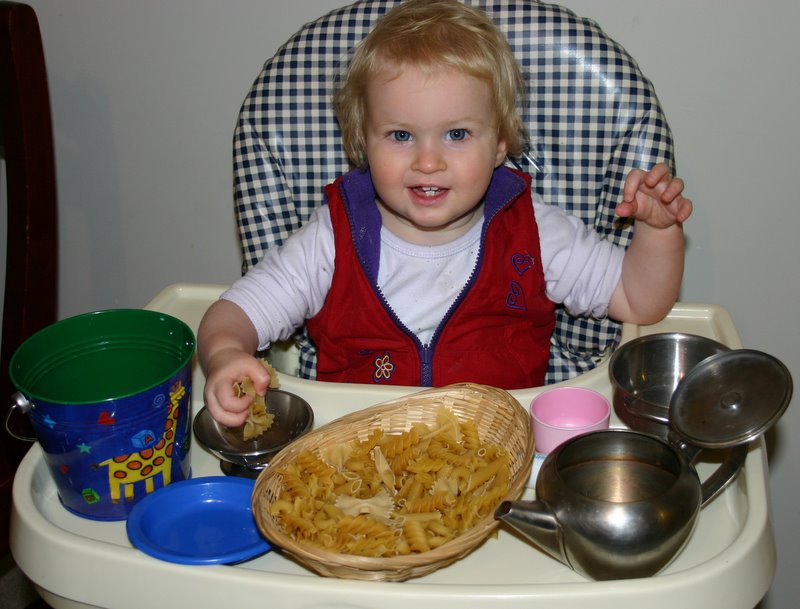
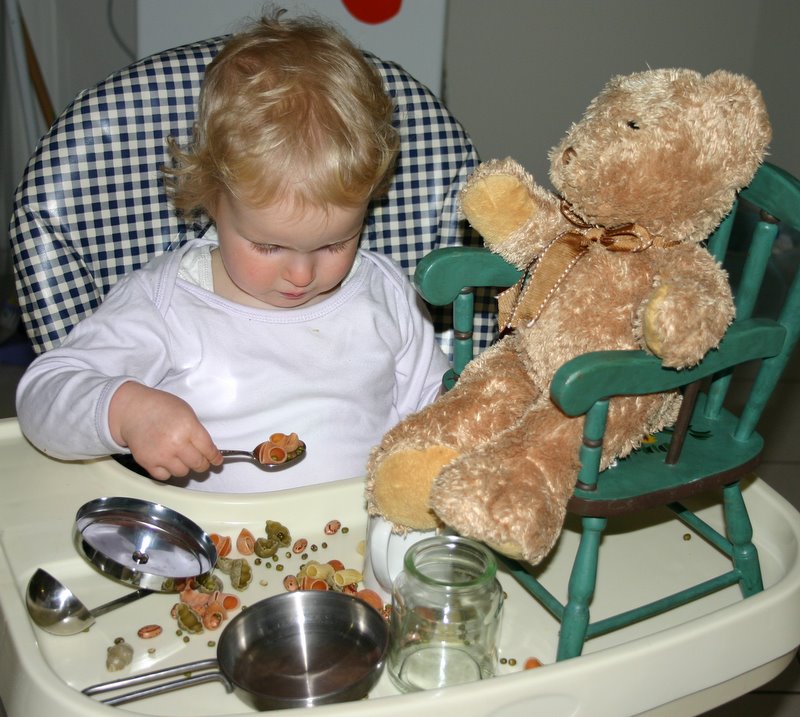
One of the easiest “home-made” toddler activities for high-chair time is pasta play. Raid the pantry for some interesting pasta shapes and gather a bunch of little containers of different varieties and you’re done. While most toddlers will have the self-control not to put the pasta in their mouths, keep an eye on them simply because of the choking hazard it could pose. As far as them having a bit of a chew though, there’s really no problem – it is just pasta!

If you start simply, changing materials as interest wanes, there are unending ways to extend this kind of play. Some ideas are:

  • a cup of pasta and cake tin to tip it into. (Tipping out and refilling a cup is surprisingly absorbing for a toddler and a good introduction to dry pouring.) The tin also makes a satisfying  sound as the pasta is poured.
  • a cup of pasta, cake tin and scoop. The child now learns how to scoop the pasta back into the cup from the tin.
  • a container of pasta and a second container to transfer it into. Transferring is another practical life skill that develops fine motor control. Vary this by changing the kid of tool used for the transfer (spoons, scoops, tongs, ladles etc.)
  • a jug and something to pour into.
  • a variety of different sized containers
  • glass containers (It is interesting for the child to be able to see the container filling up from the outside.) Think about the floor underneath – glass and tiles do not mix!
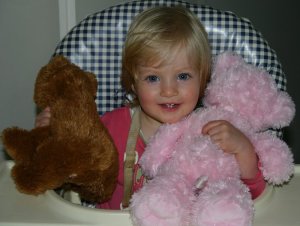
  • add a teddy with a plate and spoon
Pasta play is an open ended activity that can be independently accomplished and will keep a toddler’s interest for a significant length of time, particularly if you are regularly training them to expect high-chair time throughout the day. Use the time to wash the dishes, make the dinner, homeschool your older children or whatever it is you need to get done.

Routines: Commercial activities for highchair time

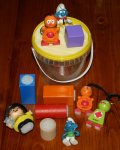
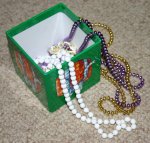
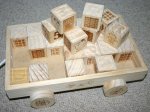
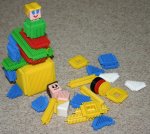
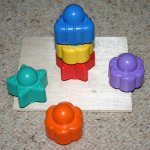
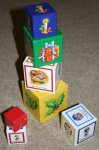
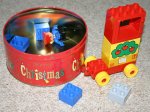
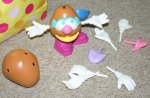
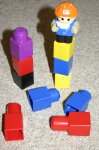
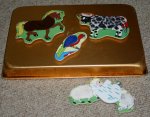
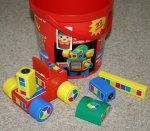
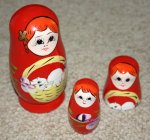
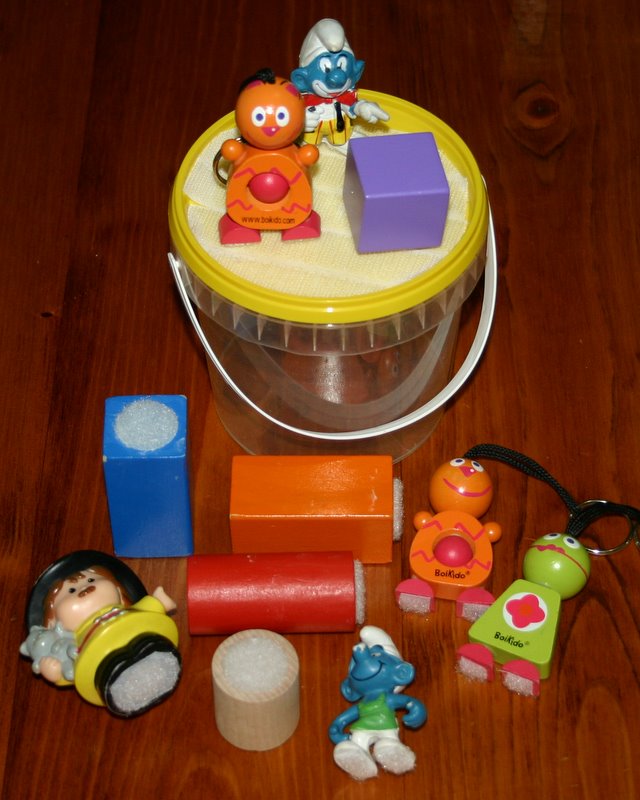
Following on from this weeks posts about highchair time and highchair time activities for babies, here are some pictures of commercial toys I use with my babies and toddlers for highchair times. Go for a walk around the house and see what there is to collect. If you have older siblings, you’ll be surprised what you can borrow from them to keep a toddler happily playing.

(Home-made practical life and other toddler activities will be posted individually from time to time under workjobs and Montessori activities.)

Routines: Highchair time activities for babies

After the post about highchair time yesterday, I thought it would be timely to follow-up with some suggestions as to what to give an older baby or toddler in a highchair to hold their attention and promote the concentration and patience we are working on.

I like to think of toy types in phases of development:

1 to 12 month old babies love toys that are good to mouth and sensory based toys that make sounds, feel interesting and look visually stimulating. Obviously within this age range there is a big difference in the kind of baby toy they are interested in, but in essence they are all “baby” toys for holding, touching, pulling, sucking, crinkling etc.

12 to 20 months olds enter the transition zone. Over the next few months the baby toys begin to lose their appeal and imaginative play has not yet kicked it properly. This means that the shiny red car is looked at, possibly mouthed for a minute or two, shaken, the wheels are spun around a couple of times, possibly pushed along and interest is gone. It doesn’t DO anything exciting and the child does not yet identify it as a small version of a car and drive it around making car noises because the pretend play element is not there yet. What they do like are toys that respond to their actions – that DO something. Pull a lever and an animal pops out, pop a ball in and music plays, tap the pegs and the turtle’s head pops out. This is the hardest age to supply toys for, because interest dies very quickly and those bright, colourful and interactive toys are expensive. You can join a toy library, swap with friends or make your own. (Lots of ideas coming soon.)

20 to 24 month olds and up are beginning to use their imagination, especially if they have siblings or a willing parent to show them how to play. They will begin to have tea parties, feed a teddy, set up the train tracks and create their own pretend play situations. The possibilities open up enormously and this age is so much easier to cater for.

In general, there are some great baby and toddler toys that can be purchased, however interest in most is short-lived as the child moves on to the next developmental level or simply has seen it enough to no longer be attracted to it.

Why not capitalise on the toddler’s natural attraction to learning new skills, copying Mum and Dad and using “real” things around the house to put together your own activities. They are cheap to make and can be disassembled once interest has passed. Important practical life skills can be introduced that will be used every day, many of them developing fine motor skills that will be vital for pencil grip and general hand control later on.

Here is my list of activities to make for babies with instructions for each. Practical life and general toddler activities will be posted individually from time to time and categorized under workjobs and Montessori activities so keep an eye out for them.

Travelling with young children – plane trips

Earlier this year we took a plane trip with 5 children aged 8 and under. While our children are generally well behaved, it was not without some trepidation that we embarked on this experience, particularly when we thought about the long hours with TWO 15 month old toddlers to keep entertained.

We also had 5 days at a conference once at our destination and although there was one session per day of children’s activities planned, we had potentially a lot of time throughout the remainder of the day when we would have to keep the children quietly entertained. What to pack?? Here is our survival list, both for the plane trip itself and for quiet times throughout the day.

1. Snacks

Any parent of young children knows that you never leave home for any length of time without snacks and this was no exception. We bought an assortment of dry snacks and treats that wouldn’t make a mess and shared them out between little ziplock bags. Each bag was labeled with the child’s name and when it was for; one for the plane ride over, one to come home and one for each day of the conference. They included yoghurt coated sultanas, mini pretzels, dried banana, several varieties of cereal, tiny teddy biscuits and a lollipop per bag and as we rarely buy this kind of food they were a real treat.

2. Books
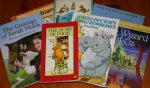
  

A couple of new books (new to the kids anyway) and a few favourites that were suitable for all ages. At one point we looked over and the big burly gentleman that had the dubious pleasure of sharing a row with us was reading one of the books to our 3 ½ year old! Not sure how that came about but it was very cute.

3. Sticker books
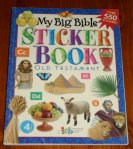
Another quiet and absorbing activity and as we were catering for a variety of ages perfect for us. The three older children all love to do stickers, particularly the girls.

4. Drawing equipment
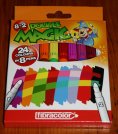
     

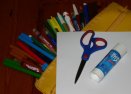
Magic markers (they change colour when you draw over the top with the colour change pen) were new to the children and so had novelty factor. A mini whiteboard and eraser is good for even the littlies under supervision and a general supply of gluing, cutting and drawing equipment was useful for when other children wanted to join in.

5. Activity books
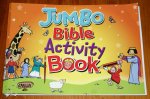
Dot to dots, mazes, colour-by-number and other simple puzzles keep the older two busy and number 3 enjoys simply colouring in the pictures.

6. Water painting books
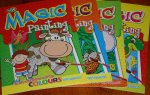
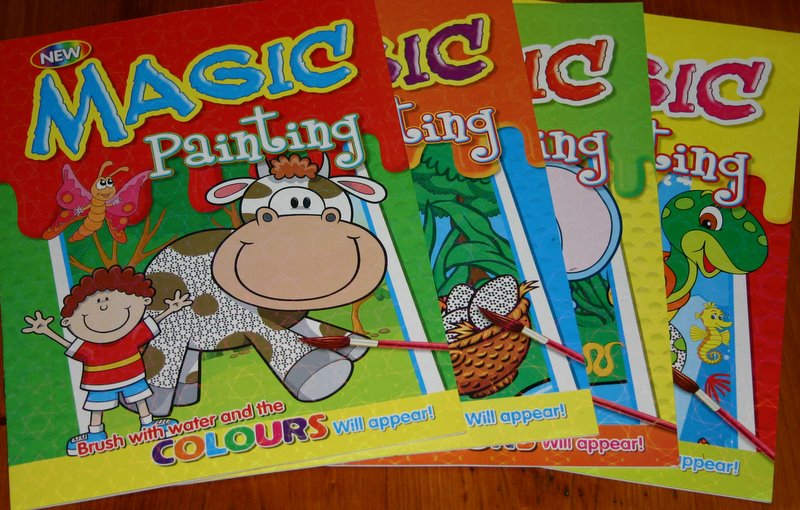
These are brilliant. A small brush and a little water is all that is required and the pictures change colour in front of their eyes. The children especially loved these, although they completed them very quickly and they were fairly pricy considering the small amount of time they occupied. I had a lot of trouble locating any in the shops and ended up buying this set on ebay for around $5 per book including postage.

7. Toddler toys
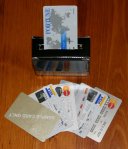


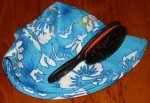
I find toddlers the hardest to cater for. They have the shortest attention span and are easily bored with the toys they have already used at home, plus commercial activities often tend to be large and bulky. I have found with my own children that a selection like the ones above of new activities with equipment I can gather from around the house is even better that trying to pack their usual toys and holds their interest longer because they are new. I also capitalized on current interests such as putting on hats, brushing their own hair, Velcro, posting objects etc Obviously, behaviour training is very important and teaching toddlers to sit and concentrate at home during highchair time, mat time, playpen time and other structured elements in your routine pays off in situations like this. If a toddler is not taught to sit still and focus on an activity and to stay where Mum and Dad put them, then a plane ride is not going to be a pleasant experience at all.

8. Playdough

I didn’t get this out on the plane but it was a nice afternoon quiet time activity and was easily shared with new friends.

9. Lacing and sewing activities
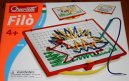
    

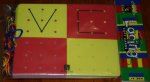
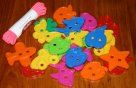
I purchased the Filo lacing and lacing cards from Skillbuilders, an occupational therapy business. They are excellent for fine motor control but do require more effort. I use these in my homeschooling activities but find that the children would not generally choose to use them just for fun. They were well used on the trip though simply because they were new.

10. Toy cars

Again, good for all ages and compact for travel. We were allocated one item of carry on luggage and one suitcase per person (including the twins), plus a baby bag, a portacot and a twin stroller and we used every single bit of it. The eldest child dragged two carry on suitcases on wheels, the girls had one each plus a jacket and hubby and I had the rest between us plus 2 babies. Moving about was not an easy affair but we did get excellent service as the air hostesses took one look at us and instantly we had pity factor. Especially when we first arrived and hubby went to park the car after dropping us and the luggage off at the entrance. I was asked in horror(?) if I was travelling alone with the children as the bags were carried through and we received one on one attention to get through the queue.

11. Wikki Stix

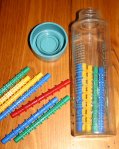
These are wax coated bendable sticks (also known in Australia as Bendaroos) that will stick to themselves and almost any smooth surface. The children can make models, spell out words, make pictures and put them to a variety of other uses due to their open ended nature. They are clean, quiet, small and easily portable so brilliant for travel. I did read on one parenting forum though that they are poisonous if ingested so without knowing if this is true or not, I am very cautious with the twins not to let them get a hold of them.

Two more activities that we didn’t take this time, but have used for travel activities in the past are:

12. A roll of alfoil.

Yep, that’s it! You’d be amazed at what kids can do with a roll of alfoil; it makes an excellent sculpting material. I trawled the net and found a bunch of pictures and included these as springboards for ideas and they went from there.

13. A packet of pipe cleaners.

Again, I found heaps of pipe cleaner creations on the web, printed them out as ideas and the kids created to their heart’s content.

In the end, we only used half of the activities that we took, but we made it there and back in fairly good humour and the people around us didn’t have much to complain about!

Check out this post and this one for more related travel activities for toddlers and children.


Toddlers and Cupboards.

What is it with toddlers and cupboard doors? They are naturally fascinated with opening and closing doors and of course checking out what you have stored away inside your cupboards. It is possible to simply train your toddler not to open any cupboards in the house and this may be the preferred option for you. I have in fact done this with several of my children, with the idea that I don’t want to clean up any more mess and that children need to know their physical boundaries and simply obey their parents.

While obedience and boundaries are certainly important, I have slowly come around to the conclusion (helped by having twin toddlers) that it is simply easier for everyone if there is one special door (or drawer) that toddlers can be directed to when they are itching to explore.

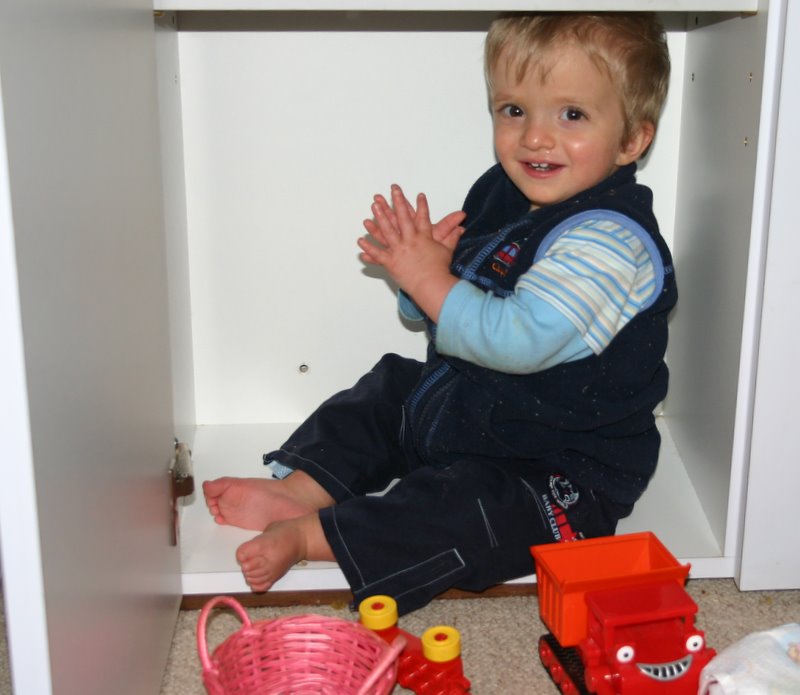
They will still gain the understanding that there are physical boundaries and need to obey when Mummy says “Don’t touch,” however being able to redirect that interest with the simple instruction to “Go to Jamie’s cupboard” makes obedience more palatable for them. Some parents use the plastic storage area, the pots and pans cupboard or clean out a bottom drawer. I have a ground level cupboard with a shelf that I fill with a small selection of books and toys and occasionally rotate.

As you can see by the picture, the attraction here is the cupboard itself, rather than the toys and it didn’t take long for the twins to work out how to remove the little shelf and insert themselves – usually at the same time!