Montessori style practical life tray activities for toddlers

Today’s post is a potpourri of Montessori tray activity ideas. They cover a range of skills and fall into a number of practical life categories, but all are great for teaching your toddler to sit and concentrate for an extended period. I have spoken to a number of Mums recently about the difficulty they have in getting their toddlers to sit for any length of time at the one activity. One method that has helped me to achieve this with my toddlers is to include highchair time, table time, and mat or blanket time in our flexible routine. These are times when Mum chooses what the toddler will play with and where they will play. (See choices.)

I use my Montessori style tray activities for highchair time with my young toddlers or during table time for my older children. For those little ones who are “done” with an activity after only a minute or two, I have used a timer to extend them. I put it on for 5 minutes and let them know that I will give them a new activity to play with when the timer is done. They may choose to be finished with their current activity and just sit and wait for the next one or (and this is what usually happens very quickly) they will realise that since there will be nothing else to do until the timer finishes, they will choose to go back to the activity they have been given and work on it for a little longer. The timer I use is a visual timer so they can see how much time is left as it counts down. It also has an option to turn off the beeper so that if they have become engaged in a task the beep of the timer does not disturb their concentration. As they become more able to concentrate for an extended period, the time is lengthened accordingly and eventually the timer is no longer necessary.

The older preschoolers who have developed sufficient self control and concentration are given the freedom to choose their own tray activity, take it to a designated space, work on the task, pack it up and return it to the cupboard before choosing another activity.

If you are getting started for the first time with an 18 month to 2 year old, 5 minutes for each activity is reasonable and the entire session may only last for 15 to 20 minutes to begin with. A two year old will quickly work up to a 30 minute session, but still may need a change of activity after 5 minutes. If I was planning a half hour session of highchair time (long enough to cook dinner) I will organise the 6 activities I need to be on hand before I start. (It may be a good idea to keep them out of view to begin with to prevent their attention being diverted by another activity that looks more interesting!) As the child gets older, the complexity of the activities increases and their ability to concentrate without needing to change improves and therefore the number of activities I need to have ready becomes less. My 3 year olds will need only 1 or 2 different activities for a half hour period depending on what I have provided them with. They are also given some choice over which activity they work on.

The other benefit of having toddlers sit in a confined area to complete these tray tasks is that I can give them breakable and delicate equipment without fear that they will be accidentally damaged and also keep an eye on them with small attractive materials like coloured beads that little children are quite likely to want to pop in their mouths.
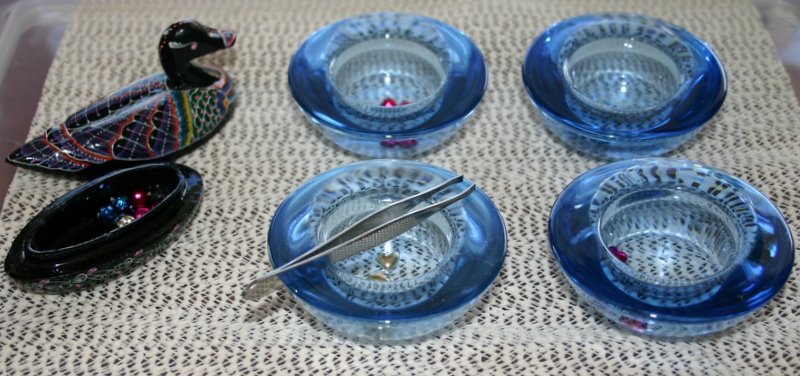
Now for some activities! Tweezer transfer activities are great for fine motor skills and require a similar grip to that used for pencil grip when writing. Transfer activities can easily lead into other beginning math skills such as sorting by colour. This duck container holds 4 colours of beads to be sorted into the 4 bowls. Younger children will have fun simply transferring them randomly and very young children may need a small spoon to transfer with, rather than the tweezers.
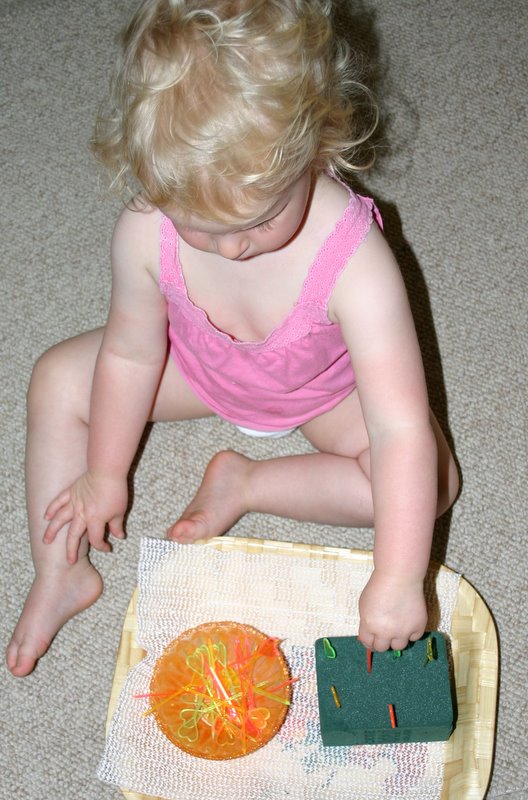
Great for even the youngest toddler, poking toothpicks into floristry oasis encourages pincer grip development. I found that the green oasis crumbled very easily so I would recommend covering it in open weave fabric to contain any dust. I have since been told that the grey oasis is much tougher and shouldn’t crumble or create dust. Foam blocks also work well. (See shape, cat and assorted pictures below.)
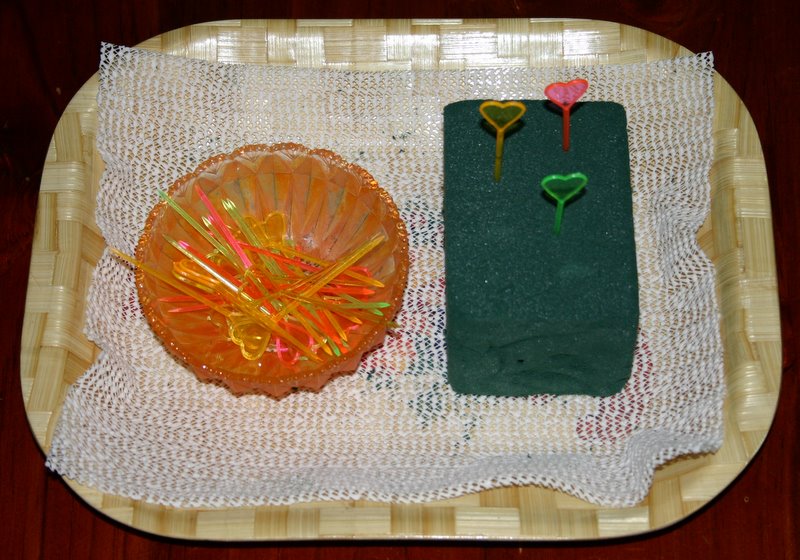
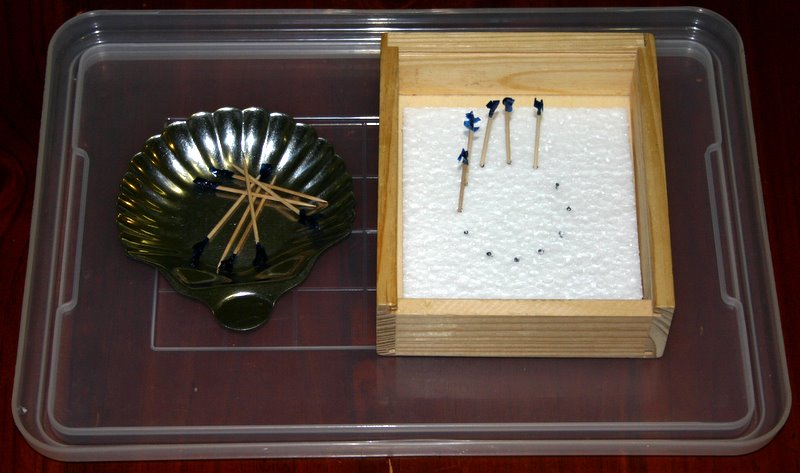
The follow-on activity was to place the toothpicks into marked holes to form simple shapes and then on to pictures.
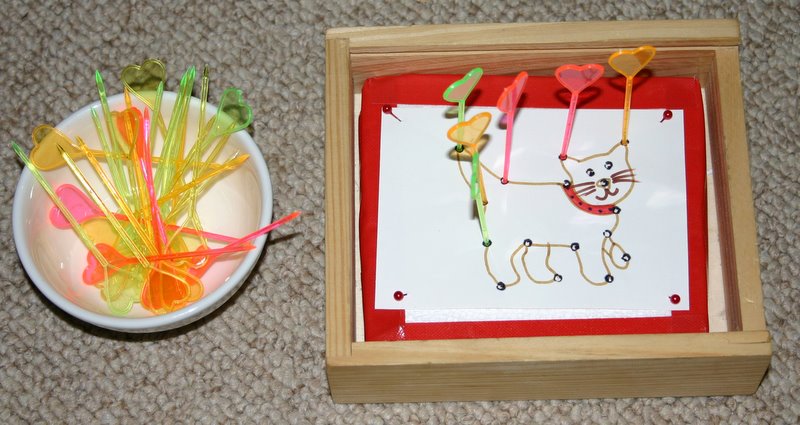
Keep the number of dots on each picture to a minimum for little ones. Too many make it difficult to get their hand in for the next toothpick.
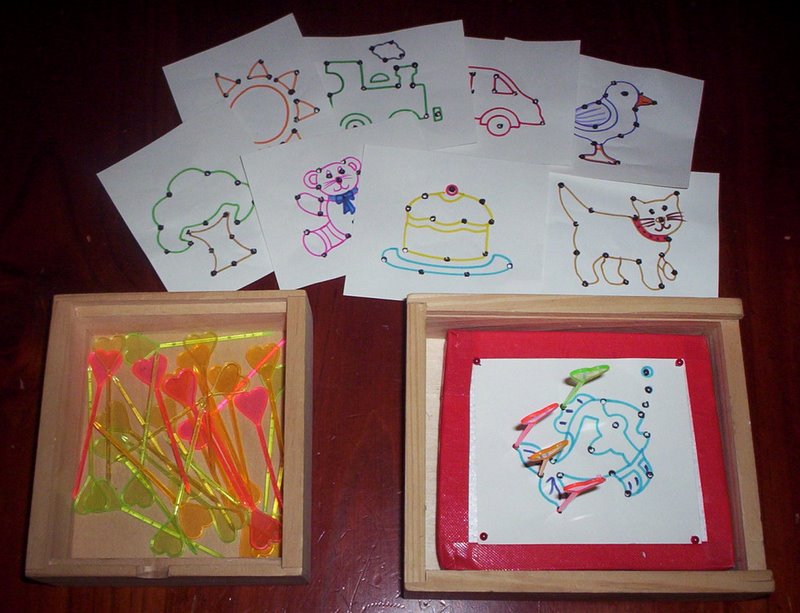
These pictures are drawn onto card and pinned onto styrofoam pieces cut to fit into the wooden box.
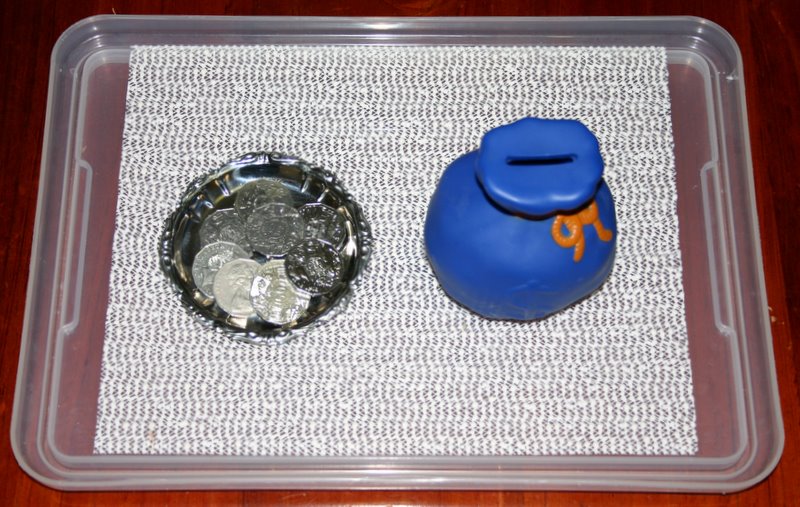
Posting coins through money-box slots. I left the bottom open so that the children can simply shake the coins out the bottom and do it again.
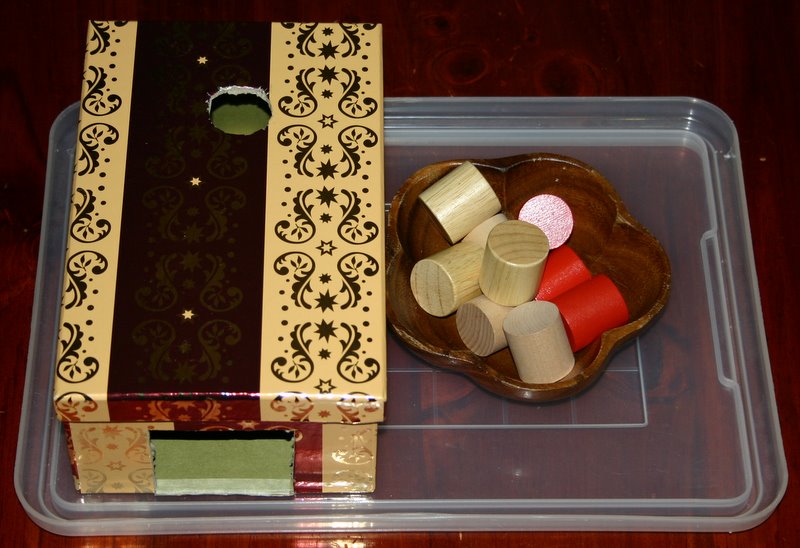
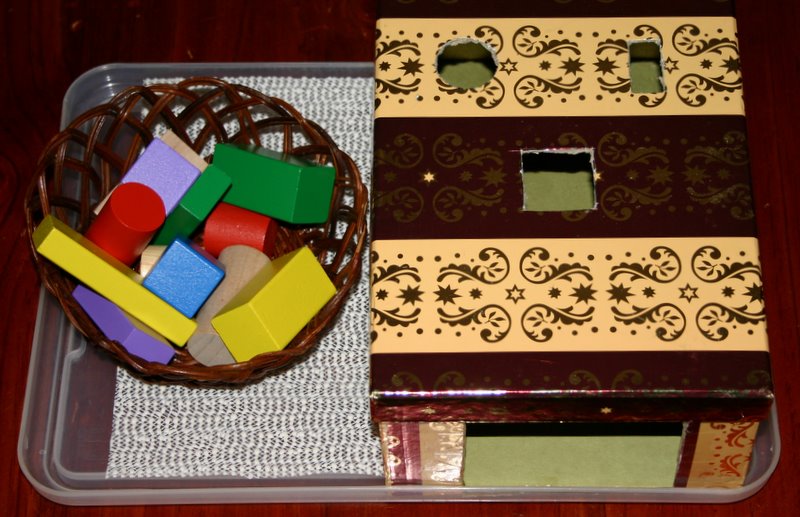
Posting wooden shapes is a good intro to shape recognition . Start with cylinders because it doesn’t matter which way the child puts it into the hole. Squares are next as they must line up but will still go in no matter which way up they are. The open slot at the front of the box allows the child to reach in and/or tip the shapes back out and for the little ones is very much part of the attraction.
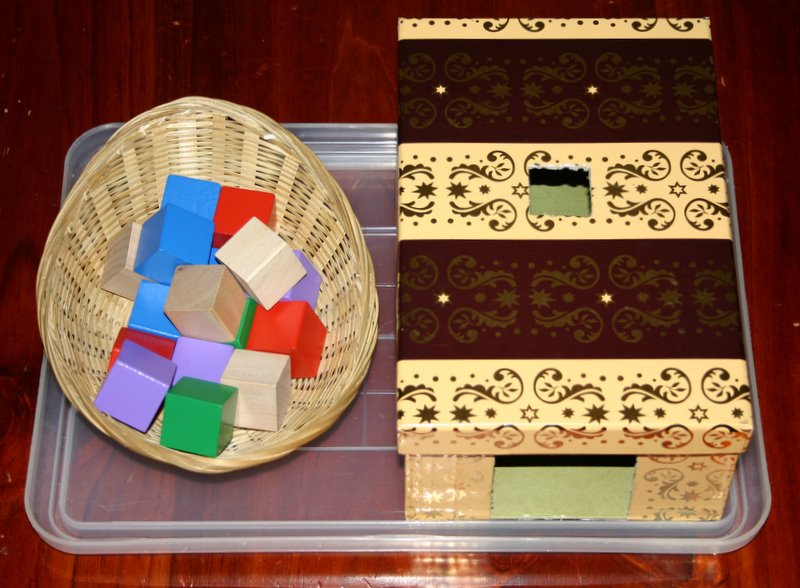
Add other shapes such as triangles or a combination of shapes to increase the level of difficulty.
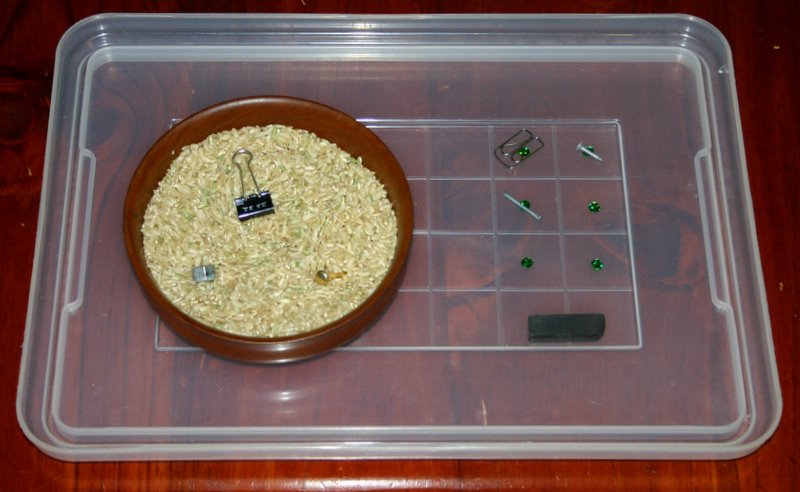
This magnet activity is fun. Hide lots of little items in a bowl of rice. The child moves a strong magnet around in the rice to find which items will stick. The number of spots on the tray designates how many magnetic items they need to find.
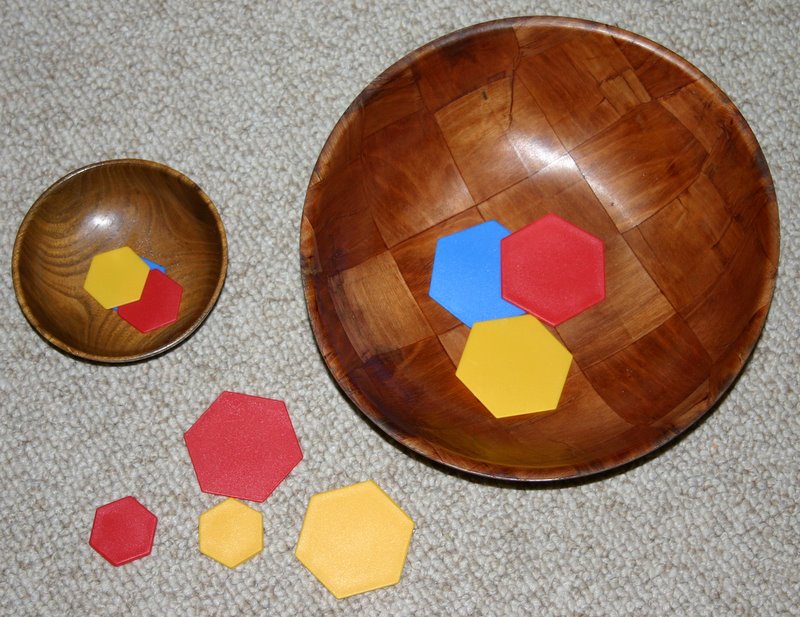
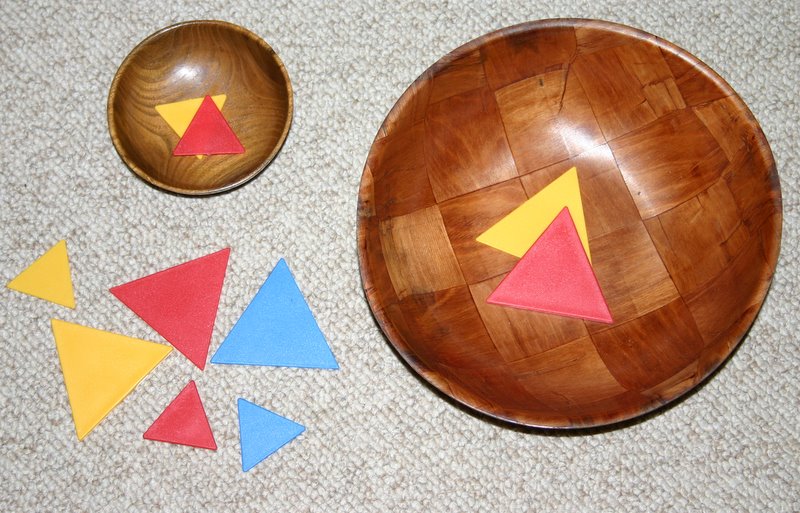
Sorting objects according to attributes is another basic mathematical concept. This beginning sorting activity has a large bowl for the large/big objects and a small bowl for the small objects. My just turned 2 year olds can usually handle this one.
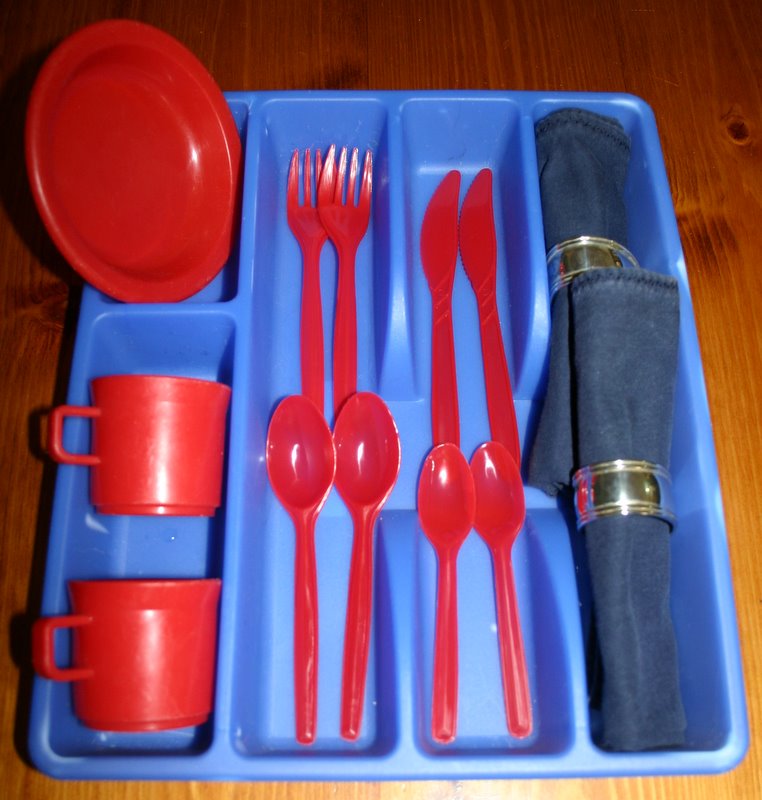
Learning to set the table is a household chore for us and learned very easily by actually doing it! Little ones however find it lots of fun to practise this skill with a couple of teddies and some play food. Provide 2 place mats (plastic, fabric or just a sheet of paper) with the outline of the items on them for little ones to match each item to so that they know when they have done it “properly.”
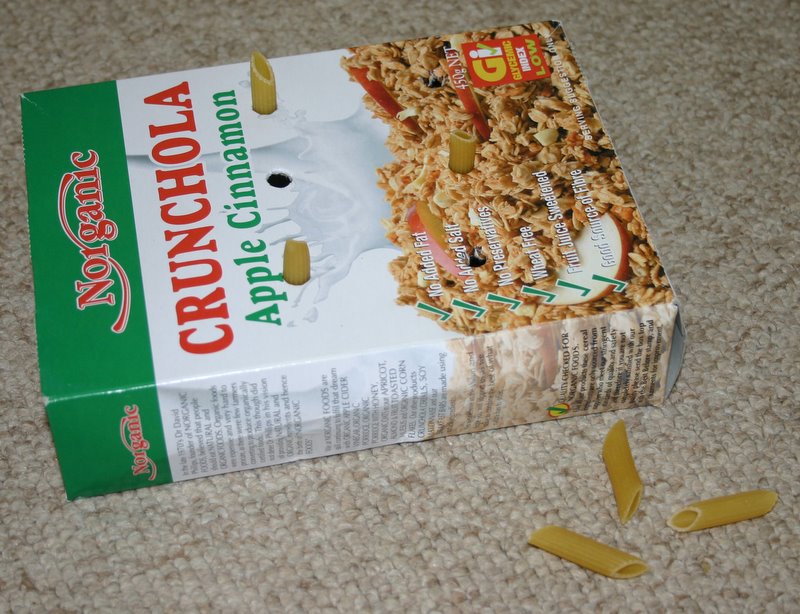
This one is for the very young. Babies do love to put things in and out of containers and if you keep changing the items and type of container, this style of activity is good for months. It is great for fine motor skills and concentration and pretty much free to make. Whip one up in just a minute or two and watch the intense concentration as they use that all important pincer grip (necessary for writing later) to grasp the end of the pasta and carefully post it into the holes. Use this activity for mat time, highchair time, table time or with straws (so they don’t eat the pasta when you are not closely supervising them) for playpen time or room time.

With all of these activities, if your child finds them too difficult and is still frustrated after you have shown them how to do it and given them some time to practice, put it away and reintroduce it in a couple of weeks or months. Many of the Montessori style activities are very developmentally based and when introduced at the right time will be stimulating and extending to a toddler, not frustrating and overly difficult.

Teaching young children to sit and concentrate for extended periods is a vital foundation for later learning and helps you as Mum to keep the house and family running as you can get your own tasks finished knowing that your little ones are happily and safely occupied with a valuable learning experience.

Emergency Visitor Scramble

s cutleryHave you ever walked around a display home or perhaps one of your friend’s homes and admired the perfectly arranged, tastefully decorated and incredibly neat rooms? On occasion I have to confess that I have wished for a house that is always “visitor ready.” With 6 homeschooled children however, the reality is that our house is functional, never filthy, but sometimes slightly (oh, ok downright) untidy.

It also seems that it is on the days when things are at their worst that the phone rings to let us know that someone is just around the corner and about to pop in for a visit. Thus, the emergency visitor scramble was born.

All the children have regular daily responsibilities (chores) and throughout the week we cycle through the main cleaning jobs so as a general rule, the house isn’t too far from presentable. We are working towards the long-term goal of fully equipping our children in all areas of responsibility relating to running a household so that by the age of 14 or so they will have all the skills involved in being able to manage their own homes well.

Because we have taken the time to train them to clean the house, organising our visitor scramble wasn’t too difficult. I simply call out “Emergency Visitor Scramble, come to Mummy!” and all the children report for duty. Knowing that the visitors are only a short time away gives us the incentive to work hard together, knowing that it will only be for a short time period.

The house is divided into zones and these areas are quickly parcelled out. We all dash like crazy to get the worst of the mess stowed and tidy before the knock sounds on the door. The little ones are paired with an older sibling or myself who give them specific small jobs to do (pick up the dinky cars) or are sent on deliveries (take the socks to the laundry basket etc.)

The toilet is checked and spot cleaned, the floors are picked up, bedroom doors shut and offending items tossed out of sight. Some families like to have a list for this, but I prefer to just look around and tackle whatever is the worst at the time. The older children who have enough initiative are sent to the most conspicuous areas with their little helpers while I direct the others.

Another strategy that we employ on a regular basis is a whole family house sweep. It works very similarly to the scramble, except instead of everyone heading off in different directions to try to cover the whole house, we all start in one room and work together until it is done before moving to the next area and so on throughout the house. This is a 5 or 10 minute per room tidy-up, not a deep clean and Mum and Dad are the directors. The eldest children who have enough initiative to handle it choose what they will tackle in each room, while little ones are given specific instructions to complete small bite-sized tasks. The adults do whatever else needs to be done while marshalling the troops.

We now can transform a pigsty into a reasonably tidy looking house in a very short time. All that’s left to do is throw a brush through my hair and fling that door open with a cheery smile and the visitors are none the wiser!

Related posts you might like:

making pack away time fun

cleaning bedrooms

variety of chore systems

what to do with models and artwork

Easter traditions and activities for children (minus the bunny)

Easter crosses

Easter is just around the corner and Lent has already begun. It’s time to start thinking about plans for this season if you haven’t already. I want to make more of Easter this year, considering the death and resurrection of Jesus is so important to the Christian faith, and yet Easter seems to creep up on me and not get the attention it deserves.

I have been going back over last years’ ideas (here and here) and pinning a bunch of new ideas to try on my Easter pinboard on Pinterest. (If you haven’t discovered Pinterest yet it’s a great way to keep track of all those wonderful ideas you find on the web and want to get around to doing “some day.”)

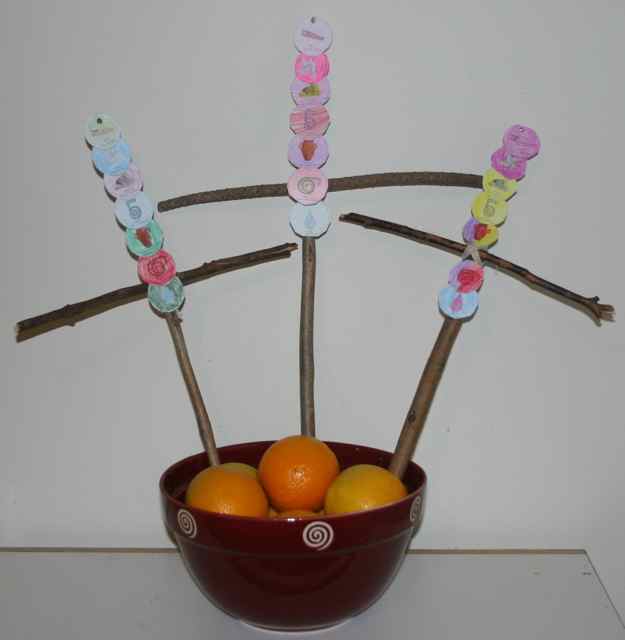
The children are colouring one symbol a day during Lent for our wooden cross “Jesus trees” and reading the related story from a fairly detailed children’s bible. I bought all the stuff to make a living hill of Calvary last year and never got it started so that is next on the plan this year. I want to make the tomb cookies with the really cool story …. and the list goes on.

Oh, and just in case you are wondering, the oranges in the photo above have no symbolism whatsoever – they just hold up the crosses really well 😉

What are you doing with your children this year?

Buffet training

Something we try to remember as parents is not to expect our children to do anything while out that they do not do at home. For example, if my toddlers are unable to sit at the table for any length of time after a meal, I wouldn’t ask them to do so in a restaurant. We think it is unfair to expect something from them that we have not trained them to be able to do in the first place.

Asher in his highchair

With long-term goals in mind, we include highchair time as a regular part of our daily routine and our little ones are used to happily staying in their highchairs after meals with a couple of small activities to play with for a reasonable amount of time. We can then go to a restaurant or meeting and set them up with something to do and know that they will be happy to sit for quite a while without expecting to get straight down. At home, it means that I have time to finish cleaning up the table and kitchen and leave the area without having a trail of mess that I need to come back to later.

A sitting up on the mat

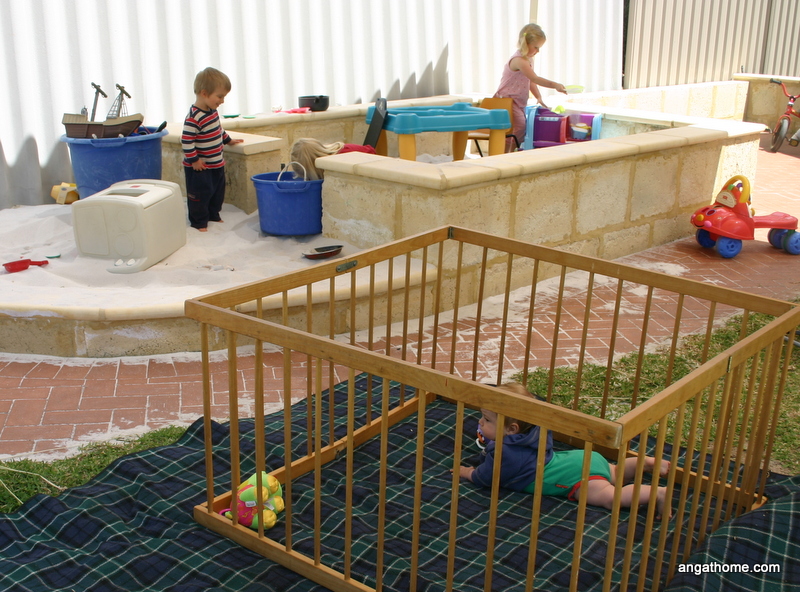
There are times when we visit others or find ourselves in a situation where there are just too many tempting items for the baby to get into. A young child will only stay in your arms for so long! Mat time training can help here. See introducing mat time and mat time on the go for ideas and explanations. Using a partacot (portable crib) as a playpen can also work well for those china filled houses. (See also starting late.)

Take a look around your table during a meal. If visitors were present, would you be embarrassed? Table etiquette and manners are something we need to go over and over (sigh..) but one strategy that has really helped us is the “3 warning” system.

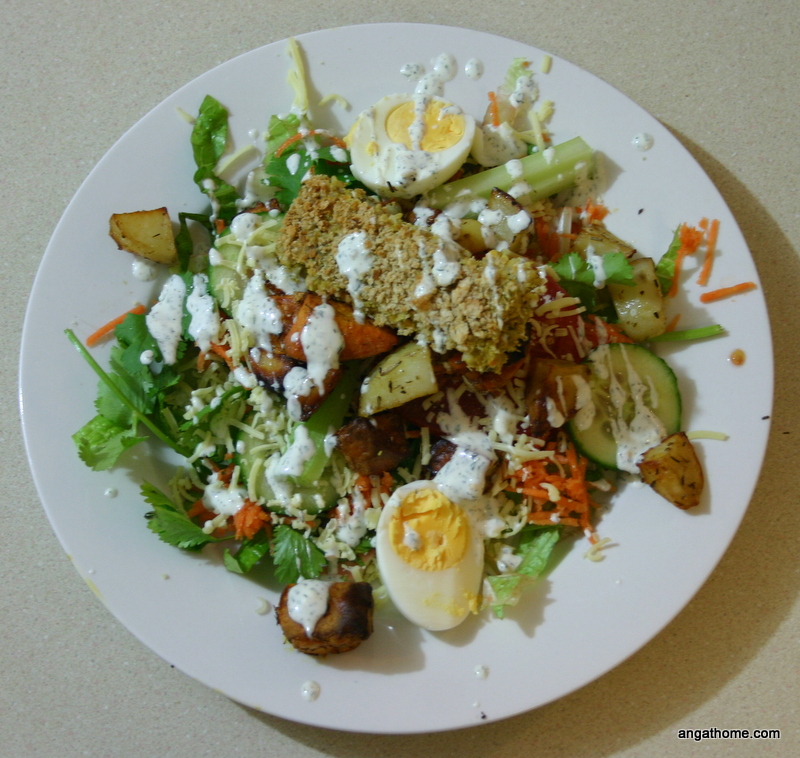
all in salad 1

We occasionally hold “buffet training” evenings. They are great for a family night activity and really very simple. All we do is put out a whole array of food on the kitchen bench in lots of bowls and have the children move along and serve themselves in the same way they would do at a buffet. We discuss etiquette at the same time and add our own rules to make it work for a home dinner. (For example, “You may skip over no more than 3 of the dishes” to ensure that the tomato haters are satisfied but the vegetable phobic children still end up with a few specimens of the veggie kind on their plate.) The children need to know how to take an appropriate amount, avoid wastage, to think of others coming behind them, use the tongs, general manners and so on.

waitressing

Hosting high teas and other special events in our home and having the older children act as greeters, seaters, waiters and waitresses is also something they love and helps them to learn how to show hospitality and serve others by making people feel welcome and comfortable.

backyard boundaries

Have you ever had a visitor’s child waltz through your house as if they owned it, helping themselves to whatever they like? If children are used to having complete freedom in their own home to go wherever they like, touch what they like and do what they like, then don’t be surprised if they do the same while they are out.

As well as having a routine in place, limiting inappropriate choices and providing verbal, physical or visual barriers in our own home, when we arrive at someone’s house or a play area, one of the first things we do is identify the physical boundaries for the children.

We also spend a little time on the way there discussing the kinds of situations they may face and have the older children remind the younger ones of the manners they need to remember (a good review for them as well!)

A with teddy

To avoid having young children who will only sleep in their own cots at home, we occasionally put them to sleep in a variety of situations; in the portacot in another room, in the pram, on a sibling’s bed, in our big bed, at Grandparentss house for an overnight etc. While they never sleep as well when we are out, at least they will have part of a nap.

While far from perfect, the children are slowly growing and developing into young adults that we hope will be a blessing to us and to others.

Homeschooling with toddlers and preschoolers

Twin's tot school activities

Whether you like to call them Montessori tray activities, tot school, preschool, workboxes, workjobs, shoebox tasks or Ziploc bag activities, providing younger siblings with engaging, educational and worthwhile tasks to do while you homeschool older siblings is vital for a smooth day with well occupied children.

While you can get some schooling done while little ones are napping, I prefer to get the bulk of our formal schooling completed as early in the day as possible when the children (and I) are freshest. Last year we had around an hour while the younger ones were in room time (playpen time for littlies) and we could also use mat time (or blanket time.) Now that we have older children though, this is not long enough to complete all of their workload and the twins are turning 3 so a new era has dawned!

The twins will be “starting school” with the big kids. They will now be included in our morning circle time, followed by table activities before they go off to room time. The list of possible table activity ideas is almost endless but our “school” trays will be more Montessori in style.

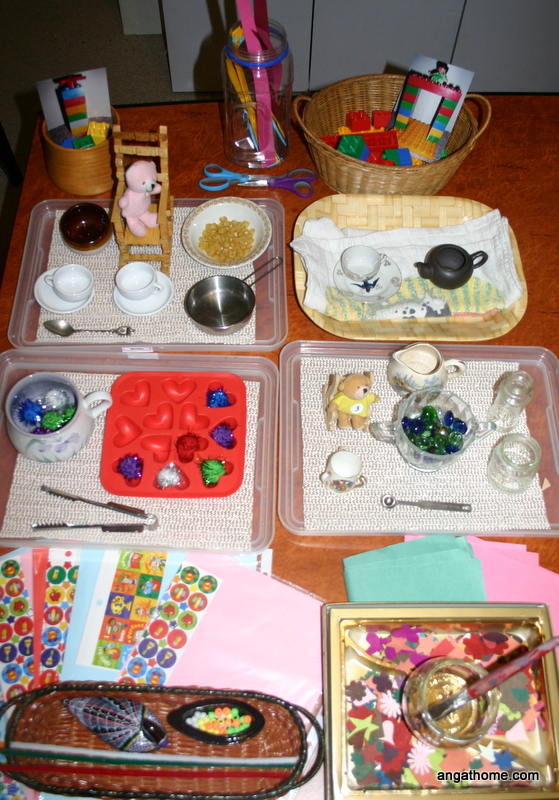
As I have done in the past, I have chosen a list of categories for each tray and put one example of each category out on the shelf. When it comes time to update the trays in a couple of weeks as interest declines, I will simply swap out the materials but keep the type of activity the same. (See starting out.) This term our trays are gluing, cutting, stickers and drawing, tong transfer, spooning/teddy play, scooping/teddy play, threading. Duplo copying and water pouring. 

The best thing about this year’s preparation is that in the past I have taken photographs of all our tray activities along the way. This meant that I could simply hand the older children a couple each and ask them to go and get everything in the photo and assemble the activity. I pointed out that this was an opportunity to bless their little brother and sister. They quite enjoyed doing it, especially as I gave them latitude to change the activities a little with different pretty pots and equipment to suit their own tastes. In about an hour we had a whole term worth of trays set up and ready to go. (Plus the extra half hour to put away all the mess that the children created as they were collecting the gear but I wont mention that!)

Our “Names of Jesus” Jesse Tree

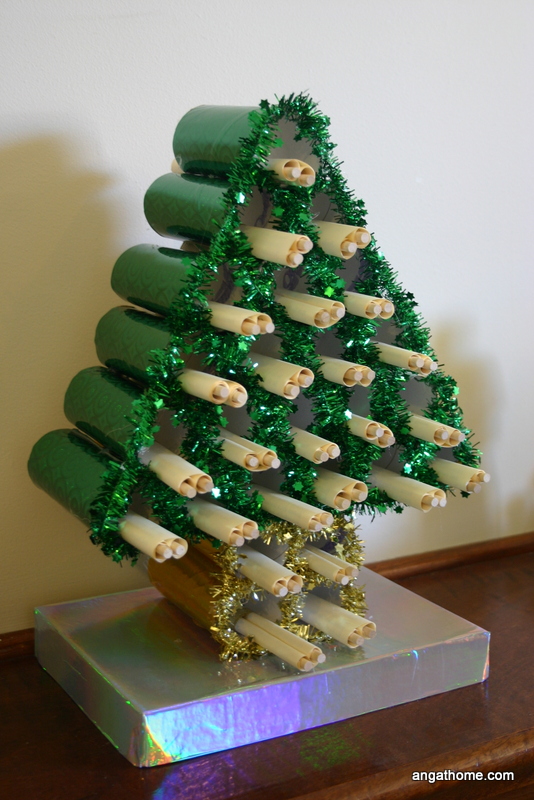
Bible reading scrolls to go with each name of Jesus.

Bible reading scrolls to go with each name of Jesus.

If you are looking for different ideas for a Christmas Jesse tree, family devotions, family alter, bible study or daily circle time, then studying some of the many names of Jesus with your children can be a great learning experience.

You can make it as simple or elaborate as you like. We used this idea for our Christmas Jesse tree this year so I prepared everything ahead of time; including printing out the bible readings and making small scrolls with them (see photo above) and making or buying a symbol for each name of Jesus and wrapping them all individually.

Wrapped Jesse tree symbols

Wrapped Jesse tree symbols

Each morning during our family circle time, one child found the bible reading scroll of the day and wrapped symbol. As we read through the verses, everyone listened carefully and raised their hand as soon as they heard a name of Jesus. (Some readings had more than one in them.) After finishing the scroll they guessed which name we were looking at today and what the symbol could be, briefly discussed what that means to us or what it teaches us about Jesus and then opened the symbol to hang onto the Jesse tree.

The names, symbols and bible readings that we used are photographed below. A few of the readings do not have the name in them directly, but add related information and there are probably many more that could be added.

J tree 1st born

1. Firstborn of every creature (Colossians 1:15-20 1 Corinthians 3:9-15 ESV) {This is supposed to be a race ribbon for first place. A plastic trophy or medal would work well.}

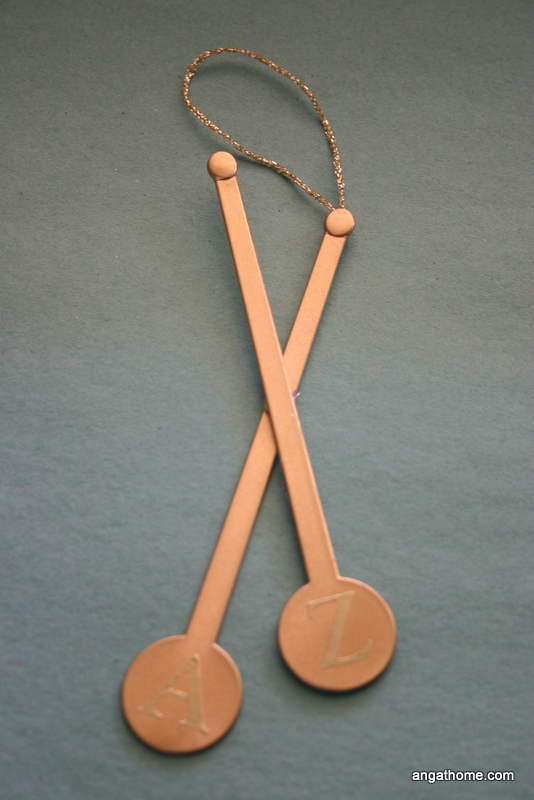
Alpha and Omega

2. Alpha and Omega (Revelation 1:7-8 Revelation 1:12-18 Revelation 21:5-7 Revelation 22:12-14 ESV) {These are swizzle sticks – just an interesting way to display the A and Z as the English equivalent of alpha and omega.}

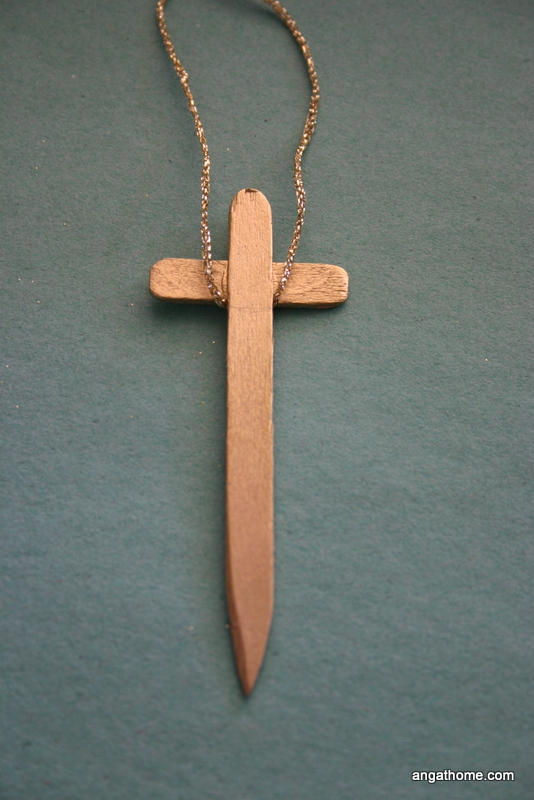
Mighty Warrior

3. Mighty God (Isaiah 9:6 Isaiah 63:1 Deuteronomy 10:17 Job 36:5 ESV) {Popsicle sticks shaped and glued to make a sword.}

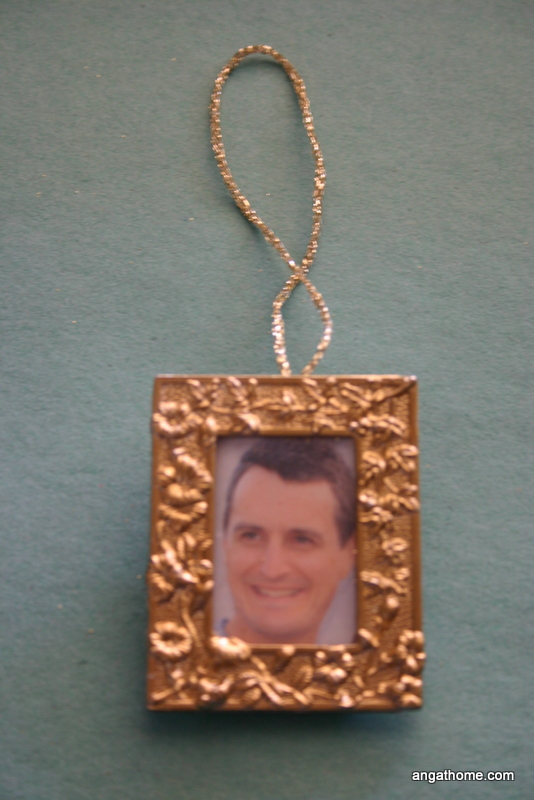
Everlasting Father

4. Everlasting Father (Isaiah 9:6 Hebrews 1:8-12 ESV) {This is our earthly Father}

Prince of Peace
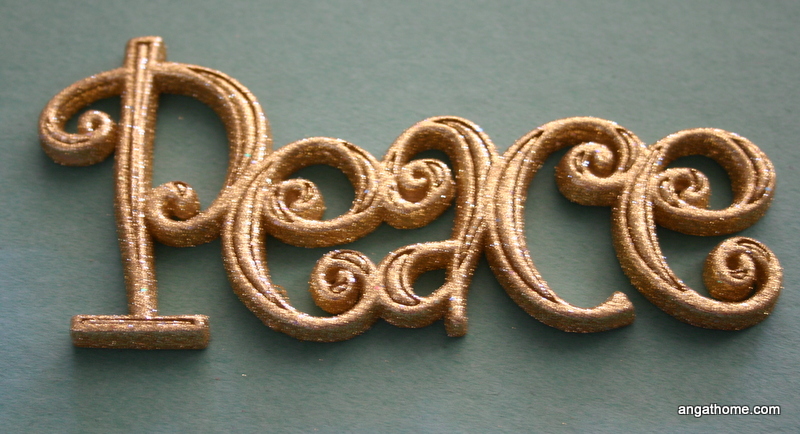
5. Prince of Peace (Isaiah 9:6 Ephesians 2:13-17 ESV) {Peace Christmas decoration.}

Unspeakable Gift
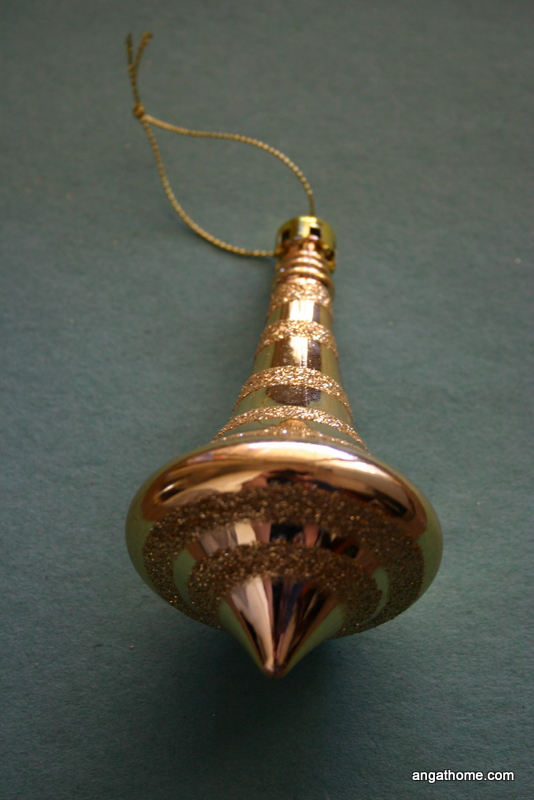
6. Unspeakable Gift (2 Corinthians 9:10-15 John 4:7-10 ESV) {Another Christmas decoration.}

Lamb of God

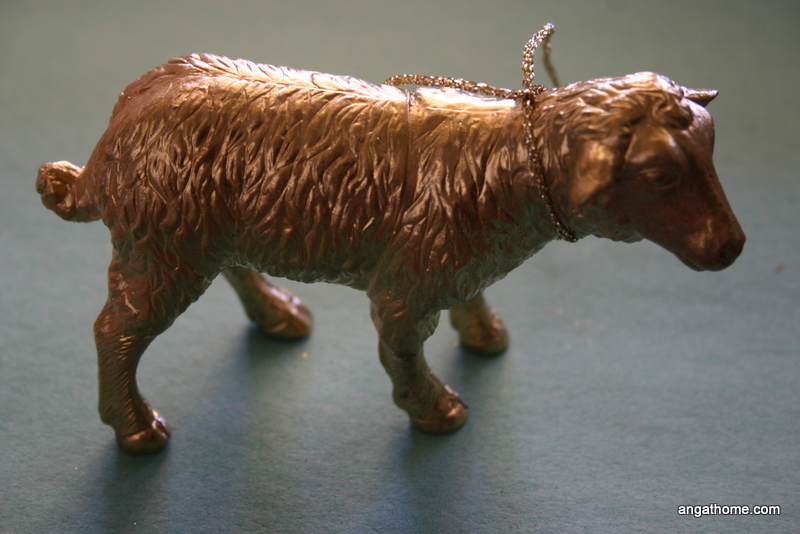
7. Lamb of God (John 1:29-36 Hebrews 7:27 1 Peter 1:14-19 Revelation 5:6-14 ESV) {Plastic lamb.}

Shepherd

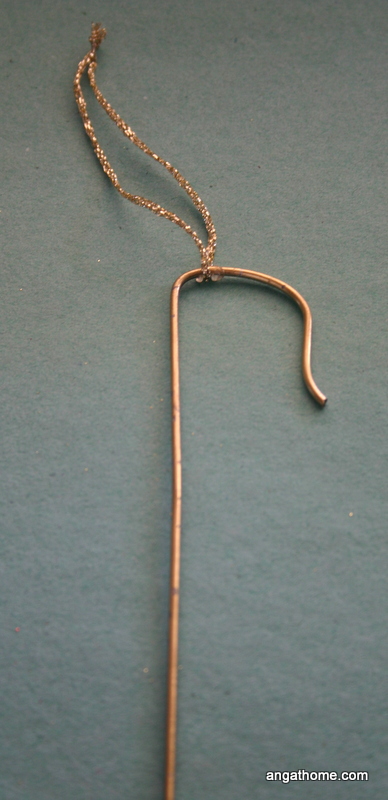
8. Good Shepherd  (Psalm 23 Matthew 2:5-6 John 10:1-18 Revelation 7:17 ESV) {This is the corner piece from a metal coat hanger – a small tent peg would work just as well.}

Jesus is born Bethlehem star

9. Bright and Morning Star (Revelation 22:14-17 2 Peter 1:17-19 ESV) {Our usual tree topper}

Anointed One

10. The Christ/Anointed One/ Messiah (Matthew 16:13-17 Acts 4:25-28 Acts 10:37-38 ESV) {We thought this ornament looked like a jar of anointing oil.}

Holy

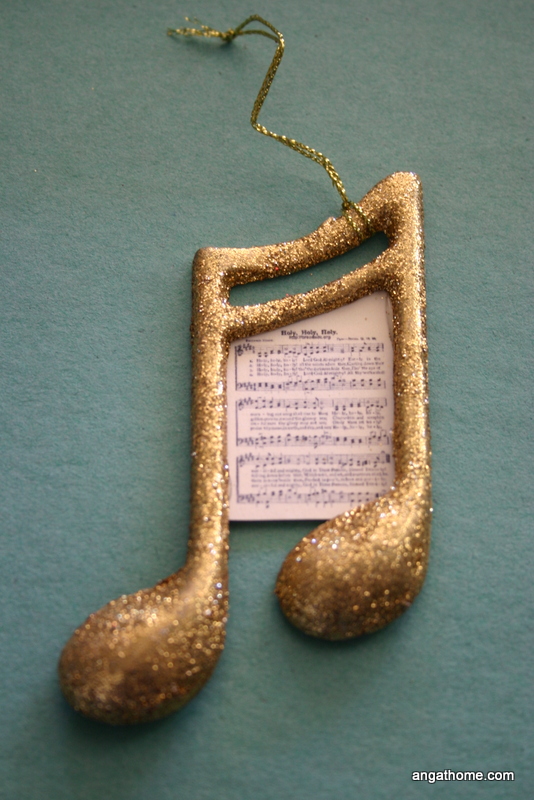
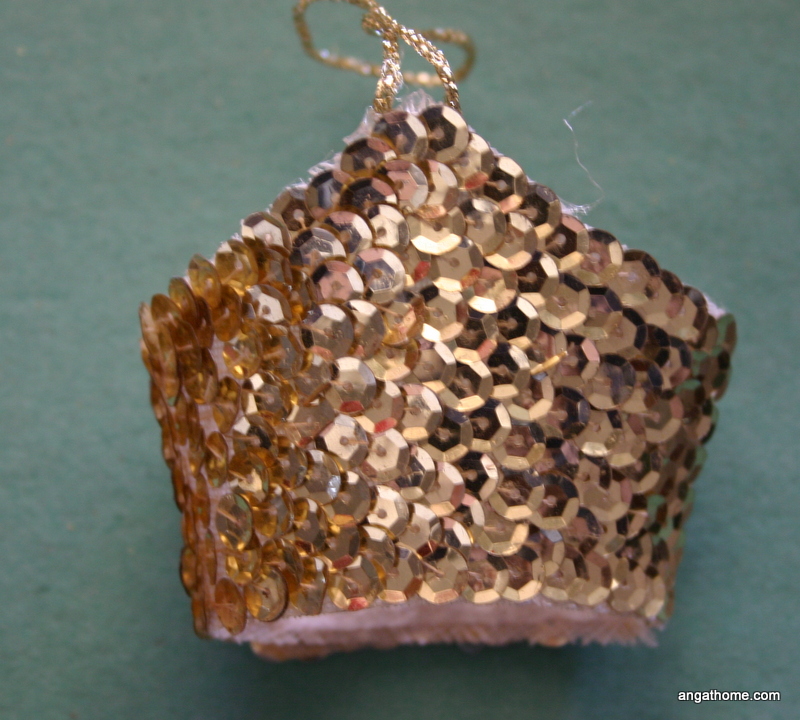
11. Holy One (Mark 1:21-26 Acts 3:11-16 ESV) {The music is the hymn Holy Holy Holy. I googled images for “holy holy holy” and several choices came up. I just dropped it into a word document so I could size it to fit the music note ornament.}

Light of the World

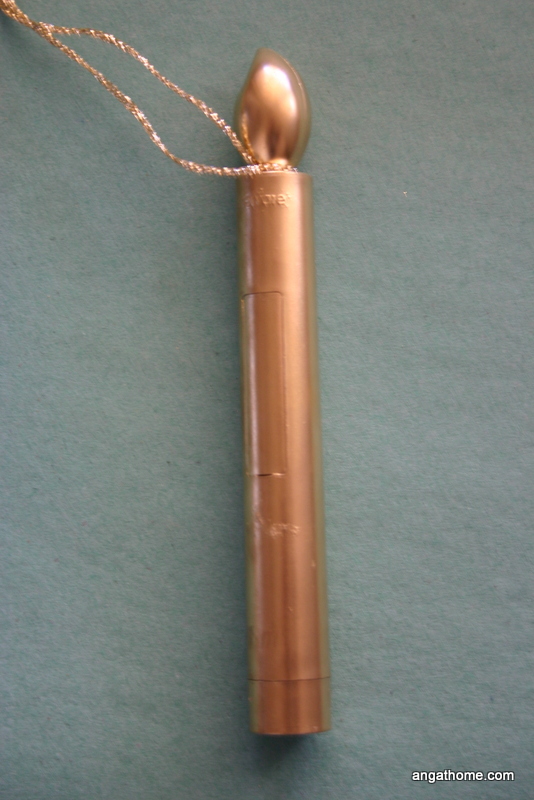
12. Light of the World (Revelation 21:22-27 John 8:12 John 12:35-36 ESV) {They give these battery operated candles out every year at carols in the park events.}

The Word
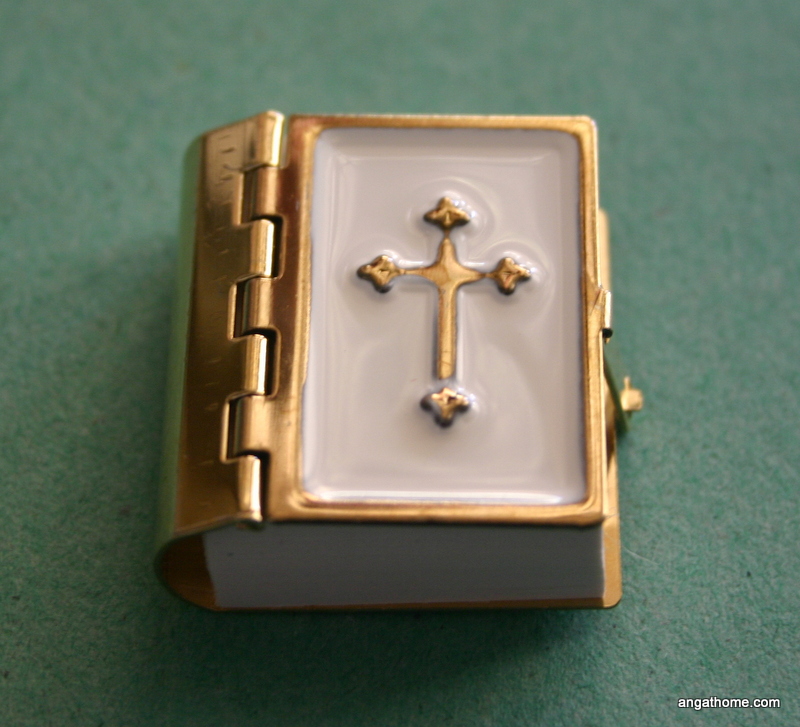
13. The Word and Wonderful Counsellor (John 1:1-5 Revelation 19:11-13 Isaiah 9:6 ESV) {This is a dolls house miniature. I had to buy this online and it was a little expensive but we all love it. It actually has the new testament printed inside and you can read it with a magnifying glass.}

Servant

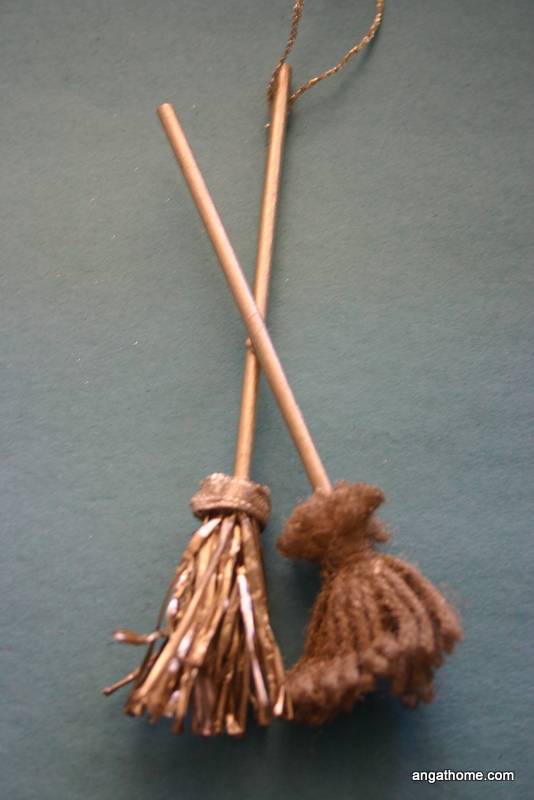
14. Servant (Matthew 12:17-18 Mark 10:43-45 Acts 3:26 Philippians 2:3-11 ESV) {Small craft wooden dowels with ricrac hot glued onto one and wool on the other- a servant’s tools.}

King of Kings

15. King of Kings Lord of Lords (Isaiah 33:22 Zechariah 9:9 Zechariah 14:16 Revelation 19:11-16 ESV) {This came off a broken Princess headband.}

The Vine
16. Vine (John 15:1-11 ESV) {A regular Christmas ornament.}

Lilly

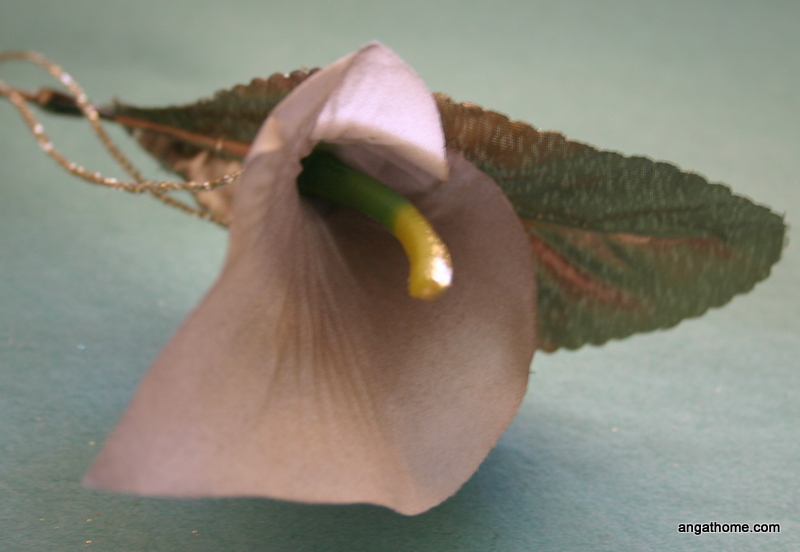
17A. Lily of the Valley (Song of Solomon 2:1 ESV) {An artificial lily flower.} We did two symbols today because there is only one small reading for the lily.

The Door

17B Door [of the sheepfold] (John 10:7-10 John 14:6-7 Psalm 118:19-21 ESV) {These craft sticks came with the small dowels I used for the scrolls. Regular popsicle sticks would do nicely.}

Friend

18. Friend (Matthew 11:16-19 James 4:4 ESV) {We talk about their siblings being their best friends regularly.}

Saviour

19. Saviour (Luke 2:8-14 John 3:16 Acts 4:12 John 4:39-42 Hebrews 7:27 ESV) {Another regular ornament.}

Ancient of Days

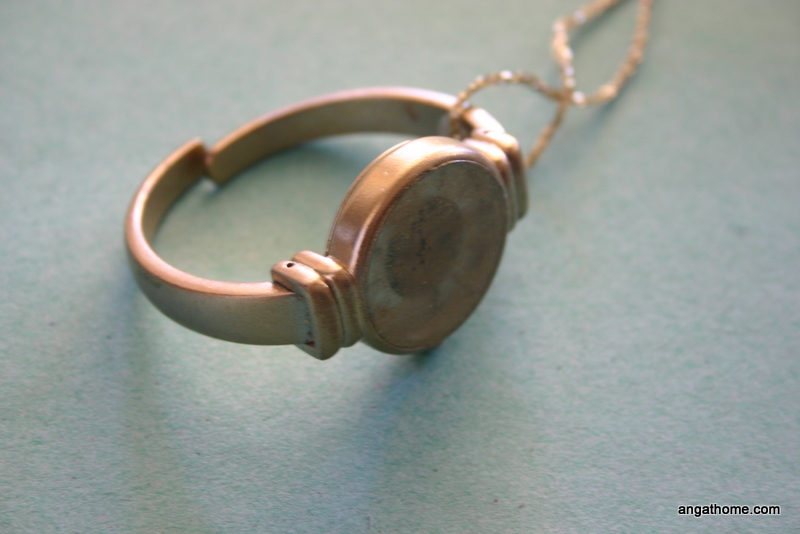
20. Ancient of Days (Psalm 102:25-27 Daniel 7:9-10 ESV) {An old broken watch.}

Branch/Stump/Root of Jesse

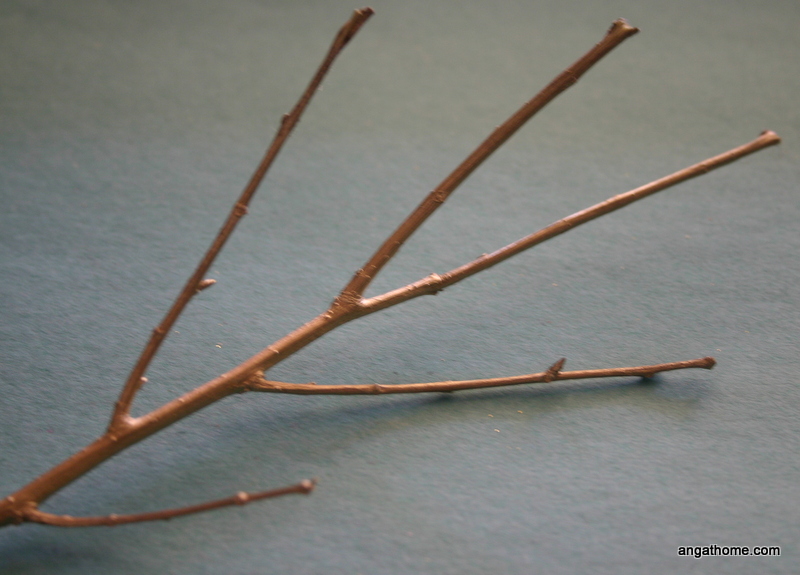
21. Branch/Flower of Jesse (Isaiah 11:1-2 Jeremiah 23:5-6 Romans 15:12-13 ESV) {A twig from the backyard.}

The Rock

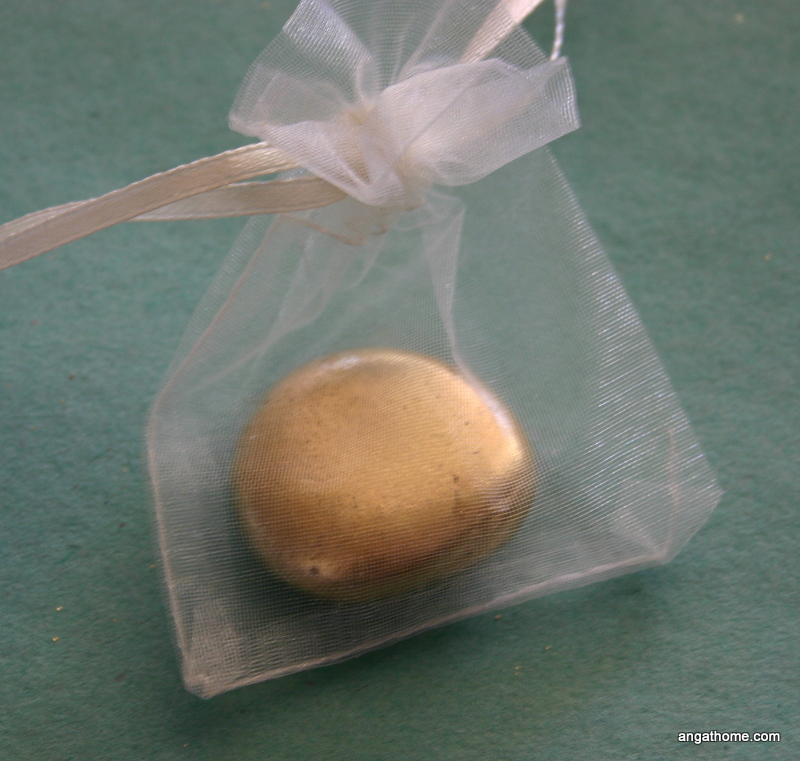
22. Rock & Cornerstone (Psalm 62:5-7 Ephesians 2:18-22 ESV) {Another backyard find in a bag so we can hang it.}

Lion of Judah
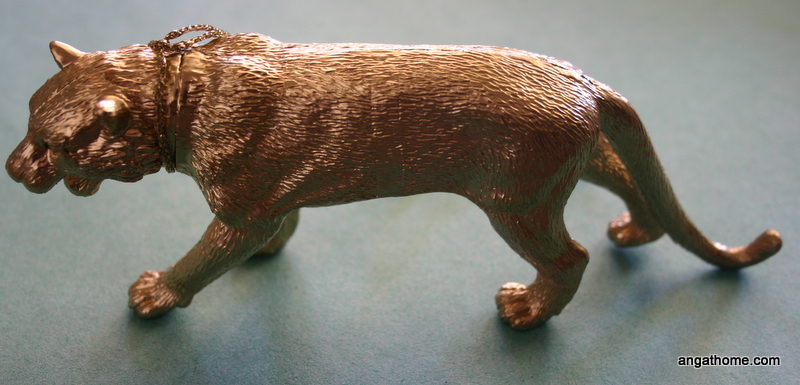
23. Lion of Judah (Revelation 5:1-5 ESV) {This is actually a plastic tiger and the children keep insisting you can tell the difference!}

Faithful and True (The reading talks about Jesus returning on a white horse)

24. Faithful and True (Revelation 3:14-16 Revelation 19:11-12 ESV) {This verse talks about Jesus riding on a white horse.}

Baby

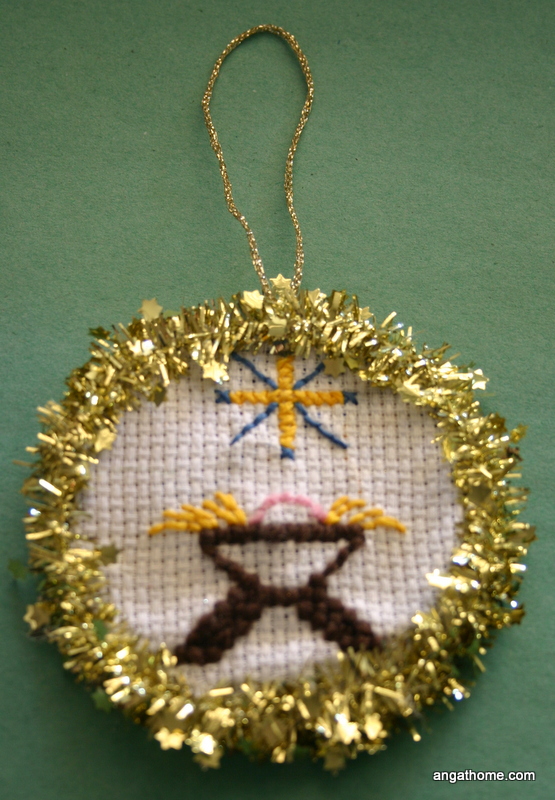
25. Baby/Son of God/Son of Man (Luke 2:8-18 ESV) {From last year – a cross-stitch of Jesus in the manger.}

Other posts you may like:

Our Jesse Tree (traditional style)

Advent and Christmas traditions

Christian families and Father Christmas


Advent and Christmas Traditions 2012

3 decorating tree

This year, like every year, Christmas time has been hectic but filled with fun. We have endeavoured to keep up the many traditions started in past years and even added a couple of new ones I have gathered from other Mums to add to our family repertoire. Here is a mega list of all of the ideas, including those we do ourselves and some we like but simply cannot fit it in just now.

Jesse tree readings

This pretty tree is made from toilet rolls covered in contact paper and hot glued together. We use it to keep the scrolls with our daily bible readings to go along with the Jesse tree symbols.

  • This year our Jesse tree is focussing on the many names of Jesus, rather than the more traditional Jesse tree readings we did last year. Each morning I read the bible reading from the scrolls while the children listen carefully to hear the name of Jesus contained within the reading. They then try to guess what the symbol will be and take turns to open the wrapped symbols to add to the Jesse tree. (Last year’s symbols.)
  • Each morning the children take turns to open a door on our wooden advent calendar. Each little box holds a character from the nativity and occasionally there is a surprise treat to share. The characters are magnetic and are added to the scene above the boxes to eventually complete the nativity story. The child opening the box that day is allowed to arrange the characters however they wish, which leads to some interesting nativity set-ups!

Jotham's Journey: A Storybook for Advent

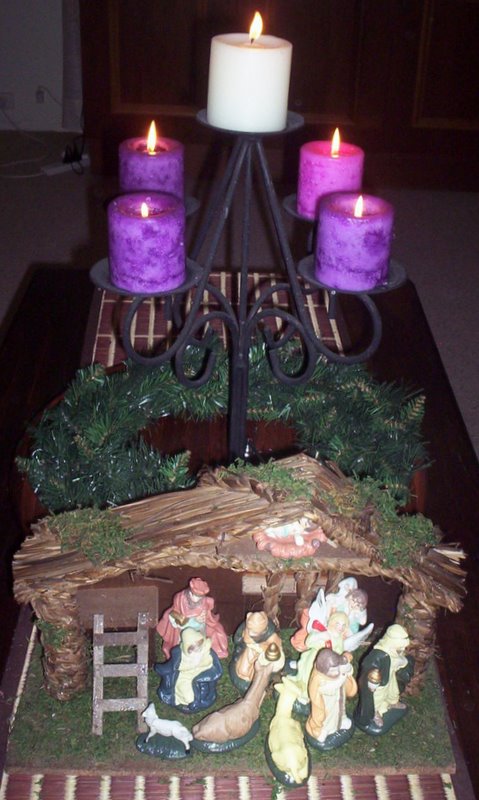
  • Every evening the advent wreath and candles are lit while we read our advent story. This year it is Jotham’s Journey. It is written in small instalments with the story of Jesus’ birth as a background to fictional events and includes a short life lesson following each day’s reading. Each evening finishes on a cliff-hanger that leaves the children begging for more.
advent candles and nativity

Our advent wreath and one of the nativity sets.

  • We have several nativity scenes set out for little ones to play with; a china set for the older children and fabric and wooden sets for the little ones. We plan to add to these each year in the after Christmas sales. In the after dinner rush to get PJ’s on and teeth brushed and be ready for our Advent story, those who are done play quietly with the nativity sets or browse through the Christmas books until the whole family is together. The advent candles are lit and tree lights turned on while we cuddle up and read together.
  • Christmas worship music and carols are playing in the house often throughout December, especially during craft activities.
  • We attend a Carols in the Park each year with candles, animal rides, picnic dinner, snacks, deck chairs & blankets. Singing songs about the birth of Jesus under the stars with family and friends is one of the highlights of the season for the children.

rd to bethlehem camels

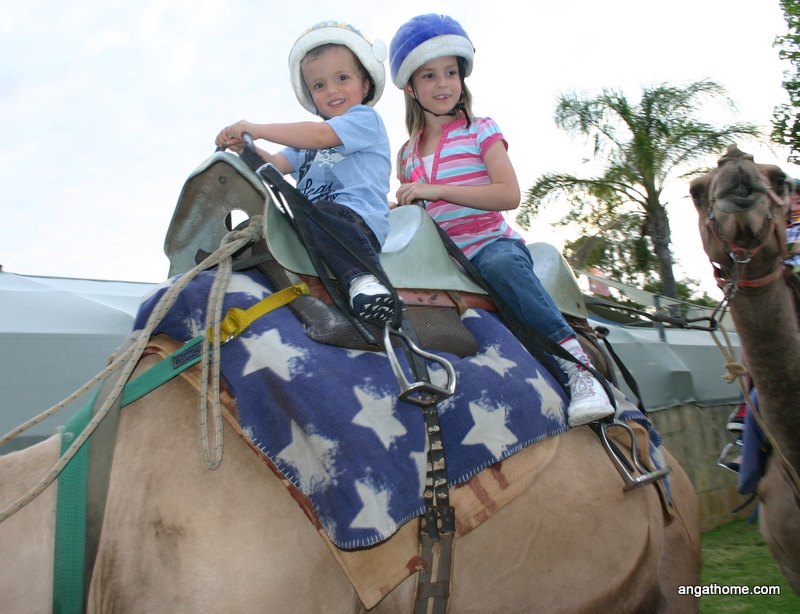
  • The Road to Bethlehem is another evening event we now attend yearly. Put on by one of the local churches, it is a walking tour/play/production depicting the biblical Christmas story. It is extremely well done and it never ceases to amaze us that they have a brand new baby in it every year. The camel rides are a highlight too.
  • I am gradually building up our set of Christmas books and now have quite a stack wrapped and under the tree for our Christmas picture book advent. The children take turns choosing one story to unwrap and read each day. We also have a couple of Christmas videos for those afternoons following late night activities when more down-time than usual is called for.
  • Each year we look for ways to give “gifts for Jesus” by blessing others. Church Christmas hampers, shoe boxes for Samaritan’s Purse Operation Christmas Child, choosing a Compassion gift of a water well etc. or giving gifts to local charities for underprivileged children are some of the ways we have done this.
  • Friends of ours like to get a group together (friends/neighbours, Mothers and daughters etc) to make gingerbread houses. They buy kits from large department stores/Ikea etc plus bulk lolly decorations. This year we are experimenting with making our gingerbread house kit into a nativity scene instead. It remains to be seen whether it will be a success or not!
gingerbread house

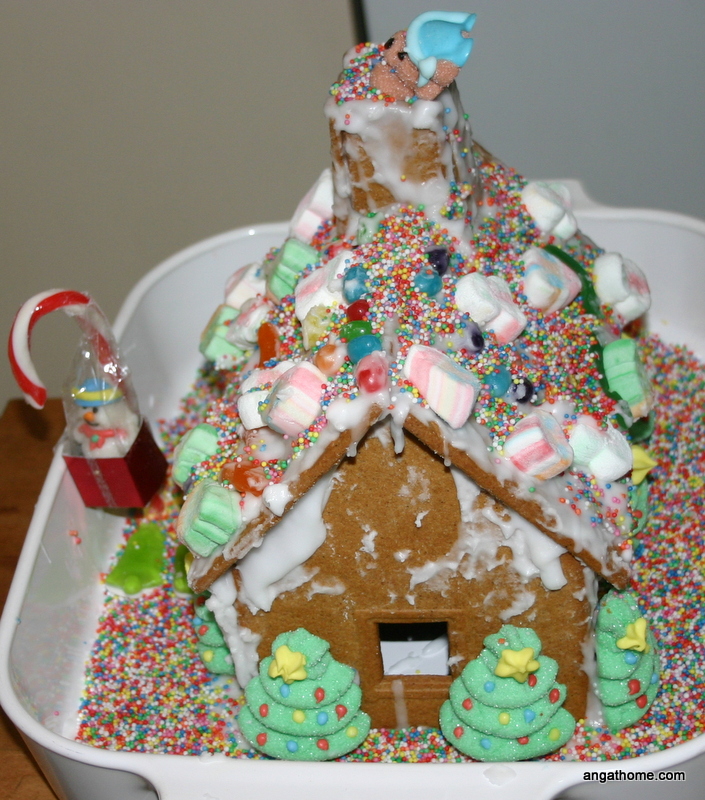
Last year’s gingerbread house. We are given a lot of lollies around Christmas and in an effort to avoid the sugar, we saved them up and used them to decorate the gingerbread house we were given as a gift. We took it with us to contribute to Christmas day lunch and share with extended family. It didn’t come home again!

  • Perhaps the children (of one family or extended family) could rehearse and put on a nativity play for Daddy and extended family. Jesus’ Christmas Party by Nicholas Allan lends itself well to a simple yet humorous retelling. Those who play instruments could perform or any other talent (serious or humorous) could be showcased for the family’s enjoyment.
  • Take a drive around your city to look at Christmas lights. Wear PJ’s, play carols on the stereo and take the Grandparents along. If 2 cars are needed, change combinations after each stop and talk to each other through walkie-talkies. Stop for a treat on the way or take hot chocolate in a thermos for the road. Buy disposable coffee cups with fitted lids for this purpose.
  • Send out Christmas cards. Perhaps involve the children in making these.  Maybe a photographic record of the years’ highlights with descriptions could be included, along with a hand-written note to personalise each one.
  • Make something for the neighbours; perhaps Christmas puddings, crafts, jam, rocky road or whatever your speciality. We like to include a flyer of Christmas day service times from our church and a small tract explaining the Christmas message and walk up and down the length of our street delivering them. This year we are making bead angel decorations.
  • Knock & run nativity. The characters from the nativity set are delivered to a neighbour one at a time anonymously in the lead up to Christmas day with baby Jesus arriving on Christmas morning.
decorating the tree 2012

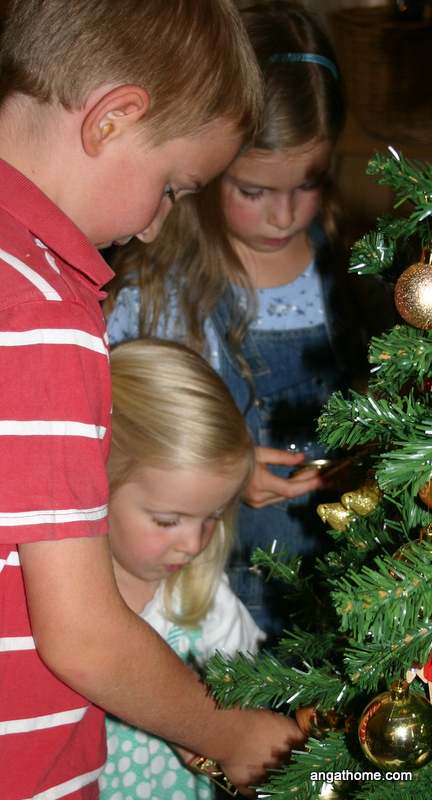
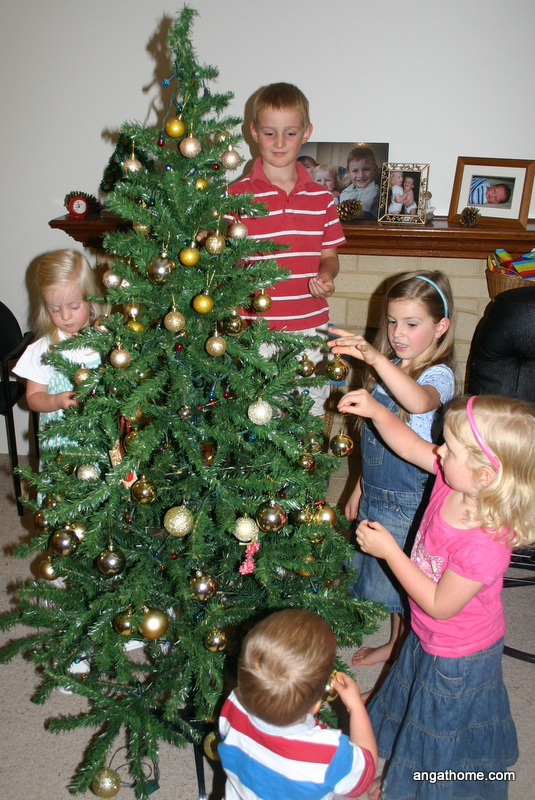
The group effort turned out a surprisingly even tree. Only one or two branches had massive overloading and they were surreptitiously corrected by the eldest while little ones were busy collecting the next handful of decorations.

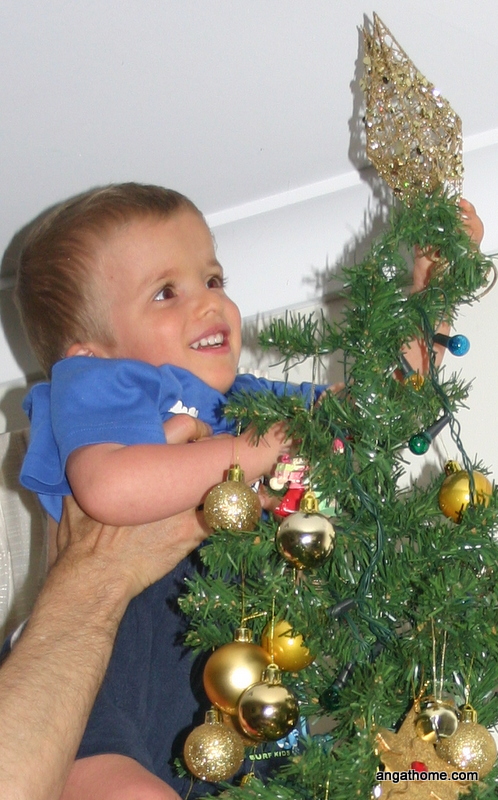
  • The tree is decorated on the 1st of December, with the children arranging it as they please while Mum and Dad take video and photograph the event. We also take individual and group photos of the Children in front of the tree for their own photo album memories and also for gifts, cards and other crafts. Christmas carols play in the background and the topping of the tree is saved for the youngest child who is able. Dad lifts them up while Mum takes the pics.
J star on tree

Being a twin had us wondering if the “older” brother would miss out. His sister was technically the youngest last year and topped the tree. Luckily for him, the baby is not quite up to decorating just yet so he had his turn after all.

  • Some families purchase 1 new decoration for each child every Christmas and eventually give them to the children when they leave home to start their own Christmas traditions. The decorations may also symbolise something of significance from the year such as an accomplishment, interest or character trait.
  • Christmas photos of the children can also be used for mini picture ornament frames or printed in black and white on clear vellum and placed inside hollow glass or plastic baubles.
25 days of Christmas crafts

25 crafts of Christmas

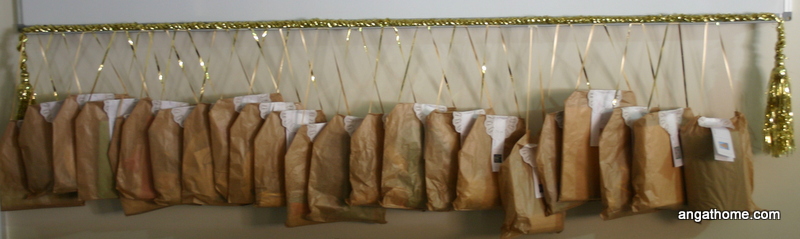
  • Craft advent activities mean that I get around to doing all those cute Christmas crafts the kids love.This year I prepared everything needed for each craft and placed it inside a brown paper bag with the instructions on the top. When craft time rolls around, all we need to do is pull down a bag and gather a couple of extra items like scissors and tape and we are ready to go. 25 activities was perhaps a little ambitious as we are a couple behind, but the kids are loving it. Next year I plan to link the crafts to the Jesse tree readings.
blowing candles

One of our helpful “staff” members.

  • For the second year, we held a high tea for older ladies from church just to bless them and thank them. All the fancy finger-food is prepared ahead and frozen to make it manageable on the day. The older children act as greeters and wait staff on the day and love every minute of it. Of course they get a lot of attention and fuss made of them so why wouldn’t they!
  • When we were younger, our Grandparents slept over on Christmas eve so that they are there for the early morning festivities. Some families like to open one gift on Christmas eve or one gift only on Christmas morning before heading off to church. A new pair of PJ’s is a nice Christmas eve gift and means that the children all look good for Christmas morning photos. Family traditions have been built around particular videos being watched on Christmas eve or perhaps a games night with hot chocolate is something your family would enjoy. Our church now holds services on Christmas eve so that families who have very busy Christmas days can attend the night before.
  • As Christmas cards arrive throughout December, place them in a little basket on the table and read them out before praying for the senders of the latest arrival that night after dinner.
  • If you know of people with nowhere to go, you could invite them to participate on your Christmas celebrations. If you don’t have much planned, why not volunteer at a soup kitchen or one of the charity run Christmas lunches held around the city.
  • In the past we have lucky dipped a name of a family member to make a Christmas gift for, rather than purchasing. Other years we have purchased only for the children, rather than the adults. Choosing one family gift for each family is another idea. (Tickets to a water playground with toys and snacks to share together, icecream Sunday or hot chocolate packs, adults & kids DVD with snacks etc.) This year we gave some families a set of our craft advent bags before Christmas as their gift.
  • The Mummy & Daddy shop is open for business during December for sibling gifts. (Full explanation here.)
  • On Christmas day itself, we start the morning with our final advent reading and prayer. Later in the day we may have a birthday cake and sing happy birthday to Jesus.
  • We try to spend some time in the lead-up to Christmas day role-playing & discussing gift receiving etiquette. (See “Receiving Gifts, Thankfulness and Good Manners”.) We discuss and act out scenarios covering what to do if you already have the same item, comments children can say to the gift giver once the present is opened, the importance of being truthful whilst respecting the thought, time, money and effort that the giver has gone to in order to give them their gifts, tactful ways to respond when the gift is not something they like, want or need & guarding their facial expressions when they see the gift for the first time.
  • One side of the family like to give out the gifts at the Christmas day celebrations to one person at a time while everyone else sits and enjoys seeing what has been chosen. One person, often Grandpa,  hands out the gifts to the youngest children first and works up by age. This means that the littlest ones can quietly play with their gifts if watching for the duration is just too much. The children sit on Grandpa’s knee to open the gifts while we all watch.
  • A new idea we have heard this year to help set limits on the amount we buy for our own children is to model our spending on the 3 wise men; gold (bigger/want) myrrh (something to wear), frankincense (spiritual) or perhaps this little poem; Something you need, something you want and something to read.
  • A friend of ours puts tags on the gifts under the tree in code so that the children can’t figure out who’s is who’s or what they are getting ahead of time. That, plus not putting the gifts under the tree until Christmas eve keeps everything a surprise. In the morning, part of the fun is working out who gets what gift.
  • We choose not to include Santa or Father Christmas in our celebrations. Here’s why.
  • The yearly Christmas day family photo is a must with all the extended family.
  • Grandma’s fancy Christmas headgear, earrings and necklaces are becoming legendary and our children have begun to join in the fun at church with flashy headbands during Christmas services.
reindeer dessert

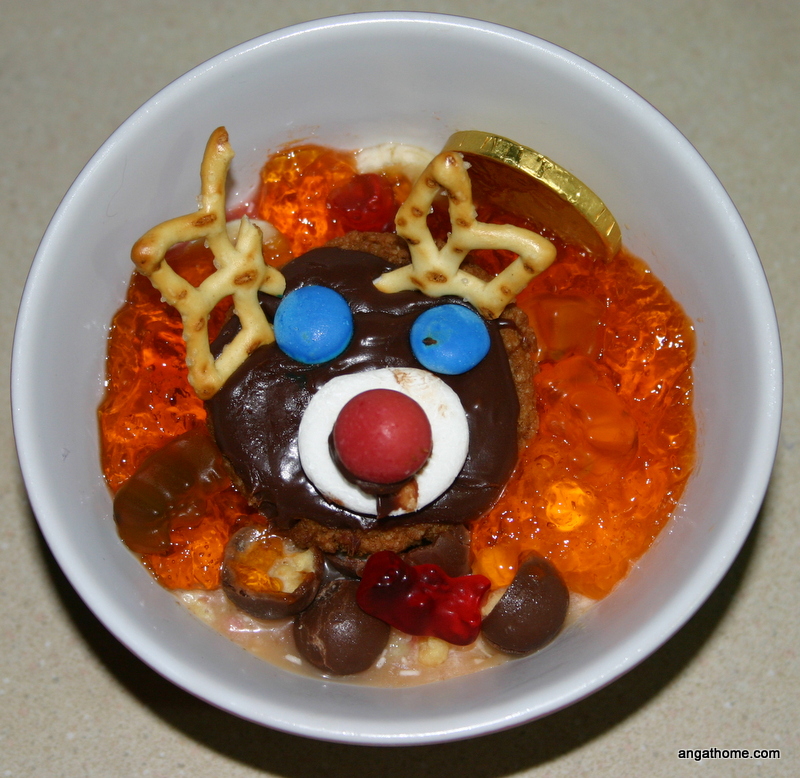
Grandma’s reindeer pudding.

  • The after lunch water pistol fight is great for a cool down on hot Christmas days, following the simple and usually outdoor lunch. Everyone pitches in to bring food and the host family rotates each year to spread the load. Bonbons, paper hats and bad jokes are part of the atmosphere and there is often goodie bags for the kids and/or a fancy treat kiddy dessert (gingerbread houses, rocky road Christmas tree cones etc.)
  • Don’t forget to collect great recipes others serve you while out and about and get family recipes traditional for Christmas time (Nanna’s fruit cake etc.) written down before it is too late. In their own handwriting, laminated or framed is extra special after they are gone.
  • Put aside a little time in the week after Christmas to have your own mini debrief. What did and didn’t work, things you want to do next year, what to change, ideas to remember etc.
  • Through the year perhaps ordering some gifts online or in the after Christmas sales will save time and money for the following year. Maybe hand-made gifts can be planned so they can be made over the course of the coming year.
  • Keep a list in your purse of items you have and a list of those you will be buying for and update it through the year as you see items on sale. Pick up your cards, wrapping and decorations on sale after Christmas.
  • Don’t forget to post thank you cards from you and the children. Home-made cards are more meaningful but do take longer. Young children can dictate for you to write.
  • Check out Pinterest and other online resources for ideas in the lead-up to next year. (My Pinterest Christmas ideas page is here.)

Filling their love tank: The 5 Love Languages of Children

Each of us expresses love to others and feels loved by others in different ways. These can be categorized into the 5 love languages of physical touch, words of affirmation, quality time, gifts and acts of service. Most of us appreciate being loved in all 5 ways, but usually one way will speak to us more strongly than the others and is known as our primary love language.

Why do we need to know? Because it is possible to be expressing your love to your child (or spouse) in one love language (usually your own) and virtually ignoring the love language that makes them feel the most loved. Many children and adults can travel through life feeling unloved, regardless of the fact that their family members do indeed love them very much, they are just not expressing it in that person’s primary love language.

To find out which is the love language of your child, spouse, loved ones or yourself, there are several online tests. Reading “The 5 Love Languages” by Gary Chapman (and the rest of the series) will give you a much greater understanding and help you to be more accurate in your diagnosis.

Online tests:

Combine these tests with your own observations of how your child expresses love to you and others, what they ask for or complain about and discussions you have with them about what makes them feel most loved. I would recommend reading the books before you start as the best way to give yourself enough information to make a more accurate assessment.

Beware of pigeon-holing children into one love language too early.  Children need to be shown love in all 5 ways and it is difficult to tell their primary love language before the age of 6 or 7. They must also learn to express all 5 love languages. Who knows what their future spouse and children’s love language will be? Teens too will often go through periods of change so look out for this.

When discipline issues arise, first check your child’s love tank. If we ensure that our children feel well-loved then some issues will disappear without any other action on our behalf. Expect children to display childish behaviours. They are sinners just like you and we shouldn’t be surprised when they mess up. Be proactive and approach correction with a plan and calmness rather than anger and withdrawal.

Love must be unconditional. When you least feel like loving them is when they most need it. When you are having one of “those” days, take a break from the routine and spend 15 minutes filling their love tanks. We may not feel loving but we can still act in a loving way.

Teach children to fill other people’s love languages. Explain how siblings and parents in your family feel loved. Brainstorm ways the children can show love to each other. Take a few minutes regularly to plan with individual children one thing they can do to show love to a family member today. Make sure you demonstrate love for your spouse in front of the children.

Here are some specific ways that parents can show love to their children in each of the 5 love languages.

Physical Touch

  • hugs, kisses, cuddles
  • hand on back or shoulders while talking, passing by or during correction
  • back rub, massages
  • sitting on lap or cuddled up close
  • carrying or piggy-backing a child to bed rather than walking
  • wrestling, sock wrestling, rough and tumble, tickles
  • bumping on the way past, covering eyes, tousling hair
  • older boys like jostling, playful punching, high 5’s, bear hugs, contact sports
  • fathers need to be careful to continue displaying appropriate physical touch to teen girls
  • family prayer time before leaving the house in the morning including physical touch and goodbye hug
  • sitting or laying together on the bed and story time with cuddles as part of a goodnight ritual
  • finding them when you arrive home and give them a hug and kiss
  • games involving touch – Ninja, footsies, handsies
  • rub down or massage after sporting activity
  • pamper time with foot washing, manicures and pedicures, hair brushing and special hair-dos
  • teens may not want open displays in front of others. They may not respond openly to your physical touch, but may still want to receive it

Avoid:

  • rough touch, harsh or irritated touching, touching in anger or hostility and physically hurrying a child along.

Words of Affirmation

  • Cheer at sports games and give verbal encouragement throughout any kind of event or performance
  • Write thank you notes, encouragement, love letters, birthday card messages with depth and meaning. Make sure Dad writes messages in birthday cards as well as Mum.
  • Let them hear you praise them to others
  • Tone of voice and eye contact is important
  • Use words of appreciation for what and who they are, as well as words of praise for what they do or achieve
  • Avoid insincere or false praise and flattery. Do not give praise that isn’t genuine or deserved
  • Praise character rather than just achievement
  • Catch your child doing good and commend them for it
  • Lunchbox & whiteboard notes (Pop a small note in their school lunchbox for them to discover at lunchtime or for homeschoolers, Dad may write a message on the whiteboard before he leaves for work.)
  • Say “I love you” every day and do not connect it to any kind of condition (I love you, will you please….)
  • Write and post a real letter for the child to take from the mail box.
  • Send an invitation to your child for a special day or event you have planned.
  • Yearly reflections from Mum (Keeping a written record of achievements, milestones, special events and other information about each child. Perhaps in a photo album as part of your scrapbooking.)
  • Birthday letters from Dad (Imagine having a letter from your Father every year of your life tucked away. It could be filled with encouragement, advice, memories or anything that communicates love.)
  • Praise plates

Avoid:

  • Talking negatively about your child to others, especially in their hearing
  • Teasing, ribbing or put-downs
  • Criticism and harsh words. Do not allow your frustration to come out in cutting words or sarcasm.

Quality Time

  • One-on-one time is important. Have a routine and spend time early in the day doing something together with your child before expecting them to spend time alone, even if it is only for 15 minutes. (Older children will happily wait if they know that there is a regular time planned for you to be together.) Use daily events as opportunities to spend time alone with individual children e.g. Roster one kitchen helper who helps to prepare dinner each night. Plan quality time into your day so that the time is already designated and set aside. You are then less likely to feel like you should be doing something else.
  • Take one child with you whenever you run errands. Perhaps incorporate a special treat while you are out.
  • Occasionally plan parent/child dates that are over and above the ordinary. (Don’t forget to plan dates with your spouse too!)
  • Plan family nights, holidays and special events to do together.
  • Maybe you need to remove something from your life so that you have the time for each child. TV perhaps?
  • As teens (especially boys) grow and mature, they often need to be doing something with you to open up and talk. Consider planning to have a pool table, ping-pong table, car to fix up or some other hobby that allows for communication while doing something.
  • Be open to the “window of opportunity” for sharing. Time in the dark before bed is an excellent time for this.
  • Eat meals together as a family, without a television on in the background.
  • Kidnap them from school at lunchtime as a surprise (arrange this with the teacher first!) and go for a lunch date together.
  • Go camping together
  • Go for a walk around the neighbourhood.

Gifts

  • Gifts need not be expensive to be appreciated. Something thoughtful will be treasured too. Be aware though, that the occasional investment into a larger gift is required or the message may be that they are not worth much.
  • The little bibs and bobs they make for you are important – regard them with appreciation
  • If you are away, bring home a gift.
  • Gift giving must come with the other love languages to express true love. If emotional love tanks are empty, a gift will not fill them up alone and may in fact be treated with disdain. A trip to the shopping centre together to choose new PJ’s for winter covers quality time and gift giving.
  • Do not use gifts as bribery.
  • Avoid excess. If gifts are given in vast quantity they lose their specialness.
  • Take care in choosing gifts. If the gift is given with love and thought, a gifts child will love it just because it came from you. If they perceive that you have not made any effort with the choice it cheapens the gift.
  • When you hear them comment on something that they like, make a note of it and refer to this list when it comes time to choose a gift. Perhaps add smaller items to your Mummy and Daddy shop for siblings to purchase from.
  • Occasionally give a gift “just because,” not just on a birthday or Christmas.
  • Wrap up any item you would usually just give to your child. New shoes, a hat for summer, a new school lunch box etc. Paper and bows are important and beautifully presenting the gift makes it doubly special. If a gift comes with little pieces, wrap them all separately and perhaps have a treasure hunt to find them. Do not rush the opening process; it is part of the experience.

Acts of Service

  • Generally it is a good idea to only do things for your child that they are unable to do themselves. We want to promote diligence and a hard-working attitude. However, an acts of service child will love you to dry them after their shower, brush their hair, dress them, put their shoes on or any other task that they are quite capable of doing for themselves every now and again.
  •  If they ask you to do something for them or fix something, make an effort to do it quickly. It means more to them than it does to others.
  • If help is requested and is genuinely needed, give it as soon as you can.
  • Time together working on projects, cleaning something they want cleaned or achieving something they would like done will be appreciated.
  • Occasionally do one of their chores for them and when asked why, tell them it was just because you love them.

Praise plates, character and love languages

We occasionally use reward systems to boost the tone of interaction between siblings and reinforce good character. While our marble jar and treasure tree were an enjoyable way to focus on building positive family identity, they do come with a reward and as such I do not always use them. I do not want the children to get the impression (however subtle) that it is only worth displaying good character if there is something in it for them.

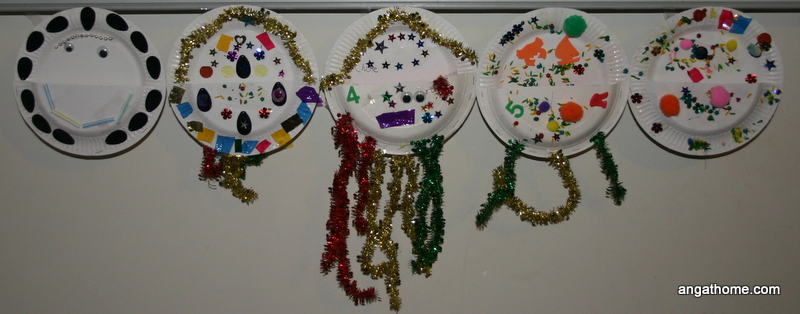
We have just reinstated our praise plate system which we have used and loved in the past. The children have in fact asked for it more than once. It is very simple to set up. Each family member uses one and a half paper plates to make and decorate a pocket (see photo above) using art and craft materials. A bunch of paper slips are cut up and left handy with some coloured pens and we are ready to go. Whenever I or one of the children notice another family member displaying positive character in any way, they write it down on a slip and pop it into that person’s praise plate.

The focus is on character rather than physical attributes and they are not allowed to write them for themselves or point out their own sterling qualities! Some examples are: G showed hospitality today when she greeted Mrs Smith with a lovely welcoming smile and hello. B showed kindness today when he tied his brother’s shoe laces for him. C was very helpful to Mummy and served our family by preparing a delicious salad for lunch. S showed initiative by putting away her ironing before she was asked to do it. The possibilities are endless and the children get better at writing their own as they hear more and more examples.

Older children write their comment and the younger children draw a picture and dictate their praise comment to be written underneath.

Occasionally when there are a few minutes spare before dinner or at an opportune time, all the children are instructed to sit down and complete at least one slip for every other person in the family. This insures nobody is left out and gives me a wonderful way to use those spare moments before a meal is served. My husband and I also take the time to write out several slips for each child and each other and slip them in the praise plates.

This great character chart helps us think of different qualities we want to commend and recognise and prompts us as we think of what we can write. Catching our children doing the right thing is such an encouragement to them.

On Sundays after lunch we stay at the table together and read each person’s praise slips out loud for all to appreciate. This is a wonderful way to fill love tanks and particularly speaks to those children who have words of affirmation as their primary or secondary love language. If you have never come across the idea of love languages, I strongly suggest reading Gary Chapman’s book “The 5 Love Languages.” The 5 Love Languages website is also helpful, with diagnostic tests to determine the love language or your children, spouse or yourself. If you are someone who finds it difficult to speak encouraging words consistently, or tend to be critical with your words, this is an excellent way of ensuring that those ‘building up’ words are heard by your children.

Other posts you may find helpful:

Sizzlers and grace

Spoiled walls – bickering and sibling conflict

Sibling relationships

Easy home-made no sugar icecream

No weird ingredients, 5 minutes to make (plus freezing time) and no sugar or other additives. Oh, and very tasty too! This “icecream” fools everyone I serve it to and they can’t believe that there are only two ingredients. Great for a healthy no sugar snack for the children, morning or afternoon tea or for a casual dessert when you have guests.

Simply peel a bunch of bananas (I did about 8 small bananas), wash and hull a punnet of strawberries or a couple of kiwi fruit and throw them in the freezer for a few hours. When you are ready to serve, process a quarter of the mixture at a time in the food processor, blender or thermomix and there you have it – pink or pale green icecream that is as delicious as it looks. You won’t believe there is no sweetener or additives of any kind. This amount of fruit topped about 14 cones with the equivalent of a generous icecream scoop ball of icecream. And best of all, it has a wonderful creamy flavour that really does taste like icecream. No leftovers here!

I imagine you could add pretty much any other fruit you like for a different flavour as long as it is approximately 2/3rds banana . A dash of vanilla tastes good too. I have found that it is easier to mix if the bananas are taken out a little bit before you need them so that they are not quite rock solid, but I have also mixed them straight from the freezer as well. Adding a little natural yoghurt or cream helps get the mix blended when they are rock hard.

The kids enjoy the cones in particular so look for some with low sugar and no harmful additives. When guests pop in unexpectedly there is always something special to pull out. With a birthday around the corner I am going to experiment with layering several different flavours to make icecream cupcakes or perhaps icecream sundays. With a sprinkle of nuts and coconut curls on top they should be a hit.

Other posts you may like:

   No (or low) sugar snacks for kids