Christmas Traditions 2015

IMG_8682 fireplace

The Christmas season is in full swing for us as we begin our many special traditions again this year. As always, we have tried to keep the focus on Jesus and blessing others over this period, rather than on presents and “getting.”The Blessing Buddies have arrived with their acts of kindness  for others and the children are excitedly searching for them each morning to see what they are up to. (Full explanation, printable poem and many acts of kindness ideas here.)

We are opening one special Christmas book to read each evening. This year I have sewed 24 bags for the books that I can reuse year after year.

The child of the day rushes out each morning to open the advent calendar and place the nativity figure onto the stable. Rather than treats this year, our advent calendar has an envelope filled with a handful of Lego for each child to open on their appointed day.  I was able to buy a huge bag of secondhand Lego cheaply at an op shop and had my eldest make up little sets for each day.

The same child takes their turn to pull out the day’s Jesse tree reading. This year we are focussing on the symbols of Christmas, looking at their meanings and how they can help point us and others to God.

Decorating the tree was eagerly awaited as always and our youngest placed the star on top as is our tradition, despite the fact that Daddy had to hold her hand in place to do it.

Another morning search finds our “What’s in the box?” Christmas table activity tray for the day. These Montessori style trays are for the toddlers and young children to do while the older children work on more difficult crafts or activities.

After our morning devotion using the symbol of the day we look in the craft box to find a special Christmas activity for the morning. With carols in the background we create something special, often related to the blessing of the day and meant to be given away to bless others.

We will be cruising the canals admiring the Christmas lights soon and attending the living nativity in a couple of weeks, with one important difference this year – the girls are in it. Our high tea for the senior church ladies is all set for a couple of Saturday’s time and we have a full schedule leading up to Christmas.

Having asked the children some weeks ago what they remembered as special about Christmas in our family I was glad to see that they did recall most of the traditions we have started and were looking forward to doing them again. Hopefully they will look back on this family time with fond memories and a heart that is knitted to us and their siblings for life.

For a full list of all our Christmas tradition and family identity building ideas for the Christmas period, see this post.

Consequences series – What? When? How? Part 4 First Time Obedience

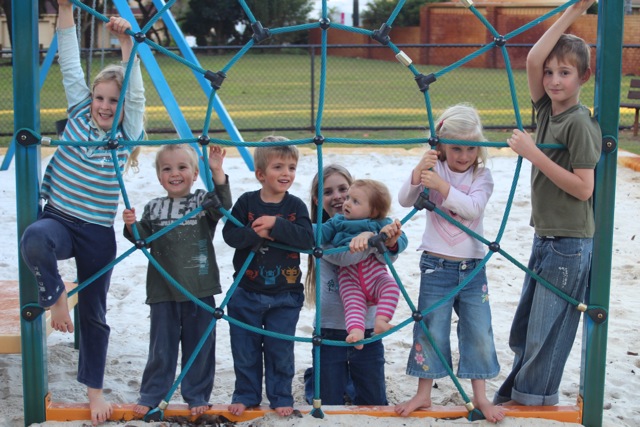
7 kids at park

If you are new here, please have a browse through the first 3 posts in this series (part 1, part 2, part 3) before continuing on. For consequences to work effectively on your family, the foundations need to be in place, otherwise you will be running about cleaning up messes, rather than correcting the source of the problem.

We teach our children to obey for a number of reasons:

  • Physical safety (Will your child stop when you call them or run out into the road?)
  • The Bible instructs children to obey their parents and it is our responsibility to teach them to do so.   
  • Because we want our children to grow up wanting to love and obey God. God calls all of us to submit to His authority and to the authority He allows or places over us.  This applies to children also and the authority that God places over them is their parents. If they won’t obey their parents (whom they can see), it is less likely that they will obey God (whom they can’t see.)
  • It’s loving to do so (We obey God because we love Him.)
  • It helps our children grow in character, becoming those who bring pleasure to others around them.
  • It avoids anger and frustration in the parent that leads to escalation and inappropriate responses from us.

It is beyond the scope of the post to try and explain how to get first time obedience in your family. If you believe as I do that it is important enough to work on, there are some excellent resources available to help you in your journey.

  1. Growing Kids God’s Way courses from Growing Families International (US, Australia/New Zealand and other countries)
  2. Get hold of the Childwise books appropriate to the age of your child. See other titles at Growing Families US or Australia/New Zealand.
  3. Purchase a “First Time Obedience” chart and related downloadable audio sessions from Carla Link at Mom’s Notes. These are the best parenting resources. Well worth the money. Highly recommended. (No, I don’t get a commission 🙂 )
  4. This post at Large Families on Purpose is a good start if you are after a quick look at something to get you going.

I have not “arrived” when it comes to obedience. My children are far from perfect. And sadly, it is possible and even likely to achieve first time obedience with your children AND then lose it again over time! There are many factors at play here, from personality types, love languages, to parenting practice. But the job we have as Mothers and Fathers is the most important one in the world – one worth investing our time, energy and money into doing well, don’t you think?


Consequences Series – What? When? How? Part 3 Giving Instructions

7 in sandpit IMG_6369

If you are new to this series of posts on consequences, please read through the introduction and part 2 first.

So you have layed a solid foundation of strong parenting practise and have made some headway to identifying the root cause(s) of your child’s problem areas. Before we take the leap to the consequences themselves, we need to take another look at ourselves. Yep, parenting is a lot about us, not just the children! This next step is to give instructions to our children correctly. It may seem very simple to just bark out orders and expect obedience, but there are things you can do to get a much higher level of obedience from your children simply by changing your approach. Have you ever been guilty of any of the following?

  • Giving an instruction that you are too tired to check up on and hoping your child will follow through.
  • Shouting instructions at rapidly retreating children’s backs as they tear off on their own pursuits.
  • Instructing a child while you are peering distractedly into the refrigerator, balancing morning tea in one hand and holding a spoon between your lips.
  • Directing instructions to a room full of children who are eating/playing or otherwise engaged that sound something like this – “Everyone, get you shoes, coats, hats, drink bottles, go to the toilet, pack your bag, make your bed, finish your morning jobs, find matching socks and be at the door in 5 minutes.”
  • Arriving home after everyone’s bed time and telling everyone to “Get ready for bed” as you walk in the door.

Perhaps these scenarios do not happen in your home but giving instructions across a crowded room or to an otherwise engaged child is just too easy to do and when we don’t get the obedience we are looking for we get angry, frustrated and disappointed in the child. Time to make some changes. Before you start work, you need to have a clear understanding for yourself of what obedience looks like. We teach our children that obedience is first time, straight away, with a happy attitude and a verbal response. (“Yes, Mum.”).

Step 1 Get hold of a “First Time Obedience” chart. It is a brilliant resource by Carla and Joey Link for teaching parents how to get first time obedience with their children.  It lays out all the steps in detail and tells you which behaviours to work on now, which ones to ignore for now and what the next step is. I thought I understood first time obedience until I listened to Carla’s talk Understanding First Time Obedience in her Mom’s Notes series but she really cleared it up for me. (It’s only $4.99 to download or get it if you are in the USA with the message, notes and chart for $12. In Australia, the charts are available here for $5 plus postage and download the MP3 message to go with it.) Her audio resources are gold and I cannot recommend them highly enough. (No, I don’t get a commission!)

Step 2 Train your child to come when you call their name, answering “Yes Mum, I’m coming” as they do in fact come. It’s a very simple step but if you want compliance you need to get attention first. A child who will not come when you call them is not likely to obey an instruction you give them either. To get this started we like to institute treat training. I gather everyone around me and tell them that we are going to play a game. I tell them that they all need to go to different parts of the house and when I call their names, they should answer with “Yes Mum, I’m coming” and come running back to me. I let them know that when they do come, I will have a little surprise for them. (Do it) Once everyone is back and all have their surprise, tell them you are going to do it again.

At this point they can’t believe how easy it is to get the reward! (Do it again.) Now instruct the children to go back to whatever it was you had them doing before and keep an ear out. Some time soon you will call their name and they need to answer with those same words and come. Leave it a short time and then repeat. Over the course of the day, repeat this procedure several times until everyone is coming running the second they hear you speak. You will be surprise to see how amazing their hearing is from even the furthest corner of the back garden to the back bedroom when you barely speak above a whisper. I even had children calling out “Yes Mum. I’m coming” when no names had been called or coming when someone else’s name had been called “Just in case you said mine and I missed it!”

The following morning start off the day with 1 repeat of the same scenario to remind them of how it worked. From this point onwards you can explain that there will be no more rewards, or perhaps only occasional rewards but they still need to come when you call and answer “Yes Mum I’m coming.” For those who are wondering, yes, this is a bribe but a useful one a short lived for training purposes. As a general rule, I am not characterised by bribing my children for obedience so the occasional instance that I decide to employ one is useful and effective. See this post for the difference between bribes, rewards and incentives and why you shouldn’t bribe your child.

If they refuse to come then a consequences will be necessary. For little ones, a few minutes sitting in their cots to get ready to obey, followed by putting them back where they were when you called and saying “Let’s try again” as you call their name will probably be enough. Older children may need some further encouragement but ideas for this will have to wait until we get further into the consequences side of this series!  

Step 3 Get eye contact. Holding a young child’s hand while you do this may help them. Instruct them to look at Mummy’s eyes or “look at Mummy’s face” and wait until they do so. There is a big difference between a child who struggles with eye contact – that is it is difficult for them to do – and a child who won’t make eye contact. The former is disobedience and the first is developmental. How do you tell the difference? Choose a short phrase like “Eyes” and simply prompt the child to look every time they look away. If you say “Eyes” and they look back at your eyes immediately then they have an obedient attitude and will get better in time. A child who deliberately turns their eyes away from you when instructed to look in you face is telling you that they have no intention of obeying your instruction and you may as well deal with the disobedience then and there rather than waiting for them to not follow the instruction you are about to give and then give a consequence.

One caveat with this is that children with processing disorders and other problems will find it almost impossible to hold their body still and focus their eyes on you. When they do, all of their energy is poured into doing this and there is no attention left to actually hear the instruction! The purpose of getting eye contact before speaking is to get the child’s attention. If you know that you have it, regardless of whether they are looking or not then you can go ahead. Just make sure this truly is something they are unable to do, rather something they choose not to do. Sometimes asking them to look at your chest will help.

Step 4 Give the instruction. Keep it simple for little ones. Give the number of steps your child can cope with. For some children, one thing at a time is enough. They may need to be told to “Get your drink bottle and come back to Mummy.” An older child may cope with a series of instructions, particularly if they are familiar to them. Some children may prefer a written list if there is a lot to get through. I sometimes jot a list on my whiteboard and instruct the older children to work their way through it before returning to me to let me know there are done.

Step 5 Have them respond with “Yes, Mum” after you give the instruction. Hearing themselves agree to obey is often enough to help a child follow through with obedience. Often a child who does not want to obey will refuse to say “Yes, Mum” and again, you deal with the disobedience then and there rather than after they fail to obey. A good strategy for children who struggle to follow through with instructions is to require them to repeat back to you what they are going to do. “Yes, Mum, I will get my drink bottle.” There is no way they can say they did not hear, did not understand or forgot. It’s clear-cut obedience or disobedience – so much easier to deal with.

This is a very simplified overview of the whole process. There is a lot of supporting “if, buts and maybe’s” that should be included, but that’s why there is a whole parenting course on this. (See the introduction post)

Involved? Yes! Time consuming? Yes! Effective? Yes!!

Consequences series – What? When? How? Part 2 Finding the cause

IMG_5541

So you have read through the consequences series introduction and your parenting “ducks” are all in a row. You’ve booked into a GFI parenting course, ordered some good quality parenting books, your husband/wife relationship is flourishing, your routine is on track, the children’s love tanks are full and you are training their hearts. With all this in place you have seen dramatic improvements in their behaviour and many of the problems you were dealing with previously have all but disappeared. And yet… there are still behaviours that need to be worked on!

Our children are sinful creatures (like us!) and yes, no matter how perfect your parenting is there will always be issues to deal with. Today we are going to take a brief look at finding the root cause of the problem, also know as the “besetting sin” or underlying cause that will help us to see where some of those behaviours are coming from.

Having a good understanding of basic personality types will help immensely as these are often very closely tied with the areas that our children struggle in. A highly choleric child will tend to be bossy and impatient, the sanguine child can be impulsive, disorganised and easily detracted, the phlegmatic child struggles with time management and diligence. While it is not helpful to put our children in a box as some critics would say, having some idea of their underlying motivations, needs and approach to life will help you to better parent them. My favourite book for those who have yet to explore this area is “Personality Plus” or “Personality Plus for Parents” by Florence Littauer. Who knows, you may have a whole new understanding of why and how you relate to your child as you do.

Secondly, grab hold of a list of character qualities or virtues. This will help you to categorize your children’s areas of struggles and start to see the connection between them. There is a free printable version here or here.

The “Working With Your Child’s Besetting sin” series of messages by Joey and Carla Link from Parenting Made Practical is brilliant for understanding and identifying your child’s personality type and working to improve their sin areas.  But I warn you, you will want to listen to the rest of the Mom’s notes series as they are the best parenting resource I have ever come across after the GFI parenting courses.

The idea of your child’s besetting sin or root of the misbehaviour is that many different wrongful behaviours can actually spring from the same underlying motivation or lack of character/virtue. The example Carla uses in her Mom’s notes message is that of patience. A child who constantly interrupts others when they are speaking, pushes past siblings to get out the door, shows frustration with anyone or anything that holds them up etc. is demonstrating a lack of patience. As a parent, you could come up with a bunch of different consequences to suit every different occasion that you see it demonstrated, but you really need only one – for the lack of patience itself – as this is the underlying cause or besetting sin.

So how do you start to find this common link between behaviours?

Sit down and make a list. List everything that your child does that you would consider less than virtuous! Once you have done this (and if they are anything like most children it will be quite a long list) take your character chart and note down next to each problem the character quality (virtue or vice) that they displayed. Perhaps they lack diligence, honesty or generosity? Sometimes it is easier to find the vice being displayed rather than the virtue and vice versa. Hopefully, by the time you have finished you will be starting to see a pattern. Maybe your toddler is simply showing a lack of self control and this is showing itself in a variety of ways. (Just a tip – most toddlers are lacking in self control and need to do lots of work in this area 😉 ) Perhaps an older child is not showing the responsibility necessary and appropriate for their age.

Once you have identified the areas you need to work on you have a starting point. Spending time actively working on the positive side of the vice is going to be vital. If your child is impatient then you need to be focussing on training them in patience, not just correcting for impatience. If they are lacking in responsibility then they are going to need lots of training and encouragement in this area. To ignore this training will mean that you are continuously ‘cleaning up’ the result of the lack of virtue but doing little to build the corresponding character that you want to see. Yes, there will be a place for correction (after all, that will be a major part of what this series of posts is all about!) however, without the balance you will be struggling uphill.

Consequences Series – What? When? How? (Introduction)

me and R IMG_6277

Today is the beginning of a series springing from the discussions I have been having with the Mothers I meet with on a monthly basis. It is not meant to provide you with everything you need to know in order to discipline and train your child effectively, but will hopefully give interested parents some valuable advice and strategies for dealing with some of the more common battles we face with our children on a regular basis.

Consequences is a hot topic for many parents. We all want our children to obey, but if we jump straight to a whole bunch of punishments as our single and only method of achieving this then we are bound to fail. The consequences that we give our children should aim to achieve heart change, not just outward conformity. We can alter the behaviours that annoy us the most, but our aim should be to change the heart of the child, to train them in Godly character and prepare them for a relationship with God inasmuch as it is possible for us to do so.

So where do we start? Parenting is a multilayered affair and without a solid foundation underpinning the consequences we do use we will not achieve the best possible outcome. While just using our common sense will take us a long way, parenting is a difficult task and even the best of us can improve and develop our parenting skills.

As a first step I would recommend taking the Growing Kids God’s Way parenting course.(AustraliaUSA  and elsewhere.) There is so much to learn and know and while we can glean a tip here and there, a solid base is better laid with some intensive training.

Read some good quality parenting material. There is an abundance of parenting information out there and not all of it is good so again, I personally would recommend staring with gfi material. The Childwise series, Terrific Toddler books 1 & 2 and other gfi material contains a wealth of information to get you started. Check the gfi website in Australia and growing families USA for recommended titles.

Work on your husband/wife relationship. Without harmony in the home and parents who are on the same page, parenting will be an uphill battle. Use the concept of couch time from the gfi material, set a time to discuss your parenting together and make a plan of attack. Single/divorced/remarried parents can still work to achieve the best parenting practice possible within the situation they find themselves. Blending Families by the Book  is an excellent resource, as is the single parent supplement that goes with the Growing Kids God’s Way course.

You must be filling your children’s love tanks. Children will act out to gain attention/time/focus (even if it is negative) if they are not getting enough love in the way that they receive it. Different children have different love languages and different level of needs.) See Filling Their Love Tanks – The Five Love Languages of Children.

We need to train our children’s hearts, setting aside time to teach what we expect from them (proactive parenting) rather than simply reacting when they do something we don’t like. We need to work on their character and fill their moral warehouse by explaining the moral reason why for the instructions that we give.  We should be doing everything possible to prepare their hearts to know God.

It is essential to have a flexible, consistent routine in place. One that includes time where our children are with us and time where they are learning to play happily alone. A balanced routine will include activities that teach children to sit, focus and concentrate and involve only age-appropriate choices. Mum and Dad, not the child, should be in charge. Even babies need a good routine. 

So much of our success with parenting depends on us to begin with. How we give instructions plays a vital part in the level of obedience we will receive in return. How we respond when our children disobey and how we train them for future situations will help to determine the outcome of the battles we face repeatedly. It’s a tricky business but one that is worth pouring our time and energies into. I hope that the information today and in posts to come will help you on your parenting journey.

Christian Easter ideas for 2015

c holding string cross IMG_6150

Easter is here and with it the bombardment of chocolates and commercialism that threatens to take over any meaningful celebration. If you are looking for some Christian Easter activities and traditions that help make Easter a Christ-centred affair, take a look at this post or for Jesus trees, Lent ideas and other Christian Easter activities see here and lastly, my Pinterest board with some more activities is here.

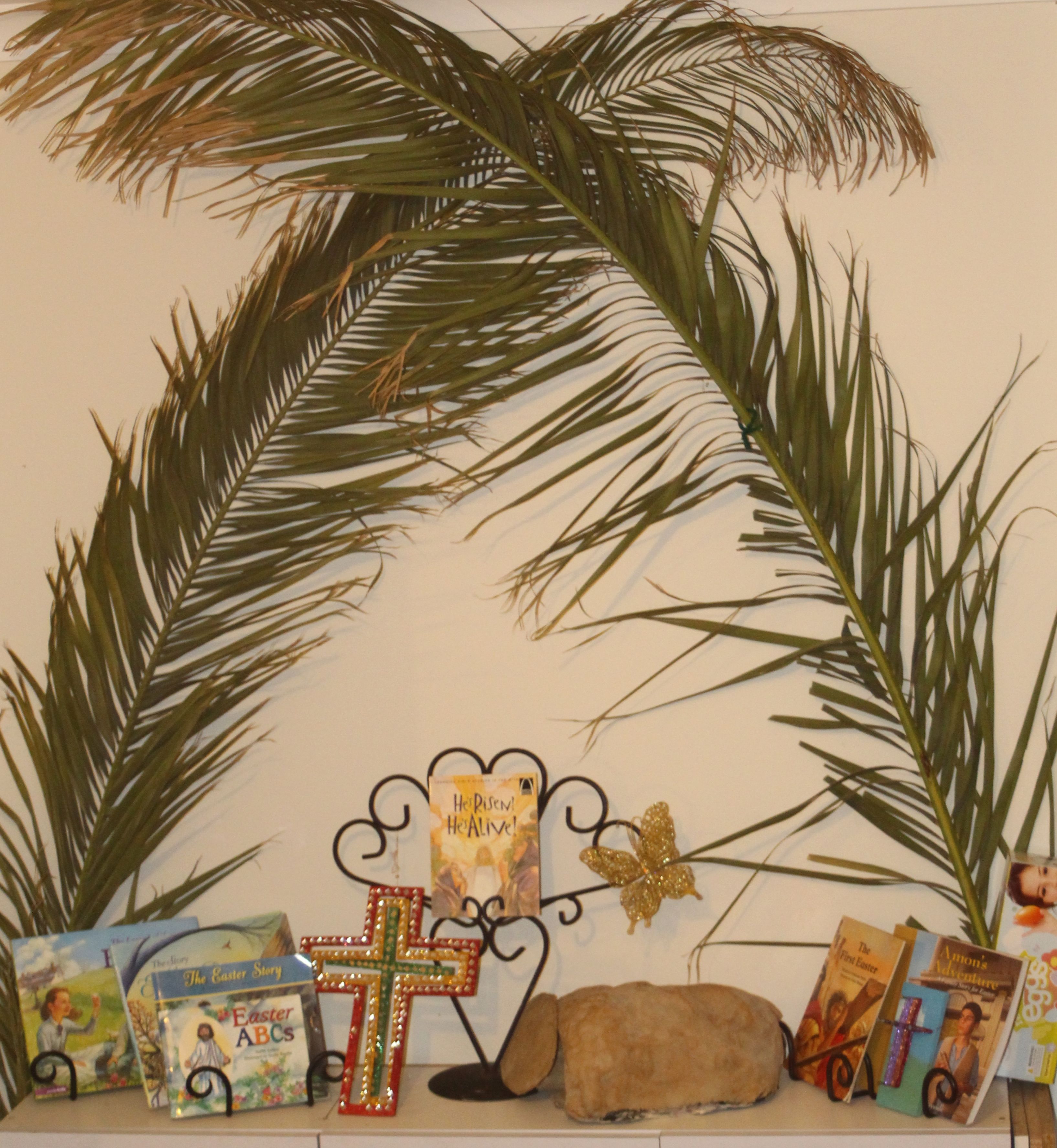
Easter decorations

Our Easter space with books and objects that help direct our attention to the real meaning of this season. We used palm branches to act out the story of Jesus’ entry into Jerusalem. The kids threw down blankets as cloaks as well as the branches and made crowd noises to help tell the story. It was a little chaotic but lots of fun.

cross string up close IMG_6152

An up close view of our string crosses that we made this year. (Original idea and instructions here.) As we hammered the nails into the wood blocks we talked about Jesus being nailed to the cross and what that must have felt like, comparing the size of our nails with the nails that would have been used to pierce Jesus. My oldest son’s comment was “Children’s bibles always make the cross seem so pretty!” It doesn’t hurt our kids to get a better picture of what the events surrounding Easter were really all about. Giving them some understanding of what our sin really cost is so important, especially for those who grow up so saturated in bible stories that they grow immune to the importance and reality of it all.

Revolving Focus

IMG_6110 recipe planning

If I had a job outside the home there would be an expectation that I continue to hone and improve my skills. I would attend training to keep me abreast of current findings and research, look for opportunities to develop skills in new areas or advance the skills I already have and be continually working to progress across the board. There would be a budget set aside for training and development and a certain number of hours nominated for this purpose.

Mothering and educating my children and running a household is my full-time occupation and as such I need to set aside the time and resources needed to improve myself in these areas. What does this look like? Reading and researching from bought books, books borrowed from friends or the library, scouring blogs, web sites and picking the brains of like-minded friends, praying, thinking and planning.

I do not have large blocks of time available so I use the time that I do have. I choose one area that will be my focus for the next week or even several weeks. Usually the area that I like the least at the moment is the one that I need to focus on. Hate cooking? Get out the recipe books and get inspired. Search Pinterest, blogs and websites for great ideas and print out a stack of new recipes. Write a weekly menu. Set up a shopping list. Sort out the pantry. List the contents of the freezer and the weird ingredients that are moldering in the back of the cupboard. Buy a new tool that will help you get organised. Take a class. Set up a recipe swap with friends. Research the latest health research and try some foods you’ve never made before. Make the changes to your own diet that you have meant to do but never got around to.

I find that after a period of time of focusing, organising and up-skilling in an area I get excited about it. I look forward to implementing all the new ideas I have found and no longer dread it. I don’t want to sit around resigned to the fact that I’m just not that good at …… (fill in the blank.) If I’m not good at it, I want to get better!

After a couple of weeks fully focused on cooking for example, other areas start to scream out for my attention. The kitchen is now running well, the pantry is organised, the shopping systems are in place, the freezer is stocked with meals and snacks and I have a menu for the next week or two. Time to change the focus to the next area and use all my little minutes to make progress there.

In the business world there is a phrase “eat that frog” – from the book of the same name. The basic premise being that the tyranny of the urgent will always crowd out that large long-term project that needs doing (the frog!) and it just never seems to get started. If we spend a little time each day focused on our goal we will see progress and the frog will eventually be eaten! Now go eat that frog!!

Preschool at our house: Workbox system for 5 year olds

IMG_1612

Here is the latest workbox style arrangement for our 5 year old preschoolers which will allow them to get the direct instruction from me that they need as they learn basic reading and writing skills, while at the same time having some degree of independence in their other work. I have always invested some time in one-on-one teaching at this age because helping each child to become a proficient reader is one of the keys to independent learning and self-educating later on (one of my goals for all my children.) The children have access to plenty of creative play opportunities and lots of great hands-on learning tools at other times in the day but this morning period is slightly more “bookish” as we step into more formalised learning.

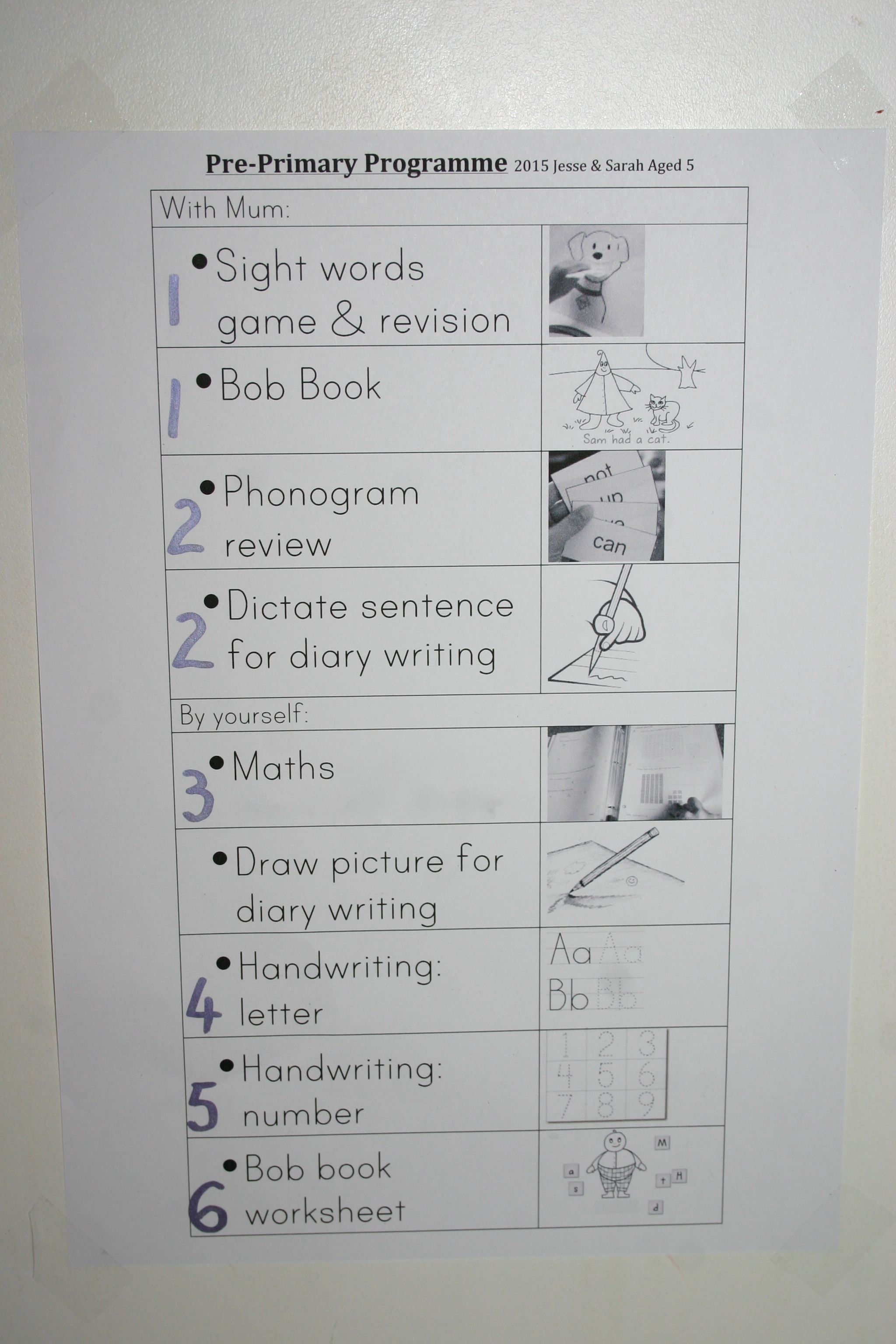
pp schedule

My older girls (7 and 9) both work from a written schedule for several reasons; they know exactly what to do, when to do it and how much they need to do before they are done for the day. My 11 year old son also works from a schedule, but is free to decide the “when” for himself, having shown responsibility in managing his time in the past. The twins (5 years) have a pictorial schedule to gently ease them into a more independent role in the future but don’t really need it because their boxes are numbered and they are under my direction anyway. (It’s more so that I can keep track of what they are supposed to be doing!)

I researched workbox homeschooling several years ago and most of the examples I found on the web involved nightly or at least weekly changing of the contents. I knew that wasn’t going to work for me so I devised a simple system that only needed to be changed out about once a month. (See details here.) There will be some items in the boxes that needs to be updated more regularly (Sight words as they are learnt for example) but this will require minimal effort as the sets of words etc. that I need are all ready to go.

Some advice that I always give beginner homeschoolers, especially those with a large family, is to set their homeschool up so that  it will continue to run without them as much as is possible. Life intrudes; an unexpected visitor, an unscheduled phone call, the baby is sick and on and on. Set things up so that you are not required to be “teaching” directly all the time or the pace may be too hard to keep up. With only one or two children you may be able to do it but not with the number of blessings we have!

So.. what’s in the boxes?

IMG_1614

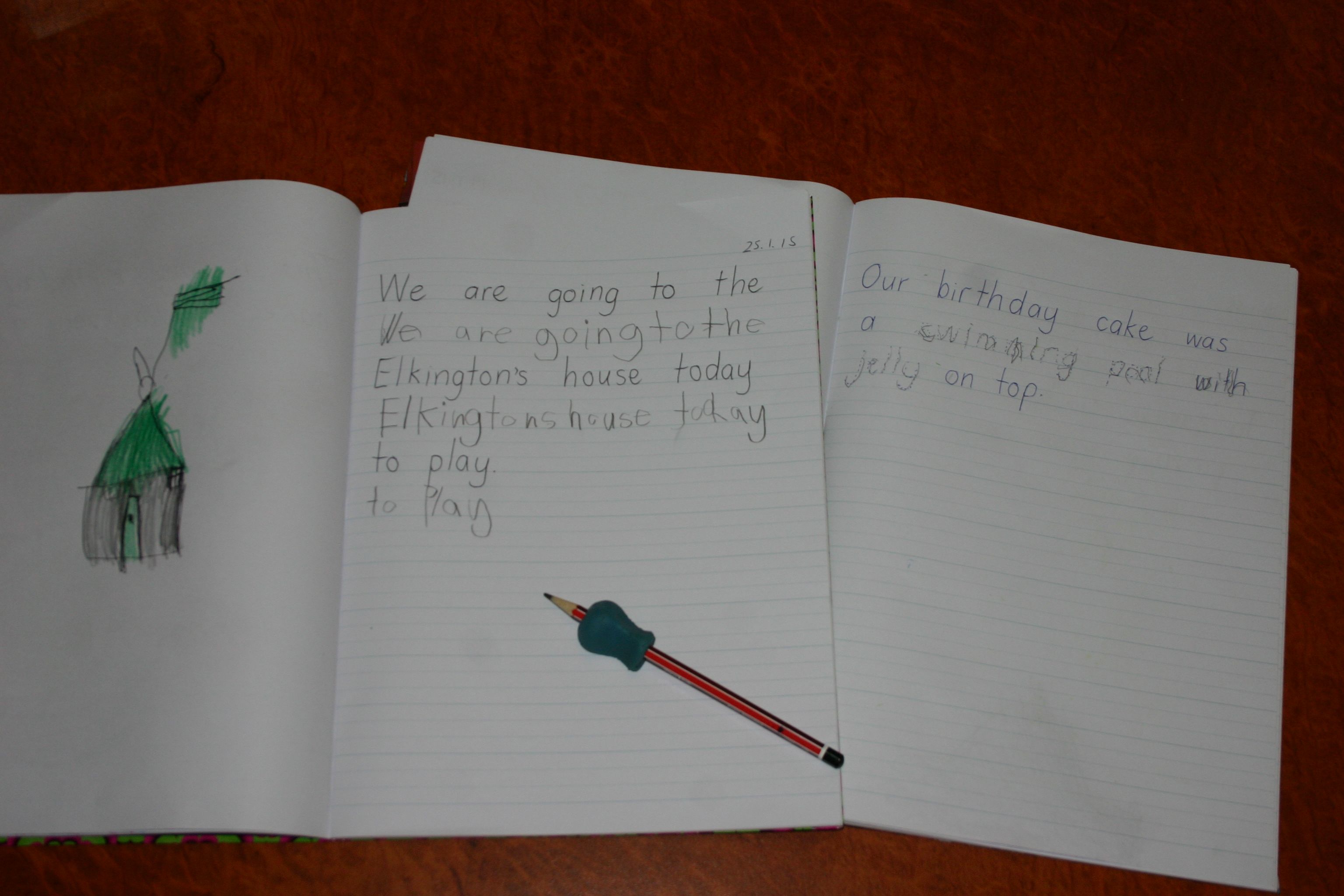
Daily diary writing (See full explanation here.)

IMG_1616

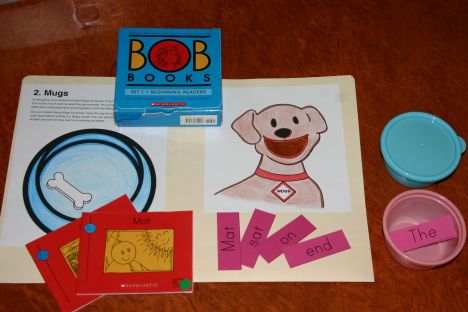
Bob Books and a file folder game to practise sight words. As the child chooses a word it is read and fed to Mugs the dog through the hole in his mouth. (See this post for how to teach children to read and this one for some info on beginner readers.)

IMG_1617

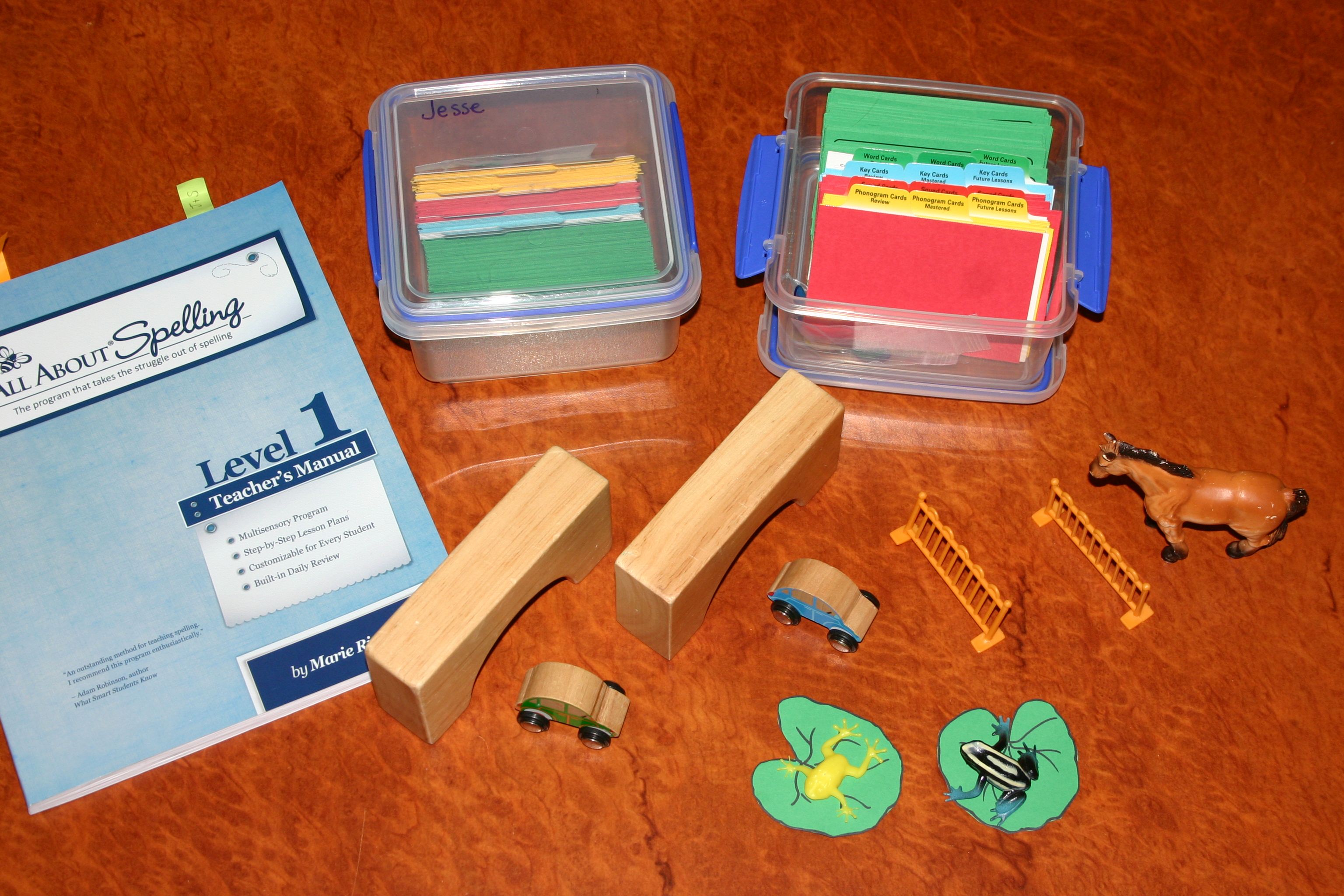
Segmenting words game based on All About Spelling level 1. I am using this programme as a rough guide at this stage. We will get into it more next year but for now our activities are loosely base around the progression in this book which is very thorough. We are using the flip boxes to review the single sounds we already know before moving on to more complex phonograms.

IMG_1618

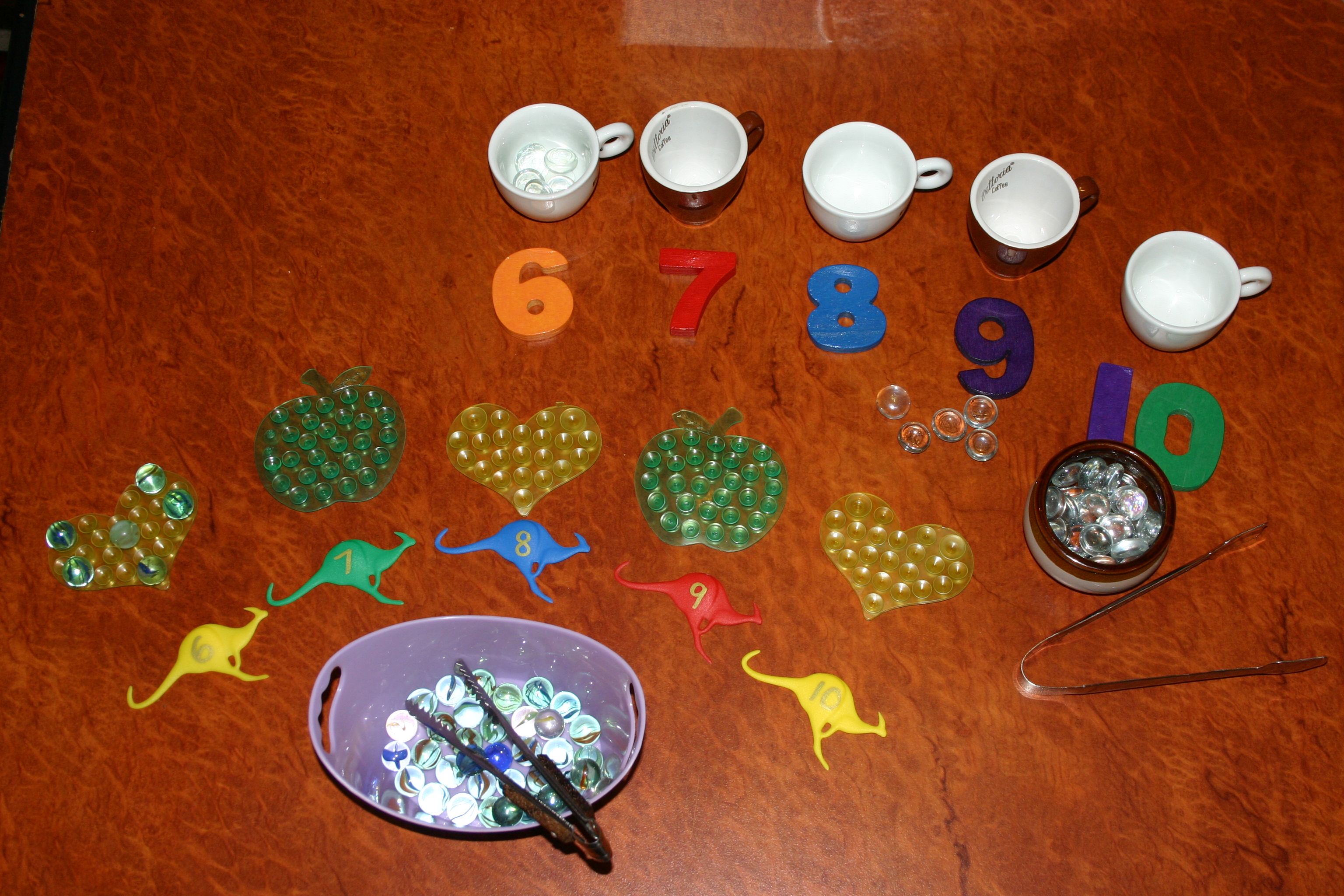
Montessori style counting activity tray. Developing one-to-one correspondence is crucial before any real maths skills can be developed and these simple counting activities give heaps of practise while also working on fine motor skills. In the top activity the expresso cups are set out with the numbers in order from 6 to 10 and the child uses the tongs to add the correct number of sugar lumps to each cup. In the second activity the small tongs are used to transfer the correct number of marbles to the suckers on these soap holding shapes – the kind that suction onto your sink to stop the soap slipping away.

IMG_1619

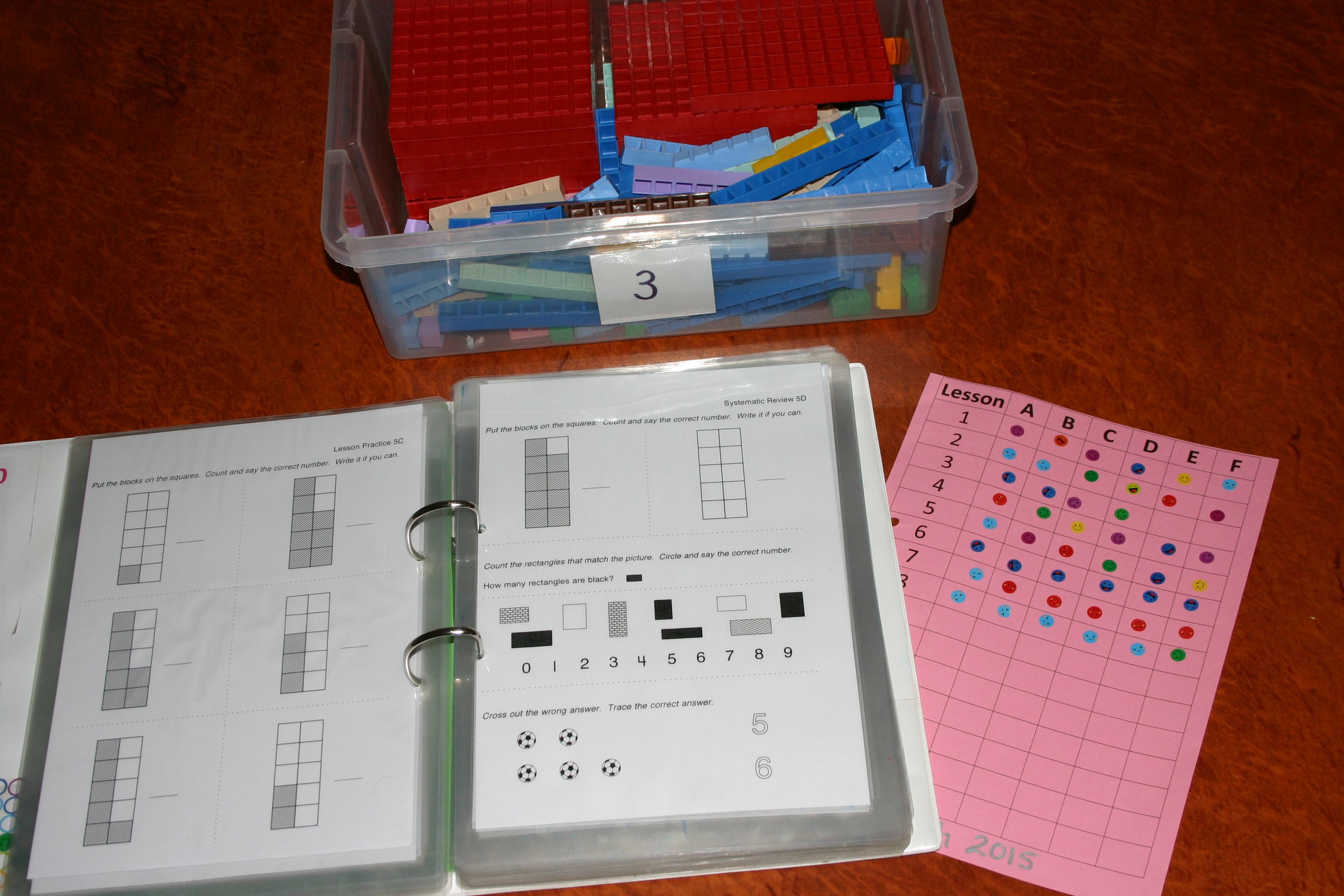
We use Math-u-see for the first couple of years and Primer is the first book in the series. I cover all of the concepts with  hands-on tray activities first and once they are well mastered the children can work through the book as a bridge to the bookwork they will be doing the following year. We also have the Dive CD’s which have videos for each lesson in the student books so some added “teacher” instruction is given as well to help fill any small gaps that may still be there.

IMG_1620

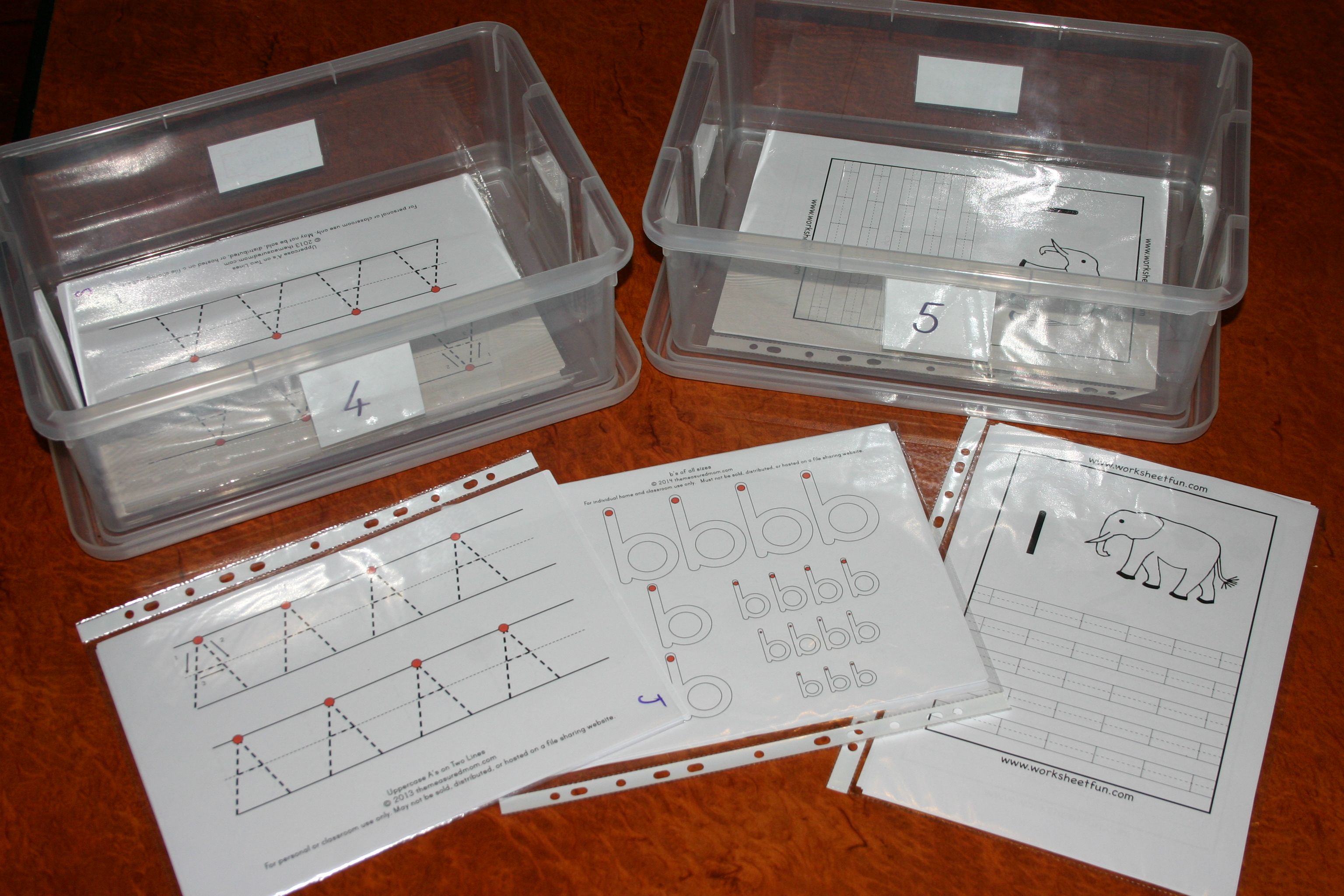
Tracing letters and numbers. I try to supervise handwriting practise to ensure that the correct letter formations are being made. There are heaps of free worksheets on the net. Look for some in your preferred font and laminate them if you choose for repeat practise. For children who find fine motor control difficult, the channel writing (bubble letter style) are the best because it allows more leeway than dotted letters for wobbly pencil paths. It can be very discouraging for children who try so hard and yet cannot stay on that dotted line. The “fat” letters to keep inside are somewhat more forgiving.

IMG_1621

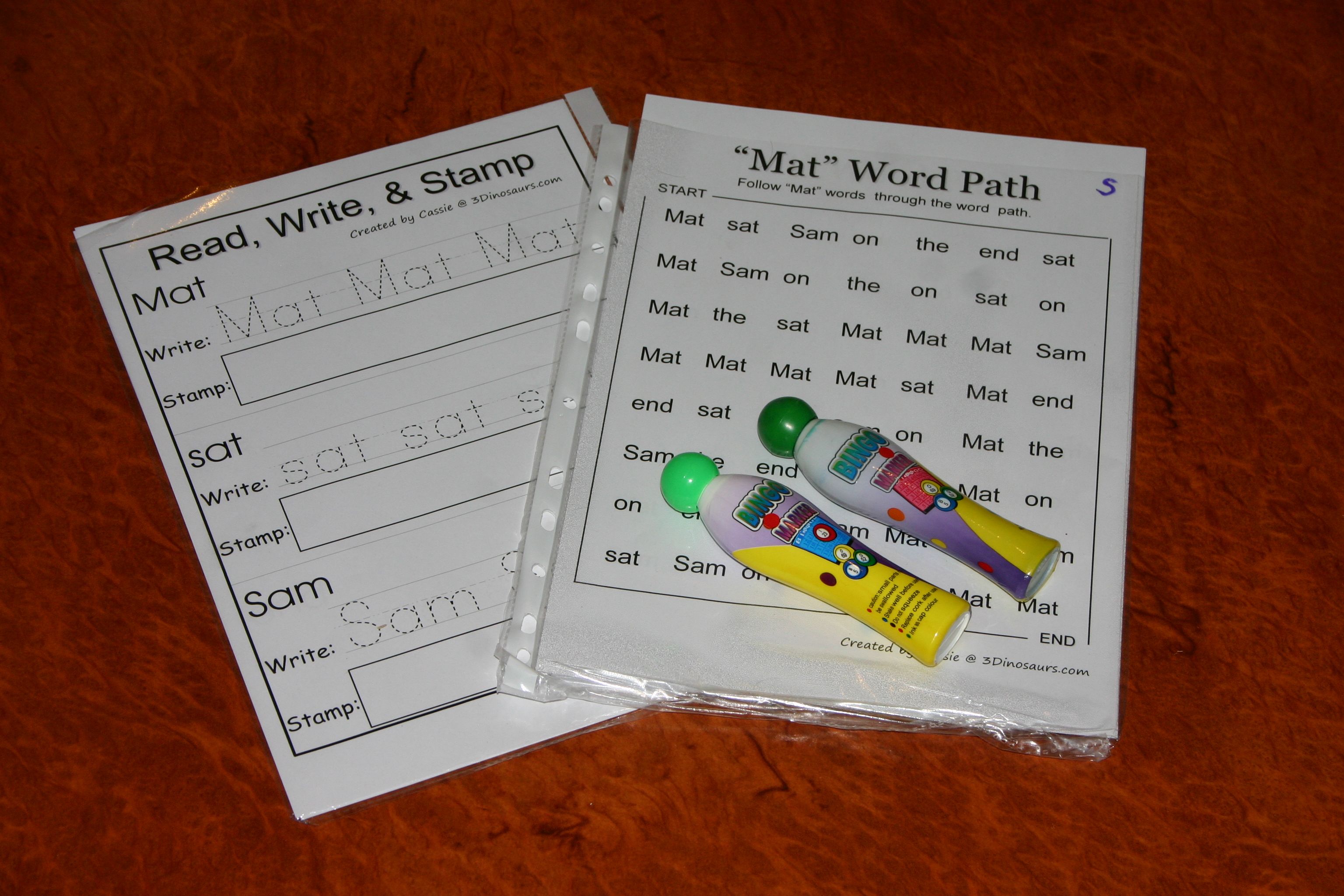
The last workbox contains a selection from some free printable worksheets to go with the Bob Books that I have found online, mainly for my daughter who finishes all her school work in nanoseconds and wants to know what else there is to do. She loves to do “real” school work like her older siblings so the more books and worksheets I supply her with the happier she is. My son will do them if he wants to which will translate to not doing any at all except possibly using the bingo dotters to follow the word paths simply because he wants to randomly dot paint everywhere 🙂


Teaching preschoolers to write

IMG_1614

Today I will be sharing how to teach writing using a daily diary with some general tips and a quick “how to.” I have started this post 3 times now because there is just so much I could say and it keeps turning into a thesis, so back to dot points 🙂

Tips for turning out great writers:

  • Provide many experiences that develop fine motor skills – playdough, threading, building etc.
  • Make sure your child is using the correct pencil grip – get a moulded pencil grip if necessary.
  • Teach the correct letter formation – bad habits are hard to undo.
  • Teach phonics. A strong grasp of the phonemes (sounds) and how they join together to form words is vital
  • Read examples of good writing every day
  • Avoid have-a-go methods where the child is internalising incorrect letter combinations that will need to re-learnt later. Do not be afraid to tell children how to spell a word. It is better to copy from a good model than to write the word the wrong way over and over again. You can encourage them to use their phonetic knowledge and spelling rules as you work with them to write the word correctly the first time.

Daily diary writing for preschoolers – how to:

  • The child chooses their topic for the day and spends a few minutes drawing a picture.
  • Have them dictate a sentence about the picture for you to write down, leaving every second line blank. Ask questions as you do this; What does the word start with? How do I write the letter “s”? Show me in the air. What sound can you hear in the middle of the word? How do I write a “ch” sound? This is one of your sight words – can you remember which letters go together to say “the”?
  • For beginners, re-write the sentence onto a separate strip of paper. Cut it into individual words (or have them do that) then ask them to match these words underneath the ones you have written in their book and glue them in.
  • When this is easy, have the child trace some of the words you have written. For one of my preschoolers I choose a couple of words each day to write in dots so that he can trace them to write the word.
  • When this is easy, start copy work – where the child copies what you have written underneath. (Don’t be too pedantic about letter formation here – just keep practising with handwriting lessons every day so that the correct strokes are quickly learnt.)
  • Read back the writing together, pointing to each word as you do so. Ask them to find a word for you – Can you see the word that says “house”?
  • Move on to having the child write their own sentence once they have a large enough bank of words to do so. Brainstorm words they may need before starting and write them along the bottom of the page so that they can see the correct spelling as they write the word for themselves. Correct any errors as soon as possible.

Obviously there is a lot more to learning to write than I have covered here but for the sake of clarity I have tried to keep it brief. I have used diary writing with several classes of students and now my own children and it is encouraging for them to watch their skills develop over time, as well as proving a lovely keepsake for later. A few years ago my Mum pulled out a school diary I had written in year one and it was so cool to read through and see what was important in my life at the time. It began with the teacher writing everything and by the end of the book I was writing everything – all in the space of one year. Preschoolers will of course move more slowly than this but you will be surprised at their progress. Reading though my diary bought back some wonderful memories of events that I had totally forgotten about and made us all laugh to see what Mum did when she was in school.


The dumping rule

IMG_5760 R jolly jumper

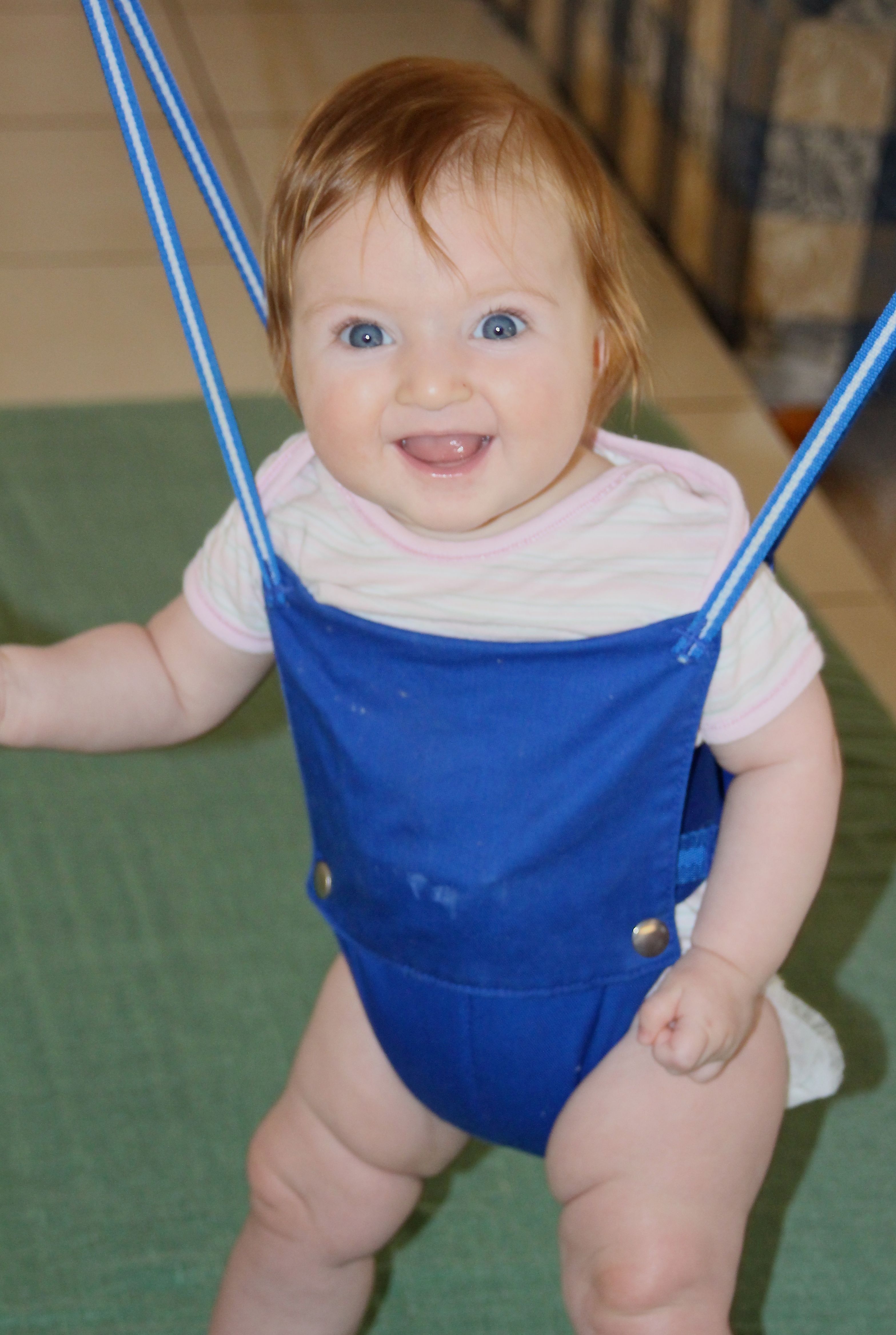
When there are 7 children in the house (or even just 1 or 2!) it doesn’t take long for a trail of destruction to threaten to take over. I do have systems in place to make sure it doesn’t get too out of hand but even with pack-up times built into our routine throughout the day there are certain areas that just seem to get cluttered with a pair of shoes here and a hairband or two there, plus a towel on the floor and a pair of knickers decorating the door handle… and so on.

I asked my worst trail maker what consequence they thought was appropriate for people who left their belongings laying about for others to pick up. They responded after some thought that they should pick up twice as many things as they had left behind. This was a brilliant answer as this happened to be exactly what I had been thinking of doing anyway (I love it when that happens), so I promptly instigated it as our consequence on the spot. One item left on the floor equals a consequence of picking up 2 more items, plus the original one you left in the first place.

It is amazing how quickly you can get the house tidied when there are a couple of bits and pieces strewn about. I just start at the front of the house and pick up the first item, identify the owner and point out it plus the 2 other items they will be required to put away. It a minute or two everyone is zooming about collecting stuff and the house is back to ship-shape. After a few days of this, I simply let everyone know that I will be conducting a dumping check in the next little while and they go scrambling off around the house madly putting their stuff away without me having to do anything.

It goes great with the 10 times rule for those who can’t remember to hang up a towel or shut the door.