Preschool at my house this week – large family homeschooling (with toddlers!)

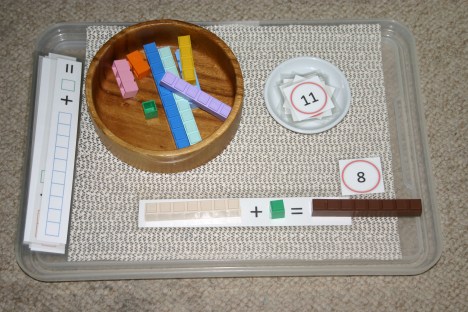
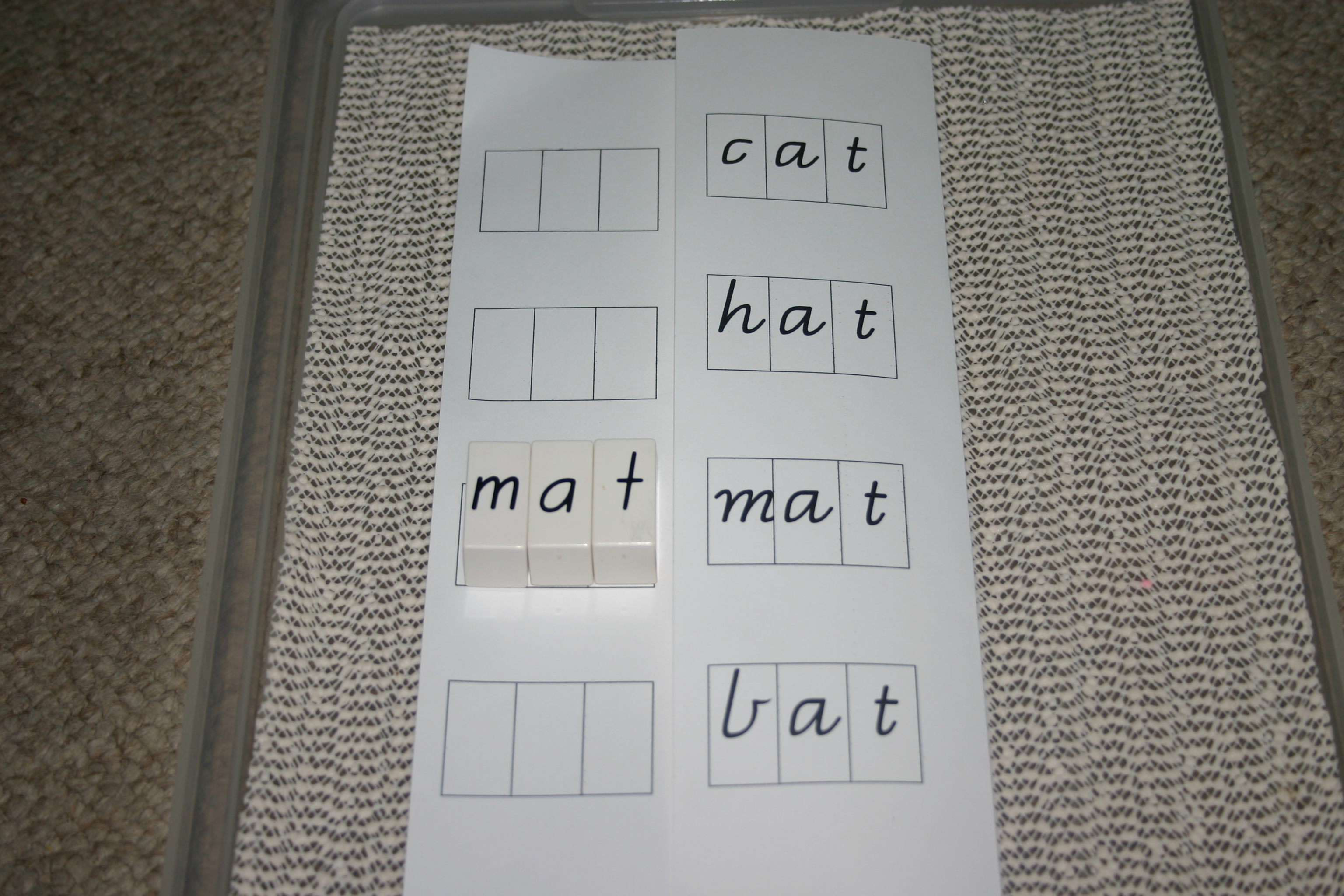
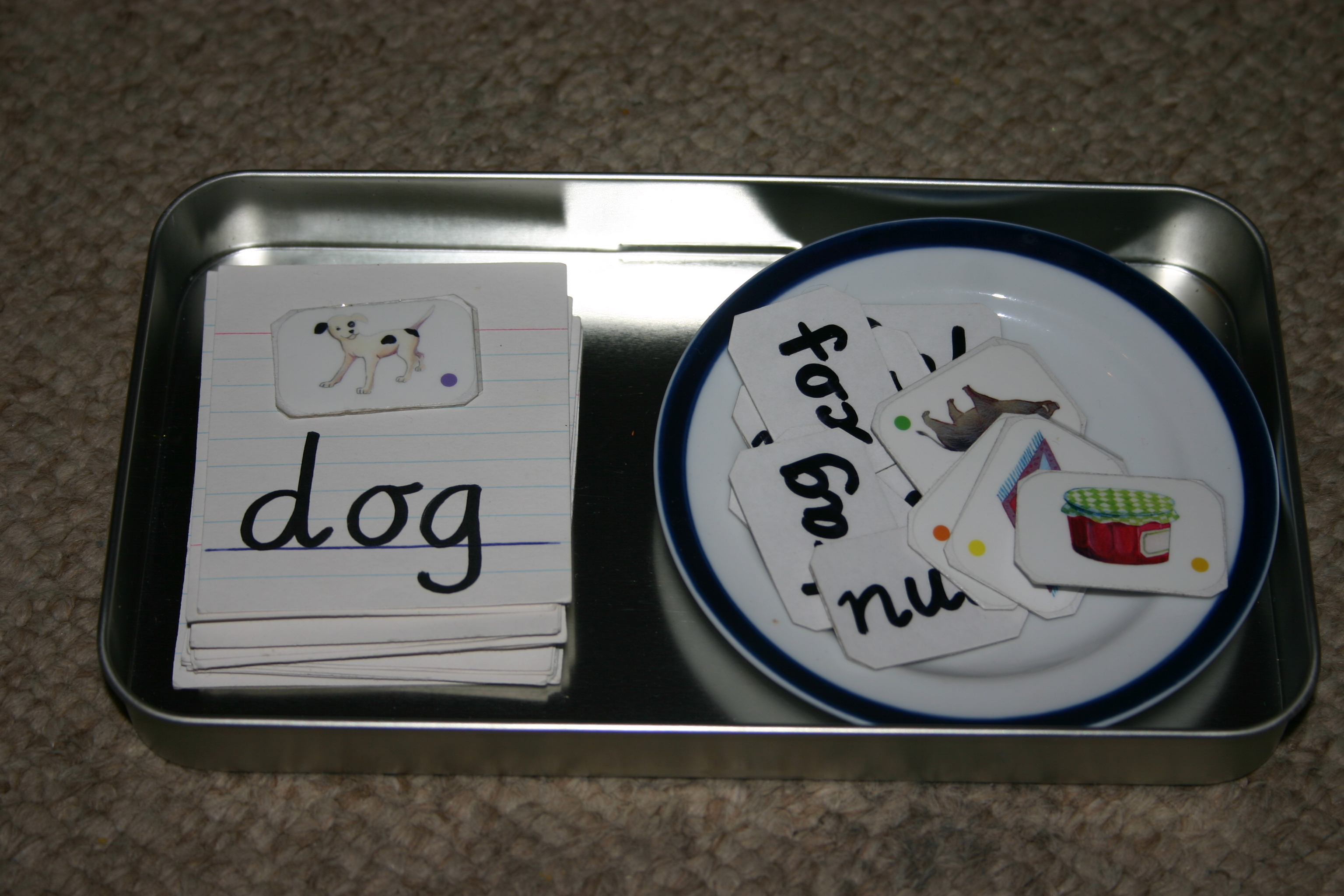
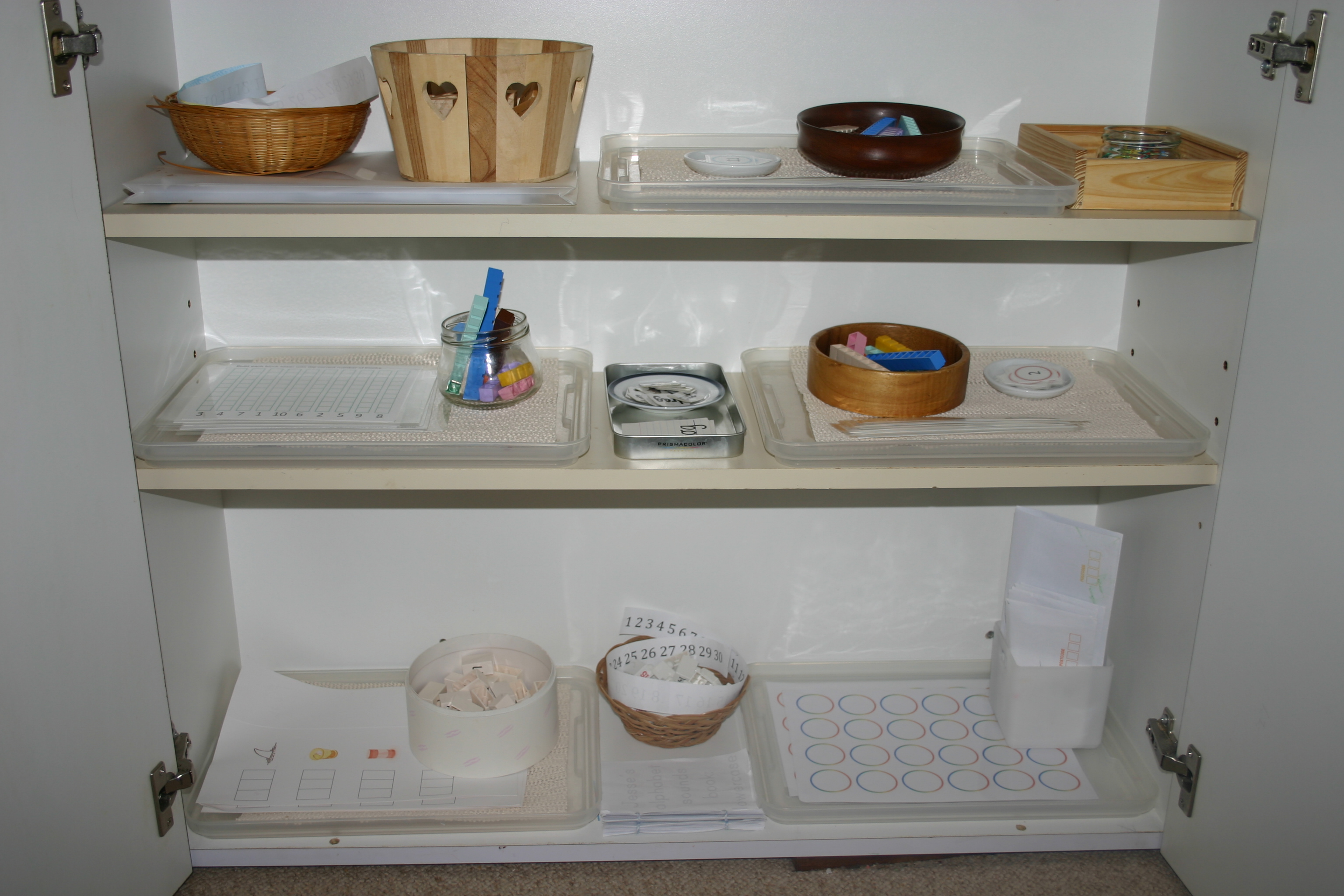
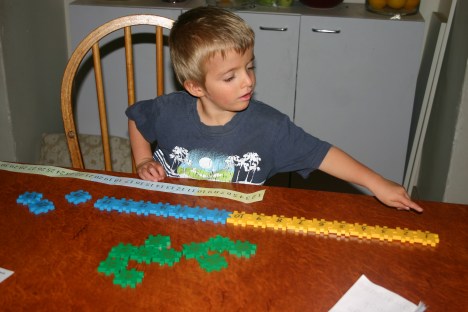
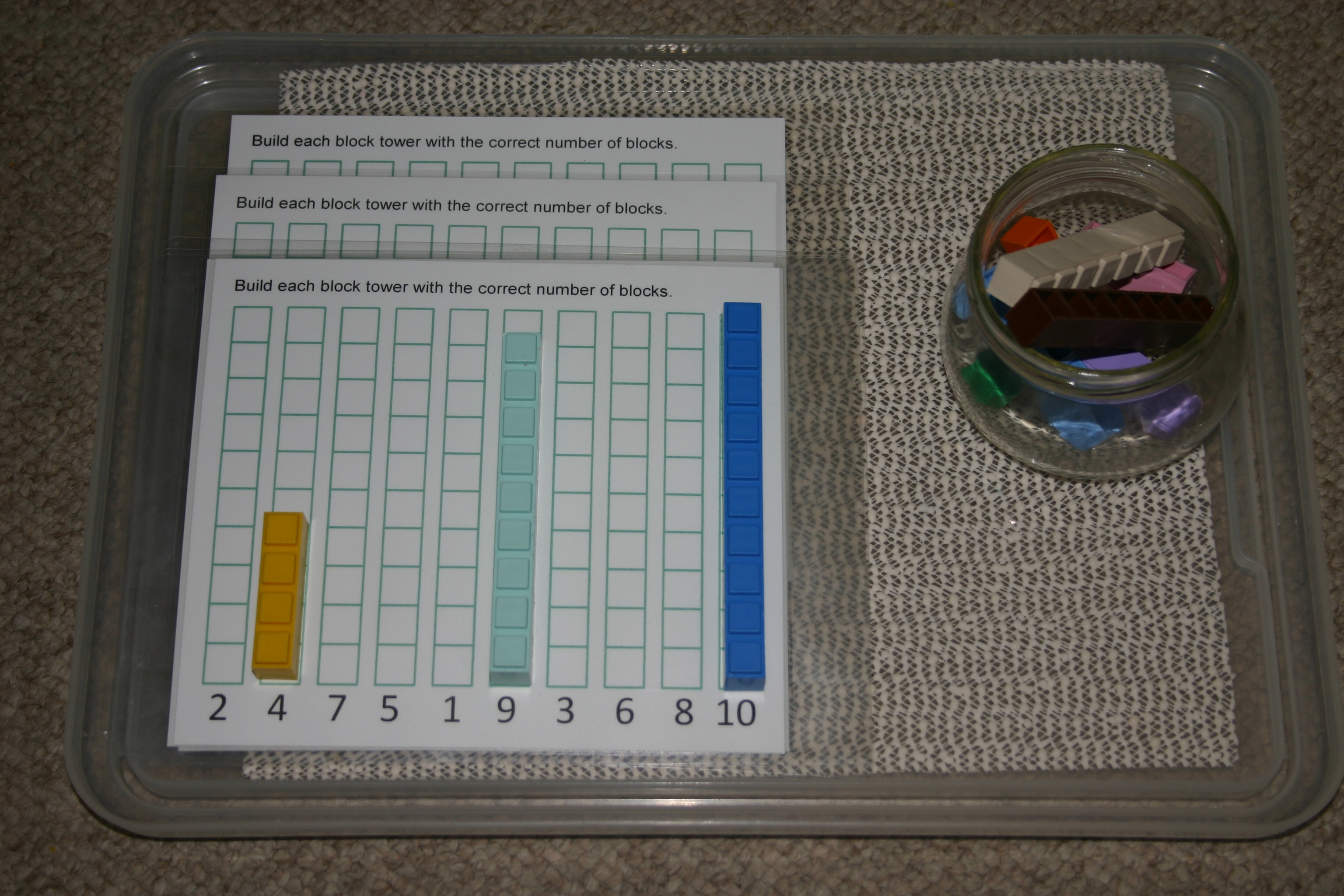
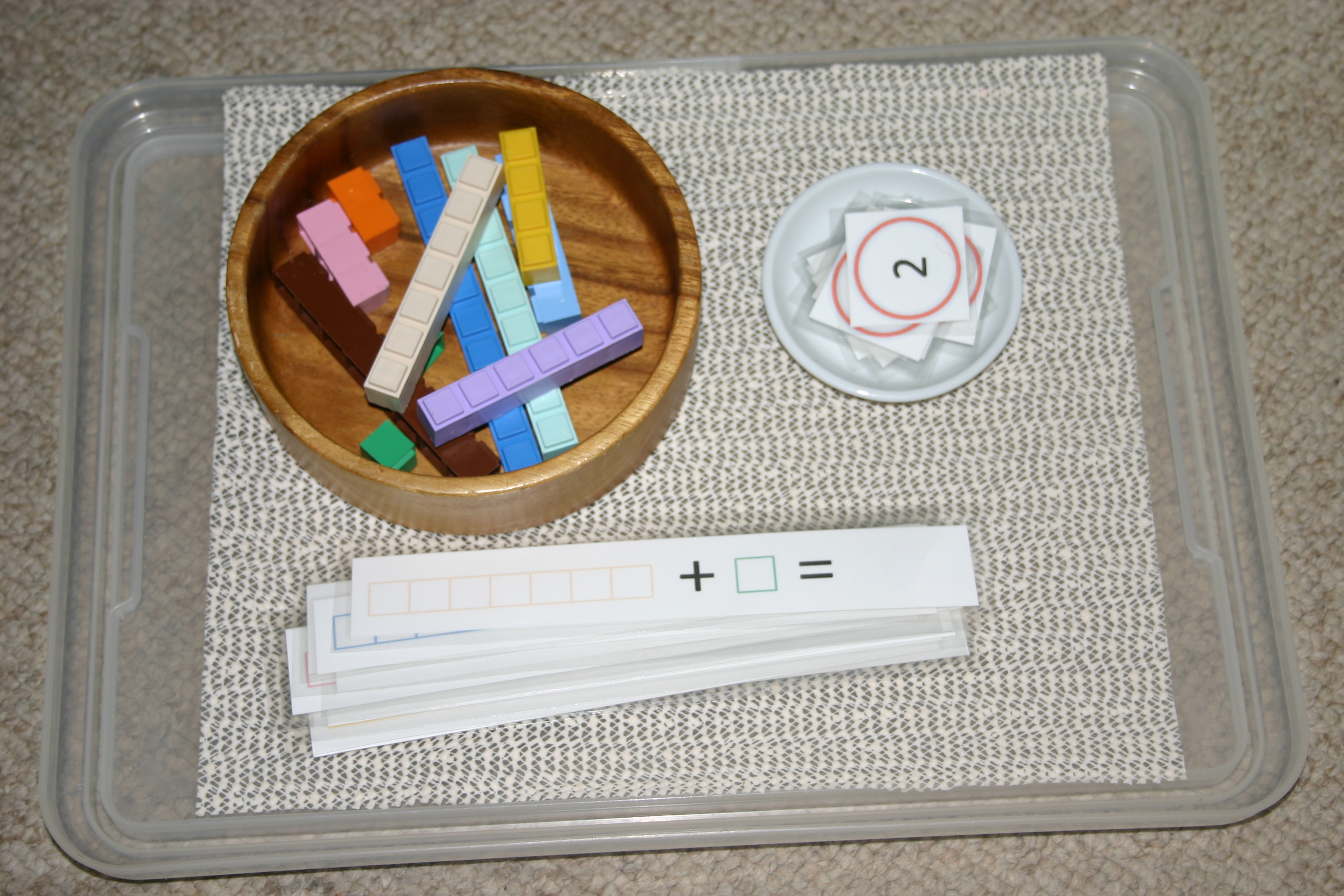
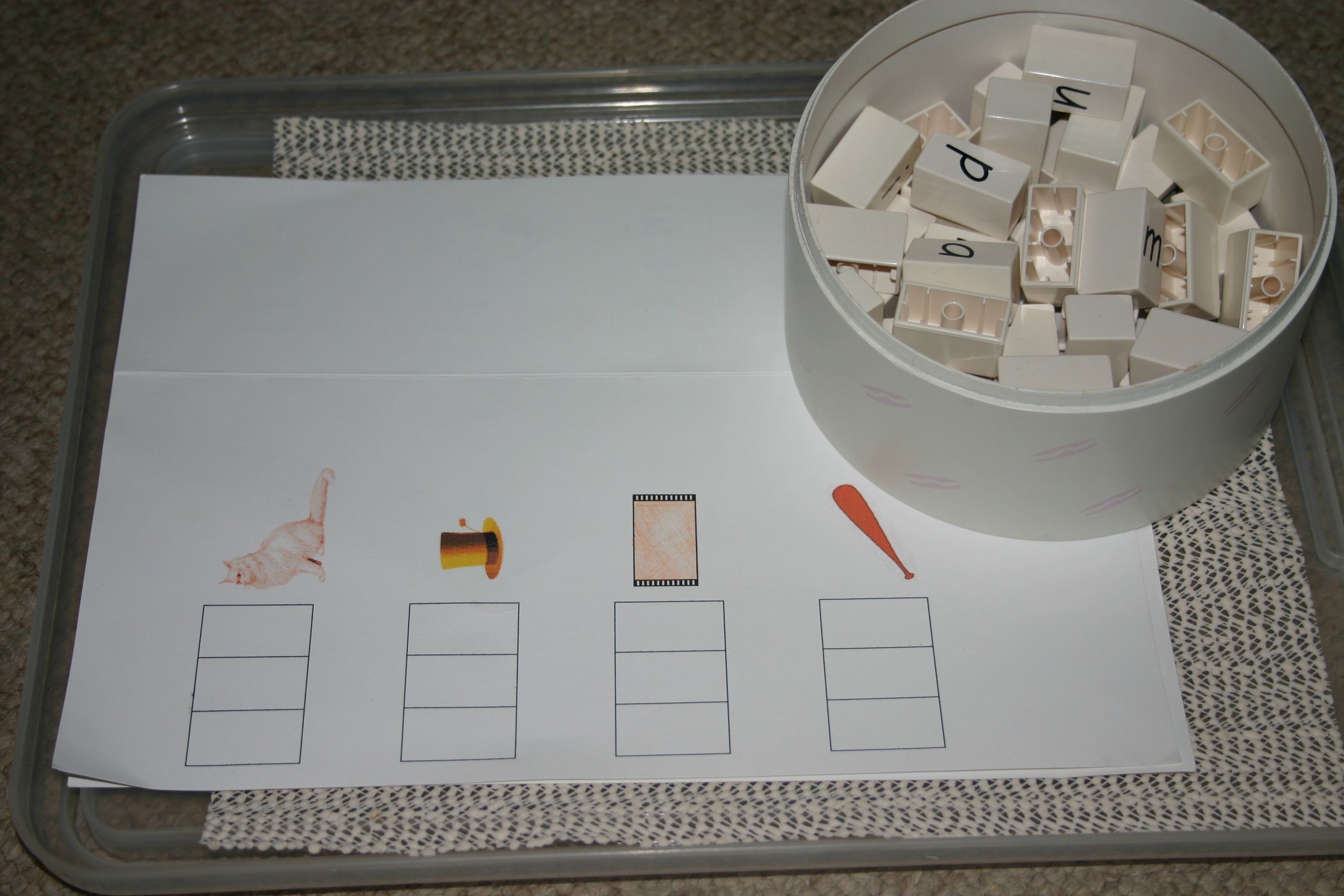
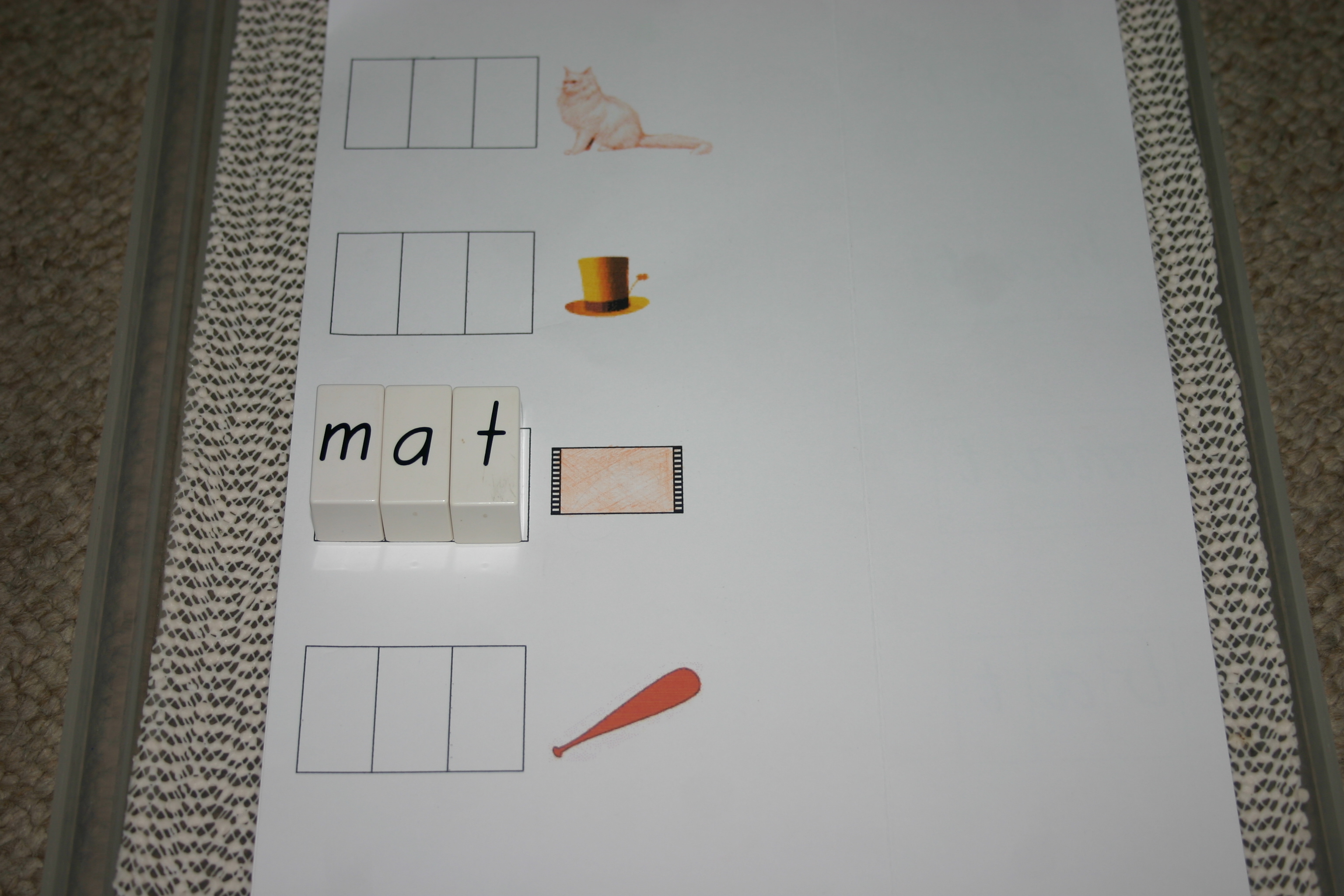
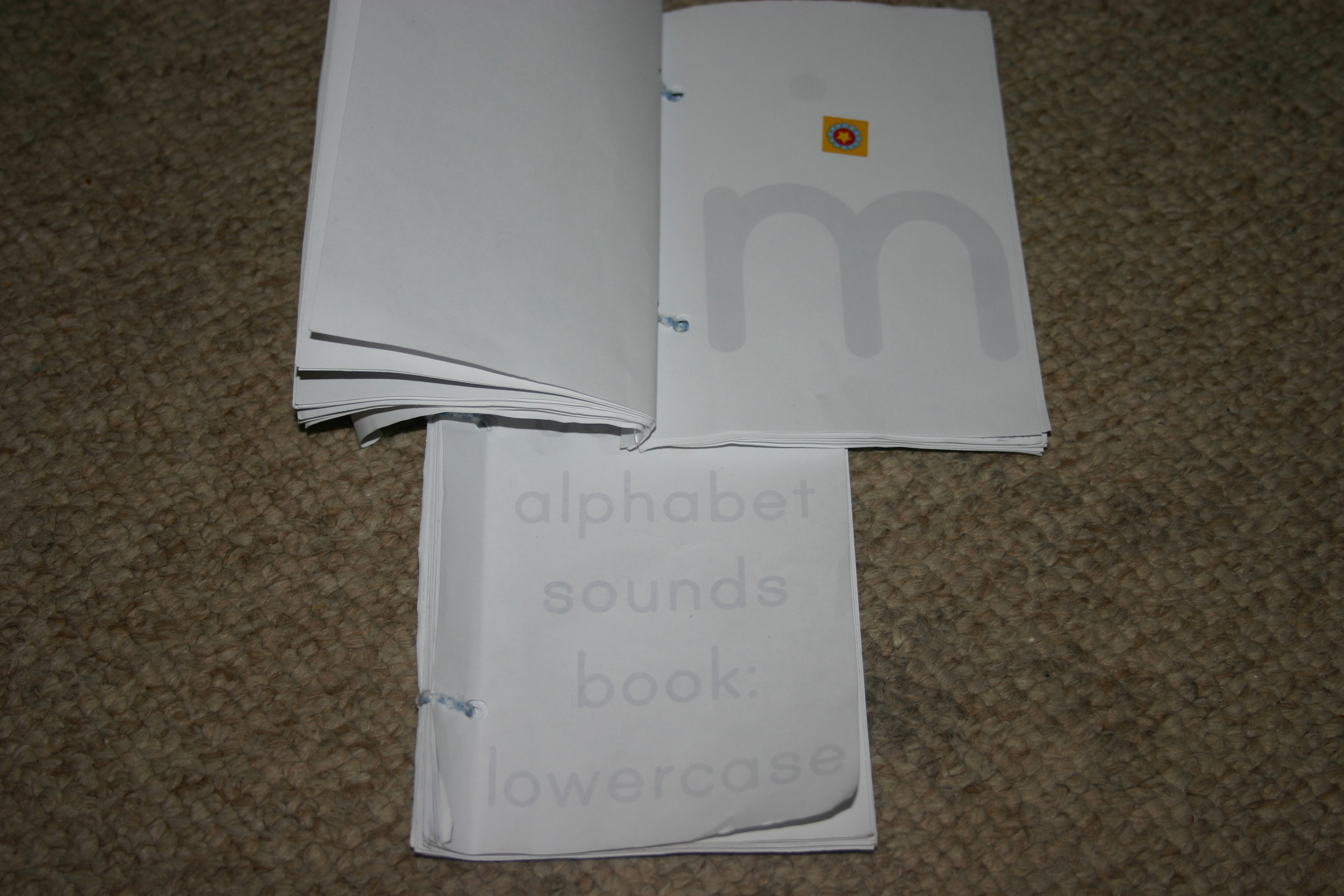
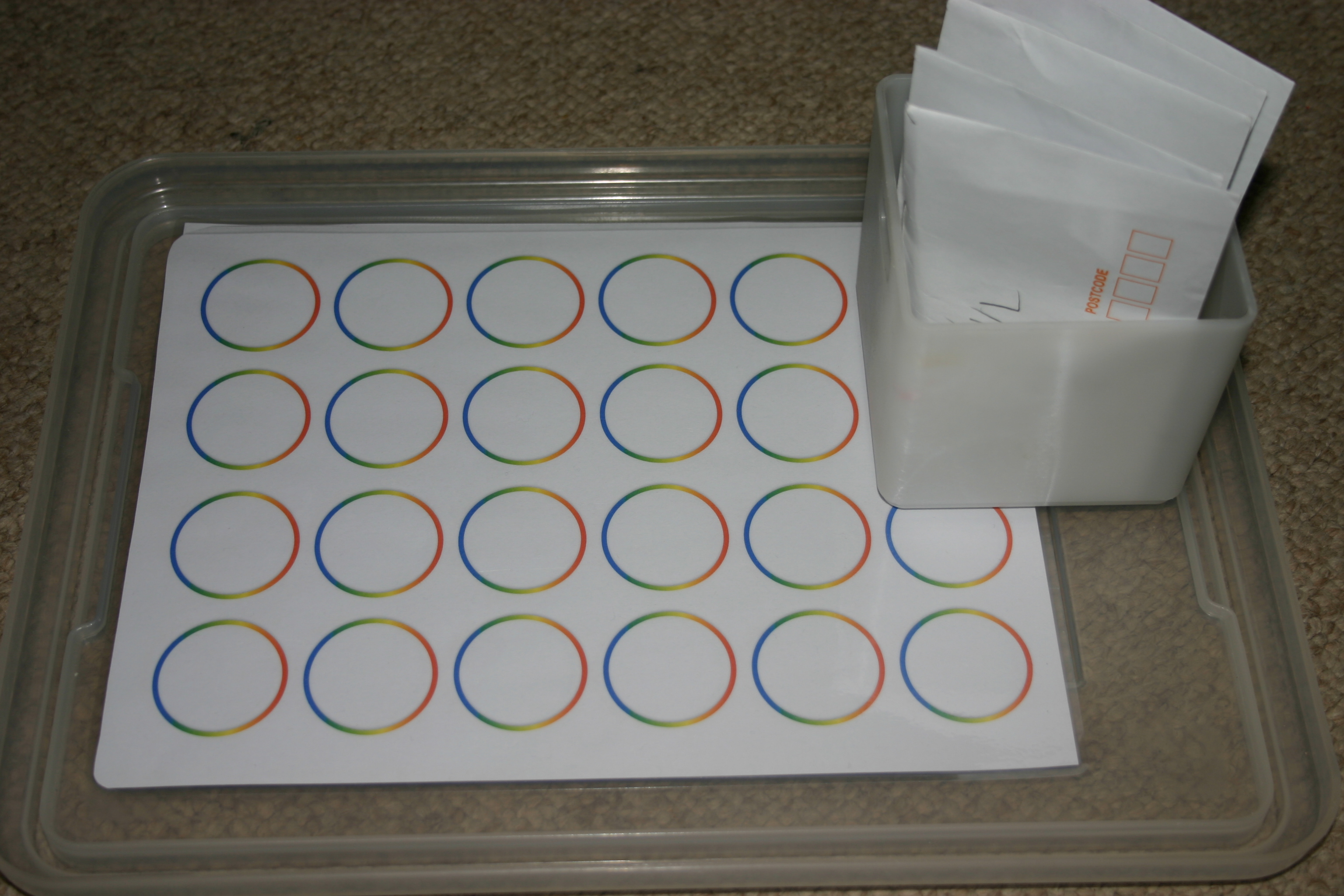
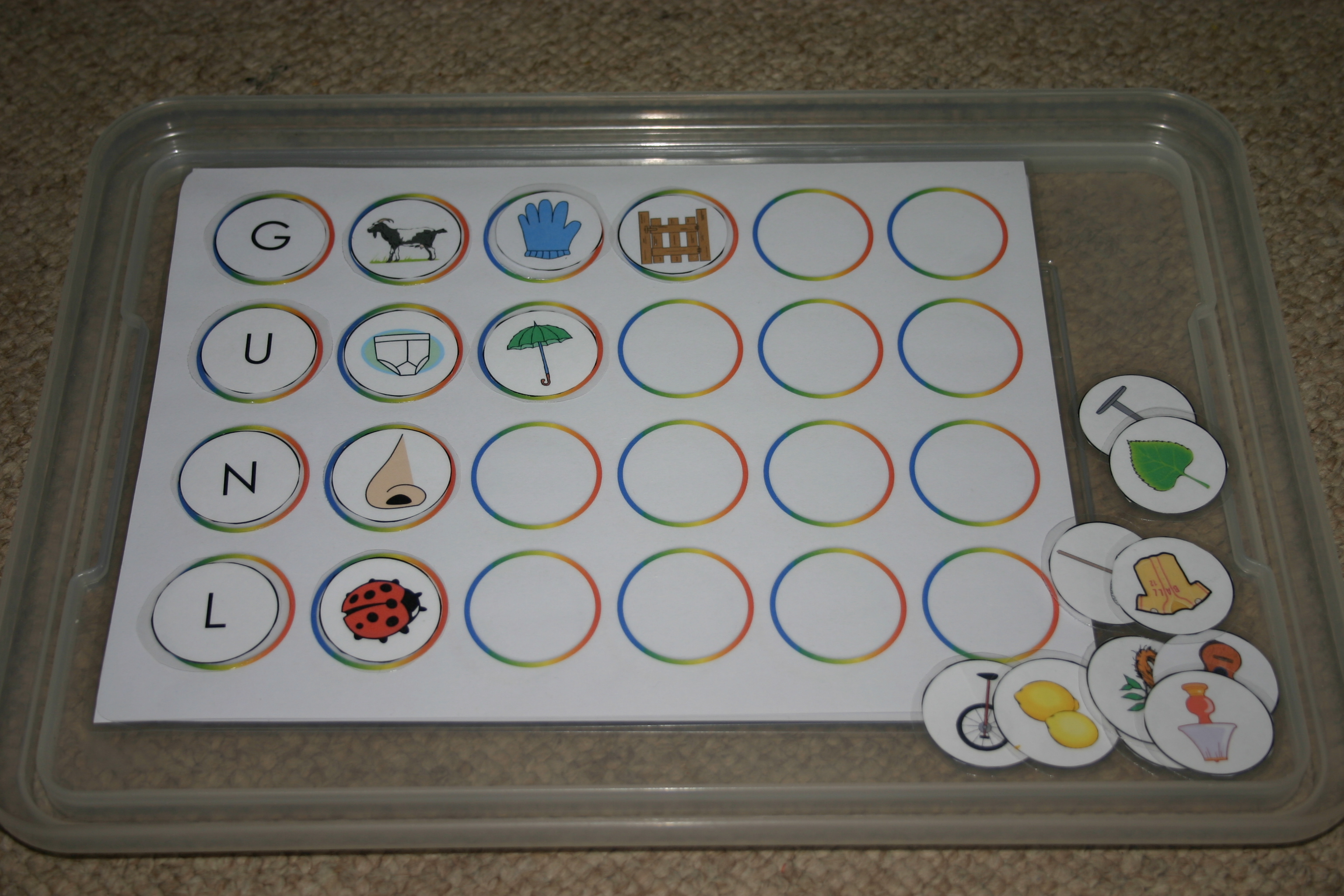
IMG_0115 It was time for an update of the activities available for my preschoolers this week. This cupboard is only used for “school” time with Mummy once a day by the twins (4 years) and contains our more formalised school activities – number and letter work etc. (Last months activities are here.) We are making the most of the next 2 months before baby number 7 is due to work on preschool skills. Once bub arrives these activities will be changed to more play based choices and able to be used independently, rather than requiring my direct supervision. Please keep in mind that I am not suggesting all 4 year olds are ready for this level of work. I work steadily with my children, moving ahead as far as their understanding and development allows. I do not stick to teaching skills by grade or age, but rather follow each child’s development as far as they are able. This changes from child to child and the ideas here are more traditionally at pre-primary to year 1 school level. It is more important that children learn to sit and concentrate, follow instructions, learn Godly character etc. than a list of rote learning or academic skills. The twins happen to be able to cope with these activities and show an interest in them so I will go with that for now. If it becomes burdensome and onerous for them, we will take a break. IMG_0097 I found these plastic tiles at an op shop. I have no idea what their original use was, however they link together nicely for this number sequencing activity. Having 3 colours meant I could quickly separate out only the 1 to 10 blocks, then add the 11 to 20 and finally 21 to 30 as they were able to complete the “path” as we called it. I provided a coloured number strip to use as a guide while they were still learning the numeral sequence. IMG_0104 IMG_0099 This is the same activity using a different style of block. These came from a build-your-own 3D desk calendar I bought for $1. You could also purchase Coko bricks which are almost identical and can be used on Duplo base boards. The twins have learnt to count to 30 out loud and have fairly good one-to-one correspondence so we are now working on recognising and sequencing numerals to 30. IMG_0105 IMG_0119 We use Mathusee in the early years (moving on to Saxon math later) but as my preschoolers are not ready to do a lot of written work I used the sequence of skills from the Primer book to develop a bunch of hands-on activities. These block manipulatives also come from the Mathusee resources. In the example above, the children need to recognise the numeral and count to find the right block to place above it. Click  HERE for a FREE PRINTABLE. IMG_0120 IMG_0121 Another Mathusee based activity; basic addition facts using the manipulatives and numeral answers. The number strips I have out at the moment are plus 1 and plus 2. Learning basic addition facts now will help with more difficult mathematical skills later on. Click the links below for FREE PRINTABLES: Plus  1 Plus 2 Plus 3 Plus 4 Plus 5 Plus 6 Plus 7 Plus 8 Plus 9 Plus 10 IMG_0122 We have moved on from letter names and sounds and identifying initial sounds to 3 letter words. These are Coko bricks and each board has groups of consonant vowel consonant (CVC) words with the same endings to keep it simple. The children carefully sound out the words and find the matching bricks to make them. IMG_0123 IMG_0124 The back side of the card has the answers to make the activity self-checking. No printable for this one sorry – the pictures are not mine! IMG_0125 These alphabet sounds books were simply a book form of flashcard. We use them to review the letter names and sounds and sticker the letters they know. I found the school font I wanted to use online, enlarged it and printed them out. IMG_0126 This is an initial sounds activity. Free printable circle pictures and letters are available from this blog. I made a simple backing page to use them in a slightly different way than the original author intended. The sets are sorted into 3 or 4 initial sounds in each envelope to keep it simple and avoid having the whole alphabet mixed up together. For a FREE PRINTABLE of my circles backing page click here. IMG_0127 IMG_0128 I made these consonant-vowel-consonant (CVC) 3 letter word matching cards using pictures from cheap sticker books. The children choose a picture and find the matching word card before turning the picture over to check their answer on the back. IMG_0129 A basic counting and/or colour matching activity from an activity bag swap I posted on a while back. The concept is far too easy for the twins now but I wanted something for fine motor skills so popped this one out again. The idea is to slide the correct number of paperclips onto each foot after ordering the numerals from 1 to 5. You may also require them to match the colours at the same time.
Mega list of table activities for school aged children

Here is the last post in a 3-part series of table activities for babies to school-aged children. Today’s chart of ideas is for the older group. By this age, my children are usually free to choose their own activity (within reason) as long as they display a good attitude on the few occasions I do choose for them. (See choices.) Much of what is on this list are items that are owned by individuals (birthday gifts etc.) so they are not out for public access, but having them on a list prompts them to get out items they may forget for a while.

As with the baby and toddler ideas and preschool children’s ideas, this is a large file and will take some time to download.

table activities for school age children – click here for free download

table activities for school aged children

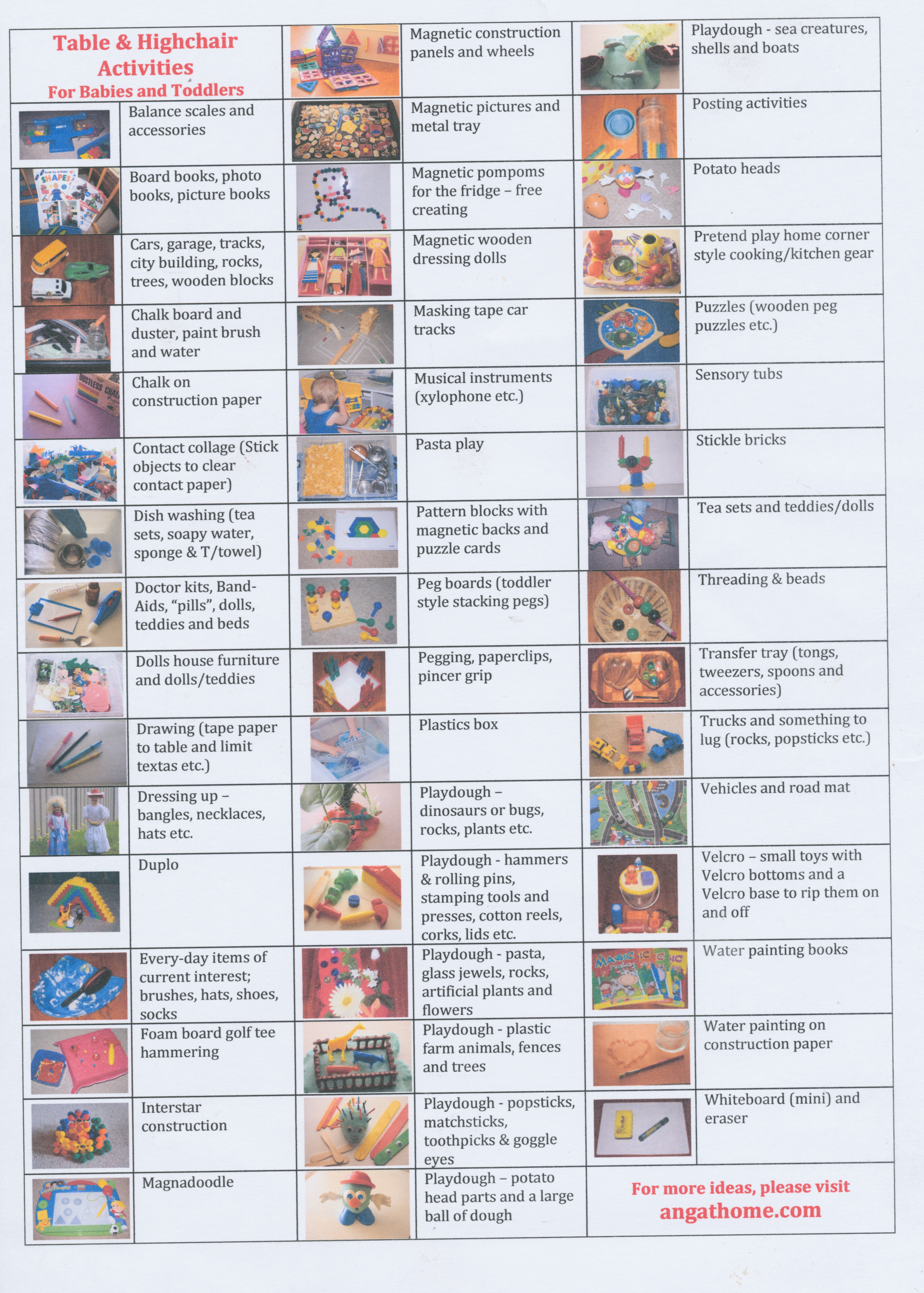
Mega list of highchair and table activity ideas for babies and toddlers

How do you keep toddlers and preschoolers well occupied while you homeschool older children, cook dinner or make an important phone call? In the interest of getting organised and answering this question for myself, I have created charts of activities for 3 different age groups; babies and toddlers, preschoolers and school-aged children.

Every item on these lists is not necessarily a toy or activity that I would have chosen to purchase, or recommend that you do, they are simply what we already have. With 6 children in the house there are many birthday and Christmas gifts coming in and our collection of table activities is quite extensive. I have purchased some and do have my favourites, but it is very nice to be able to rotate constantly so that there is always something “new” and fresh to do.

The toddlers and very young children do not have a choice of activities. I set out what they will be working on and decide how long it will be before they are able to change. See choices, highchair activities for babies, routines & highchair time and Montessori style practical life tray activities for toddlers for practical explanations of how to get started and manage highchair time for little ones.

table activities for spreschoolers p1 2   

Click here to download a free printable PDF of the activities for babies and toddlers poster

It is a large download so it take some time to come through (lots of photos!) I had to leave it and walk away! The next two posts will include the charts of activities for preschoolers and school-aged children, so keep an eye out for those. If you would like an explanation of any of the activities, please feel free to ask. I didn’t want to clutter up the lists with too much information.

I would love to hear what activities you like to give your babies and toddlers.

Toddler busy bag exchange

IMG_8810

A good friend of mine recently hosted an activity bag exchange for young children and toddlers. Each Mum involved made 13 copies of an activity of their choice. We all got together for a chat and to exchange our bags with each other, leaving us all with 13 different activities to use with our own children. Here are the wonderful bags the ladies made. (While none of these are original ideas, they can be found in so many places across the web that I haven’t tried to give credit to sources in most cases.)

IMG_8819

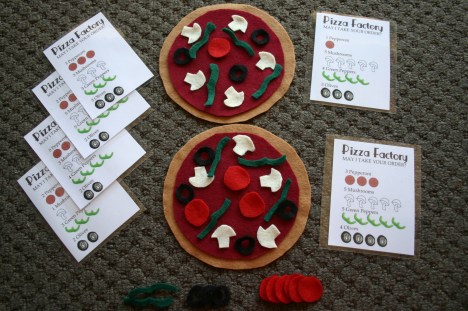
Pizza factory. The children follow the order cards to custom-make each pizza according to their customer’s preferences. (Links to free printable order cards and other busy bag swap ideas here.)

IMG_8816

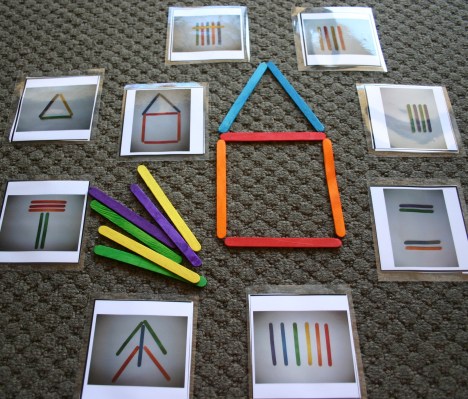
Popstick pattern match. Use the coloured popsticks to copy the picture patterns. Several of the cards have plain colours on the back to convert  the activity to a colour match instead.

IMG_8830

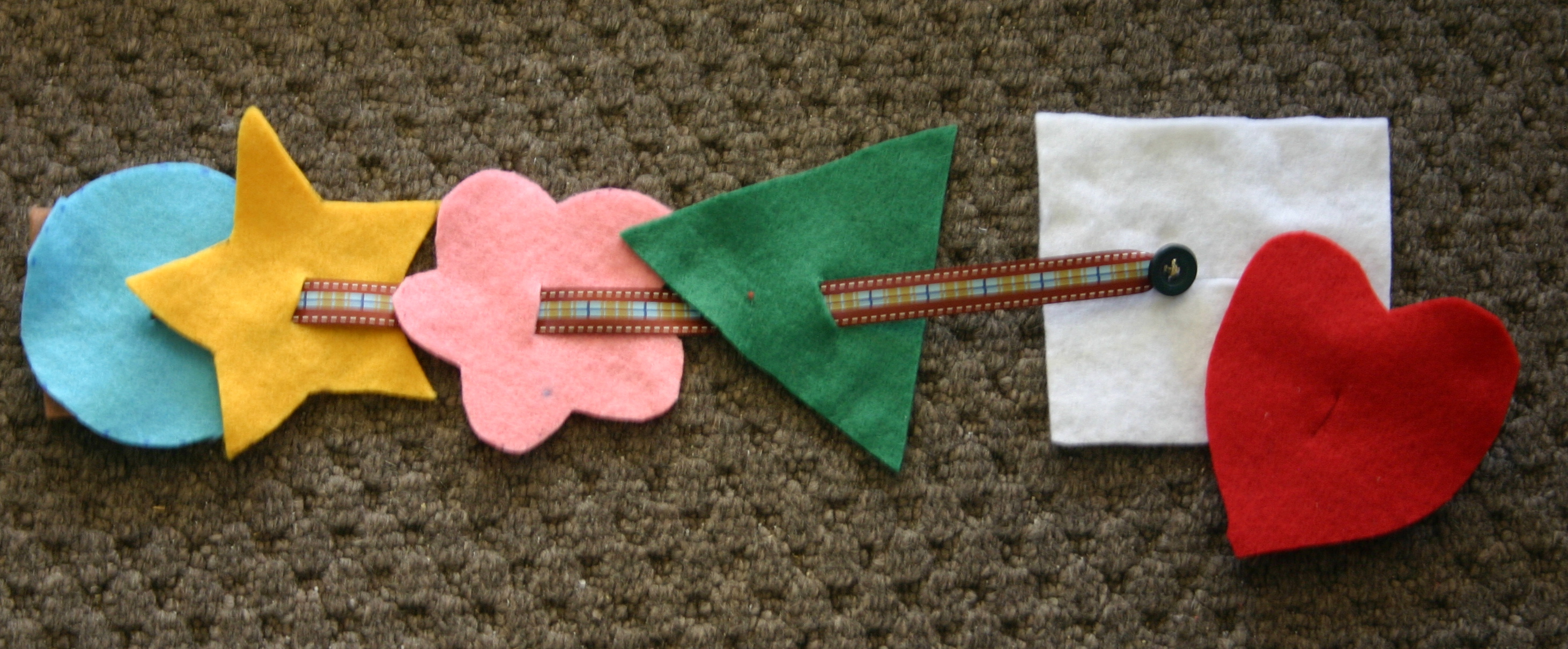
Button snake. Great for learning how to do up buttons; excellent for fine motor control. The felt pieces are pushed on and off the “snake” using the button head.

IMG_8828

Pipecleaner bracelets. Thread the cut straws onto the pipecleaners to make patterns and jewellery. You could do this as a colour matching activity if you have the right straws and pipe cleaner colours

IMG_8827

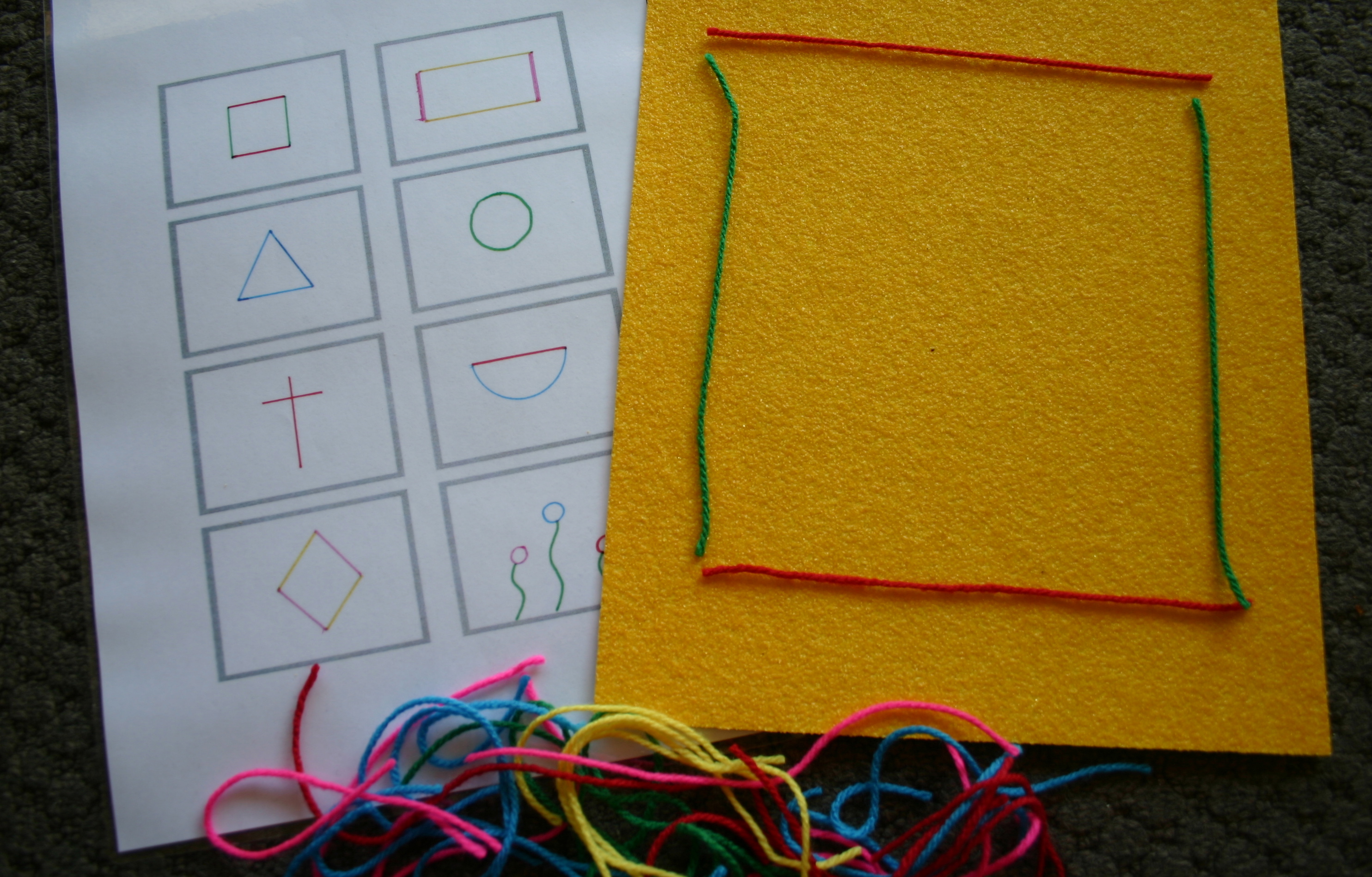
Sandpaper and wool pictures. Again with patterns to follow and copy, placing the pieces of wool onto the sandpaper to make pictures.

IMG_8826

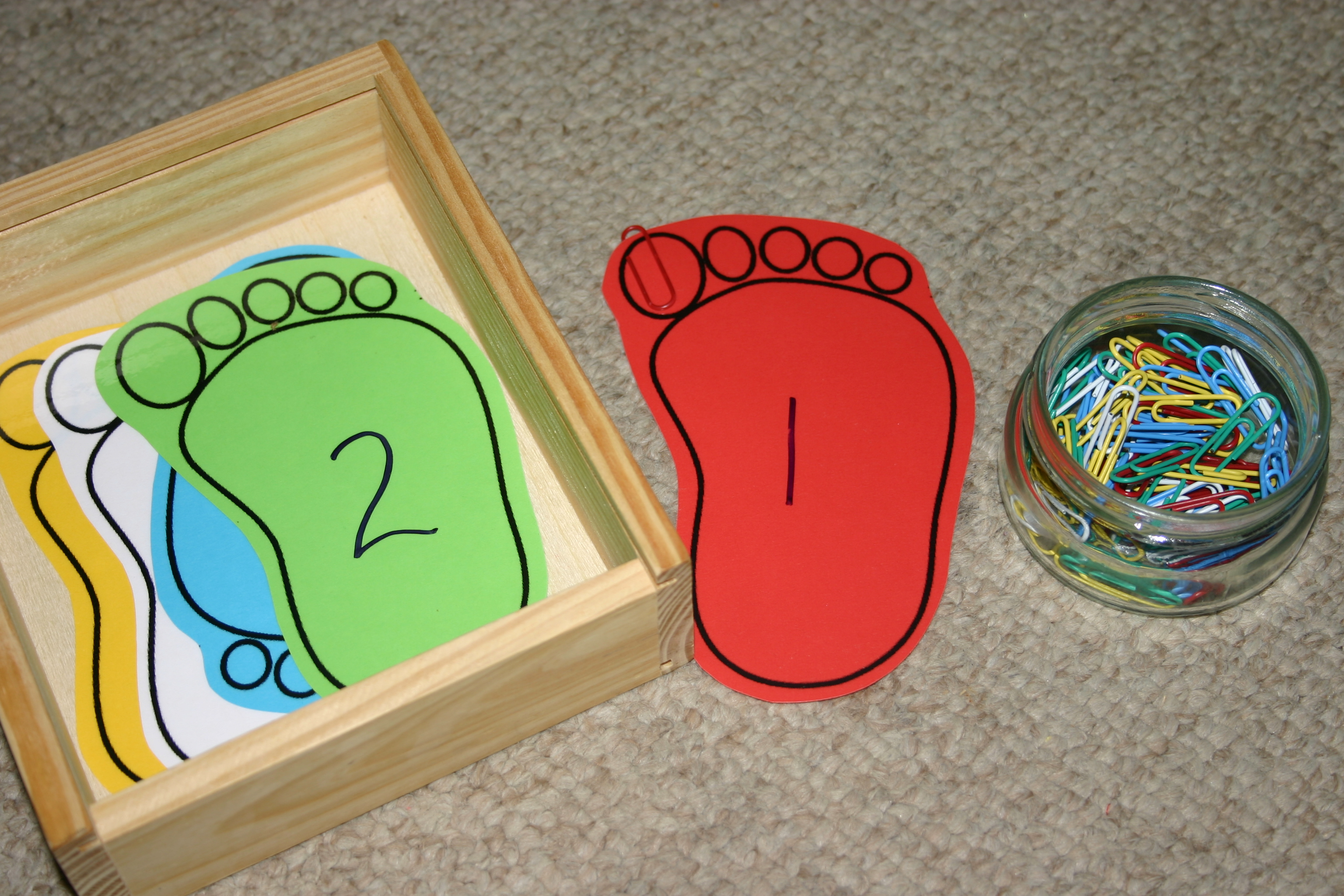
Paper clip feet. Slide the paper clips onto the toes by colour or write a number on each foot for counting practise as well as fine motor skills. Young children can just pile the paperclips on top if it is too difficult to push them on.

IMG_8825

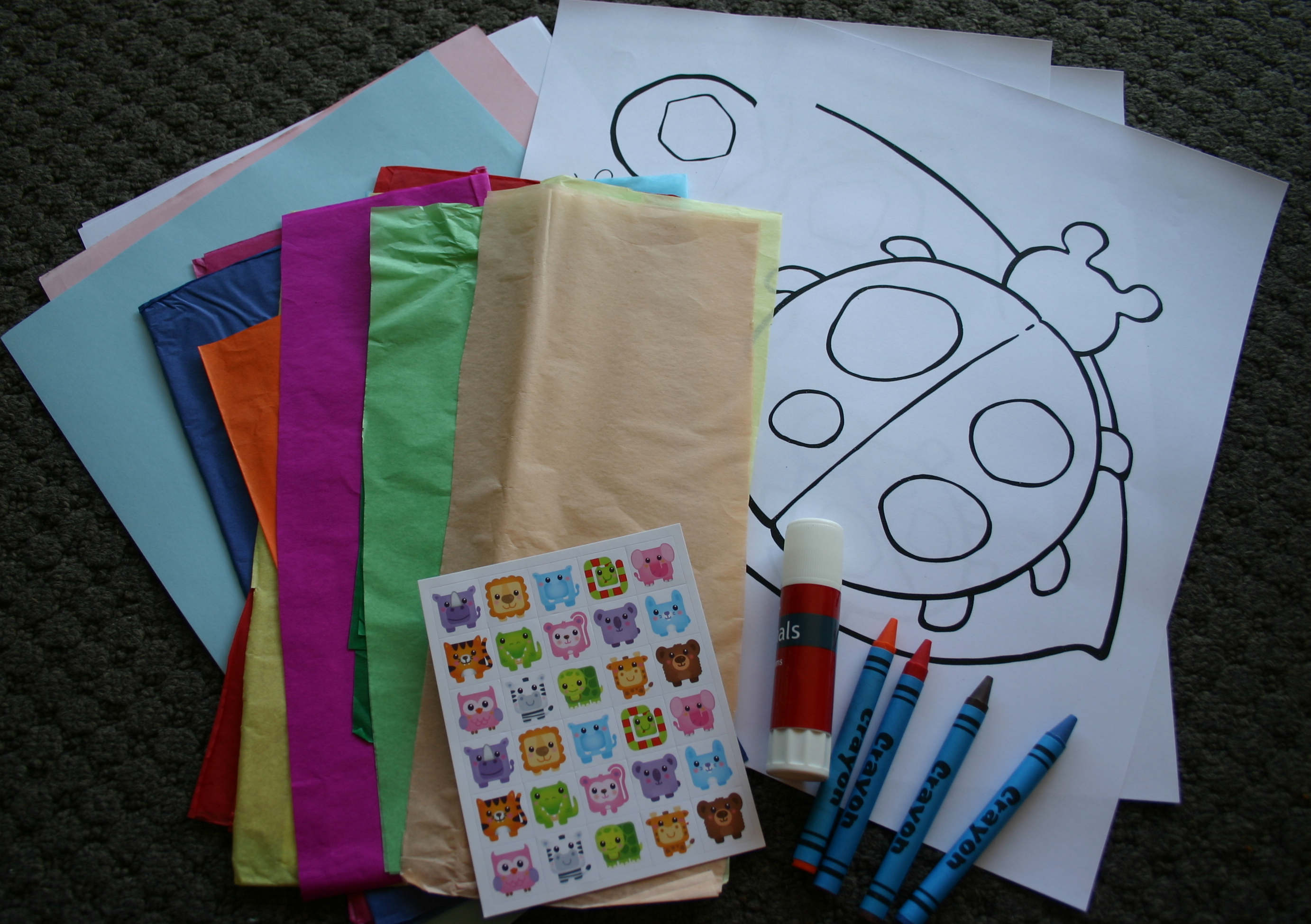
Tissue paper pictures. Tear pieces of tissue or crumple into balls to decorate the pictures or make you own with the blank paper and glue. Stickers and crayons are added for extra fun as well.

IMG_8824

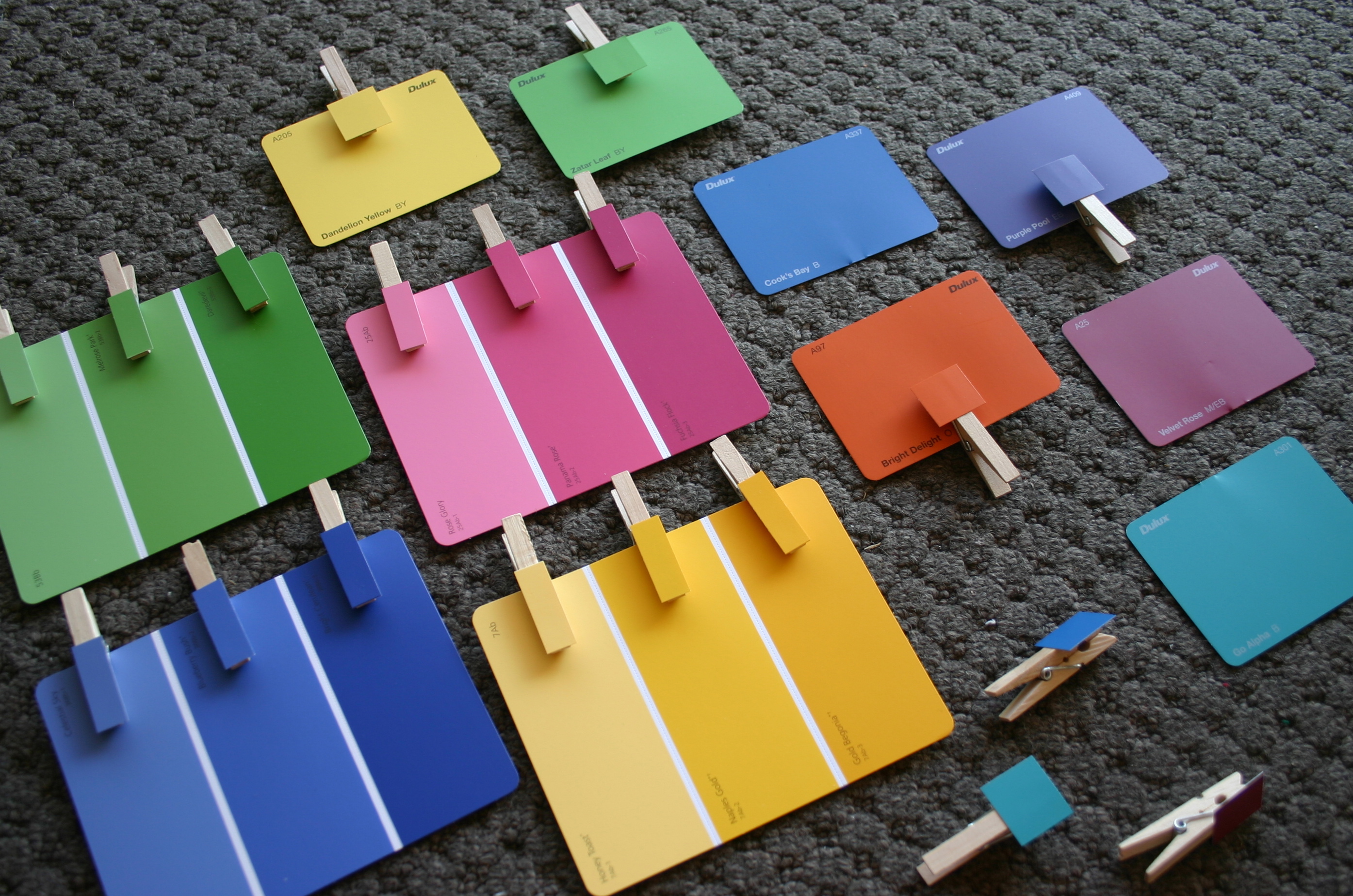
Paint swatch pegging. Pincer grip (necessary for writing later) is exercised by opening the pegs to match them to the correct colour swatch.

IMG_8823

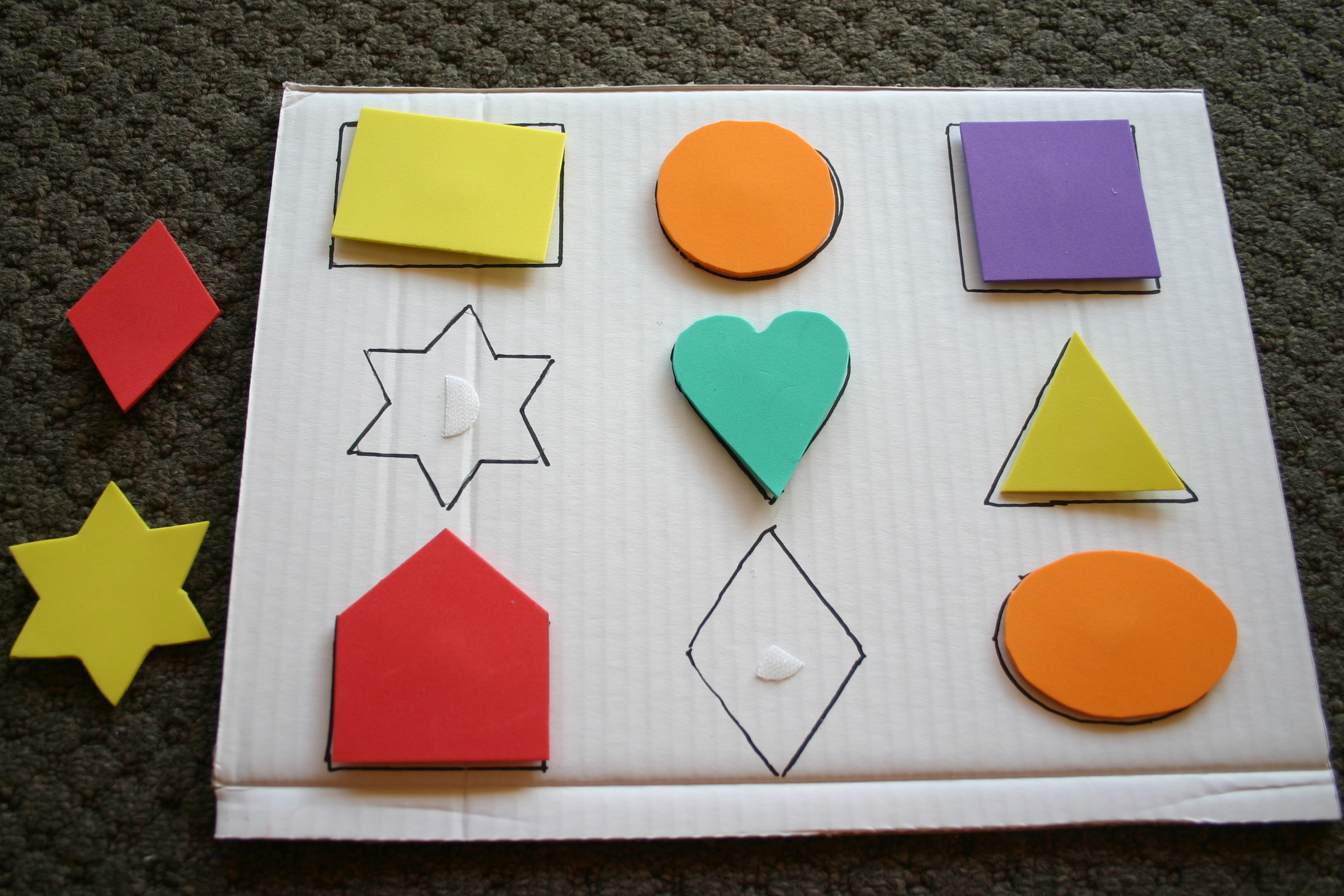
Shape puzzle. A simple make-your-own puzzle with foam sheet cut into geometric shapes

IMG_8821

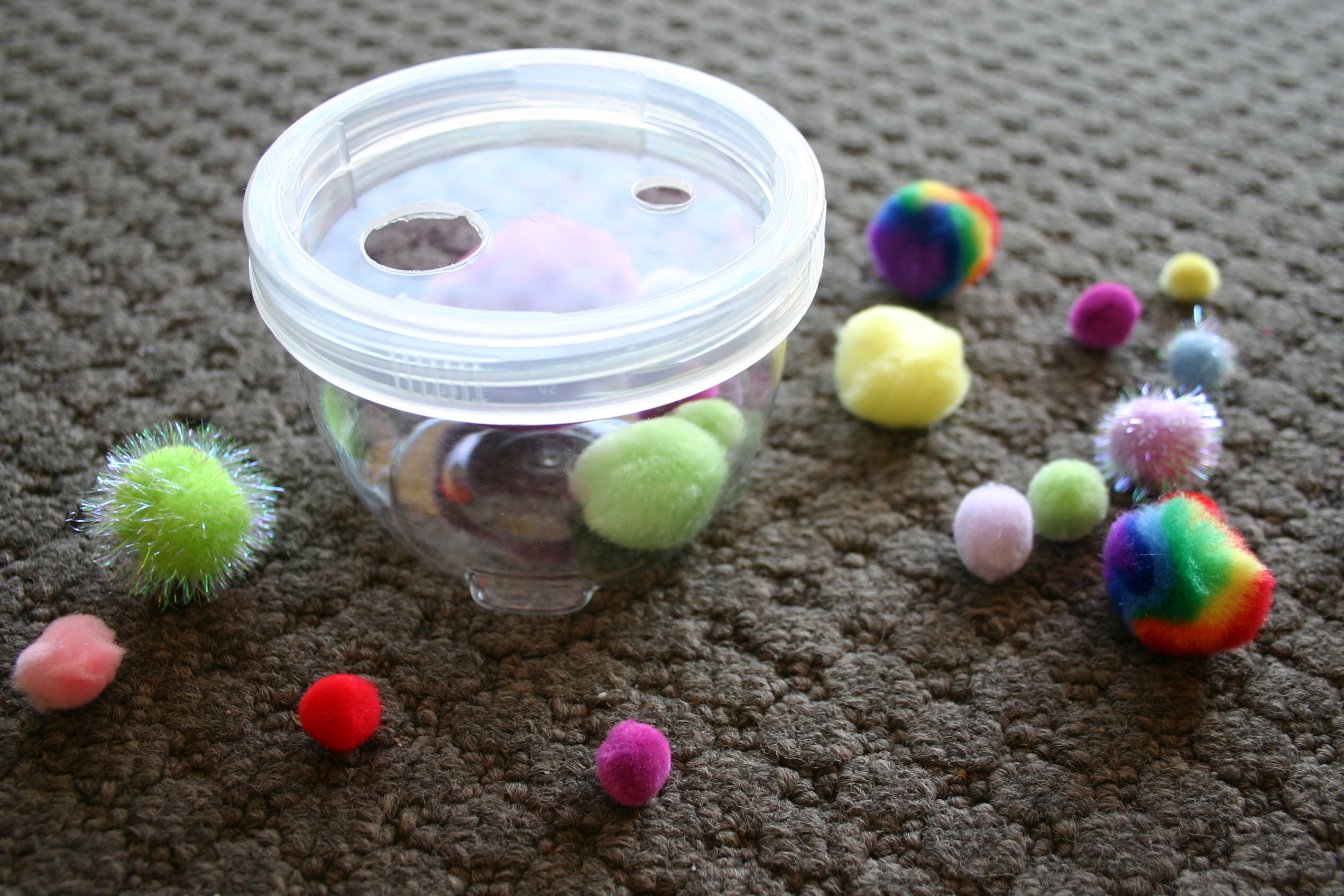
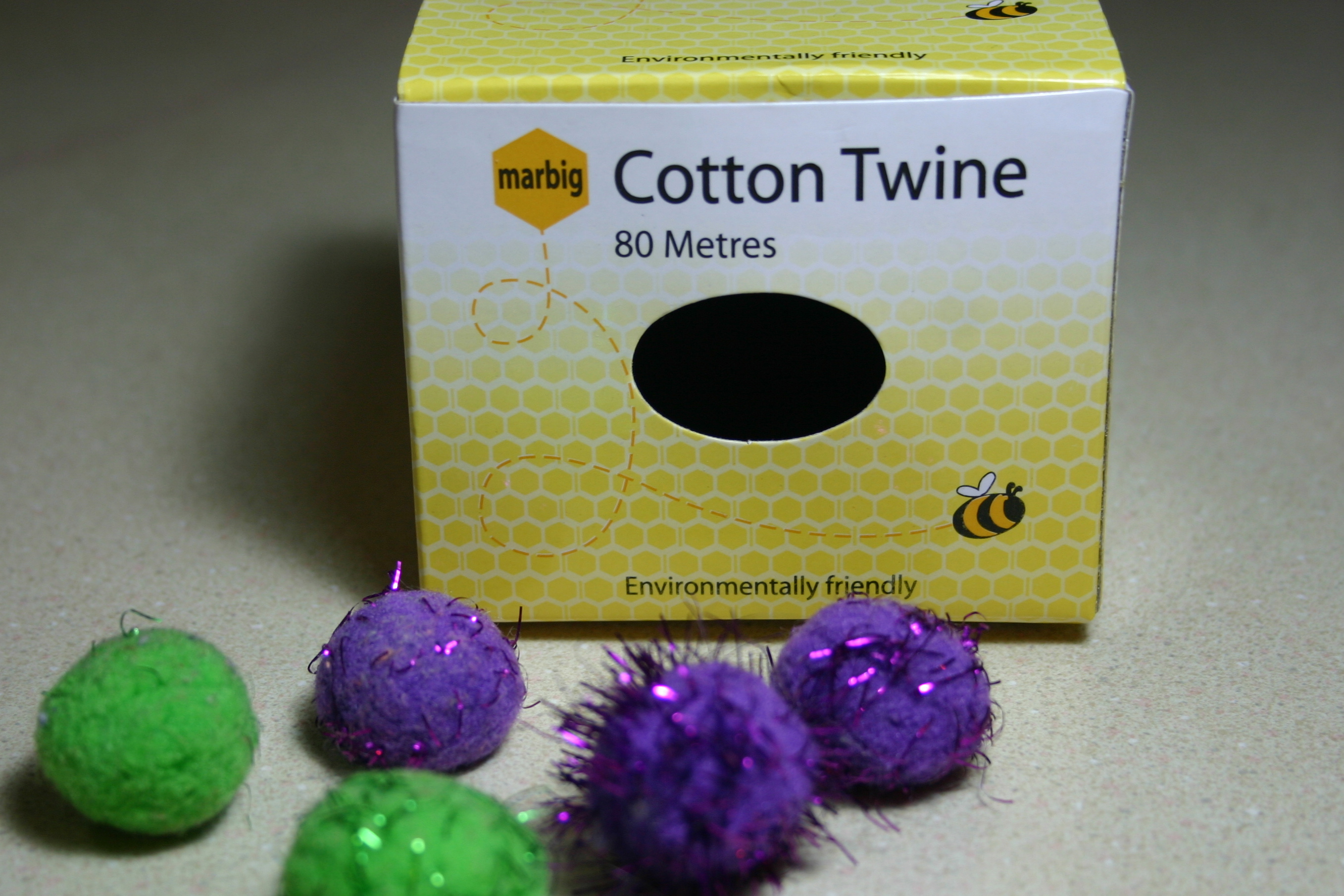
Pop-pom push jar. Push the pompoms through 2 sizes of holes into the plastic container. (Tip: Use a drill to make the holes.)

IMG_8812

My youngest enjoyed the pompom posting and soon figured out that he could shake the small ones back out again – saving me the trouble of taking the lid on and off for him!

IMG_8818

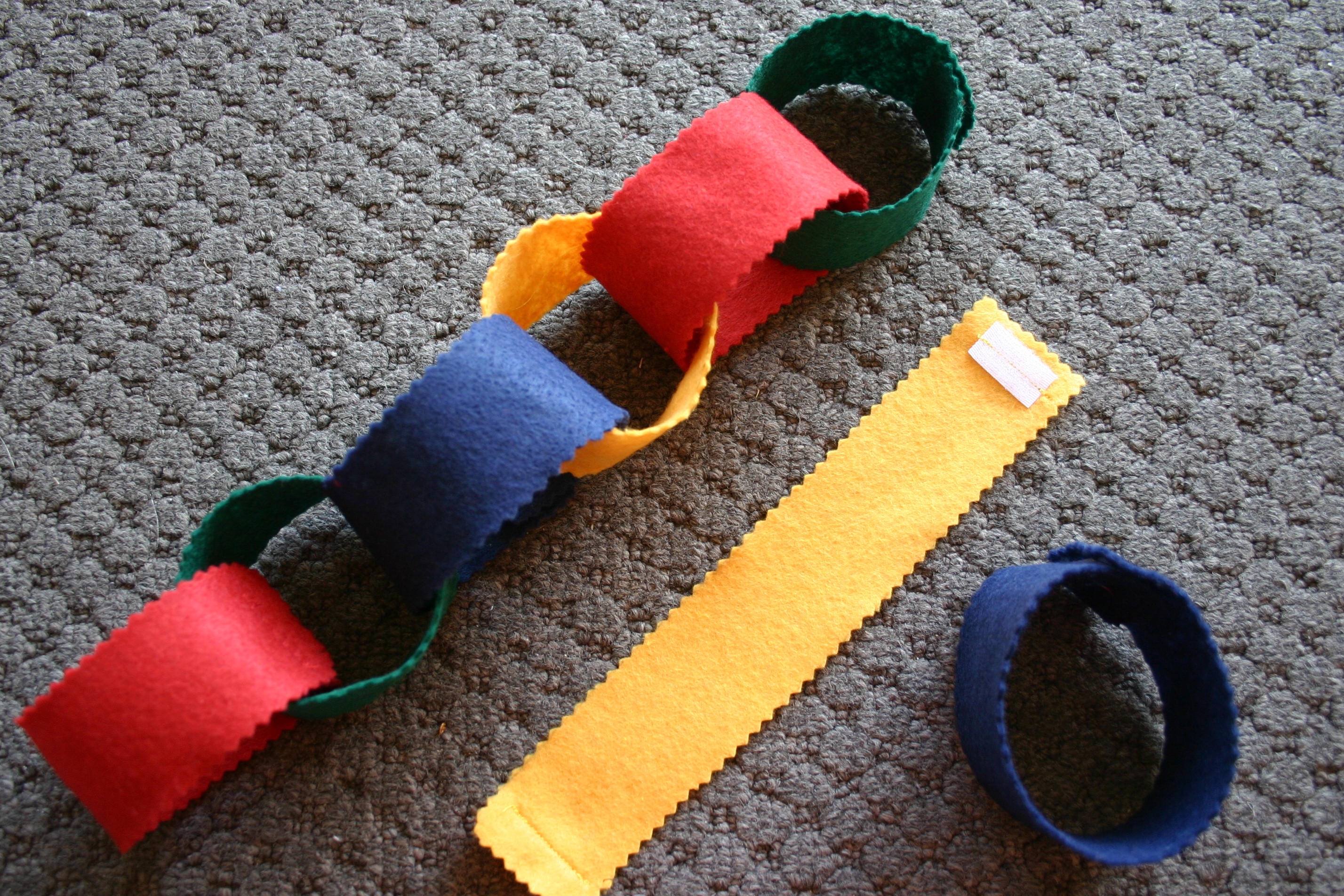
Felt chains. Perfect timing for Christmas! While the rest of the family are producing reams of paper chain to decorate the entire house (or is that just my children?) the youngest can be practising with felt and velcro, to be made and re-made over and over again.

The last 2 bags were mine and I made sewing and threading activities and a basic gluing bag. Sorry, no photos, but check here and here for some gluing and fine-motor ideas.)

Other posts you may find helpful:

Ziploc activity bags for toddlers and preschoolers

Toddler busy boxes 

Sensory tub ideas

Toddler bags for out and about: How to get through a restaurant meal with a toddler.

IMG_8763

Any parent of young children knows that a meal out in a restaurant can be taxing with a toddler in tow. There are ways however to minimise the stress and make it a pleasant experience for everyone.

Firstly, train your child at home to sit in their highchair after meals for a period of time with a few toys or activities, or perhaps a book or two and include playpen time (or room time) and mat time in your daily routine. Having these daily periods where your child is used to happily playing with the toys you give them, whilst staying within a boundary, is excellent preparation for other occasions when they will need to sit quietly for a longer than normal stretch of time.

Spend a little time preparing some new and interesting activities that are kept aside for use while you are out. Either purchased toys and books or some simple (and cheap) home-made ideas like the ones that follow. Toddler’s generally do not have a well-developed imagination and tire of toys that don’t “do” something relatively quickly, so having to buy new things continually to keep up with their changing developmental needs and interest can become very expensive. These home-made toys are great for developing fine motor skills and hand-eye coordination and when introduced at the right developmental level, will be stimulating and interesting for your young child. If a task is too easy it will not hold their interest. Too hard and they will become frustrated and lose interest.

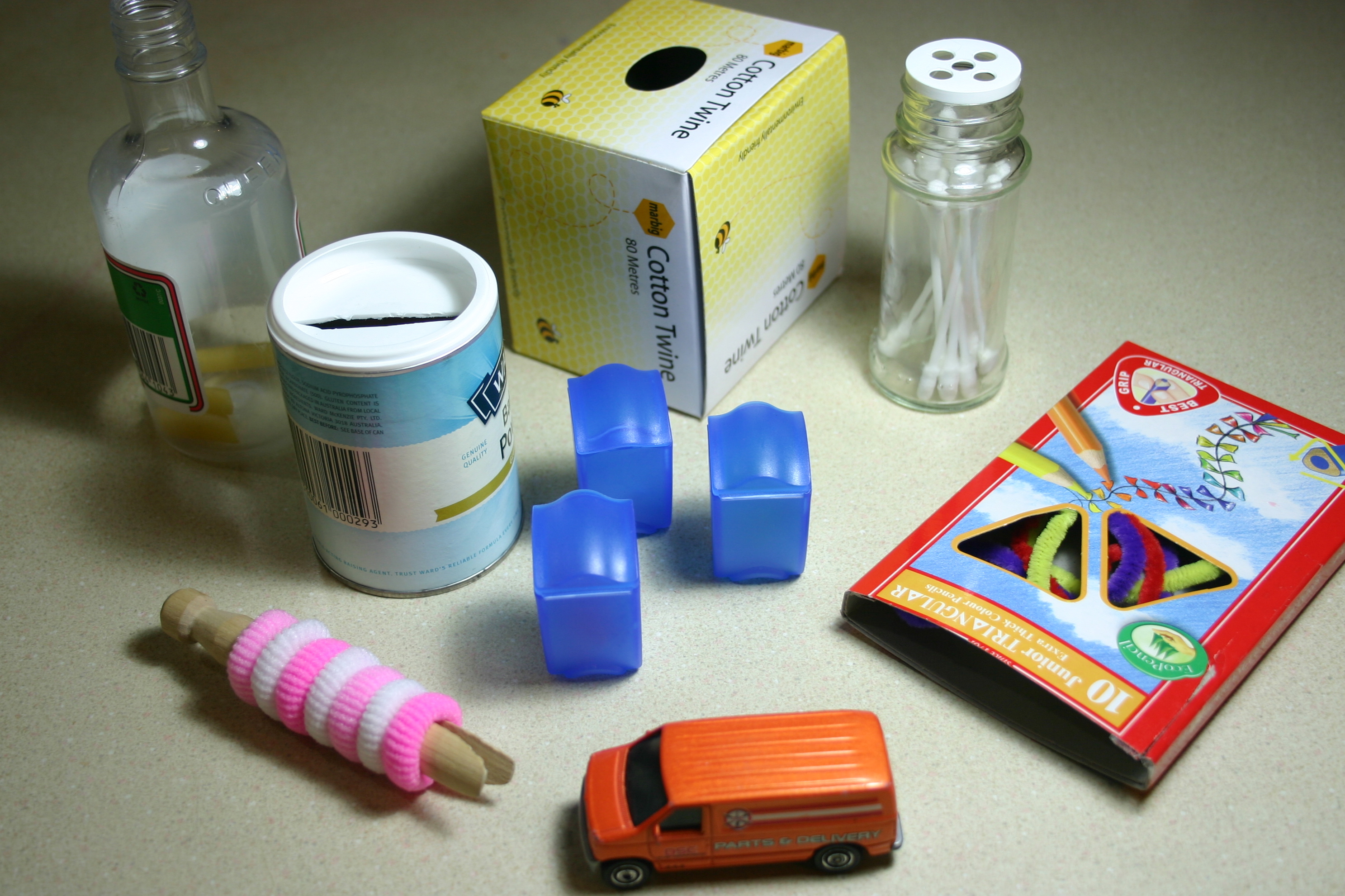
This is the bag of “toys” I put together for my 18 month old to use during a lunch we attended on the weekend. He only used a couple of them as I bought them out one at a time and only changed them over when necessary.

IMG_8759

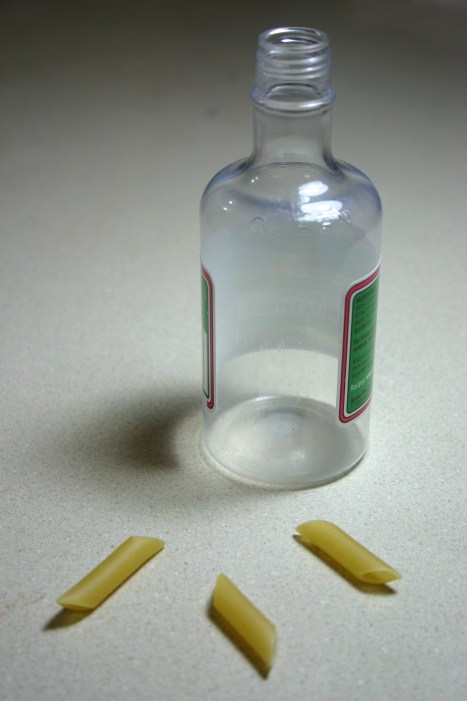
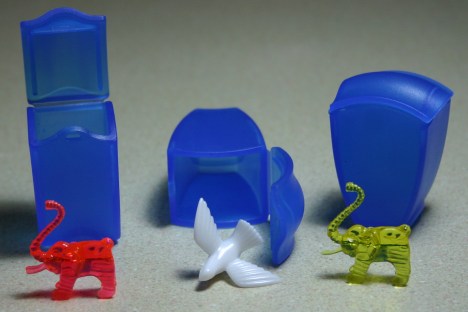
Posting bottle: Posting noodles into an empty vanilla bottle and tipping them back out again.

IMG_8761

Posting box: Pushing pompoms into the hole in this twine box. Help is needed to open the box to tip them out again but as we are sitting right next to him this is not a problem.

IMG_8758

Small spaces jar: Posting earbuds into a spice jar with holes in the lid. He discovered after I had taken off the lid and tipped them all back out about 5 times that he could shake them out one at a time through the holes so that added a new dimension to the activity.

IMG_8752

Posting tin: Posting plastic poker chips through a slot into an empty baking powder container. Yes, I know, it’s another posting activity. But at this age, my son LOVES to post stuff so I’ll run with that for a while and change when he is no longer so fascinated!

IMG_8754

Surprise boxes: Opening and closing these little pill containers to find the small toy inside is great for fine motor development.

IMG_8749

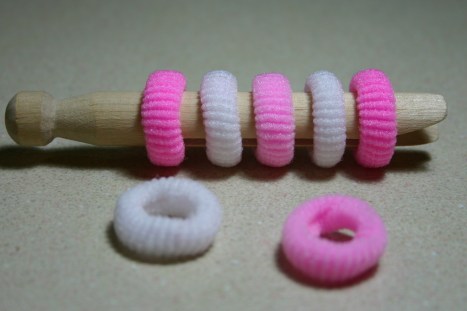
Dolly peg and hair bands: Sliding hair ties on and off a wooden dolly peg may be a little difficult for him but we will give it a go and see what happens. I haven’t used this one yet.

IMG_8750

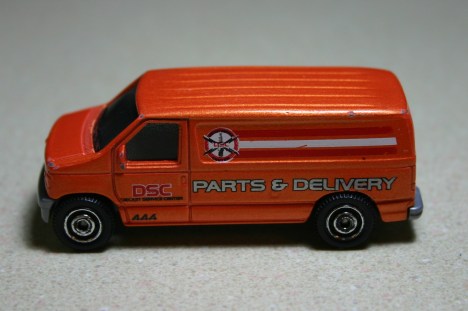
Dinky car: Having older siblings means that interest in cars has developed early and he knows how to play with them form observing his brothers.

IMG_8755

Pipecleaner box: Shoving them in and out and bending them into different shapes could be fun. (We haven’t done this yet either but I remember one of my older children using this idea as a toddler and spending a very long time poking the ends into the small holes in the chair he was sitting on.)

IMG_8764

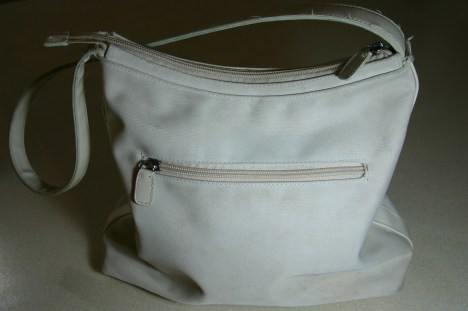
This old bag is how we cart the activities around. The fact that it has several different compartments as well as zips means that it is an activity in itself.

Having children will certainly change your life, but it shouldn’t stop you from doing the things you love. Train your children and you will reap the benefits.

Other posts you may find helpful:

Mat time on the go

Activities to make for toddlers and babies

Buffet training

Arsenic hour and toddler meltdowns

How do you store children’s jigsaw puzzles?

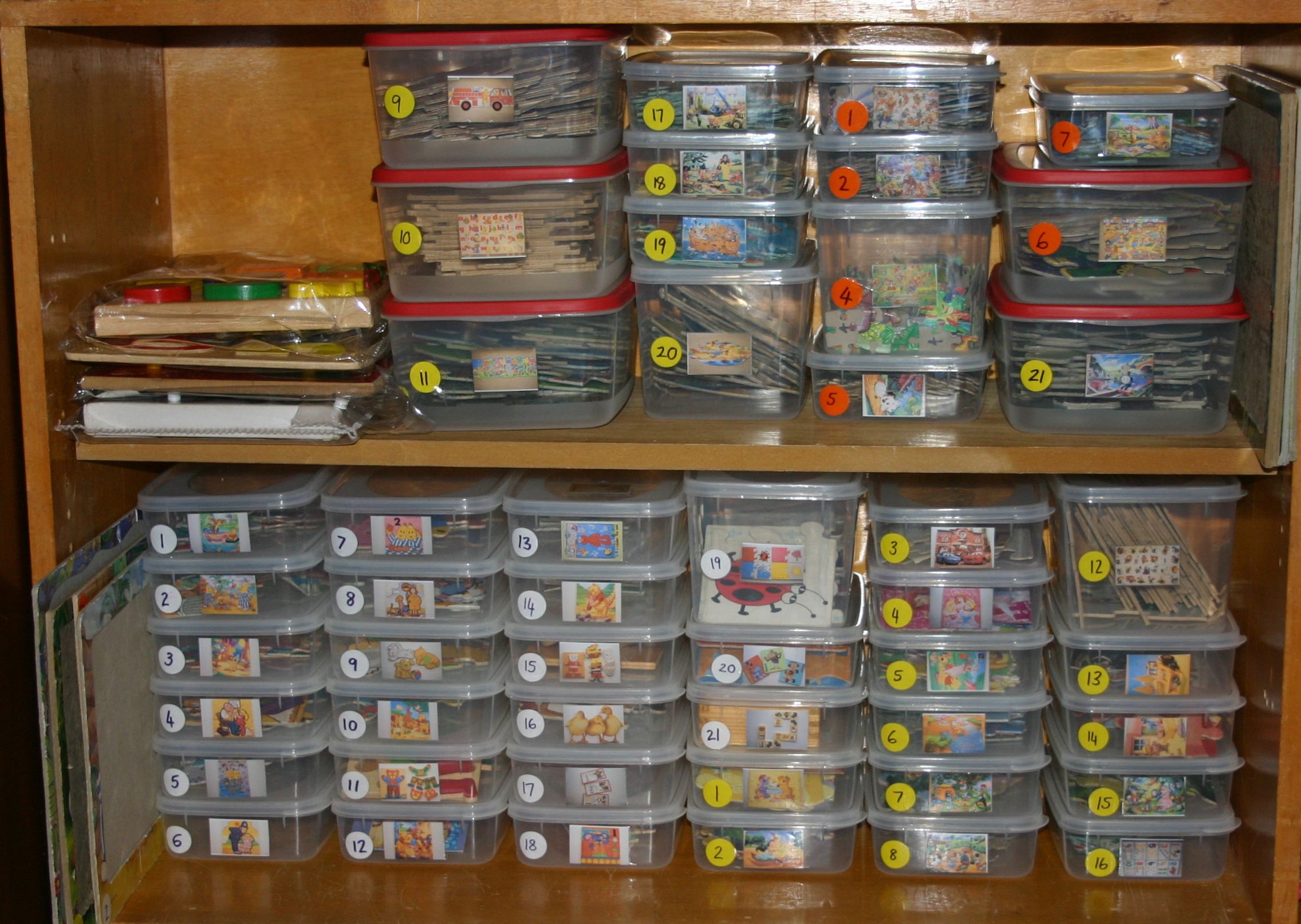
puzzle cupboard after IMG_8719

The “after” photo. All those melancholy organisation junkies out there say aaahhhhh!

After unsuccessfully searching for a suitably priced storage solution for our woefully disorganised jigsaw puzzle cupboard, I decided to come up with my own system. I have been frustrated at constantly having puzzle pieces mixed up, missing and the whole lot in an untidy jumble and sorting the mess out had finally risen to the top of the project priority heap! After looking at several different options that were going to be way too expensive for us, (we own a LOT of puzzles) I settled on clear plastic containers from Kmart.

puzzle cupboard before IMG_8607

The “before” photo. The really scary thing is that I had already taken out about 15 puzzles when I thought to take a photo of what we started with.

We had a marathon puzzle session where the children completed every puzzle we owned and I photographed the finished result. I threw out any that had been missing pieces for years and were unlikely to suddenly be found and those that were broken or very tattered. We gave several of the least loved away to friends and that still left a rather extensive collection, gathered from secondhand stores and markets over the years at a dollar or two each.

I taped the photo of the finished puzzle to the front of the boxes so the kids can see which puzzle is in the container and choose what they would like to do. I also photographed the base boards from puzzles that had a back and attached these photos to the lids of the boxes so they knew to look for the matching board when they took the pieces out. The boards are now standing at the end of the bottom shelf.

I separated the puzzles into three age or difficulty groups so that I can simply direct the twins for example to take any puzzle that has a white dot on the front. (Very frustrating for them to tip out and start a puzzle they have no hope of completing.) Finally, each box is numbered and every piece inside the box is numbered to match so that when a stray piece is found we can easily see which box it belongs in.

I cut the pictures off the boxes of the more difficult puzzles, folded them and stored them in the box too so that the children can use them as a guide if they need to. (The pictures on the front of the box do the job for the simple puzzles but are not large enough for the very complicated ones.)

The peg puzzles are stored in plastic bags that zip or press-stud together that I have kept from blankets, grobags and other gifts that come in suitable packaging. If they get accidentally tipped off the shelf, at least the pieces will stay in the correct bag.

It cost a total of $62 for the containers which was more than I had hoped but a lot less than some methods I came across. It also means that the children are now regularly choosing to sit down and do a puzzle which had not been happening at all in their jumbled state. Plus, every time I walk past I give a little sigh of satisfaction at that organised shelf! One more thing to cross off my list. Now for project 982….

Other posts you may find useful:

Overview of several chore systems; House tidy and spring clean continues

Chores and responsibility: Suggested chores for every age

Fussy eaters and 2 plate dinners

Masking tape vehicle tracks – quick, cheap and lots of fun

tracks no kids IMG_8614

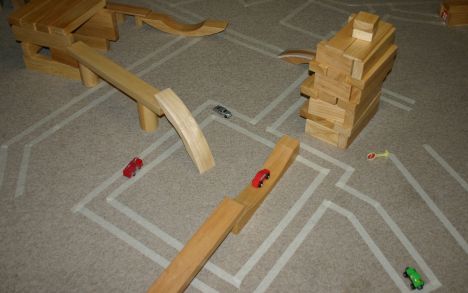
I saw the idea of using masking tape to make vehicle tracks a while ago and have since seen many people’s examples. Some have the tape going up and over chairs, mats, couches and all through the house. All you need is a roll of masking tape and some cars to drive on it. Let your imagination go wild as you design roads all over the place or in a more civilised fashion in just the one room.

s with teddies IMG_8618

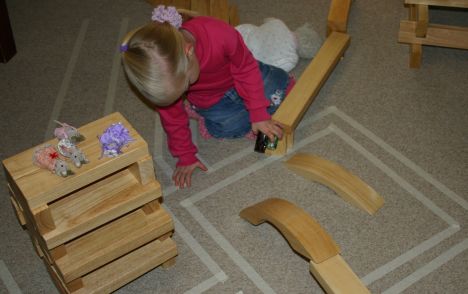
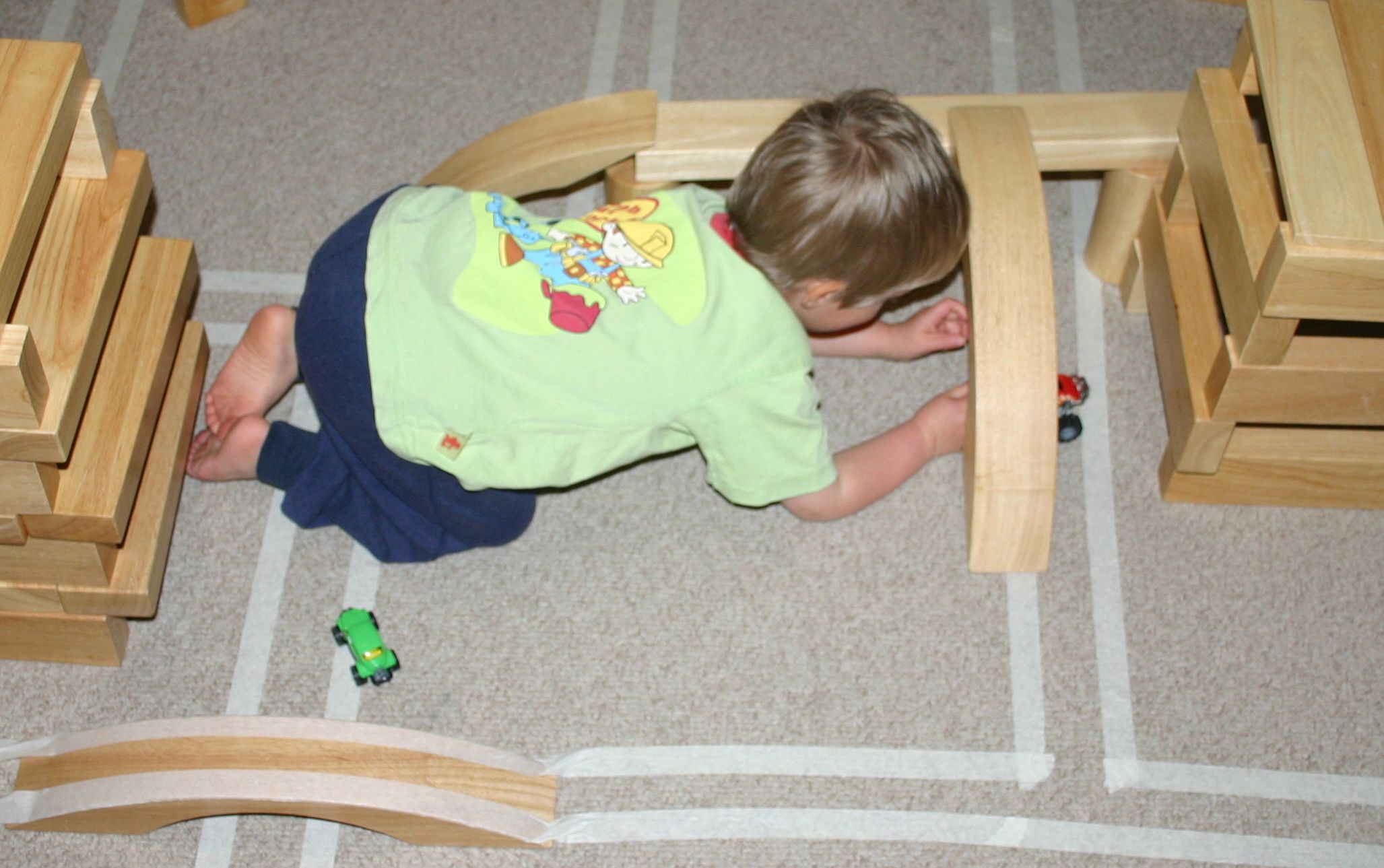
We added our wooden construction blocks for houses, bridges and buildings but you really don’t need to have anything like this, the tape alone is interesting. Allow your budding builders to design the layout with you and they will be hooked. Apart from the visual display, there is nothing to trip over so the roads can be left out indefinitely. Having said that, after a long time masking tape does get a bit trickier to get off. We played it safe and pulled ours off in under a week but I’m sure it would have been fine for longer than that. j car under bridge IMG_8617

This is a great activity for a rainy day or during quiet time when younger siblings are napping, or perhaps younger children could play while older siblings are being homeschooled. We did it as a family activity with all the children together and constructed a whole city. The younger children returned to it over and over again in the next couple of days and were disappointed that we had to take it off. We will definitely use this again another day.

(I have also seen a role of masking tape with a small car attached and instructions for this activity as a birthday party gift. It would make an inexpensive gift that any young boy would love. Or put it on your stocking stuffer list!)

Other posts you may like:

rainy day activity: balls and stockings

101 mostly stay at home family night ideas

sensory tub ideas for toddlers and preschoolers

homeschooling with toddlers and preschoolers

Toddler busy boxes

b and J using animal busy box IMG_8561

Toddler busy boxes are part of our flexible daily routine. They help me to homeschool  older children or get some chores done while my toddlers and preschoolers are well occupied on a worthwhile task.

busy box cupboard IMG_8556Our busy boxes (and ziploc bag activities, tot school, workjobs, shoebox tasks, preschool or Montessori style tray activities) are only available at certain times in the day to keep them fresh and interesting and to stop them getting spread throughout the house. We use them during school time in the morning and for table activities while I am getting dinner on the table in the evening. That way I do not need to change them too often because the children’s interest stays high and I can also keep some degree of supervision over the messier trays to avoid major pack up sessions afterwards.
They are also excellent to use for buddy time when an older child is assigned to play with a younger sibling. This is useful for example when the younger children have already finished playpen or room time and I just need an extra 20 minutes or so to finish working with one of the older children to complete their school activities. Turning toddlers loose to wander unattended throughout the house is bound to end in trouble, so some time with an older sister or brother gives the older children a break from their school work and builds good sibling relationships at the same time. The older children enjoy the responsibility because they do not get asked to do it all the time or for very long periods of time. It also gives them an excuse to play with all those attractive tubs as well!

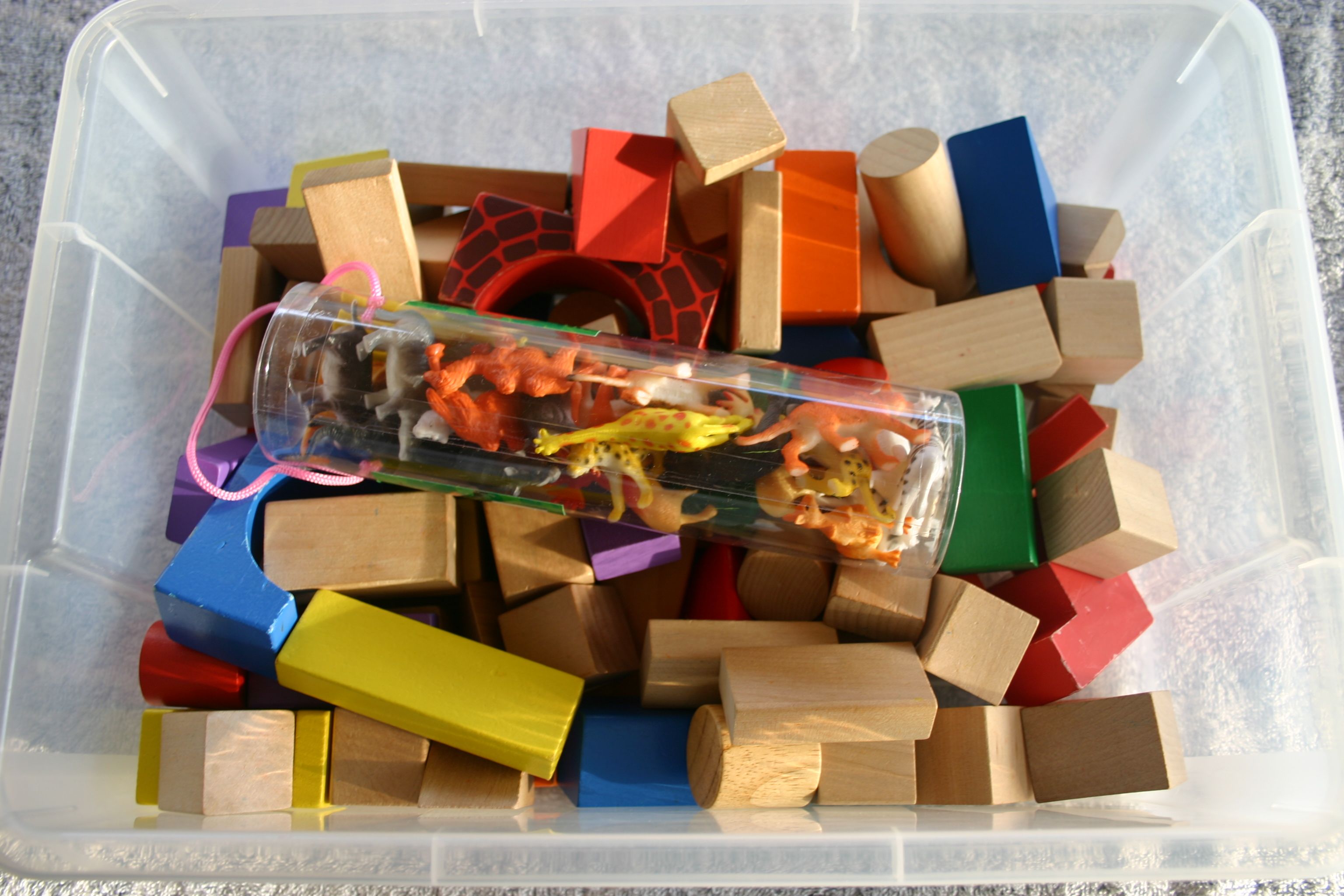
This set of busy boxes is for my 3 year old twins, but many could be adapted to suit toddlers and older babies too. There are heaps of ideas on my other posts for the younger age group.blocks and animals IMG_8554Plastic animals and wooden blocks for building corals, zoos, farms and houses. Jenga blocks work well too.

counting Duplo blocks IMG_8550

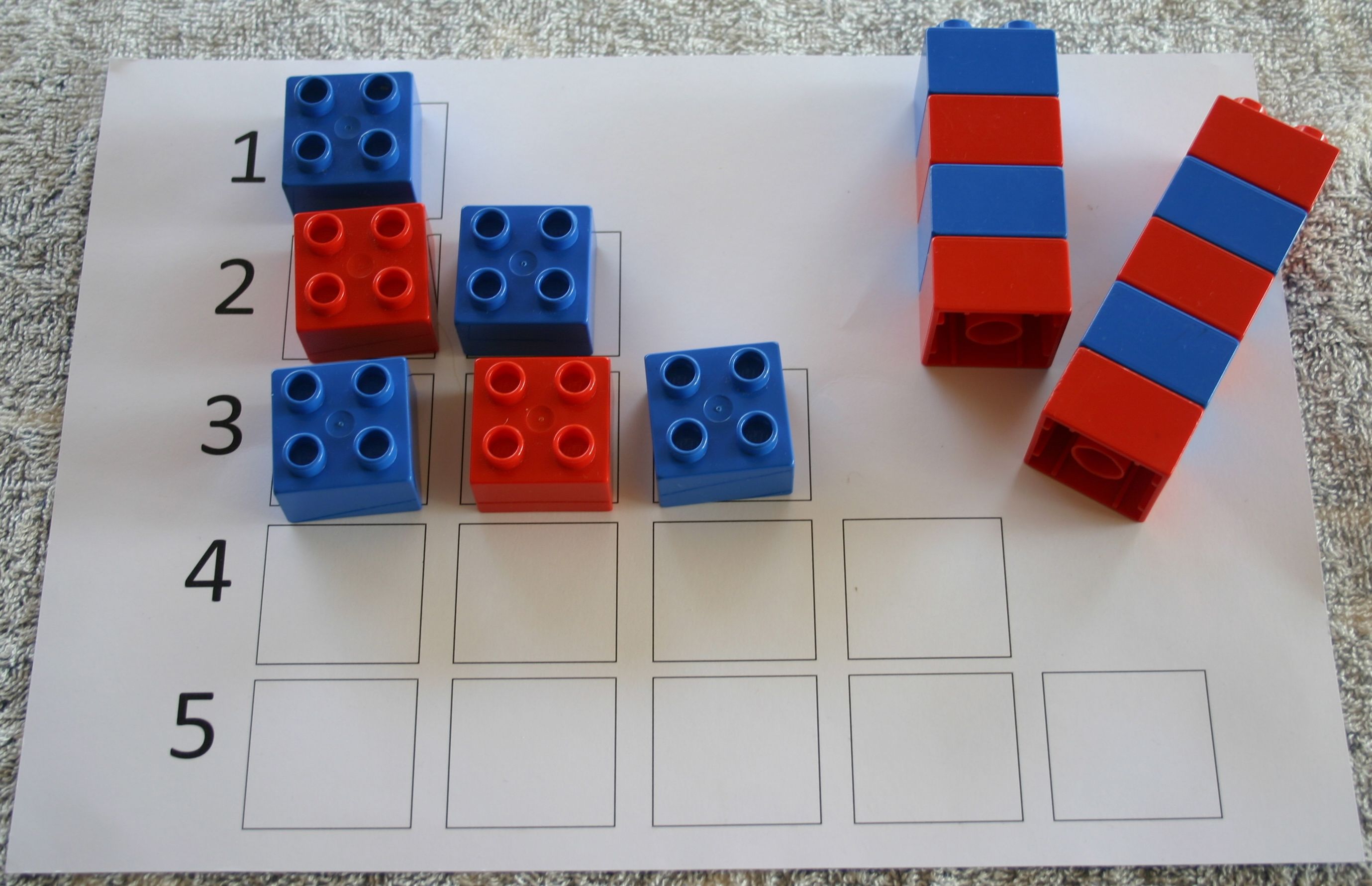
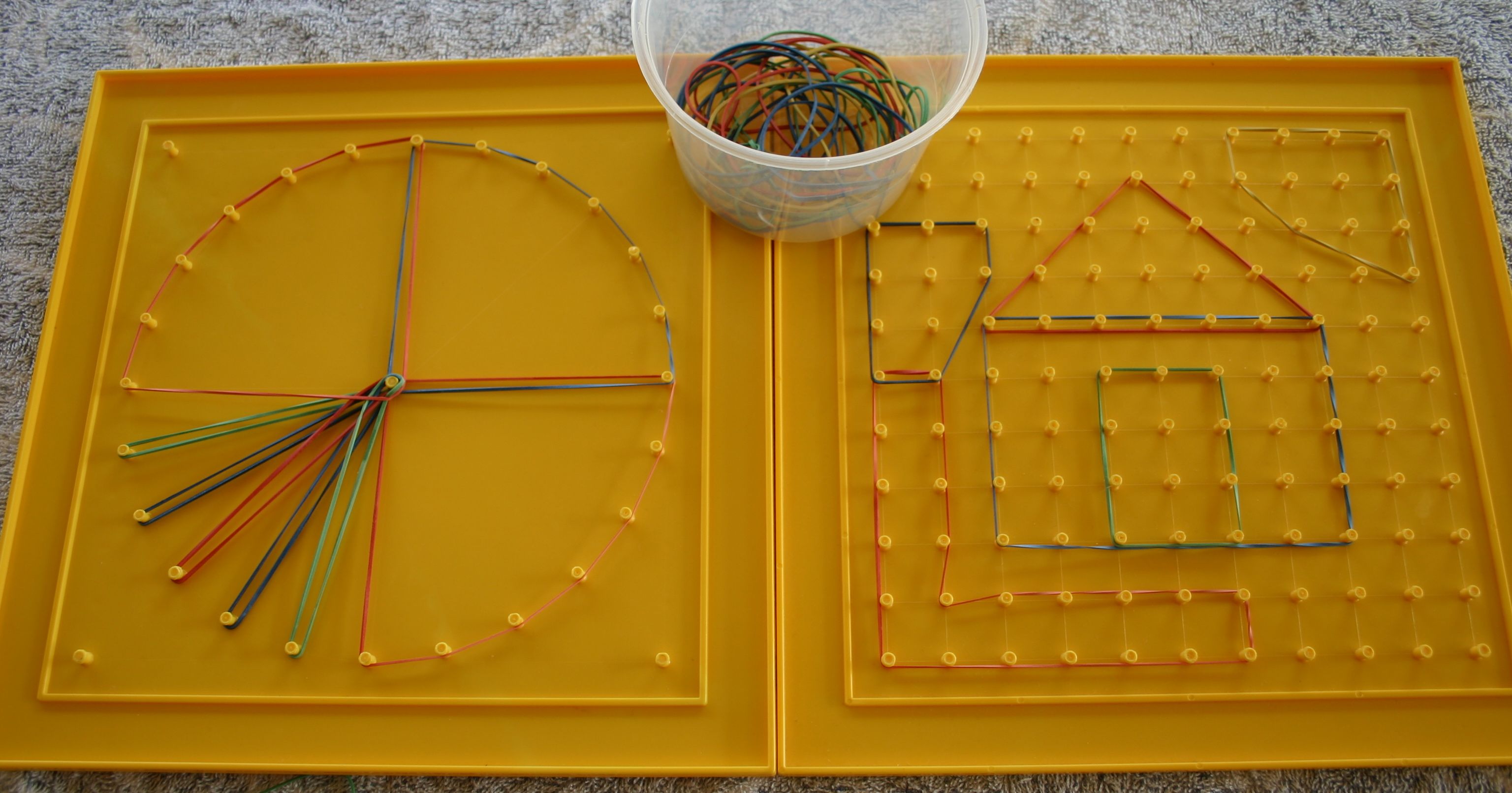
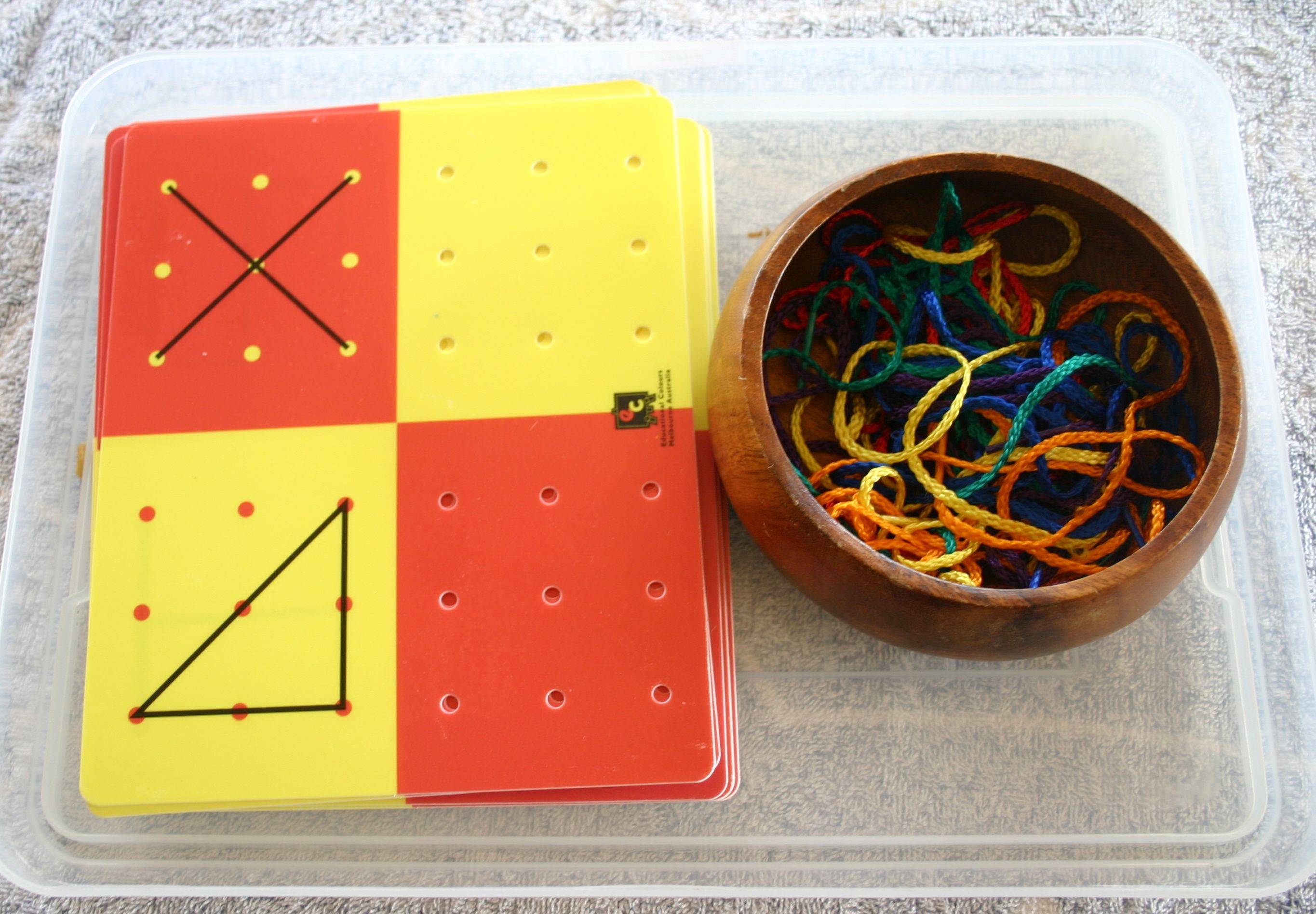
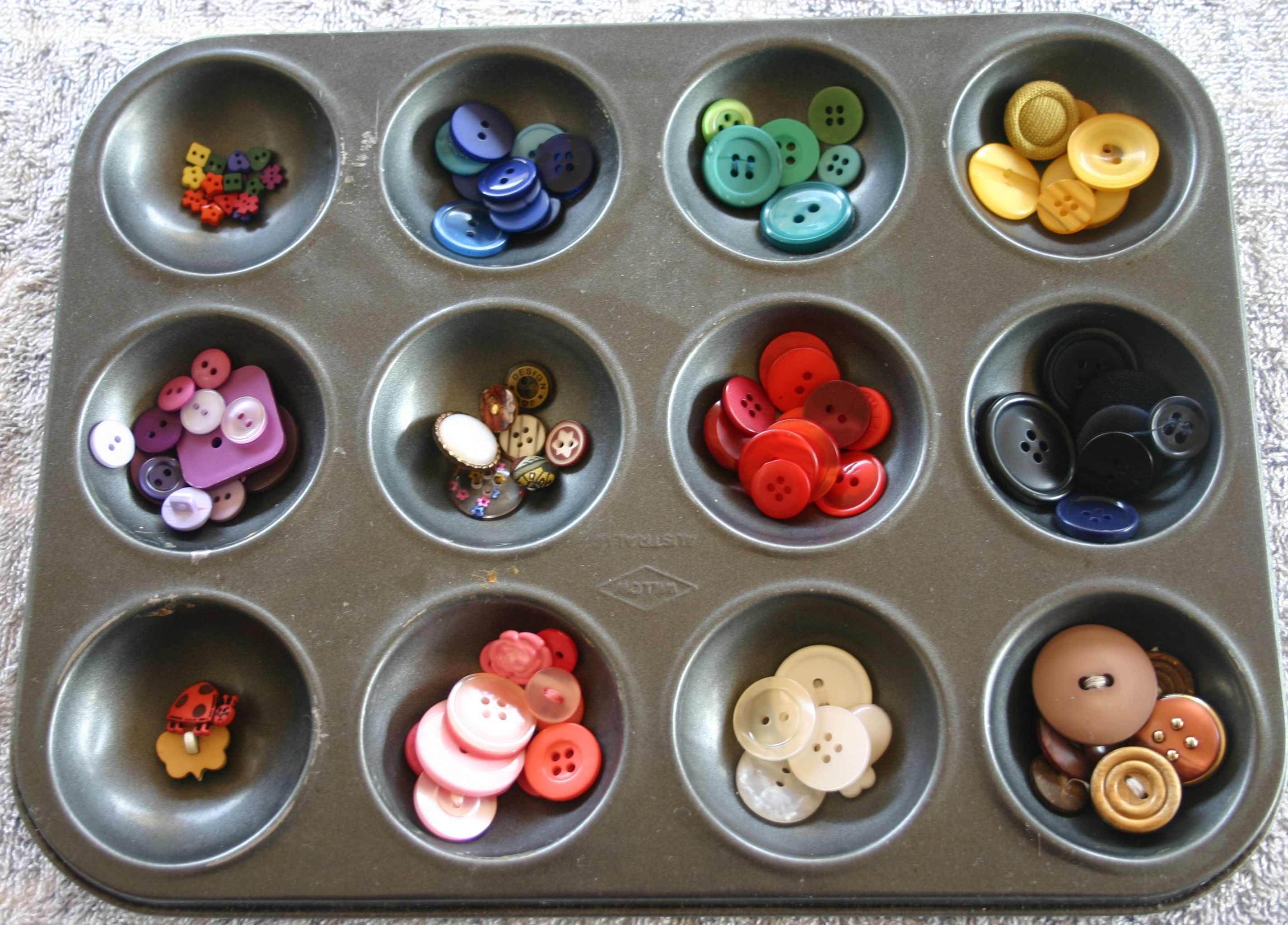
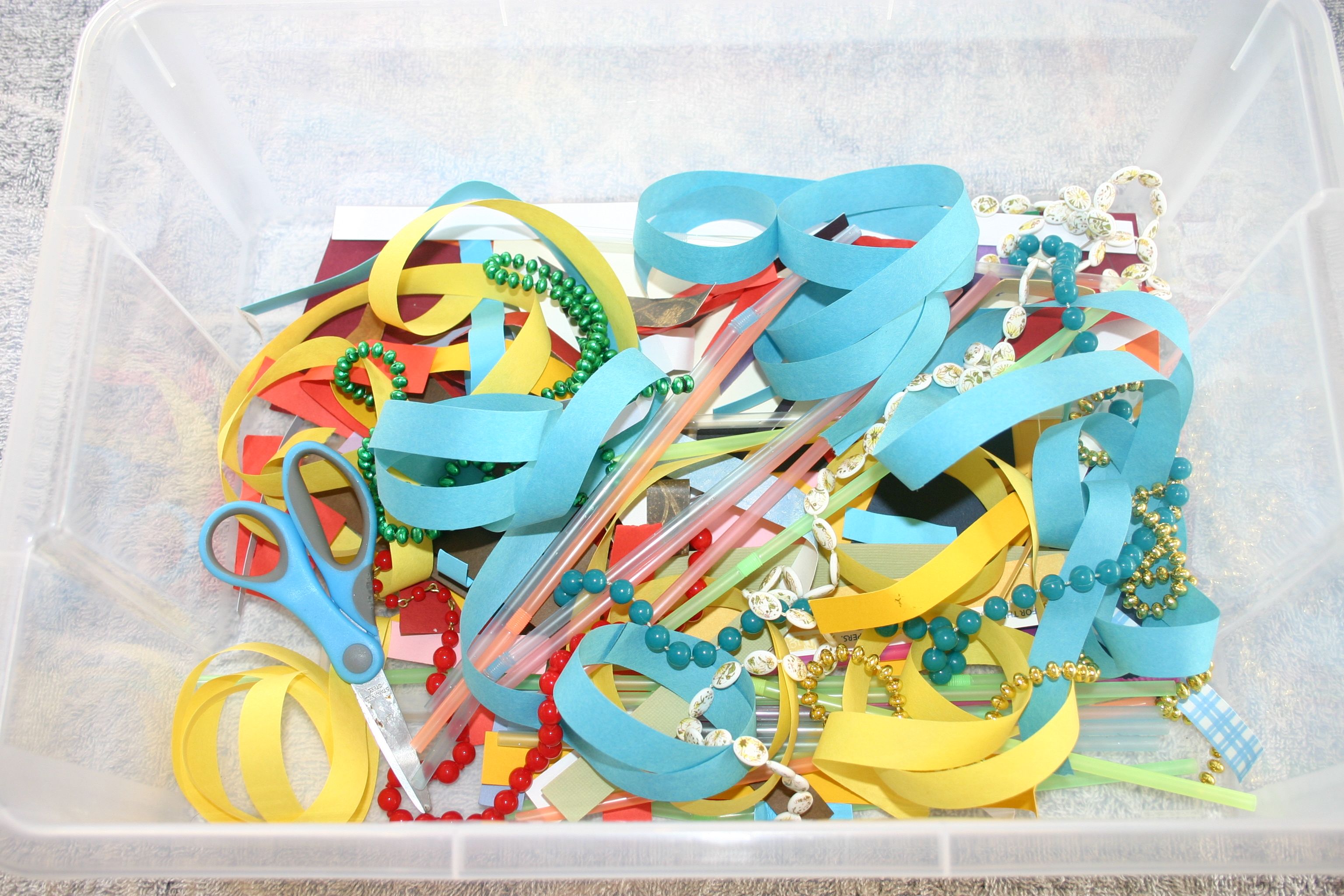
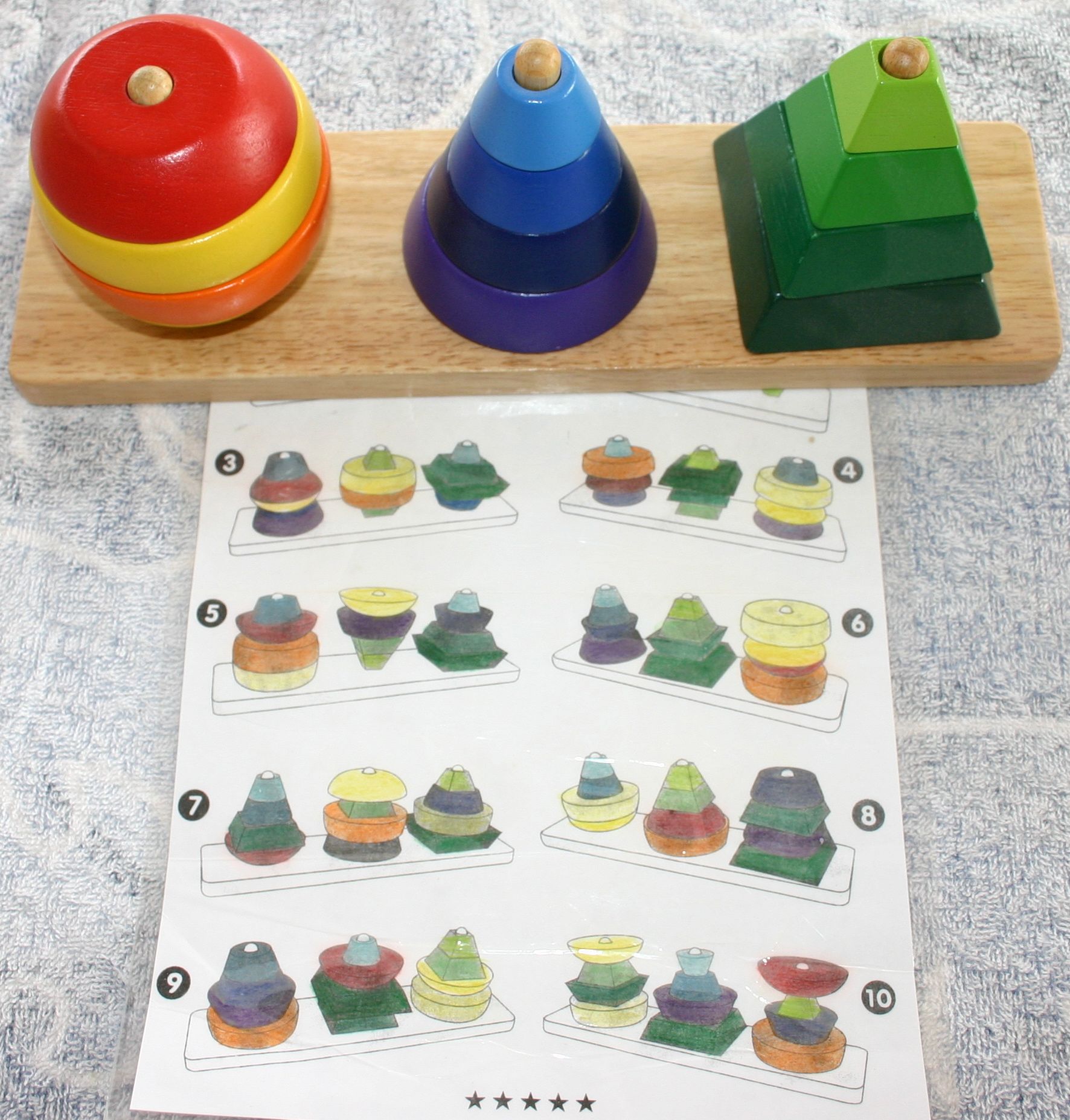
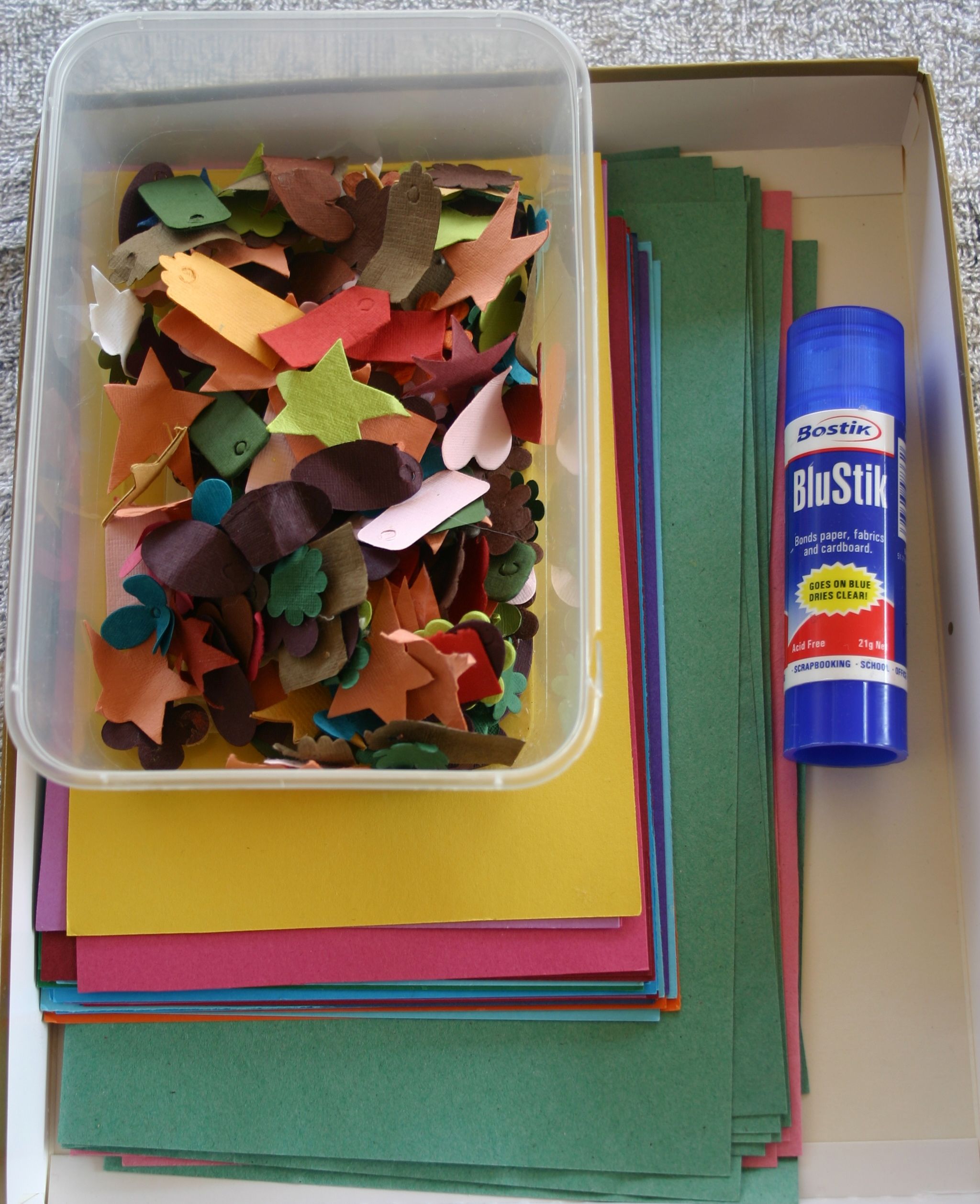
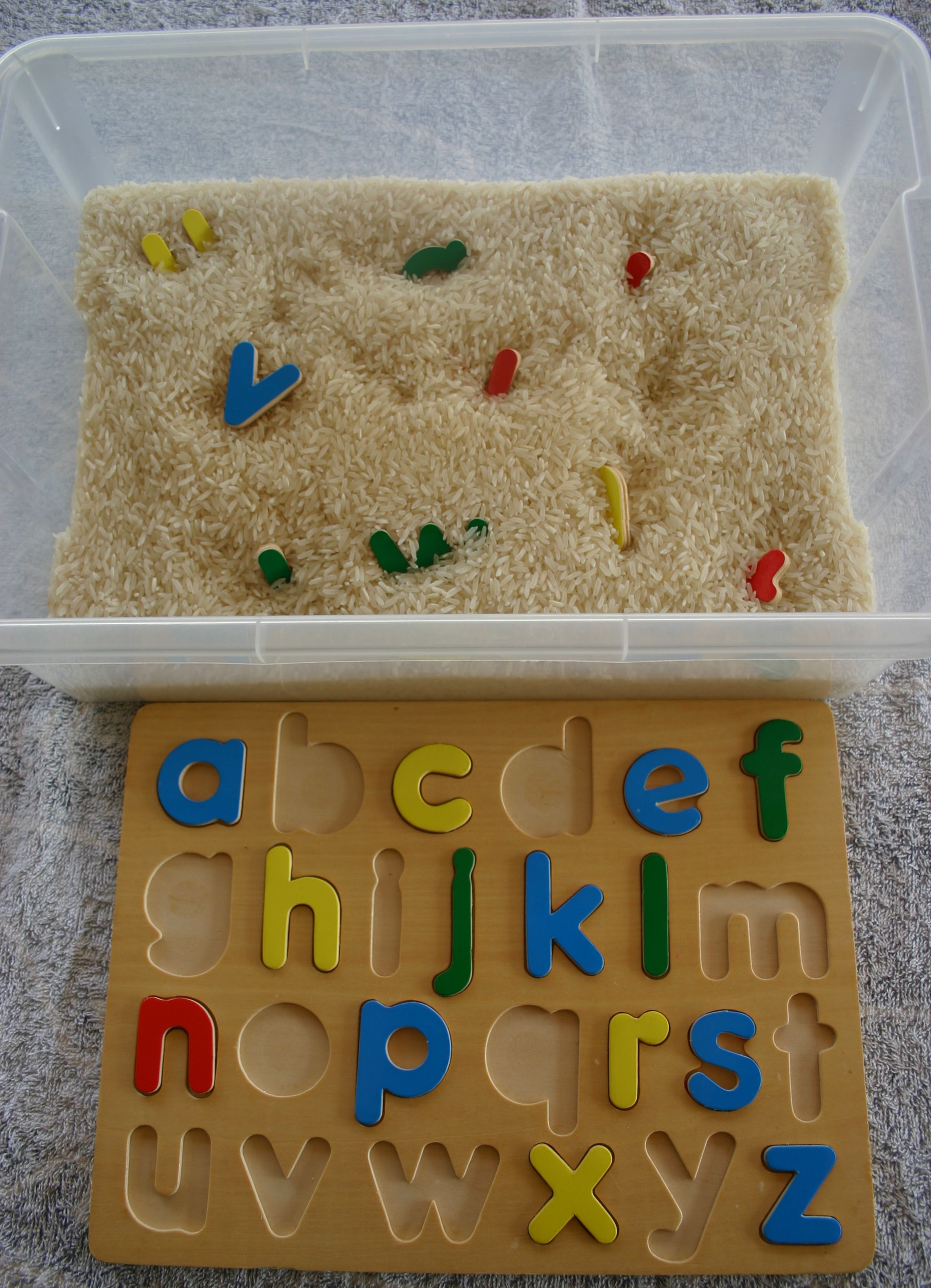
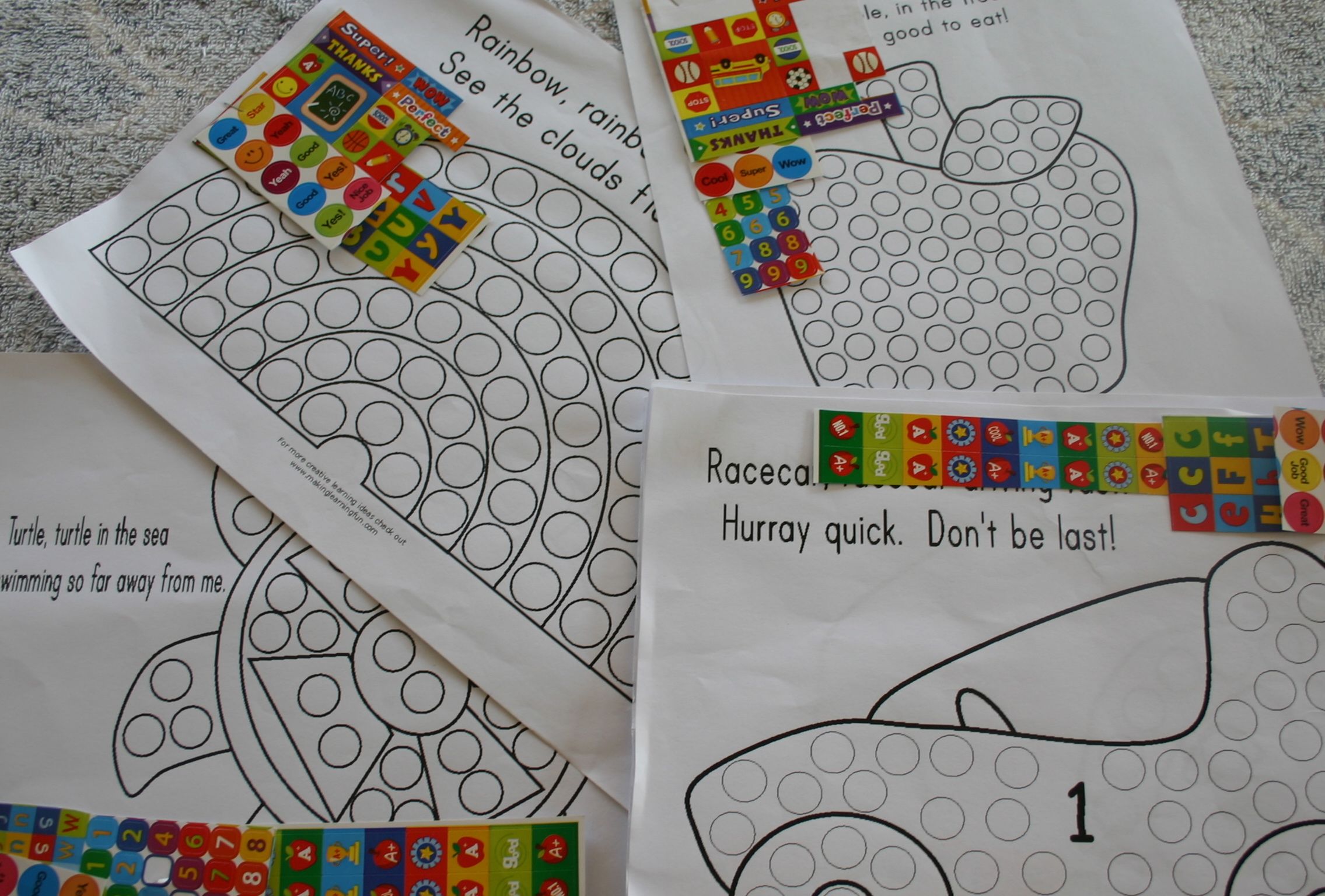
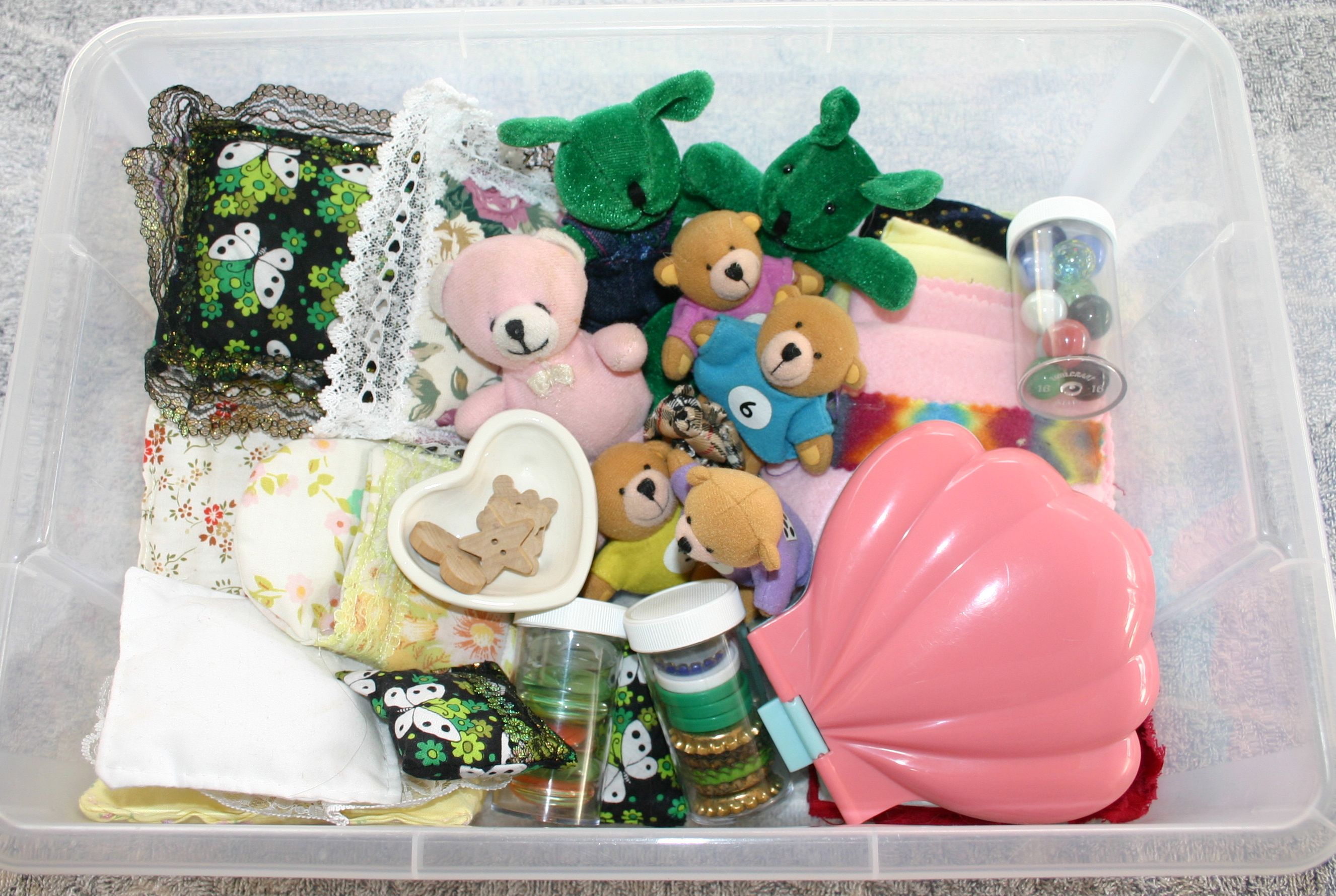
The 3 year olds have been learning how to recognise the numerals 1 to 5 and count small items. Combining building with Duplo as well makes this counting tray attractive, particularly to boys.geoboards IMG_8547Geoboards are a commercially produced mathematics tool. Great for exploring geometric shapes, perimeter, fractions or just for making pictures with elastic bands.dry erase board IMG_8546Personal dry erase boards (whiteboards) with pens and an eraser. sewing cards IMG_8543Sewing and lacing cards. These have a shape drawn for the children to copy. There are plenty of sewing and lacing shapes around to buy or make your own by punching holes around a cardboard picture using a hole punch.button sorting IMG_8542Sorting buttons into muffin trays is a hit with all ages. There is just something about handling all those different shapes and textures. The twins haven’t even gotten their hands on these yet – the 6, 8 and 10 year olds have been monopolizing them! cutting box IMG_8540Teaching toddlers to cut provides them with an absorbing activity that is great for their fine motor skills. The twins have had experience with all the materials in this box so this is just an assortment to chop up any old way they like. Paper streamers, card strips, beads, straws and other oddments such as tinsel or curling ribbon could be included. We let the bits fall back into the box and they can eventually be used for collage later on. The cutting box with free printable patterns I prepared a little while back was too advanced for them so I have put it away to use later on. wood puzzle IMG_8536A collection of good quality wooden puzzles is a good investment. This one came with a variety of patterns for the children to copy, making it much more  long-lasting.gluing IMG_8534Teaching toddlers to glue is another open-ended activity that they will love. Using a glue stick makes it a lot less messy to begin with. A selection of coloured card pieces and diecut shapes from a Kmart scrapbooking assortment pack made this very easy to prepare.rice box IMG_8531Sensory tubs have so many applications. Finding puzzles pieces hidden in rice is pictured above. See here for many more ideas.do a dot IMG_8530Do-a-dot pictures are great for fine motor skills. Bingo dot markers can be used to dot inside the circles or provide small stickers to peel and stick into the dots.  There are tonnes of free printable do-a-dot pictures around if you do a quick google search. teddies IMG_8528Imaginative cooking and doll/teddy play is always a hit. Small teddies, mini pillows, sheets and blankets, along with marbles, jewels and wooden button food makes an interesting selection. Bottle top plates and an old polly pocket toy as well as some screw-top jars finish it off.beads IMG_8526Pony beads and pipecleaners are great for threading and can be made into bracelets or tipped off and re-used next time. dinosaurs IMG_8523Our dinosaur tub includes play dough, plastic dinosaurs, popsicle sticks and popstick fences, a rolling-pin and plastic knife and some artificial leaves for plants and trees. The green bowl has been used to make a pond, cave and home for them as well.

Make sure you choose activities that are age appropriate, can be used independently, include attractive materials, are easily accessible, and easy to pack away. Being able to throw everything back into a robust plastic tub makes it easy for children to keep the activities together and tidy up after themselves.

The key to using these kinds of activities with your young children successfully though is training. No amount of pretty materials will keep a fidgety toddler with the attention span of a flea sitting in one spot for any length of time on a day-to-day basis. As soon as the novelty wears off they will be up and off again.

Take the time to train your children to stay in a designated area. (See mat time/blanket time and highchair time.) Introducing young babies to playpen time that transitions to room time later on is an excellent way to begin (see starting late) and the highchair and table make excellent places to sit a child with an engaging activity while you are nearby. Some children will naturally sit still for longer than others, but all can be trained to do so for a reasonable length of time.

If you are too busy to train your children to sit and concentrate then you are too busy!! Give up some of those good things you do and take on the better thing of training your children. They will need these focussing and concentrating skills in later life, especially at school and your home and others will be blessed by a self-controlled toddler.

For a list of toddler table activities, see here. For preschool ideas see here. For many more ideas for children of all ages, have a look around! For some more sensory tubs, try here.

Dolls houses in a shoebox

G's shoebox dolls house IMG_8279

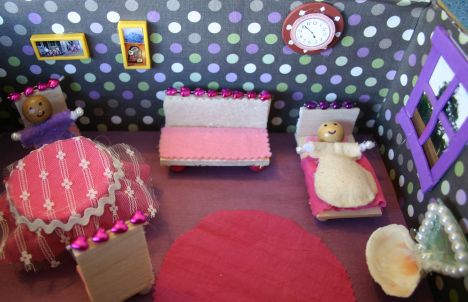
Dolls houses in a shoebox are a wonderful travel activity, take away toy for holidays, table activity, quiet time or room play idea or highchair activity for younger children. They are very portable,  simple to make (these examples were created by my 5 1/2 and 8-year-old daughters) and the possibilities for open-ended imaginative play are endless. We will be making them with a group of girls for our 8 year old’s birthday party next month and with a little bit of preparation, they will be an easy craft to engage a group of young ladies for a couple of hours.c's shoebox dolls house IMG_8272

I will be adding some miniature food (novelty erasers from a discount variety store) plus a couple of ceramic ornaments to use in their little houses and the girls will create the furniture, make wooden peg doll babies (instructions in my next post) and decorate their rooms.mini dolls house furniture IMG_8275

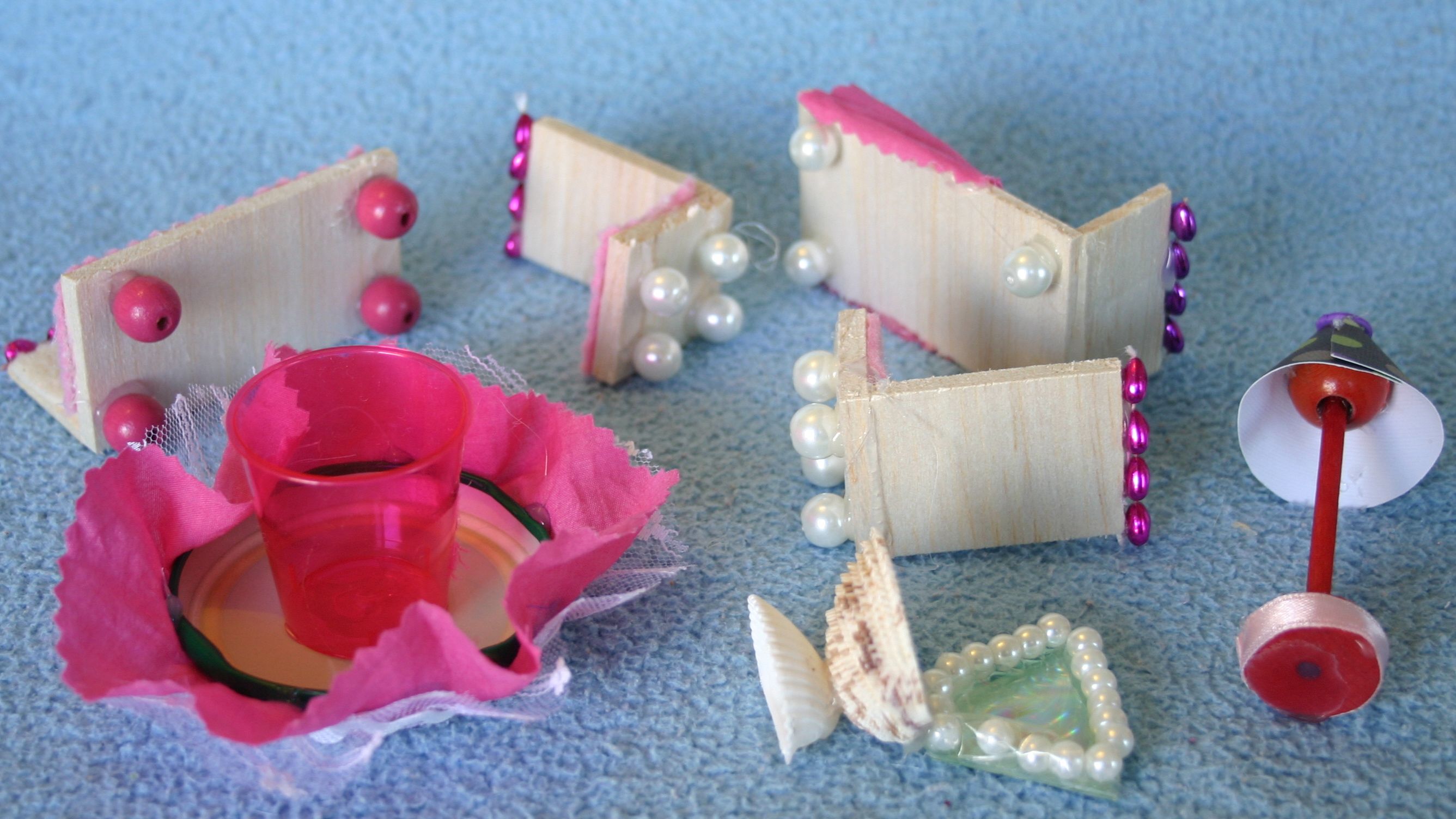
The furniture is made from balsa wood hot glued together with beads for legs and felt pieces for cushions. We cut up cheap plastic bead necklaces to decorate the top of the chairs. A jar lid glued to a plastic shot glass and covered with a circle of fabric and ribbon forms the table. The mirror is a piece of CD surrounded by beads and glued to two shells as the base. The lamp is a small craft stick with a large wooden bead on top and a circle of card cut to form the lamp shade. It stands in a wooden circle that came with the sticks.

A printed clock face glued to a plastic disk, plus some old tiles from a board game with miniature photos inside, decorate the walls. Photos and magazine pictures of outdoor scenes give our rooms a view.mini dolls house furniture bottoms IMG_8278The girls were able to wall-paper and “carpet” their boxes, plus put together all the contents in a couple of hours and with a little more preparation our party guests should be able to complete theirs in an hour and a half.

Lots of fun for all ages and a lovely gift for any little girl.

Other posts you may like:

Wooden clothes peg dolls house furniture

My next post (still to come) on simple peg dolls from pipecleaners and wooden beads.

Sensory tub ideas for toddlers and preschoolers

sensory tub A teddies IMG_8196

Sensory tubs are great for mat time (blanket time) or as a table activity and are excellent for when you need to school older children, cook dinner, or during any other time when you need your little ones well occupied and absorbed in a worthwhile activity.

They are quick and easy to put together, cheap or free (depending on what you already have lying around the house) and can be used daily as part of your flexible routine for babies, toddlers, preschoolers and even older children. Obviously the materials you present will change according to the age of the child who will be playing with them, with safety always a factor for little ones who may put small items in their mouths.

There is no limit to what you can put into your tubs. Ideally the materials will be open-ended; that is they can be combined and used in a variety of ways.sensory tub trains IMG_8187

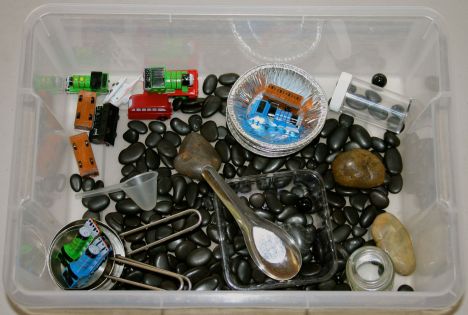
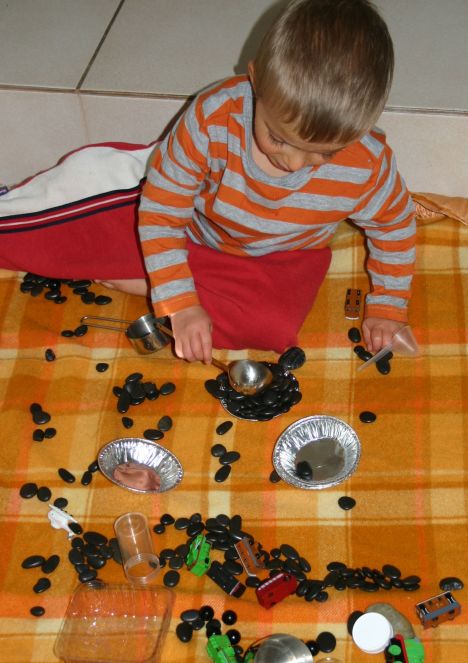
Younger toddlers do not have a well-developed imagination and therefore need more hands-on options, rather than pretend play materials. For example, in the trains tub above, I included a variety of scoops and containers to fill, transfer, tip and pour as well as the trains themselves. A young toddler may examine the trains before setting them aside in favour of transferring the stones from container to container. The older children may go straight for the trains and set up a complicated rail system with rocks delineating the tracks and the containers used as sheds for the trains. Another may decide to serve dinner on the silver pie tins or set up a picnic for the trains.

sensory tub trains JIMG_8193

I find that the tubs themselves are not large enough for the children to play within. They like to sort through, put aside what they are not using and generally spread out, so I use a blanket or sheet for them to play on. When play time is finished, the corners of the sheet are lifted up and all the materials can be quickly tipped straight back into the tub without a tedious pack-up session.

sensory box horses jewels IMG_8183

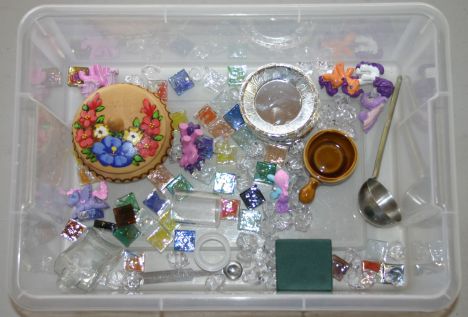
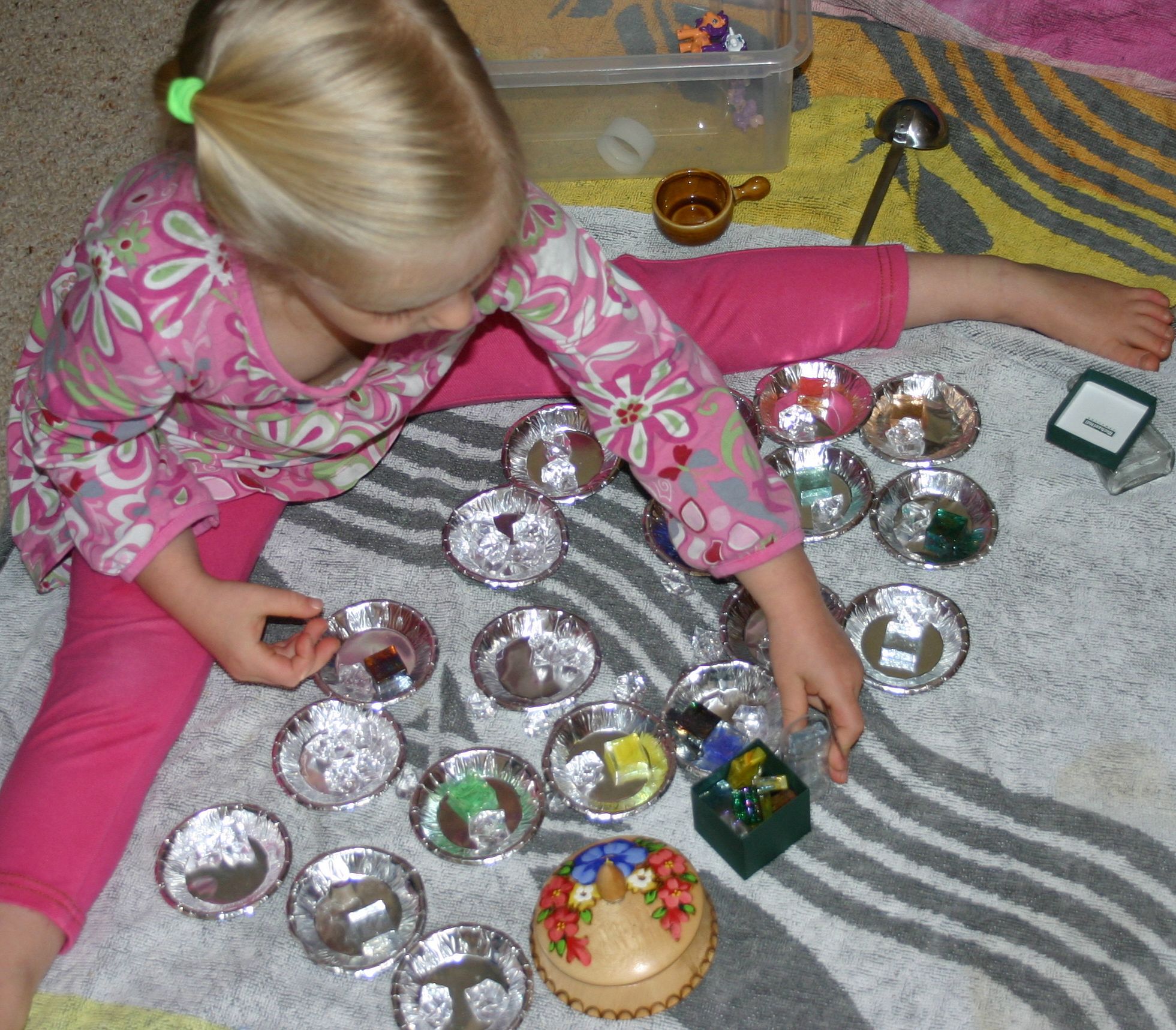
The older girls were practically drooling over this jewel and miniature pony tub as I was putting it together – usually a sure sign it will be well-loved by the younger children as well! Again, a variety of scoops, containers, bottles and boxes with sparkly jewel squares and pebbles. (The kind used in vases or to fill bowls – from the discount shop.)

sensory box sea IMG_8185

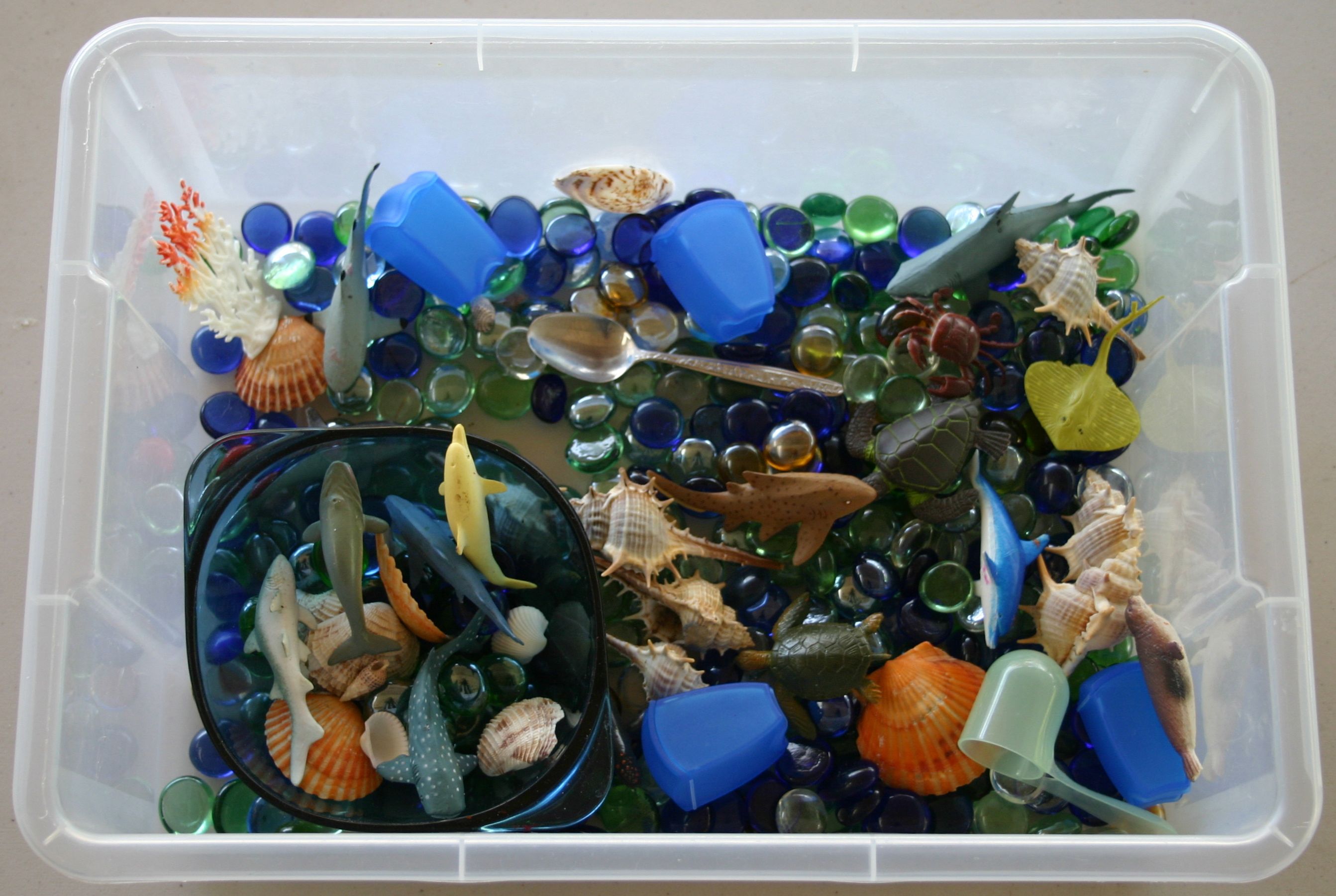
Blue and green gem stones, plastic sea animals, shells, bowl, spoons, scoops and empty pill boxes. This tub covers opening and closing skills, spooning, scooping, tipping, pouring (all transferring skills) and could be extended to sorting and categorizing as well as the pretend play options.

sensory tub S jewwels IMG_8192

My youngest daughter used the pony and jewel tub this morning for the first time. She carefully removed all the ponies and put them back in the box before making a picnic for her teddy bear and the 12 disciples (!) with the containers and jewels. The older girls (6 and 8) have already asked to use it later and tell me they plan to set the jewels up as food for the ponies. The beauty of open-ended, attractive materials is that they will appeal to a variety of ages. My 15 month old can barely restrain himself and wants to dive straight in whenever he sees these tubs out. Unfortunately the pieces are just too small for him to use safely.

sensory tubs A teddies IMG_8194

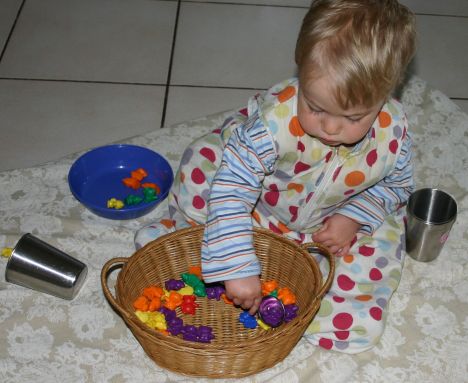
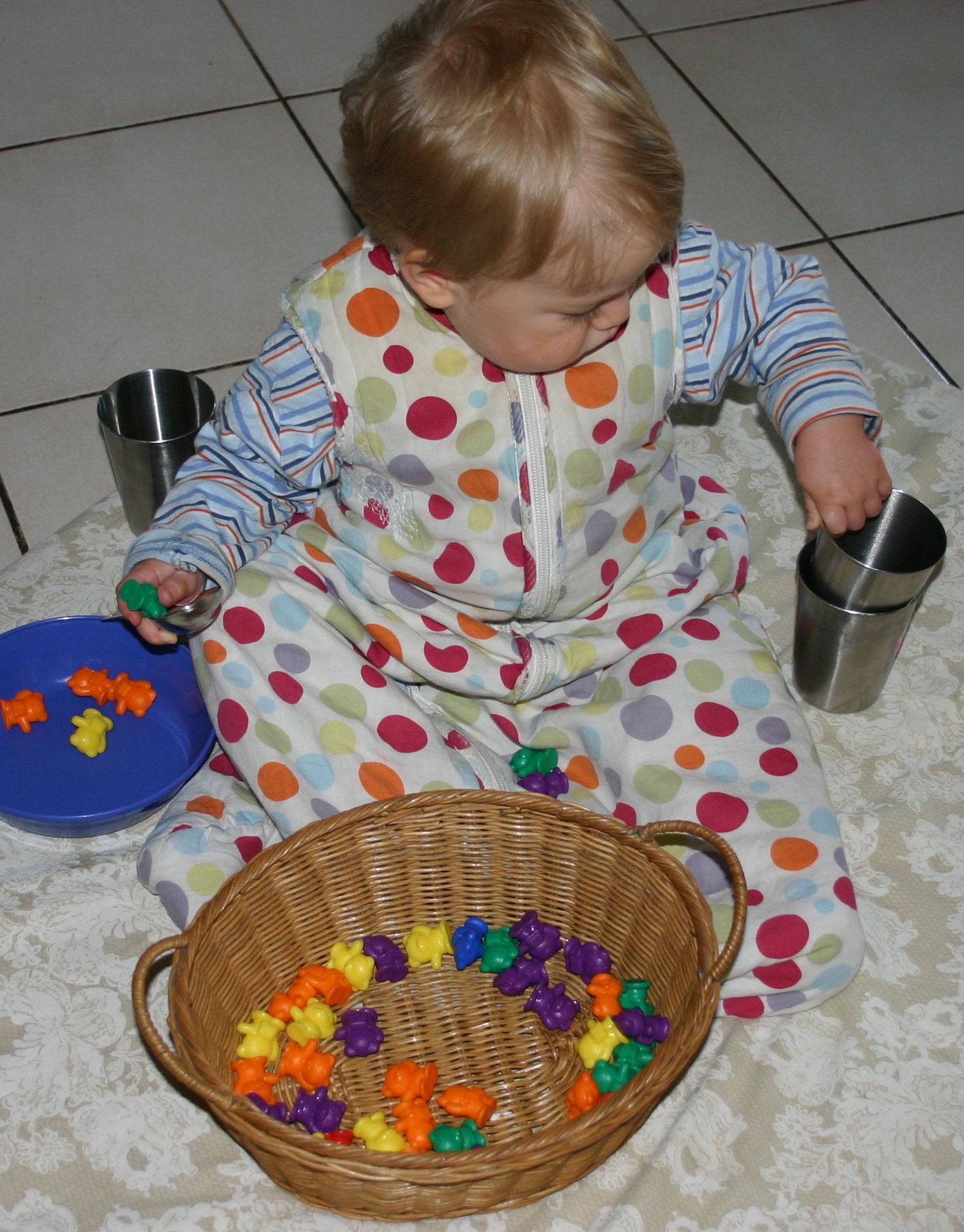
This is the 15 month old’s sensory “tub” this week. He loved it and used the scoop (a large measuring spoon) to transfer from the large basket to the small bowl, filled and stacked the metal cups and filled and tipped out the basket numerous times. Provide a container or two and something to put in and dump right back out again and it will always be a hit with anywhere from an 8 month to a 2-year-old. 12 to 18  month olds particularly love to fill and dump.

For a stack of ideas to fill your sensory tubs,see this post. Many of the other ideas I have posted as table activities, highchair activities or mat time activities would all work in a sensory tub. See pasta play and teddy food play as examples.