Birthdays and travelling with toddlers

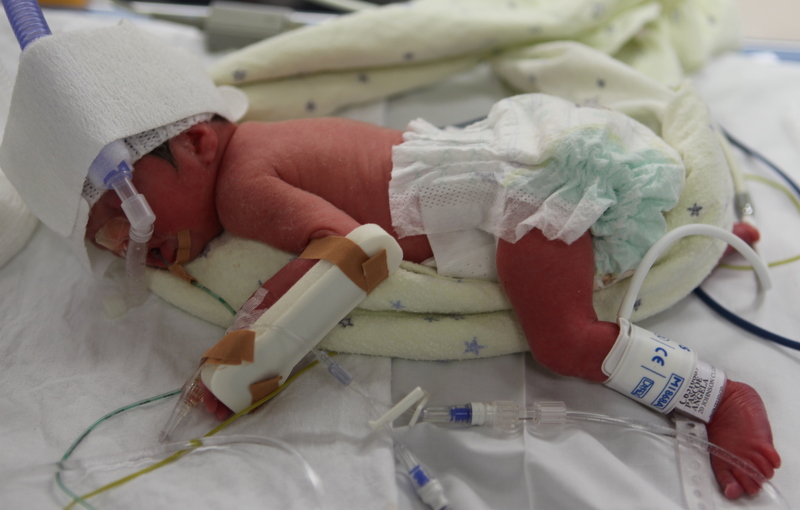
Our wonderful twins turned two today. It’s amazing to look back at their birth photos and remember how it all began.

Our three eldest chose to make gifts rather than visit the Mummy and Daddy shop and as we are travelling via plane to Melbourne this week we thought activities to keep the toddlers occupied while travelling were a good idea. They will also be good to add to the homeschooling activities for when school starts again as there will be no morning nap to keep these little ones occupied while I school the older children anymore.

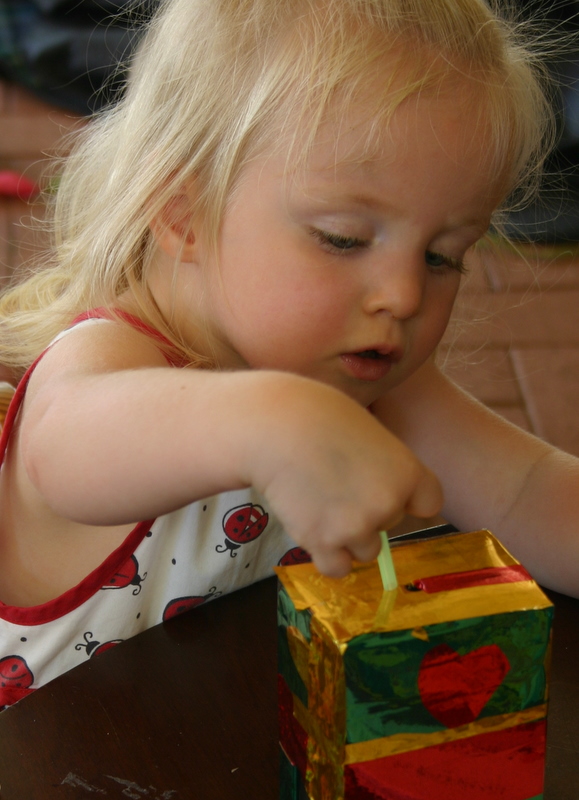
Our 6 year old used coloured contact paper to cover a small box to make this Montessori style practical life activity. A bunch of straws to post through the hole at the top and a small window on the side to shake them back out again did the trick. It was a hit immediately and I had to hide it away to ensure that the novelty hadn’t worn off before we even got to the plane as our youngest lady seemed determined to repeat the activity over and over!

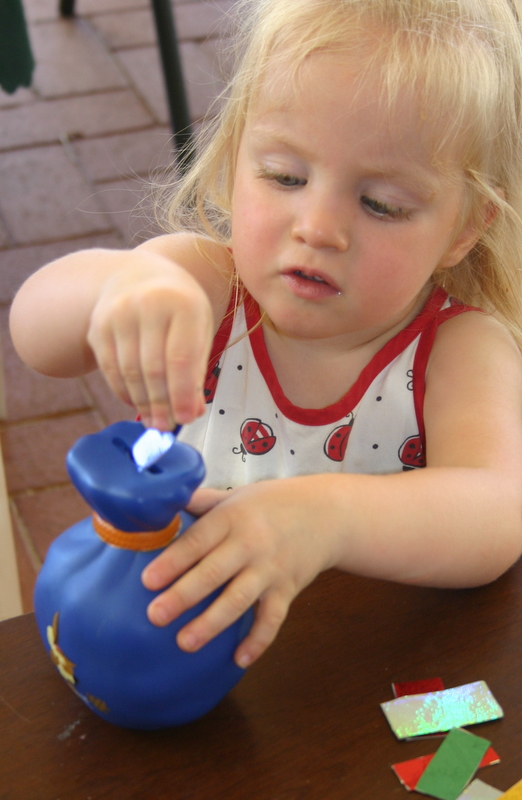
Our 8 year old designed this one completely on his own without any input from me at all. He covered strips of cereal box on both sides to make them look attractive and pulled out a plastic money-box to post them in. Another Montessori style practical life activity for the plane trip.

This was the four year old’s creation. Strips of contact around a baking powder tin, several length of ribbon tied together and a cross shape cut into the lid to pull it through. Again, it was a great hit with the ribbon being pulled out and stuffed back in (by a grown-up) at least 5 times in a row. This one is more a baby activity but will keep their interest for a while. For many more ideas for keeping children happy and content during a plane or car trip, check out this post on travelling with young children. We will be making up our snack bags and pulling out the water painting, drawing and other ideas again and hopefully this trip will go as smoothly as the last one did.

The new year organisation and tidy-up continues…

Christmas has come and gone and left behind lots of new toys and belongings to store and old ones to be sorted out and passed on. The spring clean and cupboard empty continues throughout the house. (My husband thinks I’m nesting – I think I’m just getting the house under control again before school starts up and a new baby makes these projects all but impossible!)

The previous year’s projects, papers, drawings, paintings and crafts need to be sorted, chucked or saved. Some of the methods we use to keep precious projects under control are outlined below.

Desks/Ledges: Each child has a designated ledge, windowsill, shelf or desk for displaying models, junk modelling and any other bulky items they have built. When the area is full, they have to decide for themselves what comes down. No mean Mummy throwing out things they love, they make all the culling choices for themselves.

Digital photographs: To make the transition to the bin easier, we photograph the models with the digital camera and print them out to be added to their scrapbooking albums or personal homeschool diary writing books so they have a permanent record.

Pinboards: The children’s rooms have pinboards for displaying their artwork and other projects. When they are full and they want to add a new item something must go into the bin or move to their workboxes. A limit of one item per child is displayed on the fridge at any one time otherwise the forest of paperwork on there gets quickly out of control.

Workboxes: Each person in the family has an A3 box with lid that we long ago covered and decorated with coloured contact. Throughout the year, all paperwork that is not on display (other than homeschool work) is placed here if the children want to keep it. Even Mummy and Daddy have a workbox for all the pictures, paintings, crafts and cards given to us. We show they are valued by keeping them in our special place and try to remember to date them as they go in. As the children’s boxes get filled, they empty them out and only put the most precious items back in again, throwing out the rest. After some time has passed it is easier for them to be more objective about what is and isn’t precious. EVERYTHING is precious when they have just finished it!

What’s for lunch Mum?

We’ve all heard it before; get organised and menu plan! Save time and money and get rid of the daily headache of thinking about what we are going to prepare for dinner half an hour before we should be serving it.

I have menu planning systems (weekly, monthly, shopping) and I do use them (most of the time!) but I was finding lunch particularly difficult to wrap my head around. I wanted it to be quick and easy but not just bread, bread and more bread. There were also occasions when I needed to pack lunch boxes and I didn’t want them to be nothing but sandwiches either.

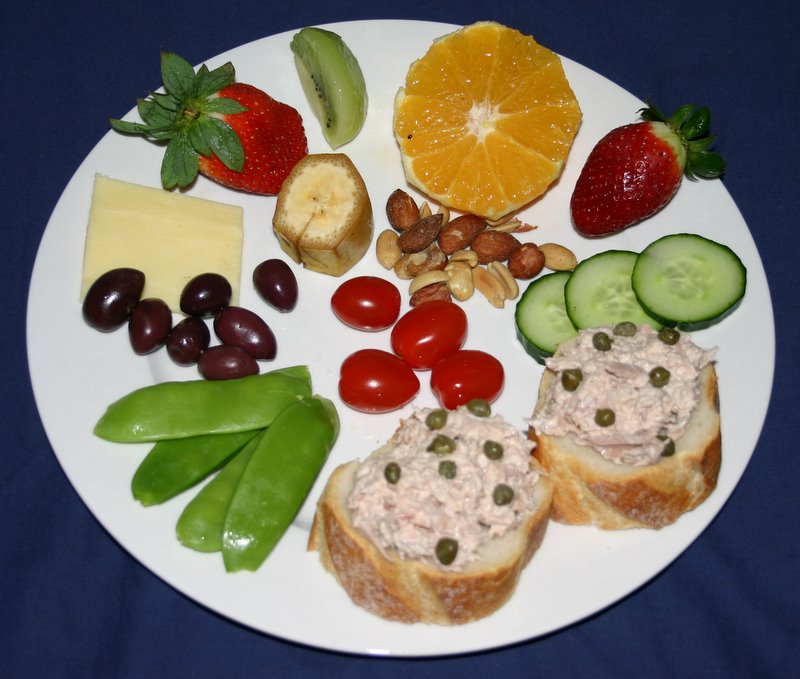
My favourite lunch is what we call a ploughman’s plate. Sounds fancy, but all it means is that I pull out all the fruit, salad, veggies, cheese, left overs, cold meats or anything else I can spot laying about the fridge, cut it into pieces and arrange it on a plate. That works great when the fridge is stocked, the fruit bowls are brimming over and there is plenty of choice, but by the end of the week this is not a good option.

I decided to sit down and make a list of as many lunch ideas as I could come up with, barring leftovers and hot meals. Much of my list came from the excellent resources at Meerilinga plus a few ideas of my own.

I have printed it out, laminated it and taped it to the pantry door for inspiration at the last minute and to use when making up my shopping list for the week. You will find a printable version here.


Recipes and food: Kids in the kitchen

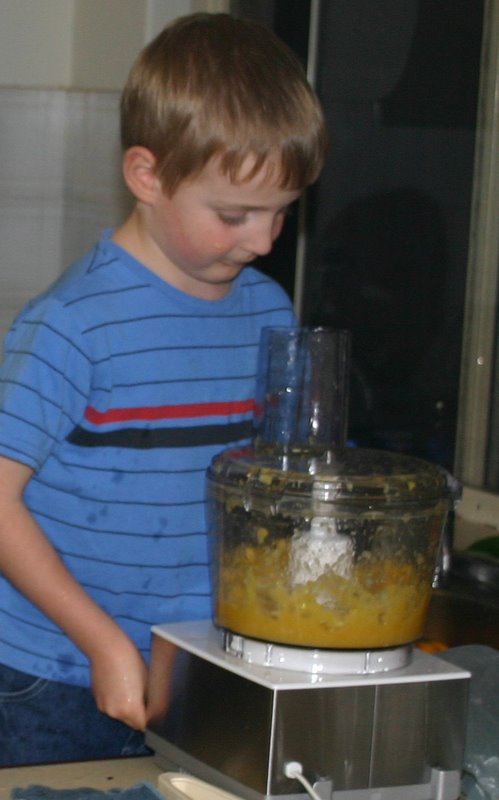
Running the food processor is a job I often give to the youngest. They love to feed ingredients in the shoot and be in charge of turning it on and off.

One of my goals as a parent is to teach all of my children every aspect of running a household, with the aim that by the age of around 14 they would be able to independently manage their own household if necessary. I will not expect them to actually be doing all of it at once by that age, but they will have been fully trained in all areas to a point of competence; something I’m sure  their future husbands and wives will appreciate.

What does that look like now? Each child has their own personal responsibilities (chores) that contribute to our family. Personal care and general cleanliness, emptying dishwashers, hanging wet clothes, cleaning toilets and the like. Young children start on the easiest jobs and move on to the next level of responsibility as they are able.

Each child (bar the toddlers) also spends time in the kitchen with me; sometimes one-on-one and sometimes all three at once. They learn how to read a recipe, measure ingredients, make a range of meals and baked goods and assist with general meal preparation. I try to give them experience in preparing everyday food as well as special occasion food.

Another great job for the younger children is washing fruit and veggies. They usually get wet, but it allows even the youngest to feel that they have contributed to the meal.

By 5, my eldest could make a batch of muffins completely independently (bar putting them in the oven). He had learnt step-by-step how to read a recipe, take out the ingredients and equipment, measure and mix, spoon into pattypans and tidy up after himself. The girls were not quite at that point by the same age, partly due to reading skills not being at the same level and also due to me not having as much time to spend with them teaching the skills. They do however love to cook and are learning the same valuable skills, albeit a little slower!

Ideas for the youngest:

  • wash the fruit and veggies
  • feed pieces into the food processor or juicer
  • collect ingredients
  • stir mixtures (you measure, they tip in)
  • peel easy veggies like carrots
  • cut with a butter-knife (thin sticks of fruit, cheese or veggies into cubes or smaller pieces)
  • pull tops off cherry tomatoes and strawberries
  • tear lettuce for the salad
  • share ingredients onto dinner plates for a meal (great for counting practice)
  • roll mixture into balls (biscuits, meatballs etc.)
  • thread fruit, veggie or meat cubes onto skewers
  • dip chunks into flour, egg or breadcrumbs
  • taste test recipes (my children’s personal favourite!)
Recently we have spent more time with all three children together working production line style to stock the freezer for upcoming Christmas events. (We will be organised this year!!) They are rolling meatballs, threading chicken onto skewers, crumbing fish and baking biscuits, slices and cakes to freeze already sliced. When we need to provide afternoon tea, suppers, meals and the like, we can simply pull out the required amount of each item and defrost or heat then serve.

With several little ones underfoot I dislike any recipe for visitors that has to be made just before serving. I would much rather do the work ahead of time and enjoy spending time relaxing rather than in the kitchen.

Cooking is a skill that every adult should have and it is a saying in our house that “anyone who can read can cook.” We may not all love to cook, but we can all learn to do so to the point where we can put a nutritious meal on the table to bless our family and others. Pull out those cooking books and get cooking!

Recipes and food: Snacks – juice pops

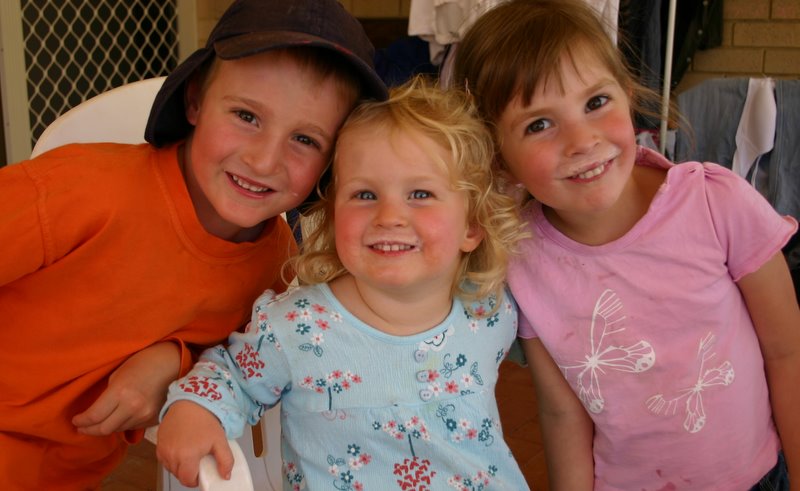
Showing off their banana milkshake juice pop moustaches. (We call them juice pops regardless of the ingredients!)

Now that the warm weather is here again, it’s time to dust of the frozen popsicle molds and make some juice pops. These are so quick and easy to make (I can even ask the older children to do them for me) and keep almost indefinitely, so there is always a snack sitting in the freezer ready to go. I like the fact that they are not too filling as some of my smaller eaters don’t need much of a snack before their appetite for the following meal is affected. Also, if I make the ones without sugar syrup in them, they are a healthy snack that even the toddlers love.

I should have put a bib on!

What do you need:

  • A mold (shop bought popsicle molds, plastic cups and popsticks, plastic cups and teaspoons, or scooped out orange halves and popsticks.)

Ingredients:

  • juice of any kind with fresh fruit chunks
  • pureed banana and coconut milk
  • milkshake mixture
  • pureed rockmelon, sugar syrup and a twist of lime
  • left-over softdrink
  • pureed berries or fruit and sugar syrup

Simply puree your ingredients, fill the mold (adding fruit chunks to the bottom first if desired) and freeze. Adding sugar syrup to the juice pops helps prevent ice crystals forming, however I usually don’t include it to keep the children’s sugar intake down and they love them anyway!

Sugar syrup:

  • 1/2 cup sugar
  • 1/2 cup water
  • 2 strips of lemon zest

Heat the ingredients together until the sugar has dissolved. Remove zest and add to puree of choice before pouring into molds.

Routines: Table activity ideas

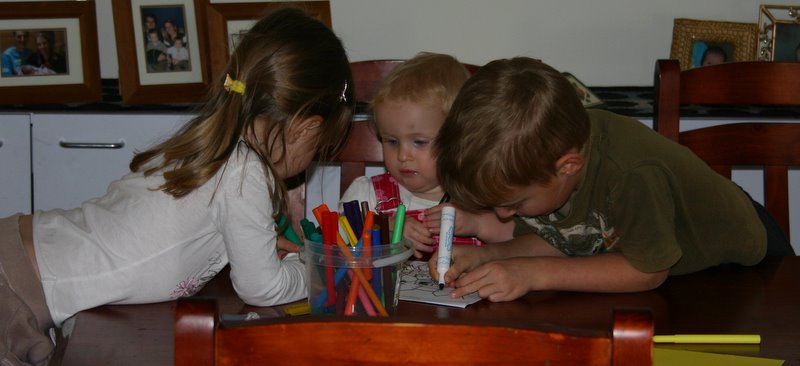
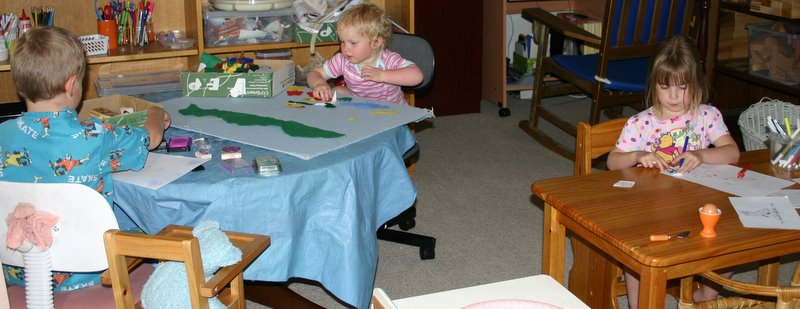
Following on from my post on table activities, I thought it might be helpful to include some ideas of the kinds of things I give my children to do at table time. The toddlers sit in their highchairs to do theirs (see highchair activities) and the older children sit at a variety of tables and occasionally on the floor.

  • Drawing
  • Playdough
  • Stamping (stamp pads and ink stamps)
  • Lacing, threading or beading
  • Puzzles
  • Books
  • Felt board
  • Construction toys
  • Pattern blocks
  • Contact collage
  • Water colour painting
  • Paper craft
  • Sticker books
  • Tea sets and teddies
  • Finger puppets
  • Mini whiteboard and eraser
  • Small chalk board and duster
  • Peg boards
  • Board games
  • Tap tap
  • Scrapbooking
  • Contact pictures
  • Dot-to-dots
  • Mazes
  • Magnadoodle
  • Colour-by-number
  • Stencils

I like to keep table activities separate from our other activities for a couple of reasons:

  • the children only use them during table time, which keeps interest levels high
  • they do not request activities that I do not want them to do at this time; those they may choose from are already set aside for this purpose
  • when I am choosing activities for the toddlers and younger children I don’t have to think of what to get or wander around looking for inspiration, I simply open the cupboard and choose from the selection there, rotating through those that are appropriate
  • the children have ready access and can pack up after themselves
Another time that we find table activities very useful is when we have visitors. We love having friends and family around but the children do get very excited. After some time to talk and play with the visitors (depending on who it is of course) I often direct the children to get out a table activity. It provides a focus, quiets down the excited behaviour and allows the adults to have a conversation. Sometimes Grandparents or other visitors will do the activities with the children (which of course they love) but we find it just gives them a great way to be around the adults and interact appropriately without dominating the entire evening.

Routines: Playpen time

What is playpen time?

Time when a baby or young child plays in a safe environment within a set boundary with a selection of age appropriate toys for a set amount of time.

Why have playpen time?

Playpen time is introduced as a regular part of a flexible daily routine. Independent playtime away from all other distractions teaches a child how to focus and concentrate on a few selected items, rather than flitting from one activity to another. It teaches them to be content on their own and to know that it is ok to be separated from Mum for a short time – that she will come back. It alleviates the separation anxiety many young children feel when Mum leaves the room because they know through experience that she will return and they will be ok.

Playpen time provides you as a parent with a period of time where you can take a shower, complete some of your own responsibilities or homeschool older children – all the while knowing that your younger child is safe and happily playing with their own toys.

How do I introduce playpen time?

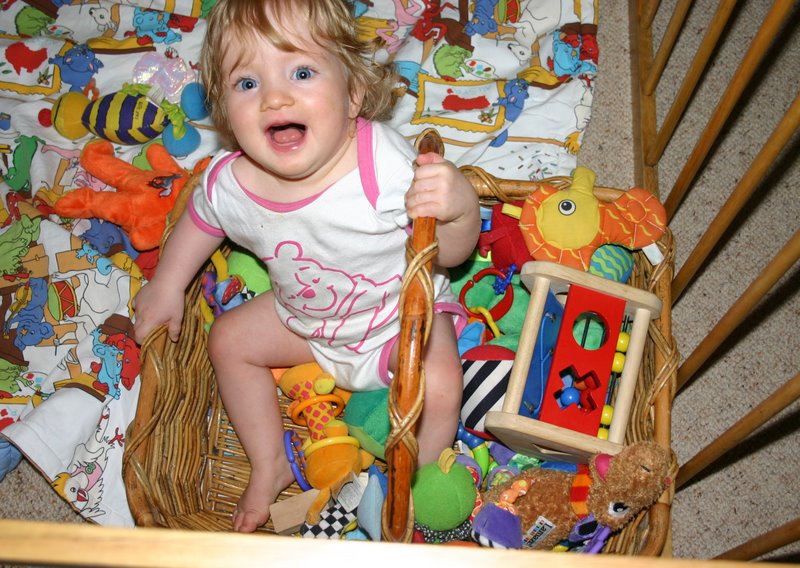
Ideally, introduce playpen time from before your baby can even crawl. (See tomorrow’s post on starting late.) An emotionally healthy baby can lay or sit for a short period of time happily focussed on their own toys in a secure and safe environment. Make it a part of your daily routine, a couple of times a day for 10 or 15 minutes right from a very young age. If you wait until they can roll and crawl to get where they want and then suddenly impose a barrier, baby will be frustrated and let you know. If they are used to spending some time in a playpen every day it will simply be something they expect and happily participate in.

Obviously babies need lots of time with Mum and other family members, cuddles, attention and the like – I am not advocating using a playpen continuously throughout the day. It is for planned periods of time and for a reasonable length of time.

Where?

Somewhere that you can check on your child regularly, but where they cannot see you. Somewhere away from the traffic flow of the house. When siblings or others walk by, a child’s attention is diverted from what they are doing and they will swiftly become discontent with being there. If they see you check in on them, they will likely cry for your attention and want to get out, whereas once settled an uninterrupted child will happily focus for an extended period.

When do I use it?

When your child is well fed and well rested and at a consistent time each day. Make it a part of your routine so that the child begins to know what will happen throughout the day and is happily ready to go in when that time comes.

Toys

Choose a small selection of toys. Too much choice means that children will not focus on any one item but swap and change from one to another. Ensure that toys are age appropriate; not too easy or too difficult for them to use. If the toys are not interesting to the child, playpen time will be a struggle. Rotate toys so that there is regularly “new” toys to enjoy.

I sort my baby and toddler toys into several plastic crates – one for each day of the week. This way, I don’t have to go though wondering what to put in today – I simply put in the next crate. It also means they only see the toys once a week so they are fresh and interest stays high. When I only had one child, I didn’t have as many toys as I do now so rotating was harder, however I will be adding lots of ideas of toys to make for toddlers and babies so check out those blog posts for ideas. You could also swap toys with friends or join a toy library.

Toy storage

Do not expect children to pack toys in to bags or boxes, it is too fiddly and time-consuming. Open baskets and crates are best as toys can quickly and easily be plopped inside. Large toy boxes are also not a good idea as all the toys get jumbled together, pieces are all mixed up and it is very difficult to quickly pull out a good selection for playpen time.

I have a mental list of categories to help me ensure a good selection of toys which varies according to the age of the child:

(For babies) Something to:

  • mouth or cuddle (favourite teddy or any suitable baby toy)
  • look at (stimulating cardboard books, fabric books, photograph books)
  • listen to (music makers, squeakers)
  • feel (texture related toys)
  • kick or bat at (dangle toys, those that clip on the side of the pen)
(For toddlers) Something to:
  • read
  • push (vehicles)
  • stack
  • open and shut
  • touch and handle, tip or put into the containers (shells, rocks, pegs)
  • wear (hats, necklaces, bangles, scarves )
  • build or construct with (Mega-blocks, Duplo, magnetic blocks, stickle bricks, train tracks)
  • pretend play with (teddies, dollies, bottles, dishes, cups, clothes, food)
  • post (a hole in the top of a small cardboard box with something to post like noodles, blocks, pipe cleaners, straws or pegs)
  • practice with (I wander through the house looking for items they are currently interested in like hair brushes, hats, shoes, cleaning cloth, tea towel, hair clips)
  • solve – puzzles (beginner peg puzzles)
  • make music or noise with (maracas, clappers, drums or other percussion, pots and pans or battery operated toys)
Toddlers plus:
See this post on room time.
Packing away

Teach your child to pack up right from the first use of the playpen. Initially it will be you packing away with them watching. Encourage them to help you put the toys away, perhaps placing a small item in their hand and guiding it to the basket and thanking them with a big smile for helping Mummy pack up. It won’t take long for them to understand what you want them to do and you can gradually pull back on the amount of packing you do until the child is completely responsible for this task themselves.

Several of my children have been heard to vigorously start throwing toys back in the crate without me telling them to do so – a very clear sign that in their opinion playpen time is done! While this is very cute, it is important that they realise Mum decides when playpen time is done, not them, or they will simply pack their toys away after a few minutes and expect to come out.


Routines: Introducing table activities

Table time is a valuable addition to any flexible routine. Simply put, it is a time when the children sit at the table (or desk or kitchen bench or wherever) and work on a quiet activity. It is a time set by the parent for this to happen and the activities used are those that are previously approved and designated as table activities.

I choose the activities for my toddlers and younger children and set them out, the middlies usually get to choose between a limited number of activities (“Would you like drawing or felt board today?”) and the older children choose for themselves from activities that they know are already approved table activities. I chat to the children while they play at the table and am able to get the dinner made and served at the same time.

While my routines have changed over the years, for the majority of the time I have used table activities after bath and shower time and just before dinner time. This allows me to get everyone finished in the bathroom and send them to their activities as they are done – no roaming about the house getting into mischief.

I find that it is the transition times, the few minutes here and there between activities, that cause the most trouble and produce the most accidents. Left to their own devices, even for just a few minutes at this time of day, a cranky, tired, hungry toddler or child will rarely make good choices with their time!

The possibilities for table time activities are virtually unlimited. I have a cupboard with shelves that is designated for table activities which makes it easy for the children to see what they can do. Anything you have that can be used independently while sitting at the table is a suitable activity. Some families like to use this time for homework. I’ll be posting some table time ideas soon and of course, any of the toddler, workjob or Montessori ideas I post would be suitable, as long as your child can do them without assistance.

Toddler activities: Sensory tables

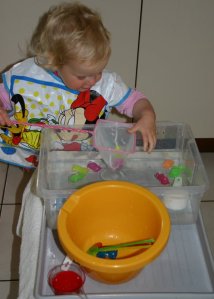
My sensory table in the kitchen; set up for water play.

Sensory tables are an excellent way to keep a toddler absorbed and concentrating for a good length of time while you homeschool older children, cook some dinner or wash the dishes. They are filled with open-ended activities and once the basic set-up is in place, are easily updated with the addition of household items for a new “theme.” Toddlers will love them and learn to focus and concentrate in the process.

A low table is ideal, however a large crate with lid, old television stand, coffee table, big wooden box or regular bench or table with the legs cut down will all suffice. I used a very large, sturdy crate with a fitted lid and covered it with a beach towel for a non-slip surface.

The sensory tray itself needs to have low sides (around 20 cms high) and be quite large. Under-bed storage crates or something similar are ideal because plastic lends itself to water and sand play and can be easily cleaned out. If the shallow crate comes with a lid this is even more ideal as it can be clipped into place when the tray is not in use.

For water play (as in the photo above) I have a smaller crate that I fill with water and a very shallow tray that goes underneath. This gives me a dry area for the accessories that are not in use and somewhere to put muffin trays for sorting and other activities near the water tub. For dry activities like pasta, the accessories can be kept in the large tray with the pasta and just put to one side.

The tray needs to be low enough for a young child to stand at comfortably, with their hands able to reach to the bottom of the tray. With very young children, you may choose to provide a sturdy step to bring them up to height, rather than cutting the table down too low – remember they will grow very quickly.

Think about age suitability. Scissor activities are not appropriate if it is likely that your 12 month old will get hold of them! Put towels underneath the table for indoor wet play. Plan for an easy clean-up by spreading out a sheet or blanket underneath when your child is using dry materials and simply gather the spills up in the sheet to tip back into the sensory tray when they are finished. You may choose to line it with fabric to cut down the noise, although this is sometimes part of the fun!

Now – what to put it in? (Keeping in mind of course that some materials pose a choking hazard and will not be appropriate for children who still like to put everything in their mouth.)

Some ideas are listed below and there are heaps of other great ideas at:  http://www.perpetualpreschool.com/sensoryideas.html


material in tray accessories to add
cheap costume bead necklaces (On strings for children to cut apart.)  Tie scissors to table legs so they are always available and do not get lost in the tray. Provide large tweezers to pick beads up and sort into muffin tins or other multi-compartment trays. Use beads for art and craft activities once interest has died.


sand plastic flowers, garden tools, rocks, pebbles, gloves, spray bottles for garden play.
sawdust or washed blue chip gravel or pea gravel or dried coffee grounds or dried tea leaves trucks, cars, rocks, pebbles, road signs
sawdust or shredded paper or packing cornstarch beans magnetic bingo wand and magnetic bingo chips (Chips will attach to wand as it is swept through the tray) or large horseshoe magnet (or similar) with paper clips, cutlery, metal pencil sharpeners etc
water aquarium rocks, pebbles, plastic bait fish or sea animals ($2.00 shops are a good place to look) aquarium net, small containers/buckets for caught fish.
water or wheat (Extremely large bags of wheat are available for at places like City Farmers.) turkey basters, squeezy sauce bottles, cups, containers, funnels, tubes, measuring spoons, sifters, egg cartons, pots, pans, jugs, measuring cups etc.
shredded paper or cotton balls or packing cornstarch beans or birdseed, wheat, pasta, rice, split peas or other clean grain. plastic or wooden letters/numbers/shapes and sorting trays to place in once found. Could be colour coded trays/containers to encourage sorting. Puzzle pieces – put puzzle tray for pieces to be inserted into once found, until picture is complete.
smaller tray – can be a table activity buttons, tweezers and iceblock trays for sorting.
chosen dry material foam board (from craft shops cut into animals or shapes to sort.)
smaller tray – can be a table activity beans and numbered egg carton (child to put correct number in each egg cup.)
ribbons, segments of curling ribbon, strips of crepe paper etc small sections of gutter guard, small hole chicken wire or commercially available weaving mats to thread ribbon through.
water sinking and floating – ping pong balls, boats, sponges, rocks, shells, other household  objects that float and sink. Encourage child to make a prediction before they check to see if the object sinks or floats. Aquarium nets to fish out objects once tested.


sand, shredded paper, crepe paper strips, sawdust or birdseed, wheat pasta, rice, split peas or other clean grain. plastic animals, bugs, rocks, shells. farm accessories etc.

(Wheat is available from places like City Farmers for $10.00 for a huge bag. Cheap enough to just sweep up spills and throw out if dirty.) Provide insect or animal books for children to look up their “catch” as they unearth their finds.

iceblocks of a variety of sizes use salt to stick blocks together to create ice sculptures
water different kinds of rocks to scrub, wash and dry (provide t/towels, scrubbing brushes, cloths etc.) Set up a couple of factual book about rocks away from the water for children to try and find their rocks and research rocks in general.)


shredded paper, packing beans fishing pole (wooden pole with string tied to the end and a magnet tied on the end of the string.) Cut fish shapes out of card and glue a paper clip to the nose of each. Write numbers, letters, sight words or whatever you are working on onto each fish and have child name them as they are caught. If they cannot recognise the letter etc. toss the fish back and catch again later. Do not work on too many new letters or numbers etc. at a time – ensure most catches are successfully named!


dog food stuffed animals, pet accessories, bowls (For the child who is old enough to resist the urge to eat the biscuits!)


nature items dry leaves, rocks, sticks, pine cones, honky nuts etc. with magnifying glass. Add plastic animals, bugs, cars etc. later, after the interest in the nature items themselves has worn off.
straws provide different sizes and colours for children to chop up. Tie scissors to leg of table to stop them getting lost in the tub. Once straws are all cut into smaller pieces, hide other objects (as for the ideas above) to find and sort or use cut straws for threading.
fossil dig freeze plastic dinosaurs in a deep tray in a thin layer of water coloured with food colouring. Once frozen, add another layer of different coloured water and so on. Dig out the fossils with metal spoons. Read dinosaur books and information about palaeontology as an intro or follow-up.

De-bone a chicken and soak bones overnight in bleach. Bury “fossils” in selected material for children to dig out.


cutting bright scrap paper, wrapping paper, magazines, pictures etc. for children to cut as desired. Hole punches, fancy scissors and staplers can all be added.


water pure soap flakes and hand beaters.


soapy water dolls clothes, tea sets or plastic dishes to wash and dry up or peg onto string line. Add dish mops, sponges, pegs, bottle washers etc.


corn starch packing beans can be used to hide many objects and are edible (ensure you get the correct ones. Encourage children not to eat them, just know they won’t be poisoned if they do!)

Once you have used them for a while dry, you can provide spray bottles filled with water to dampen the beans which are then mouldable.


soap and paper clay grate one bar of  soap and mix with equal amount of water then combine with one roll of white toilet paper (torn up) to make a mouldable sculpture material.


cities layer bottom of tray with garden soil and sprinkle well with grass seeds. Provide water spray bottles for daily watering. As the grass grows, lay small blocks for roads and add cars or other accessories. Make junk model city buildings and houses and trim “lawns” with scissors.


sand shells, seaweed, flags, buckets, yoghurt pots or other containers and water spray bottles to dampen sand.
chosen dry material spray small rocks gold or use plastic jewels or vase rocks as treasure. Link to pirate stories. Make box pirate ships to pile treasure into.
marble run clear flexible tubing, wooden blocks or real pipe and a variety of joiners to create pathways for marbles.
chemistry lab fill a container within the main crate with water. Provide “lab coats” to keep scientists clean and dry. Have a number of small jars containing vinegar, baking soda, flour, salt, oil, red, blue and yellow coloured water. Put small teaspoons in non-liquids and eye droppers in liquids. Children choose two ingredients for each experiment to mix, observe result, then rinse mixing jars in water. Provide t/towels for drying before starting a new experiment.
colour mixing as above, but only with the 3 prime colours in water. Perhaps use before introducing chemistry lab.
soap finger paint beat pure soap flakes, a little food colouring and water to form a thick, shaving cream consistency. Finger paint in crate or directly onto table surface. If painting onto table surface it is better done outside and hosed off once finished. Provide shirts or aprons to protect clothes. Make a print of painting by smoothing paper over lines drawn with fingers or plastic objects.
supersand equal parts cornmeal and dried coffee grounds make “supersand.” Use with many of the ideas listed here.
water different sized bottles and containers. Draw lines for children to fill to. Work together to decide which holds more.


Camping with little ones, heat and ticks.

School holidays are upon us. For those of you who are heading off camping with your families over the school break, well done! You are creating memories that will last a lifetime and taking one more step towards building a strong family identity. I thought I would post the following story which I wrote after a camping trip with my family at the beginning of the year . With five children 7 and under at the time, it was an interesting experience and yes, we will do it again over the Christmas break! (Just without the ticks this time.)

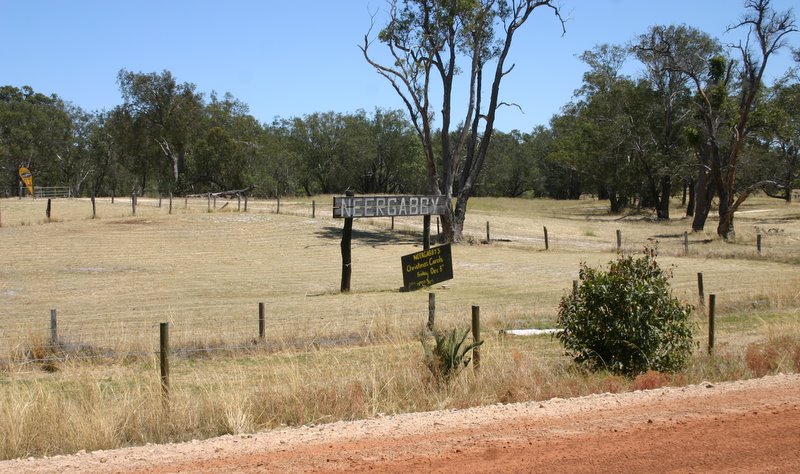
After 2 days of planning and organizing around all the usual daily activities, we woke early and were on our way by 8.30am, which wasn’t a bad start as it was only 30 minutes after we had hoped to leave. We drove the 1 ¼ hour distance to the Neergabby campsite and were pleasantly surprised at how close it actually was. We pulled into the driveway to be greeted by Nan and Granddad and the rest of their 4 wheel drive club and informed that the campsite was riddled with large ticks. After some debate it was decided that it may be best to set up camp away from the trees and longer grass as there appeared to be less of an infestation there. (This of course meant that we were in the full sun on a 31 degree day.) We set up camp without much assistance from the children who were eager to get out and meet the gang and begin events for the day.
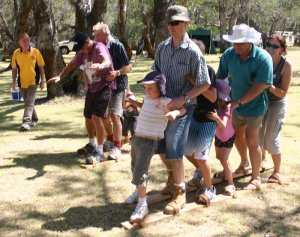
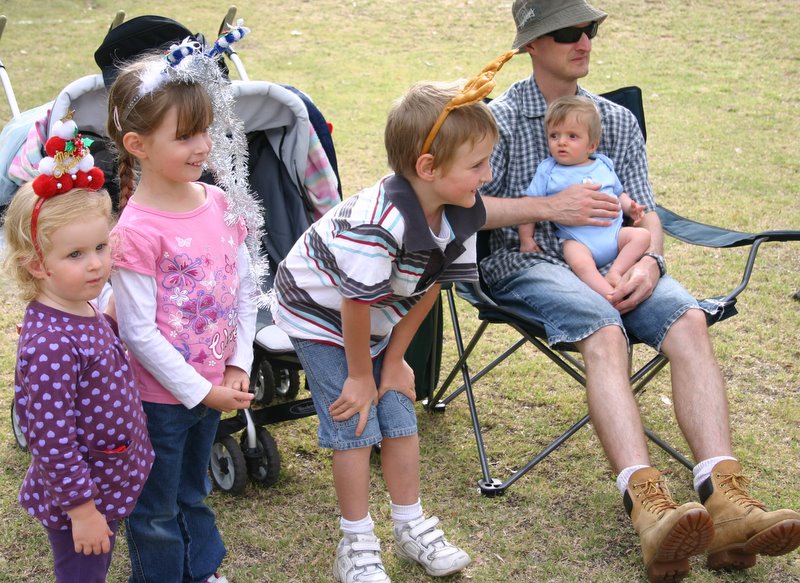
We enjoyed a pleasant day of games and craft with the whole group, young and old, lunch on the verandah, cups of teas and chit chat – while looking after our 5 of course. The twins found several willing hands to be passed around to and the older children had a couple of other playmates to run about with. They received an extremely generous Christmas bag from a club member and copious amounts of lolly bags and chocolate prizes throughout the day to give the kids that sugar rush we parents always love.
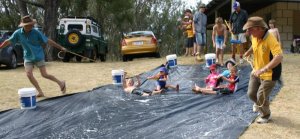
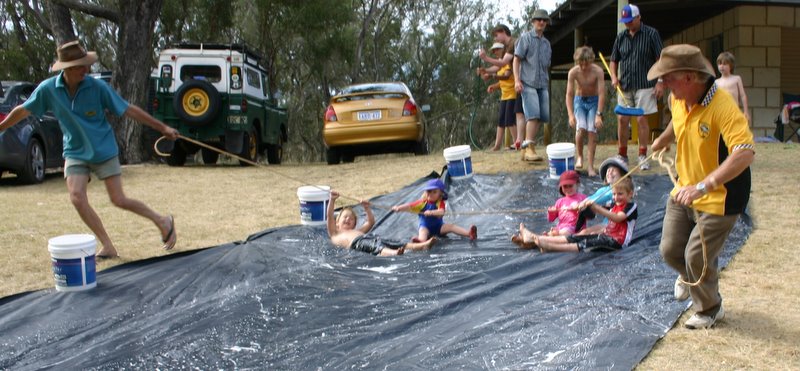
The late afternoon was filled with sliding down the plastic sheet waterslide pulled by a rope which was enjoyed immensely but ended tragically as the soldier ants whose nest we had apparently disturbed finally came out to find out what was going on over their heads. Several children (including 2 of ours) suffered painful stings. We cleaned up for a sumptuous Christmas banquet under the beautifully decorated rotunda. Mum and Dad were camp directors and had knocked themselves out making it special for everyone and didn’t sit down the entire weekend.

All children were bedded down by 8 and quiet when I checked on them (I think they heard me coming) and all was well for a while, until Master 7 appeared to tell us that one twin had been woken up by everyone else talking. We settled him down, got all the others quiet and Daddy stood guard for noise outside the tent while I returned for the raffle draw. The stayers kept on for the guitar led singsong, but we retired fairly early to bed.

We both struggled to go to sleep, being either too hot in our sleeping bags or too cold out of them. The night wasn’t tooo bad – I was only awakened once for the toilet, twice for “I can’t get back in my sleeping bag” (from a previously hot but now cold child who was under the bag rather than in it), once to feed a baby (also awakened by the sleeping bag incident) and finally to push another child back onto her own mattress (she had turned sideways and was trying to get comfortable at her brother’s feet – grumpily telling him “Don’t, stop it, stop it,” as she was kicked in the head while he tried to push her off him in his sleep.) The kookaburras started at 4/4.30am but went away fairly quickly, the first neighbours were chatting around 6am and the first child was awake at 6.30am, needing to go to the toilet.
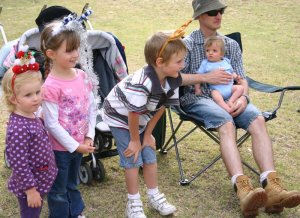
Breaky of toast, eggs and leftover ham was up on the verandah in a lovely cool breeze and after this leisurely start, we faced the task of packing everything back in the car and trailer again.

We spend 2 hours in the already boiling sun re-packing all the gear into the car and trailer while the twins sleep in their pram in the shade (lucky them!) Miss 3 1/2 completely lost it and spent the whole packing time crying about her sore arm, sore tummy and how tired she felt and the oldest two pestered us continuously to eat more lollies and chocolates from their Christmas bags. Fellow campers flipped camper-vans back together in 20 minutes and enjoyed a cuppa in the shade whilst pondering the joys of being Grandparents rather than parents and packing for 2, rather than 7. We spent the morning wondering whether all our fond memories of camping growing up were due to the obliviousness of childhood and selective memory, however Mum tells me that no, it wasn’t anywhere like this much work for them!

We finished eventually and took leave of the camp-site, electing to skip the car museum trip and simply head home with our tired crew. Master 7(who sits between the twins) was very patient and kept busy giving the twins offers of milk and finger food during the trip while Miss 3 1/2 told us over and over that her tummy and arm hurt until she finally fell asleep.  Twenty minutes down the road, Master 7 informed us that there was a brown substance (that looked exactly like melted chocolate but unfortunately wasn’t) on the baby toy, his hands and oozing out of a twin’s nappy into the car seat. We stopped by the side of road to change said twin, including his clothes, wipe his seat, Master 7’s hand and wrap up the toy to deal with later. We resumed the trip again to hear a yell from the back seat that there was a tick on the feeding pillow. We stopped the car again and I threw the tick out of the window with my bare hands (Mummy to the rescue yet again.) The final tick count for the weekend: 3 off the sides of the tent, 2 off the floor of the tent, 4 off the children, 3 off Daddy, 1 off me and many sightings. God answered my prayers and none actually bored into skin.

Twenty minutes further into the journey Miss 3 1/2 woke up, cried and threw up in her lap. We stopped by the roadside yet again to clean her up the best we could, wondering throughout whether ticks were crawling up my legs or were they just flies I could feel? As we set off yet again, Daddy and I laughed uncontrollably at the absurdity of the situation and wondered what could possibly go wrong next. We FINALLY reached the city and the home stretch, only to hear Master 7 tell us that he needed to go to the toilet and no, he couldn’t wait 15 minutes until we got home. We pulled off the freeway and stopped by a clump of out of the way bushes for longer than would ordinarily be necessary (apparently he really did need to go) and set off again.

At the next set of lights, the guy in the next car wound down the window to tell us that we were dragging an occy strap, so we pulled over once more, wondering what it could be as we don’t have any occy straps?! Turns out to be someone else’s occy strap which has hooked around the trailer lights and pulled them out of the socket (meaning we’ve had no lights for who knows how long) and badly damaging the attachment which miraculously turns out to still work when reattached but will need replacement later. After looping through the South Terrace area to get back on the Freeway we noted that we had taken 20 minutes to go 5 minutes worth of distance.

On arrival home (which we were amazed to see was only 2 hours after leaving instead of the 3 hours it felt like) we fell out of the car, fed lunch to the now crying babies and older children (not crying but complaining at the removal of their lolly bags for later), washed and re-dressed Miss 3 1/2, put twins to bed, send older 3 to room time, spent ½ an hour unloading the car and dumping everything to be dealt with later, ate some lunch ourselves and collapsed in a heap.

We looked around the house and noted that it had not cleaned itself in our absence and was now littered with all the camping gear as well and decided not to go camping again until all children were old enough to carry their own gear and put up their own tent… until the next time that is – got to build those childhood memories! We hear Dunsborough is nice over Christmas time…..