Christian families and Father Christmas

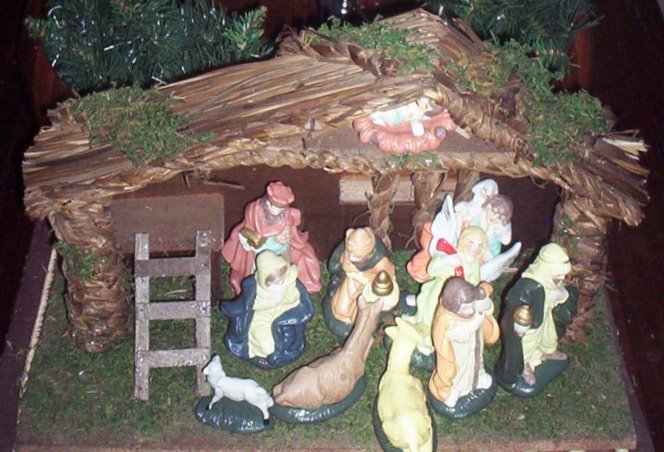
The children love to play with this nativity scene. In case you are wondering, baby Jesus is up in the hay loft.
I must admit, I hesitate to write this post knowing that many readers will disagree and perhaps even be offended. I apologise in advance to anyone who is offended but think that the topic is important enough to broach. I hope you will approach what I have to say with an open mind and make your own judgements based on biblical understanding and after prayerful consideration.

With Christmas decorations hitting the shops, I have turned my thoughts towards this year’s Christmas celebrations and plans. Is it possible to celebrate Christmas with Father Christmas or Santa Clause and still be honouring to God? Can we participate in all the pretend and story telling that goes along with it without lying to our children? How can it be ok to deliberately lead our children to believe that something is true when it clearly is not? The bible tells us that God is truth and Satan is the Father of lies. (John 8:44) Is it all just harmless pretend and imagination, or has it gone one step further than that?

We teach our children that being truthful and honest at all times is right and pleases God and tell them that pretending is fine as long as others know you are pretending. If our children report an event or happening to us that is not true, without making it clear that they are “telling us a story” or “pretending,” we treat this as lying and give appropriate consequences. I can’t reconcile that standard with telling them the traditional Santa tales, knowing that they fully believe every word of it to be true.

Why do many of us celebrate Christmas with the Father Christmas myths as a central part? For most of us, we grew up with it and loved every minute and our families (parents and extended family) may be upset if we decided to make a change. Many also seem to think that their children will miss out on the “magic” of Christmas. Some say they grew up with Santa and are still Christians so therefore there is no harm at all in doing it with their own children.

We are living in a time when reportedly up to 80% of those making decisions for Jesus walk away from the church or “backslide” as we often term it. Why take the chance with anything at all that could potentially harm our children’s faith?

We all know there will come a time when children will work out for themselves that Father Christmas isn’t real, but after years of hearing from trusted parents that he is real (and often that the Easter bunny and tooth fairy are also real), is the next step to question whether Jesus is real or just another pretend that Mum and Dad have told over the years?

At this time of year it’s hard to steer clear of the commercialism of Christmas and keep the focus on celebrating Jesus’ birth where it should be, without adding reindeer stories and Father Christmas into the mix.

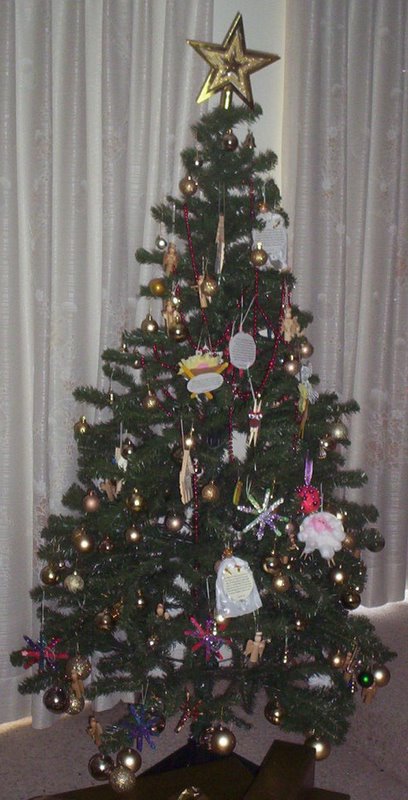
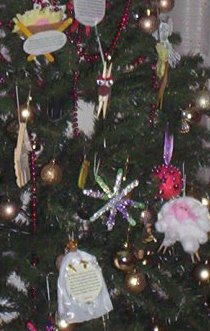
We feel that we can still make Christmas a wonder-filled time of joy and fun without involving Father Christmas at all. We do give gifts, but the focus is on celebrating Jesus’ birthday and the tradition of gift giving started by the wise men at Christ’s birth. We have a tree, but it is a Jesse tree with the symbols on it related to bible stories. We spend time together making decorations and dressing the tree, eating special Christmas treats and listening to joyful Christian Christmas music. We have an advent wreath with candles to light as we read Christmas devotions and other special Christmas stories set aside for just this time of year. We cook together, hold family get-togethers, feasts and invite special visitors and are endeavouring to build many other Christmas traditions to knit us together as a family.

Our children love Christmas and look forward to it with as much joy, anticipation and excitement as I think I ever did and we can have the peace of mind and clear conscience of knowing that we are striving to teach them to love God with all of their mind, soul and strength and endeavouring not to steer their hearts and affections away from God in any way. Just because something is traditional, cultural, I personally grew up with it and society promotes it doesn’t mean it is right.

We do teach our children the legend of Saint Nicholas and some of the possible origins of the Father Christmas tales. We also teach them that children from other families believe Father Christmas is true and it is not for them to tell them otherwise.

I encourage you to think the issue through, talk it over with your spouse, pray about it, read your bible and come to a decision for your family that is Godly and right.

Christmas traditions: Our Jesse tree


(Updated to add: See photos of the finished ornaments here,  a list of stories and symbol for each day here, advent and Christmas tradition ideas here or for a different take on Jesse trees, see our names of Jesus Jesse tree symbols.) 

I know it’s only November, but Christmas is fast approaching. Every year I have grand plans for advent style activities, but before we know it, December has started and I’ve missed the beginning again. Not this year!

In the after Christmas sales last year I ordered a bunch of books and several of them are meant to be read on a daily basis leading up to Christmas. These will be out and plans for our Jesse tree are underway (in my head anyway!)

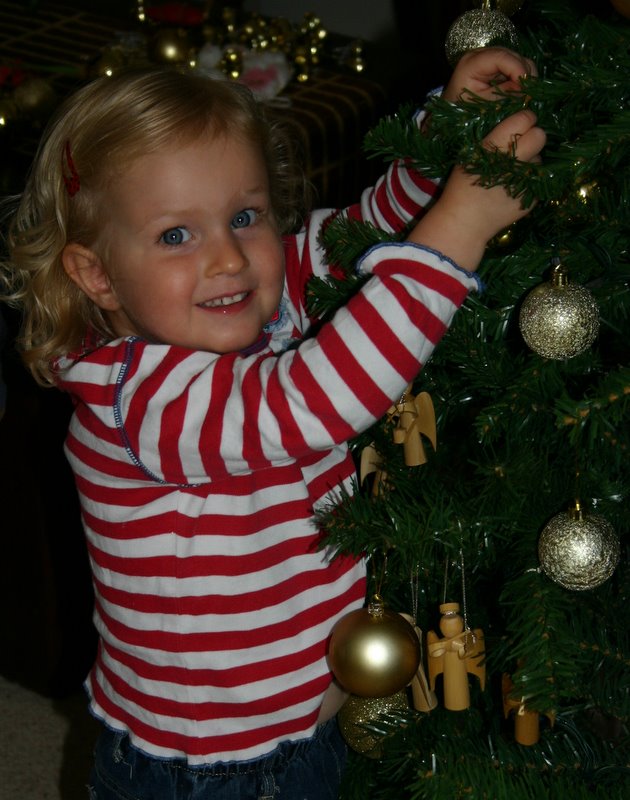
We have two Christmas trees already – a small one and a much larger tree. I have always loved decorating a beautiful tree and making it “just so” and didn’t want to add the children’s handmade decorations to “my” tree. Thus the little tree was theirs and the other was Mummy’s! As of last year however, I finally let go of my idea of a perfect tree and handed it over to the children. I arrived at this decision after allowing them to help me decorate my tree (after much begging and pleading) and finding the whole episode frustrating and annoying.

Later I sat down and reflected on the whole event. I want to create loving and memorable family traditions that the children will remember fondly throughout their lives and perhaps even carry on with their own family. Traditions are one of the ways we can create family togetherness – they knit us together. Decorating the tree should be a wonderful time of family togetherness and fun; not a time of grumping and correcting about how it was done. Sooo… my tree has gone and the large tree is now the family tree with everything on it (yes, I mean everything, sigh) and the smaller tree will act as our Jesse tree until the number of symbols builds up to the point we need to move to the bigger tree.

What is  a Jesse tree?

The Jesse tree is a representation of Jesus’ family tree. Jesse was the Father of David and God promised David that his kingdom would last forever. It was through David’s  line that Jesus comes and the symbols used on it traditionally represent those in Jesus’ family tree.

It is called the Jesse tree because of this verse in Isaiah 11:1-4:

A shoot will come up from the stump of Jesse; from his roots a Branch will bear fruit. The Spirit of the Lord will rest on him – the Spirit of wisdom and of understanding, the Spirit of counsel and of power, the Spirit of knowledge and of the fear of the Lord. He will not judge by what he sees with his eyes, or decide by what he hears with his ears; but with righteousness he will judge the needy, with justice he will give decisions for the poor of the earth. (Isaiah 11:1-4)

Rather than sticking to the traditional Jesse tree symbols, we plan to keep adding more and more symbols from as many bible stories as we can each year. I plan to collect objects from around the house, decorations we already have that match a symbol (eg, an angel) and buy a couple more every year to expand the collection. The children will make some cardboard creations, however I also want to collect a bunch of pre-made symbols that can be hung daily without us having to make something. Last year we started with the idea of making a symbol every day but it was just too hard to keep up. This year we will make a few and add a few.

Here are some useful links. Keep in mind that most of them are Catholic websites so use them as a guide and modify the readings and symbols chosen if desired.

http://www.cresourcei.org/jesse.html Lots of information about Jesse trees, including a very useful table of themes, scripture readings and symbols

http://www.domestic-church.com/CONTENT.DCC/19971201/FRIDGE/FRIDGE1.HTM Symbols with readings that can be copied, coloured and cut out to make your own homemade Jesse tree. Click on the symbol downloads to see the scripture references.

http://www.catholicculture.org/culture/liturgicalyear/activities/view.cfm?id=545&repos=3&subrepos=1&searchid=801729 Scriptures and ideas for objects that may represent them – some alternative ideas here.

http://www.shalfleet.net/advent/makeajessetree.htm Scroll down this page for more scripture readings and several alternative symbol ideas.

Make your own toddler toys: teddy food play


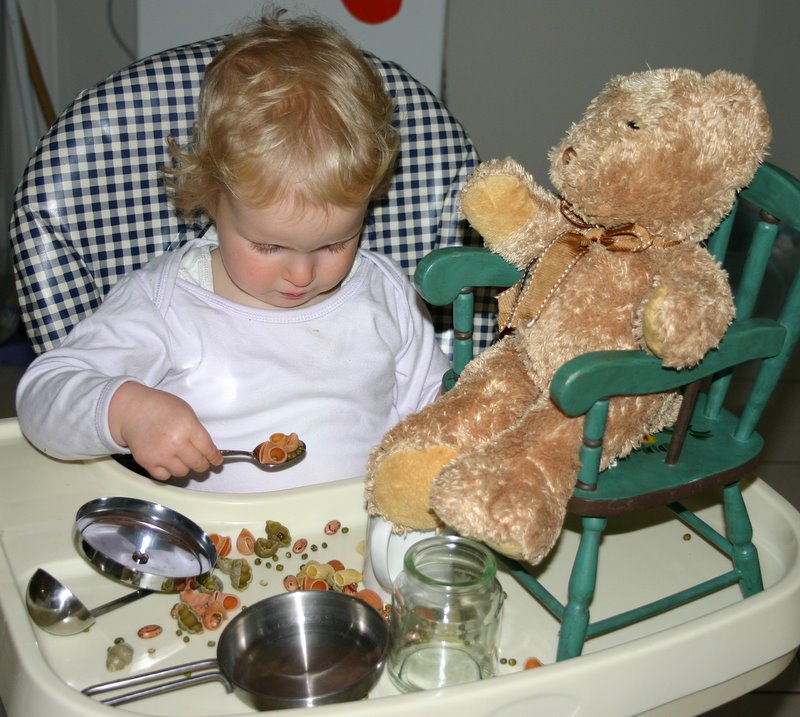
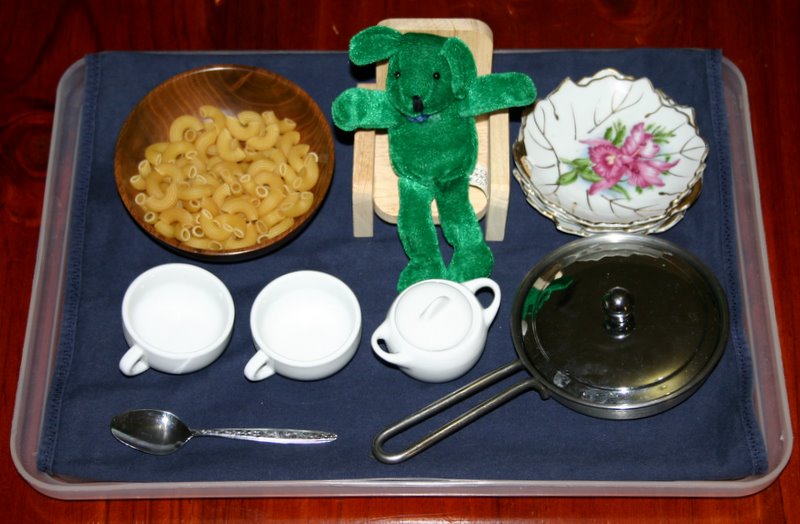
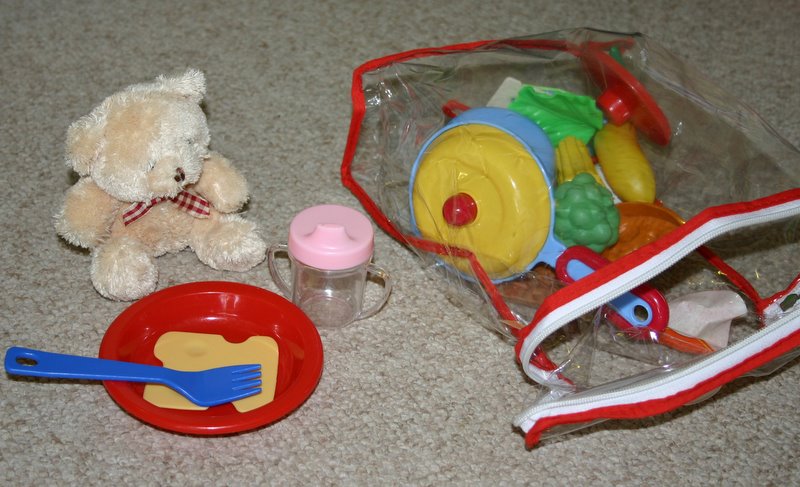
Teddies, cooking equipment and food are such an easy activity to put together for toddlers. Little boys and girls love to pretend cook and feed their willing teddy companions. I use this kind of activity for highchair time, mat timeplaypen time or as a table activity and it’s open-ended nature lends itself to long periods of concentration.

It is easily updated and kept fresh by simply adding some different containers, cooking equipment, food or teddy. It can be a “new” activity every week without much work on your behalf.

Simply look around the house, gather up some interesting containers, plates, cups, cutlery and the like, some kind of “food”, a teddy and you are set. Keep in mind the age of the child and choking hazards. Beans, pasta and jewels are best used under supervision or not at all if a child is very tempted to stick them in ears, noses and mouths or anywhere else they shouldn’t be!

Sometimes I use doll-house sized teddies and doll-house furniture so the teddies can eat at the table, go to sleep in a little bed afterwards and even sit on the couch to relax. I have used plastic food, felt food, wooden food, dry pasta and beans, jewels and rocks and even pictures of food glued onto card from junk mail.

As soon as your little one has begun use their imagination (pretend play) you can introduce this activity. For the very little children, you might even sit and play with it with them first, teaching by your example what to do with each item. Children with older siblings have had this modelled extensively, but a first child will not always know how to play unless you show them. They will of course work it out for themselves, but if you want a young child to use this kind of activity enthusiastically for an extended time, some modelling will go a long way to extending their play.


Recipes and food: Kids in the kitchen

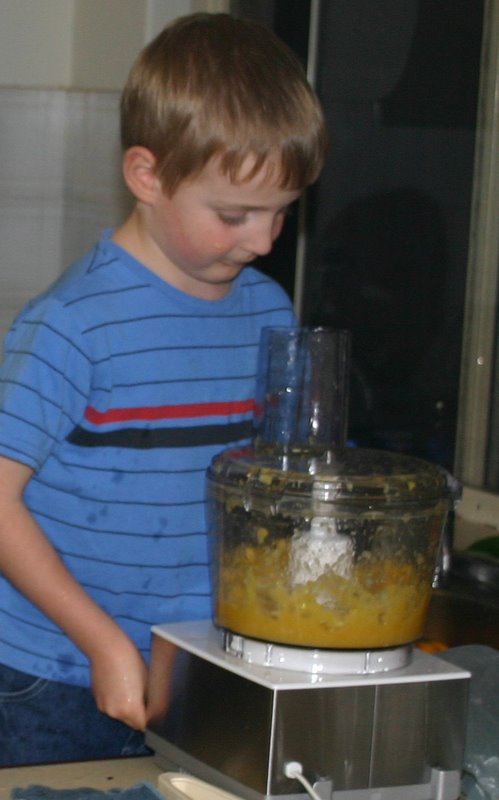
Running the food processor is a job I often give to the youngest. They love to feed ingredients in the shoot and be in charge of turning it on and off.

One of my goals as a parent is to teach all of my children every aspect of running a household, with the aim that by the age of around 14 they would be able to independently manage their own household if necessary. I will not expect them to actually be doing all of it at once by that age, but they will have been fully trained in all areas to a point of competence; something I’m sure  their future husbands and wives will appreciate.

What does that look like now? Each child has their own personal responsibilities (chores) that contribute to our family. Personal care and general cleanliness, emptying dishwashers, hanging wet clothes, cleaning toilets and the like. Young children start on the easiest jobs and move on to the next level of responsibility as they are able.

Each child (bar the toddlers) also spends time in the kitchen with me; sometimes one-on-one and sometimes all three at once. They learn how to read a recipe, measure ingredients, make a range of meals and baked goods and assist with general meal preparation. I try to give them experience in preparing everyday food as well as special occasion food.

Another great job for the younger children is washing fruit and veggies. They usually get wet, but it allows even the youngest to feel that they have contributed to the meal.

By 5, my eldest could make a batch of muffins completely independently (bar putting them in the oven). He had learnt step-by-step how to read a recipe, take out the ingredients and equipment, measure and mix, spoon into pattypans and tidy up after himself. The girls were not quite at that point by the same age, partly due to reading skills not being at the same level and also due to me not having as much time to spend with them teaching the skills. They do however love to cook and are learning the same valuable skills, albeit a little slower!

Ideas for the youngest:

  • wash the fruit and veggies
  • feed pieces into the food processor or juicer
  • collect ingredients
  • stir mixtures (you measure, they tip in)
  • peel easy veggies like carrots
  • cut with a butter-knife (thin sticks of fruit, cheese or veggies into cubes or smaller pieces)
  • pull tops off cherry tomatoes and strawberries
  • tear lettuce for the salad
  • share ingredients onto dinner plates for a meal (great for counting practice)
  • roll mixture into balls (biscuits, meatballs etc.)
  • thread fruit, veggie or meat cubes onto skewers
  • dip chunks into flour, egg or breadcrumbs
  • taste test recipes (my children’s personal favourite!)
Recently we have spent more time with all three children together working production line style to stock the freezer for upcoming Christmas events. (We will be organised this year!!) They are rolling meatballs, threading chicken onto skewers, crumbing fish and baking biscuits, slices and cakes to freeze already sliced. When we need to provide afternoon tea, suppers, meals and the like, we can simply pull out the required amount of each item and defrost or heat then serve.

With several little ones underfoot I dislike any recipe for visitors that has to be made just before serving. I would much rather do the work ahead of time and enjoy spending time relaxing rather than in the kitchen.

Cooking is a skill that every adult should have and it is a saying in our house that “anyone who can read can cook.” We may not all love to cook, but we can all learn to do so to the point where we can put a nutritious meal on the table to bless our family and others. Pull out those cooking books and get cooking!

Outside activities: Water play

The warm weather continues, which in some ways is wonderful and others not so much! Instead of enjoying outdoor time, my children start pressing themselves up against the glass sliding door and asking to come inside where it’s cool. Time to bring out the water play. We bought this water table secondhand for $5 last year and it definitely was a bargain. All the children, even the toddlers, enjoy standing around it and getting thoroughly soaked as they play with the sand toys in the water.

I like to use outdoor time to get some of my own responsibilities completed, so all water play needs to be set up so that it is safe – no deep containers for children to fall into. The swimming pool and slide etc. does not come out at these times – that needs high level supervision. I do keep an eye on the children but, as I am not right next to them, water levels are kept to a minimum. The water table is ideal as it is up high and only holds a few inches of water.

Before we owned it though, water play was just as enjoyable. We used the lid of a clam shell sandpit and filled it to a shallow depth (about an inch) and the littlies could sit in it and play – double the wet fun. The older children prefered containers like buckets and tubs filled to a deeper level so I put these up on benches away from the little ones. While I do not expect the older children to take on the responsibility of supervising their brothers and sisters around water, the fact that they are playing there means there are several pairs of eyes on the situation, including mine. I know I will be called very quickly if a toddler starts trying to get into the deeper tubs – particularly as it interrupts the older children’s games!

Babies and toddlers are happy with just a couple of containers of water to splash about in but as the main game seems to revolve around tipping the water out again, you or an older child needs to be available to constantly refill their containers. The bigger children don’t mind scooping a saucepan of water out of their tub over and over again as they have the freedom to access the hose and refill it to the agreed level as required.

If you can stand the sandy mess, add the water play to the sandpit and you won’t hear a single complaint for hours! Nothing much is better for young children to keep busy in than water and sand. When it’s time to come in, I just stand them in a line and hose them all down before sending them in for proper showers and baths.

Recipes and food: Snacks – juice pops

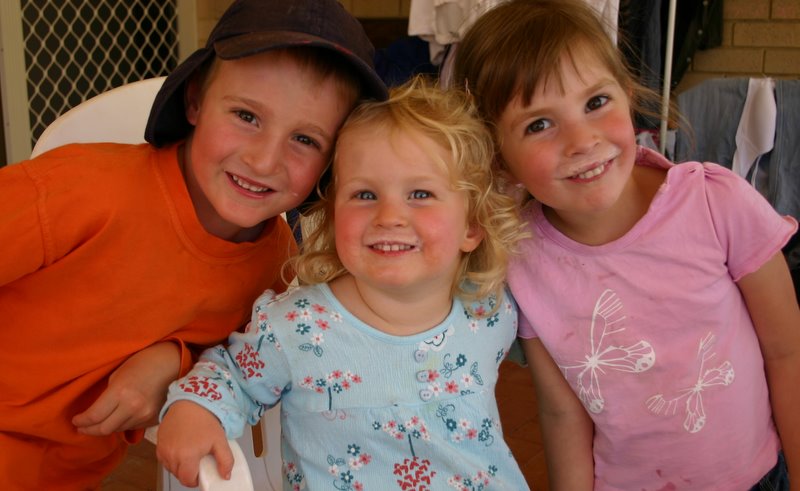
Showing off their banana milkshake juice pop moustaches. (We call them juice pops regardless of the ingredients!)

Now that the warm weather is here again, it’s time to dust of the frozen popsicle molds and make some juice pops. These are so quick and easy to make (I can even ask the older children to do them for me) and keep almost indefinitely, so there is always a snack sitting in the freezer ready to go. I like the fact that they are not too filling as some of my smaller eaters don’t need much of a snack before their appetite for the following meal is affected. Also, if I make the ones without sugar syrup in them, they are a healthy snack that even the toddlers love.

I should have put a bib on!

What do you need:

  • A mold (shop bought popsicle molds, plastic cups and popsticks, plastic cups and teaspoons, or scooped out orange halves and popsticks.)

Ingredients:

  • juice of any kind with fresh fruit chunks
  • pureed banana and coconut milk
  • milkshake mixture
  • pureed rockmelon, sugar syrup and a twist of lime
  • left-over softdrink
  • pureed berries or fruit and sugar syrup

Simply puree your ingredients, fill the mold (adding fruit chunks to the bottom first if desired) and freeze. Adding sugar syrup to the juice pops helps prevent ice crystals forming, however I usually don’t include it to keep the children’s sugar intake down and they love them anyway!

Sugar syrup:

  • 1/2 cup sugar
  • 1/2 cup water
  • 2 strips of lemon zest

Heat the ingredients together until the sugar has dissolved. Remove zest and add to puree of choice before pouring into molds.

Hell’s Best Kept Secret

We have fairly recently come across the teaching of Ray Comfort. He is a preacher and evangelist with a strong message that no Christian should miss. “Hell’s Best Kept Secret” and “True and False Conversion” are both available for free download here. With information pertinent to any believer (or non-believer) and vital for us as parents seeking to prepare our children’s hearts for salvation, this message explains why around 80% to 90% of those making a decision for Christ fall away from the faith. Don’t let your children or loved ones miss out on this vital teaching. The book “Hell’s best kept secret” is available here.

5 Category Sorting: A Montessori style tray activity

(For a detailed introduction on how to introduce sorting to toddlers, it may be helpful to read this post first.)

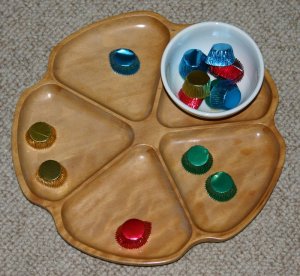
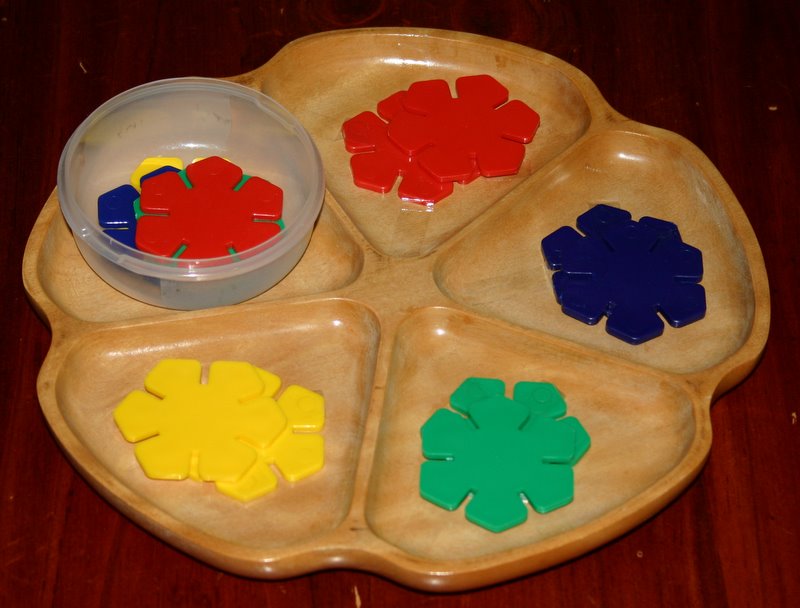
4 colour metal patty-pan sorting.

After my toddlers have been introduced to sorting and have extended their skills to independently identifying 4 or 5 attributes or more, I continue to swap the materials that they sort, but keep the base tray or sorting containers the same. This means that I can change the material and present a “new” tray activity with little or no explanation. The children are immediately familiar with the type of activity and therefore already know what to do.

This is important for when I am teaching older children at the same time as a toddler is working on their Montessori style activities so that I am not constantly interupted. It also means that I am not having to demonstrate or “teach” every single new tray activity – once the format is familiar, I can change materials and off they go.

I set up each term’s worth of tray activities with chosen categories (transferring, sorting, matching, counting, pouring etc.) and simply update the materials as necessary without having to re-introduce each activity.

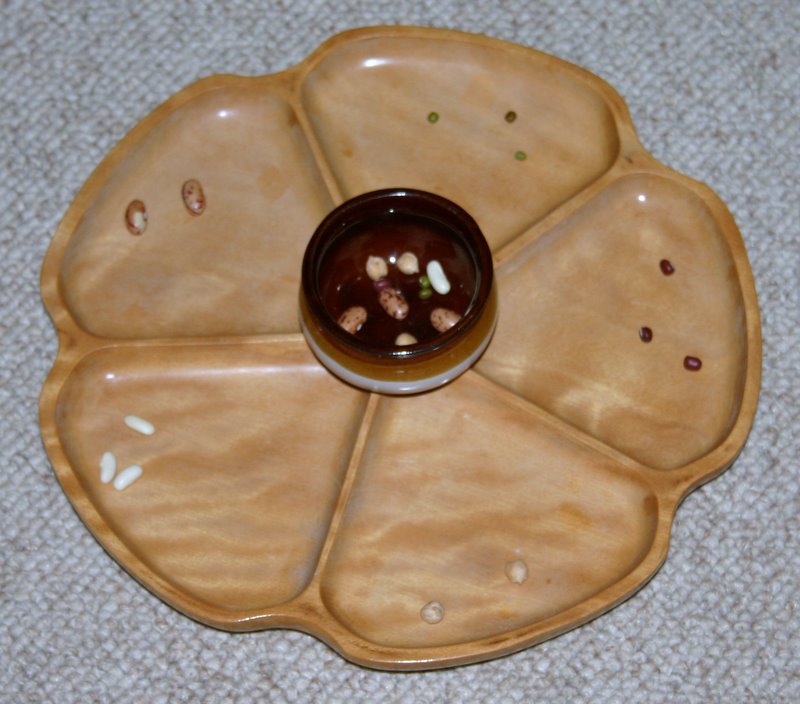
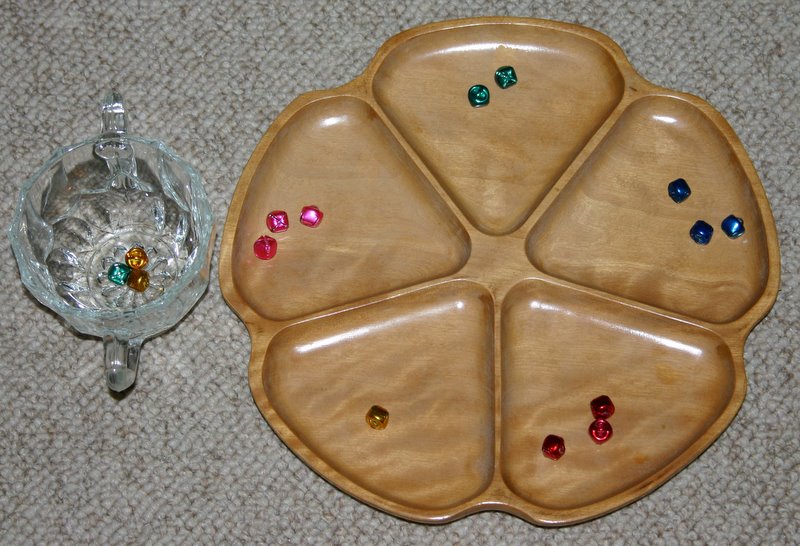
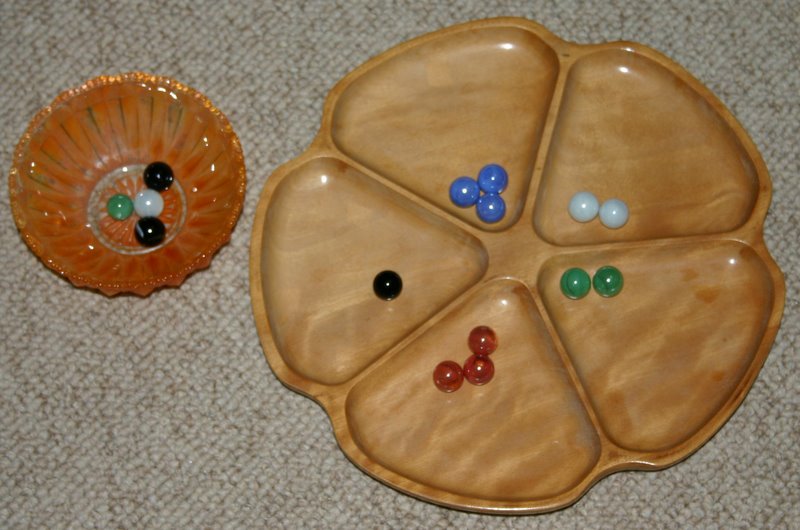
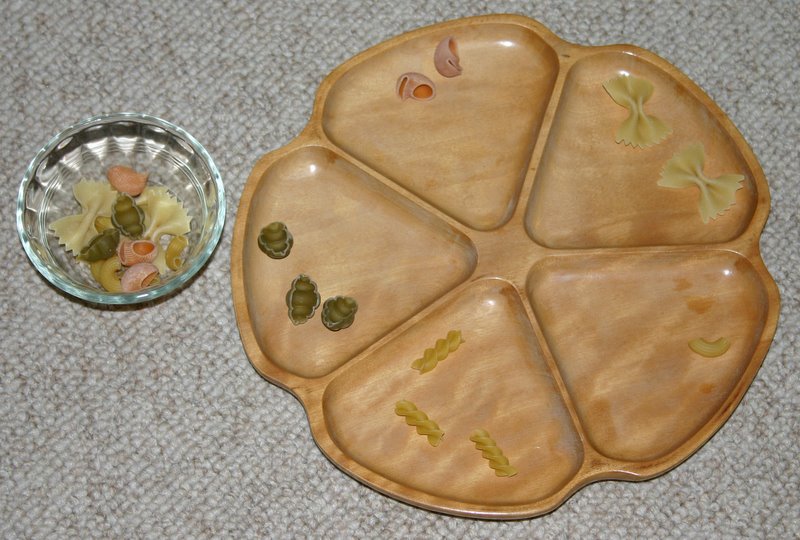
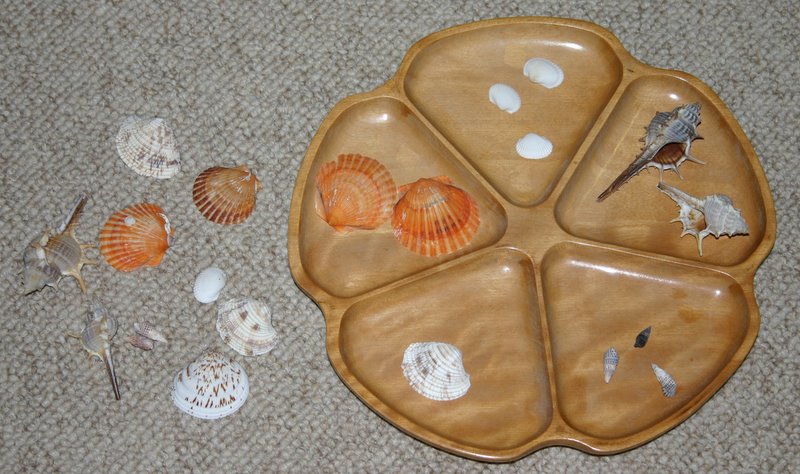
This wooden tray lends itself well to 4 or 5 attribute sorting and by simply changing the materials I can easily update it throughout a term with very little effort. I also add a pair of tongs, tweezers, scoop or spoon to incorporate fine motor skills and turn it into a transferring activity at the same time, which adds an extra level of challenge to the activity.

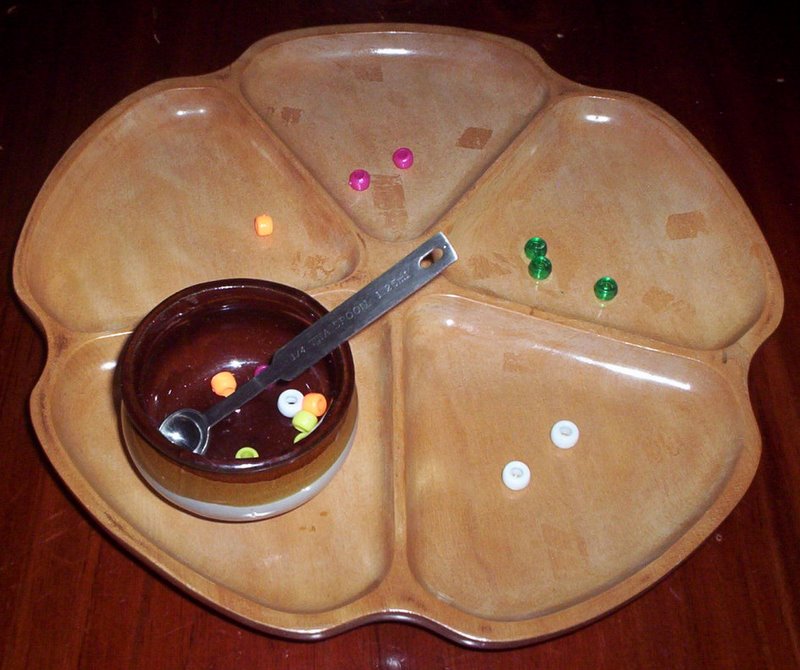
5 colour pony bead sorting. (The bowl needs to be moved off to the side to provide room for the 5th colour.)

5 colour jewel sorting. Most of these objects pose a choking hazard so take care with young children who still like to put things in their mouths. Jewels are so tempting for toddlers to suck on.

4 colour plastic flower sort.

5 types of dried beans.

5 kinds of buttons.

5 colours of Christmas craft bells.

5 kinds of pasta and dried beans.

5 coloured marble sort.

5 kinds of pasta.

5 kinds of shells.

5 kinds of farm animals.


An introduction to Sorting: A Montessori Style Tray Activity

Two colour bead sort with attribute or category already given. The first exposure to sorting for my toddlers.

Sorting is an important foundational skill requiring reasoning, logic and mathematical thinking. It enables children to be able to look at a group of objects and identify similarities and differences and to make logical decisions as to how to categorise the objects. Sorting skills will transfer into other academic subjects such as science and mathematics later in life.

Sorting frequently covers other basic skills such as colour recognition and counting and if combined with some kind of transfer tool such as tongs, spoons, tweezers or scoops, will develop fine motor skills at the same time.

I usually tape a peg to the top of each container to designate the attribute category until the child is able to determine a category independently.

I present sorting to my toddlers with only 2 categories to begin with, in the form of a Montessori style tray activity. In other words, only 2 attributes are present. These attributes could be the colour of the object, the shape, size, length or thickness etc. but whatever it is, there are only 2 possible ways to sort them. I also tape or glue one of each kind of object to the sorting container so it is essentially a matching activity as well as sorting for their first experience.

Once they are able to look at the objects (in this case beads) and identify the similarities (all beads of the same size and shape) and differences (colour) they are ready to sort according to the attribute they have identified without a pre-determined category to guide them.

We talk about the objects; what they are, what colour, size, shape etc and focus on what is the same and different about them. I then sort the first few objects (talking about their attributes) while the child watches and ask them to see if they can tell why I am separating them as I am. If they are able to tell me, I ask them to see if they can sort the rest or simply explain why I have sorted as I did and demonstrate further before asking them to have a go.

Once they are able to sort by the two attributes with a category already given (one of each object taped to the container) I present two attribute sorting again without the categories already chosen and help the child to identify the two attributes themselves and sort accordingly.

An example of 3 category/attribute sorting. Generally colour is an easy way for toddlers to sort as a beginning skill. More abstract attributes can be introduced later.

After they have mastered sorting 2 attributes with a variety of objects, I extend the possible attributes or categories to 3, 4, 5 or more attributes, until they are able to sort any objects set before them and justify their reasoning.

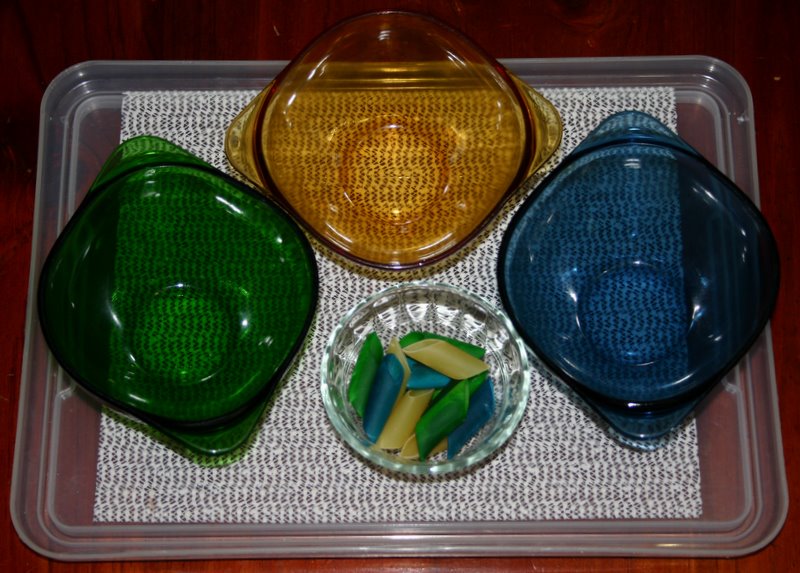
In this example the coloured bowls determine the category or attribute so it doubles as a matching activity also.

Routines: Table activity ideas

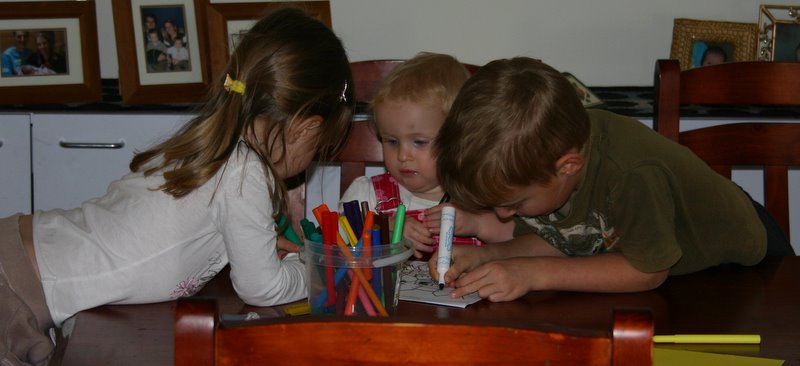
Following on from my post on table activities, I thought it might be helpful to include some ideas of the kinds of things I give my children to do at table time. The toddlers sit in their highchairs to do theirs (see highchair activities) and the older children sit at a variety of tables and occasionally on the floor.

  • Drawing
  • Playdough
  • Stamping (stamp pads and ink stamps)
  • Lacing, threading or beading
  • Puzzles
  • Books
  • Felt board
  • Construction toys
  • Pattern blocks
  • Contact collage
  • Water colour painting
  • Paper craft
  • Sticker books
  • Tea sets and teddies
  • Finger puppets
  • Mini whiteboard and eraser
  • Small chalk board and duster
  • Peg boards
  • Board games
  • Tap tap
  • Scrapbooking
  • Contact pictures
  • Dot-to-dots
  • Mazes
  • Magnadoodle
  • Colour-by-number
  • Stencils

I like to keep table activities separate from our other activities for a couple of reasons:

  • the children only use them during table time, which keeps interest levels high
  • they do not request activities that I do not want them to do at this time; those they may choose from are already set aside for this purpose
  • when I am choosing activities for the toddlers and younger children I don’t have to think of what to get or wander around looking for inspiration, I simply open the cupboard and choose from the selection there, rotating through those that are appropriate
  • the children have ready access and can pack up after themselves
Another time that we find table activities very useful is when we have visitors. We love having friends and family around but the children do get very excited. After some time to talk and play with the visitors (depending on who it is of course) I often direct the children to get out a table activity. It provides a focus, quiets down the excited behaviour and allows the adults to have a conversation. Sometimes Grandparents or other visitors will do the activities with the children (which of course they love) but we find it just gives them a great way to be around the adults and interact appropriately without dominating the entire evening.