Guest post: Structuring your child’s day

IMG_4514

Today I am excited to introduce Kristy to you. She has been inspiring me with the different activities she has prepared for her children and I have asked her to share some of her tips and ideas with us. Over to her…

Angela invited me to share with you on her blog. Firstly I feel very privileged to be doing this as I am a huge fan of Ang’s blog and it has helped me so much with parenting my two little ones. I hope what I share will help you also. Nothing I am sharing is my original idea, just how I apply it to my family life. I am so thankful to the Growing Families courses we have completed and also to Angela for her mentorship and encouragement.

Over the next 4 posts, I will be sharing things that I have found helpful. The first is structuring your child’s day, the second is busy boxes, thirdly sensory tubs and lastly I will be sharing a chore chart that has really worked for our family.

IMG_4649

STRUCTURING YOUR CHILD’S DAY:

We first heard about purposefully structuring a child’s day when our son was 18months old, after completing a toddler course from Growing Families. Now he is 4 and my daughter is nearly 2 and I have not looked back. It has been a huge help to myself and provides such a security for my children. They know exactly what is expected, they know what it means when a structured time is over (the timer goes off) and they know that Mummy makes all the decisions on how they spend their precious hours. It also helps me achieve things I need to get done in the day.

When I first began to structure my children’s day it was similar to when we first introduced couch time. At first it seemed a little fake, awkward and included lots of smiles while children either pined for our attention or were playing next to us very noisily. It seemed a little pointless, however we stuck with it and over time it was something my husband and I have started to crave. We can now catch up for around 15 minutes uninterrupted time while the children play near us. Even our son likes to remind us that “It is now couch time Mummy and Daddy.”

It’s the same with structuring your child’s day. It may seem pointless, loud, hard work and a bit of a joke when you start. But slowly as you persist with it, it becomes engrained into your everyday routine and in turn your children and yourself start to crave it. There has been many times in the morning when we have been in a little bit of a rush to get out of the door that a typical morning activity like table time has not been accomplished. My son begs for it now, so it’s used as an incentive once he has finished all his chores – if there is time left over he can do table time. I can really see the benefits of my children loving the structure and routine because of the security that comes with it. I have also found that trying my best to do certain structured activities at the same sort of time every day can help a lot. It saves the nagging and “What are we doing now?” questions.
IMG_4497

Our day comprises of breakfast, table time (4yo) or highchair time (1yo), chores, playpen time (1yo) or play room time (4yo), focus time (1yo), outing, morning tea, lunch, nap (1yo) or room time (4yo), tv time (half an hour), afternoon tea, outside play, sibling play, focus time (4yo) or mat time (1yo), chores, dinner, bath, couch time (parents) while children play on the mat or nearby, teeth, bed (2yo) story time (4yo) , bed (4yo).

This of course is very flexible and often certain times aren’t achieved. I just love having a ‘go to’ when I need to get things done. And because everything is thought out, it means I know that my children are spending their time well. You can add anything into your routine – book time, craft time, walk, errands etc.

How to start: I tried small amounts of time first and made sure I used a timer when their ‘times’ were over. They soon picked up that Mummy comes when the timer goes off, not in answer to their cries. Starting small and building up is the way to train your children in this and using praise, praise, praise when the timer goes off to indicate how proud you are of them. Verbally stating the time too with statements such as “Well done for doing PLAYPEN time. You stayed in your PLAYPEN the whole time. I’m so proud of you for playing happily in your PLAYPEN” etc. reinforces what the child has achieved and the word PLAYPEN will bring a new meaning and expectation into their little minds.

Busy Bag Swap Night

IMG_3025

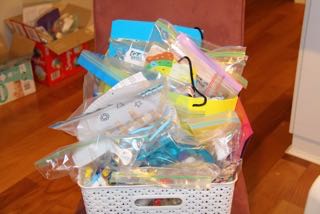
I have just been blessed by a lovely assortment of table time activities for toddlers and young children from a busy bag swap organised by my friend Kristy. You will be hearing more from her in the next couple of posts, but today I wanted to share the photos she took of all the quiet time tasks put together by the many women who attended. It was so popular in fact that she needed to form 2 groups. For those who are not familiar with how a busy bag swap works, take a look here for some more ideas and an explanation.

Kristy’s cute toddler feeding the tennis ball with a little help from Mum. A great finger strength activity, this is one for the 3 to 6 year olds to do independently. My 4 and 6 year-old boys loved filling Mr Ball to then turn around and have him puke everywhere.

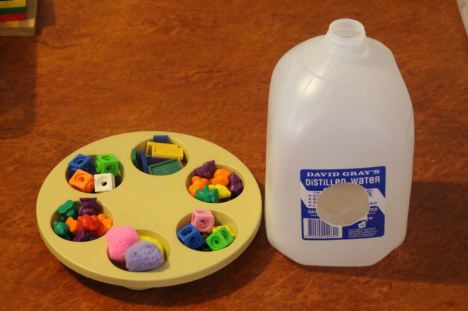
Mix and match superhero picture strips, foam sewing cards, pipecleaner and straw threading and shape matching plate.

The fact that this pizza came in a cute little box was the highlight for my children. The order cards gave lots of options for the children to follow as they completed different customer orders. Other bags included a wipe-off tracing page, mask and stickers and paint chip colour matching.

Open-ended tasks are best for toddlers as far as keeping their interest for the long haul. This pasta and bean scooping tray was popular although it did create a bit of mess. An assortment of plastic lids, frogs and bugs was another open-ended activity that kept my little one going for a while.

This mini eye-spy bottle had some interesting bits and pieces inside. Another idea I have seen is to have a recording page for the children to tick off each tiny item as they find them. My 2-year-old was too young for this as she found it frustrating to not be able to open the container. She did enjoy the pom-pom transfer tray although still refuses to try tongs. The last task was taking elastic bands on and off a cardboard tube with some pattern cards to match and extend for the older children.

Having a bunch of engaging tasks prepared is a must for successfully including highchair time in your flexible routine and the self-control your toddler will learn is invaluable.

Highchair time for two-year-olds

IMG_1410.jpg

Our cute little toddler has just turned 2 and needed some new highchair activities to keep her occupied for the 30 minutes she sits at the table after breakfast each morning. The reality of this age is that their attention span is limited and they will need a new activity fairly frequently. The more open-ended the task is, the longer it will keep a toddler engaged, but 15 minutes would be a really good long stretch for my little one. When she is loosing interest in something that I have had out for a while, 5 minutes would not be unusual. The reality is that to get through the half hour period I need to have a selection of 3 to 6 trays ready to plop out on the table for her to use.

I have an oversized egg-timer that I use to avoid her demanding a new activity whenever she feels like it – i.e. after 3 minutes! It gives a physical and visual understanding of time passing and a little child can quickly grasp the fact that they will not be given something new until the sand has all run through so they may as well play with what they’ve got until it does. Egg timers also have the added bonus of not being audible, so if she is well engaged when the time runs out, there is no interruption to pull her attention away.

Timers also work well for those little ones who throw everything on the floor when they are done after 2 minutes – I simply place the timer in front of them and tell them that they will not get anything else to play with until it is done. Once they understand that Mum is in charge and the timer dictates the change of activity they will not be so quick to dump their entertainment. Some take longer to learn this concept than others I might add!

IMG_1383

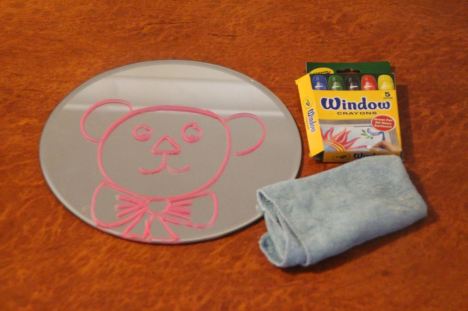
She is always asking us to draw her teddy so I think she will really enjoy cleaning off the window crayon teddy picture from this small mirror. I do not intend to let her draw with the crayons however as they are very soft (and expensive) and would be wrecked for sure. There will be plenty of willing volunteers to draw another picture for her to erase.

IMG_1393

Opening and closing containers and spooning, sorting, filling, tipping and pouring are still interesting tasks for her. A bunch of scoops, tongs and vessels to fill should keep her going for a while.

IMG_1391

Posting bottles still hold some interest although I expect this one will not keep her attention for long. 6 to 12 months ago this would have been perfect. With all of these activities the developmental stage is important. Too easy and they will master and put it aside after just moments. Too hard and they will be frustrated. If something is too difficult, pop it away and try again in a few months. Todays “no interest” activity will be next month’s favourite.

IMG_1389

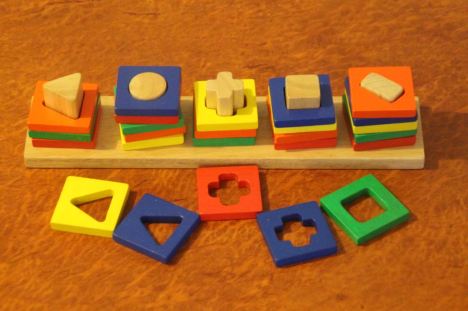
In the past this wooden puzzle has been too difficult but I think it will be about right now.

IMG_1390Oversized threading beads with one anchor bead tied on the bottom to hold all the others in place. I’ve not given her threading before so it will be interesting to see how this goes.
IMG_1388

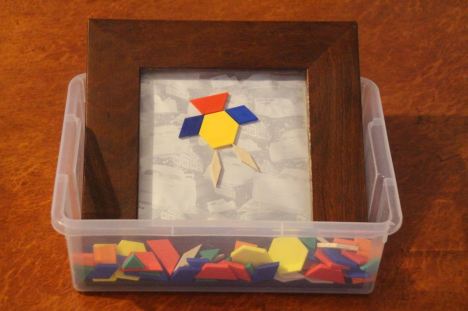
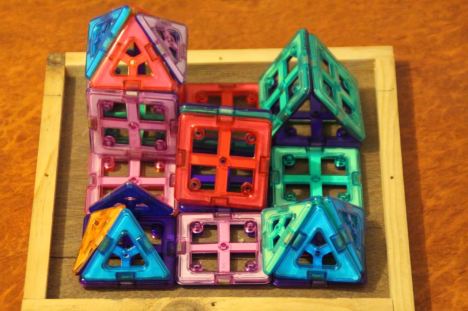
I have placed a piece of contact paper on the underside of this empty photo frame so that the sticky side is facing up. The pattern blocks can be stuck on and peeled off repeatedly. I had hoped to stand it up but it was too heavy so laying down will have to do. I can see the contact paper will need replacing after a few days but it should be interesting for a while.

IMG_1375

Just a different way to present magnetic construction blocks that she is already familiar with.

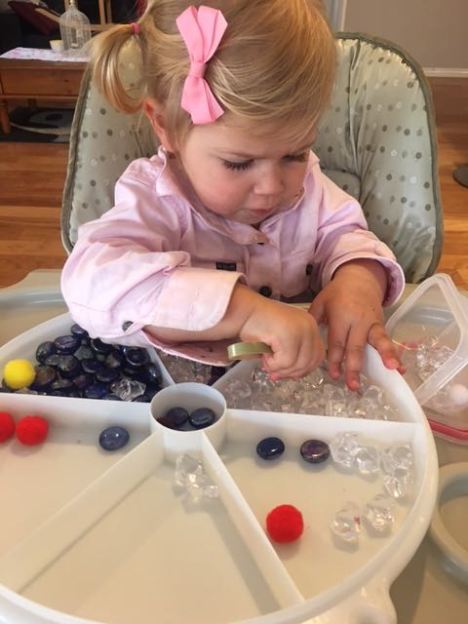
A bunch of interesting rocks and jewels with a large ice block container for transferring and sorting. You’ll notice the small wooden tongs abandoned on the side. I have not yet succeeded in getting her to try tongs despite the fact that I’m sure this easy to squeeze pair would be fine for her little hands. She didn’t bother to use the mini spaghetti spoon either – fingers all the way. In fact, the first pile she made was on the table rather than in the ice block tray.

Hands-on maths; skip counting

I like to keep much of our early mathematical skills as hands-on as possible. If an area will need to be drilled over and over again until mastery is achieved, then it is far more interesting for my children to do that using Montessori style tray activities rather than repetitive book work. Learning addition and subtraction facts, multiplication tables and the like are great examples of this. Lots of work is necessary, but it need not be all written bookwork.

This week my 6-year-old son needed to polish up on his skip counting. I pulled out some plastic Easter eggs and wrote the 2, 5 and 10’s on each hump of the caterpillar, poking a pipecleaner through the first one to make the caterpillar’s head. He placed each in order and recited them to me once finished. Next time I will remove a couple and get him to say them (including the missing numbers) until he can eventually say them all without any numbers as prompting.

Sensory tubs: pompoms

IMG_1304

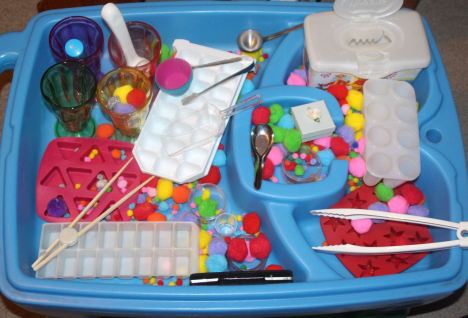
Interest in our icecream sensory tub has waned so it is time for something new. A couple of bags of assorted pompoms in a variety of sizes and colours, along with tongs, scoops, chopsticks and a variety of containers to fill, tip, pour and create with complete the invitation to play. The children haven’t seen it yet, but I am confident they will be drawn to this open-ended play opportunity. A smaller version would also make a great mat time,  playpen time or room time activity. Quiet, cheap and easy to clean up – love it!

Epsom salt snowscape mini-world

IMG_1084

Our latest mini-world invitation to play has been a hit with the children 6 and under. As is usually the case, the older children love setting it up but don’t actually sit and play with it.

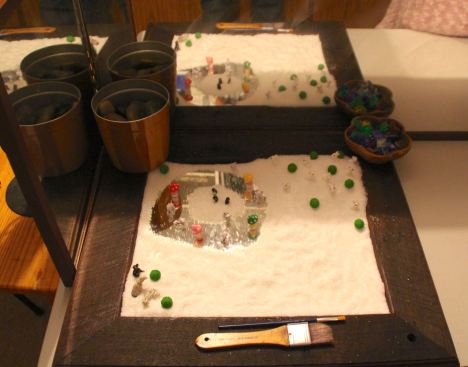
IMG_1077Epsom salts spread onto a mirror gives the impression of snow and the mirror showing through appears to be ice. I purchased a selection of miniatures that are actually terrarium decorations very cheaply on eBay and added brushes and some jewels and rocks. I later added a small sweeping brush to keep the salt off the edges of the mirror.
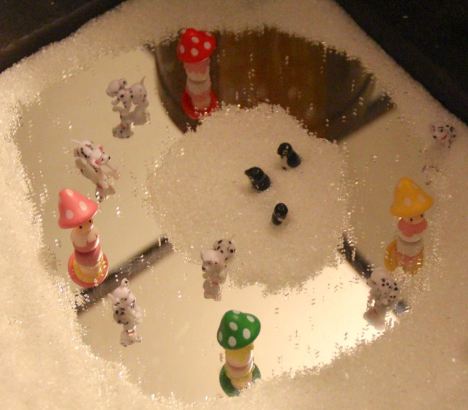
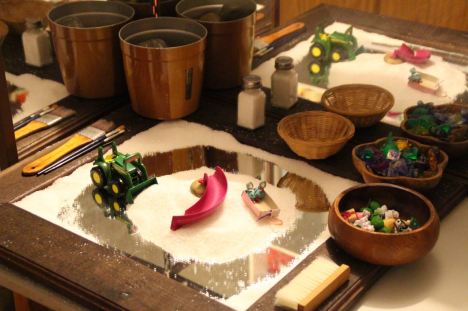
Epsom salts can also be added to a sensory tub for imaginative play or tipping, pouring and filling activities.

IMG_1074

As interest wanes I’ll add a couple of extra items I’ve kept in reserve for further exploration.

IMG_1081

The folding mirror is a new ($10 secondhand!) addition to our school area. The moment it was on the table my two daughters were found seated side-by-side in front of it drawing self-portraits as they observed themselves in it.

Children just love to watch themselves in mirrors and including one behind pretend play areas adds another dimension. There are also lots of ways to use them for symmetry activities, multiplication and art projects where being able to see behind what they are manipulating  is an added stimulus. The Reggio educational approach includes mirrors in many of their classroom activities and I have a host of ideas pinned to try in the future.

IMG_1088

We later added the bulldozer to the snow mini-world which the little boys loved, plus a Lego slide and matchbox sled made by one of the children for the rabbits to pull. I filled a salt shaker with epsom salts which allowed the children to make it snow and a variety of jewels and rocks to build onto the scene. This has probably been one of our longest lasting mini-worlds and the children are still using it most days after having had access to it for more than 3 weeks.

Icecream sensory tub invitation to play

IMG_1036

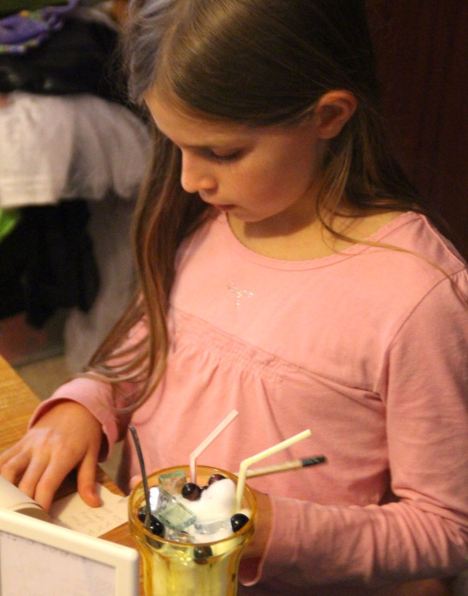
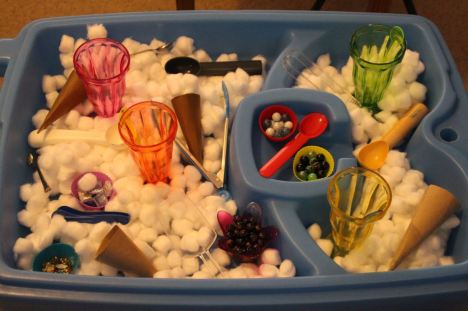
We have been doing some op-shopping lately to collect bits and pieces for our loose parts activities and to set up a variety of invitations to play in our newly organised playroom. After hearing my plans to set up an ice-cream shop in the water trolley as our next sensory tub activity the children have been quite keen to get rid of the popsticks and matchsticks and move on to cotton wool ball ice-cream right away.

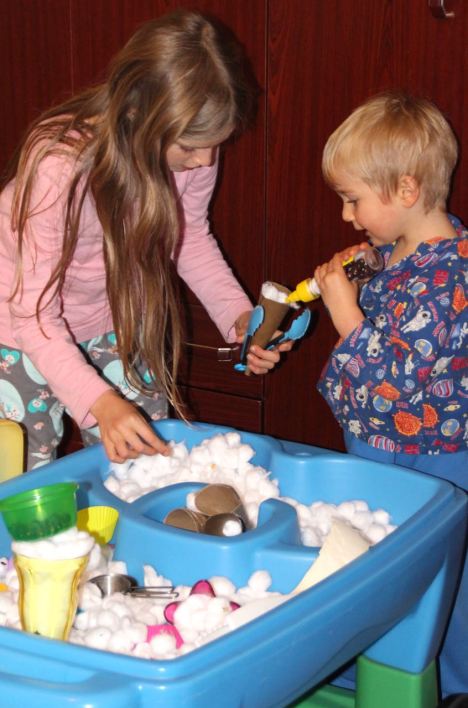
IMG_1020Cotton wool balls are a cheap base for a sensory tub and lend themselves well to being transferred by tongs, scoops or little fingers and the addition of some marbles, jewels and beads for toppings gave it a fun aspect. A few plastic Sundae cups, swizzle sticks, icecream scoops and sequins allowed for some interesting creations.
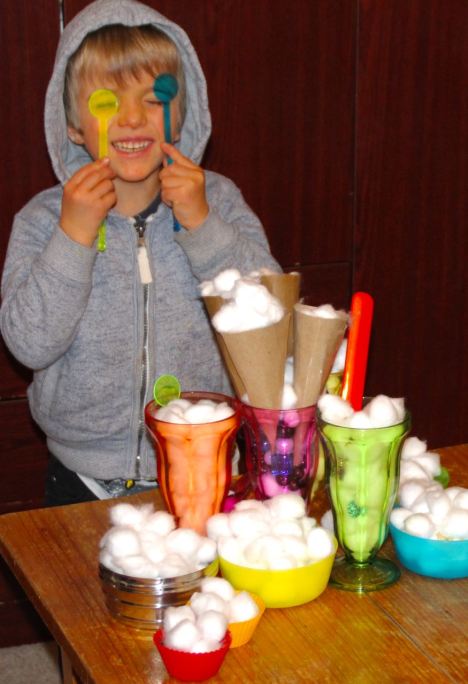
IMG_0990Having the sensory tub right next to the pretend play home corner area meant that the children could expand into dramatic play and they soon opened an ice-cream shop. There aren’t many play activities that can keep everyone from the 13 year old to the 2 year old happily occupied together, but this did the trick.


The addition of a menu board ($2 from Ikea), a roll of receipt paper from an old cash register, a couple of clip boards and some plastic tokens for money provided the stimulus for lots of copywork, writing and maths as the children wrote out orders and receipts and charged each other for their extremely expensive ice-cream Sundaes.

IMG_0998

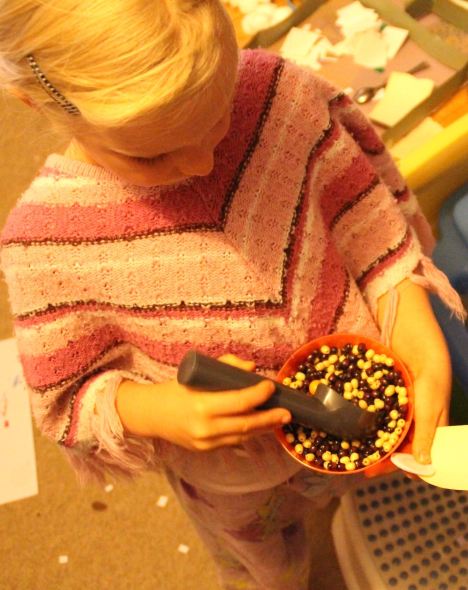
An old squeeze honey container was amongst the favourite items, as were the dark brown beads for chocolate drops.

Extra products such as paper doughnuts and choc-chip biscuits were created to add to the repertoire and the menu was rewritten to include several new additions.

IMG_1017

When you charge for every ice block, choc drop, scoop of ice-cream and berry that goes into the Sundaes it makes for some good maths practice.

IMG_0988

This was the original sensory tub that was offered as a provocation for play. The children thought of the many other additions and made it far better by the time they had finished.

Mat time on the go

IMG_0888

Do you have occasions when you need to take a toddler along and keep them quietly playing in one place for an extended length of time? Whether you keep your children in church with you, need to go to an appointment where there is likely to be a long wait, need to take a homeschool class with other children or want to get through a meal in a restaurant in peace, mat time is invaluable.

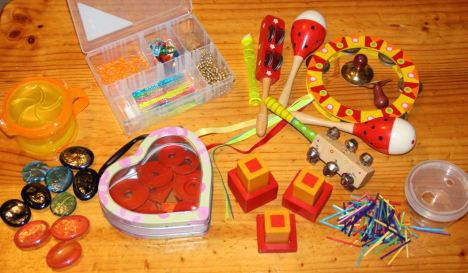
The toys need not be fancy or expensive, but it helps if they are new to the child. Things to fill and spill, tip and pour, shake and rattle (not for quiet times!), stack and read, open and shut, will all be a hit. When I pack my take-along toddler toy bag I just walk around the house looking for a bunch of interesting containers and a selection of bits and bobs to put in them. A pile of brightly painted metal washers from the shed in a hinged tin, matchsticks and a container with a hole to poke them in, large stones and a munchie mug for posting, nesting blocks from a wooden puzzle, musical instruments and a tackle box filled up with odds and ends gave us around an hour of peace on a couple of different occasions before the novelty began to wear off.

Training children does take time and is not easy, but a young child who will contentedly play with their activities within a set boundary is a joy to take out.


Sensory tub: popsticks and matchsticks

IMG_0873

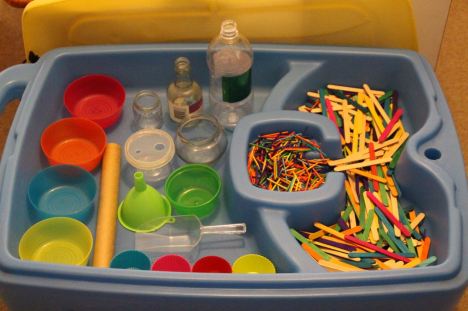
During the winter months many of us have a water trolley that is stored away unused until the warmer weather returns. Time to get it out and set it up with your favourite sensory materials! Ours has storage underneath for extra equipment and a lid so that I can keep it covered up to prevent little fingers getting into it and spreading the materials around the house after we have tidied up for the day.

Coloured popsicle sticks and matchsticks were the first material of choice. Along with them I set out coloured bowls and silicone muffin cups for sorting by colour, funnels and tubes and a couple of jars for posting, pouring, tipping and filling. No matter how large the container I find that the children ALWAYS want to put things onto the nearest surface, so this time the water trolley is next to our pretend play home corner set-up which includes a low table. Within minutes there were bowls and containers full of popsticks decorating this surface.

Sensory tubs are an open-ended play experience that will keep young children busy for ages. It provides many opportunities for fine-motor development and social interaction (those arms are my 13 year old boy’s!) and allows the rest of the family to get some uninterrupted homeschooling done.

I caught on fire last night…


IMG_1041

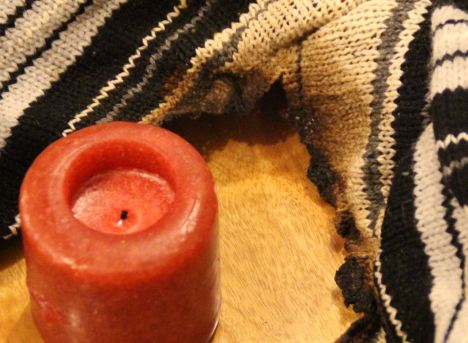
Last night my husband was setting up in the lounge room for our stay-at-home date night. A table for two, tablecloth, ploughman’s platter, candles and more. As I stood there chatting I suddenly felt a sensation of heat on my back and realised that I was in fact on fire! Luckily my jumper was open at the front and I could simply slip it off and let it drop onto the nearby bricks without any harm to myself or the house, other than a small black charred section on the carpet. But it could have been worse and it happened so quickly.

As I talked about it with the kids today we reviewed our fire safety knowledge. Some time ago I realised that although I thought the older kids would be able to make sensible decisions if our house caught on fire, when we decided to do some role-playing it turned out quite differently. It bought home to me the need to discuss safety and emergency procedures with them, plan exit points and what to do if there was a fire and actually go through the whole thing more than once. Issues like younger children not being able to get locked doors open could become fatal in a real emergency.

We now have several little games that we play occasionally to remind the children what to do and keep the plan fresh in their mind.

Stop, drop, cover, roll

If your clothing catches on fire, this is the immediate and recommended response:

  • stop (stay still, don’t run or it will feed the fire)
  • drop (lay down on the ground)
  • cover (two hands over your face and eyes)
  • roll (roll back and forth to extinguish the flames)

Every now and then when we are out for a walk I randomly call out stop, drop, cover, roll and the children drop to the floor and practise rolling back and forth. We also add ‘come to Mummy’, ‘get out quick’, ‘sit down’ and ‘freeze’. We never know when obedience to these simple commands will be the difference between life and death.

The house is on fire.

On random occasions we deliberately set off one of our smoke alarms. We make a pile of our wooden blocks in different places in the house and the kids know that this is the “fire.” They have to practise yelling to alert us, “get down low and go, go, go!” (crawling under the imaginary smoke) and get their brothers and sisters safely our of the house to our designated meeting point. Sometimes we make the fire right at their bedroom doors so every child must exit their own room through the window. Sometimes it is at the end of the hallway and they can rehearse collecting everyone including the baby of the family and getting out the laundry door safely together. We add complications like setting the “fire” at each bedroom door to block the exit and turning the power off so that the roller shutters on their bedroom windows won’t open, leaving them no exit options. (Don’t hide, lay down on the floor, yell and wait for help.)

We also talk about never playing with matches, practice making emergency phone calls, learn their address and phone number, basic first aid responses and anything else that comes up along the way. We remember the time we accidentally left a Christmas candle burning for the whole night and came out in the morning to find that it did not appear to have burned down at all in the 12 or so hours it had been lit. Slow burning candle? Maybe. God’s miraculous protection? We gave Him the credit.

Running these pretend scenarios helped us to talk through the what ifs that we otherwise may not have thought of. The child who would have stayed stuck in their room because they didn’t realise it would be ok to break through the fly wire window. (We take these off from the outside when we practice so we don’t really break them.) The child who can’t reach the windowsill and didn’t think to drag over something to stand on. The little ones who know how to open our sliding glass doors and security doors in theory but couldn’t actually do it in practice. The kids who got outside but couldn’t reach the meeting place which was out the front – through the LOCKED back gate.

I’ve heard stories about children who hide in fear, making it difficult for fire-fighters to find them and other children who are accidentally forgotten in the rush to get out to safety. The possibilities are endless and we pray that we will never actually face any of these situations but hopefully the kids will know what to do if the worst ever does happen.