Homeschooling 6 year olds – maths

It is fairly well understood in the preschool years that children need many hands-on experiences as the best grounding for mathematical understanding. However, it is too easy to fall into the trap of thinking that as soon as a child starts school he or she must “hit the books.” There is still a need to manipulate, play and explore concrete materials in the early years and rushing too fast into abstract concepts (ie. “on paper” solutions) to mathematical concepts can hinder a child developing true understanding.

So, with this in mind, do I use a maths programme for my 6 year olds? Yes, but as a spine from which other maths experiences flow. It helps me to know that I am not missing any skills along the way. Those children who have a good grasp of number concepts can skip through very quickly and often will plead to just write out their answers in the book rather than use manipulatives. If I can see that they truly grasp the skills (understanding the why and how of each problem) then they go ahead. Learning styles do differ after all and not everyone needs the manipulatives. However, other children will need to go through basic concepts such as one-to-one correspondence with manipulatives over and over and over and over again!

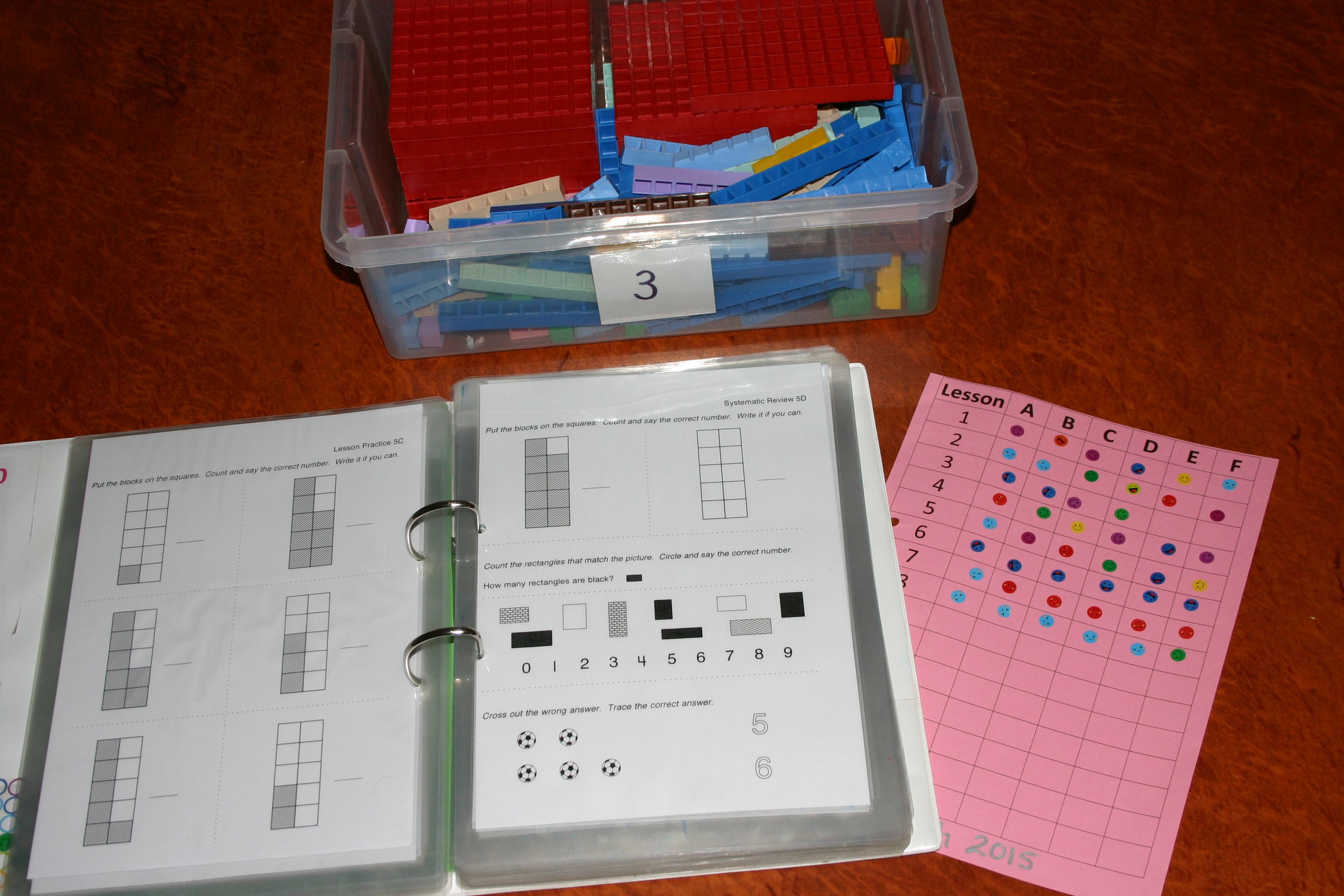
IMG_9625In the early years we use Math-U-See because it does include manipulatives, has a DVD lesson format which means the children are not dependent on me to give them one-on-one teaching to explain each lesson and has a clean and simple set-out with a good progression from skill to skill. Early writers are given enough space to write large numbers and opportunities to use their manipulatives throughout. When more practise is required, I provide Montessori style hands-on activity trays until the concept is thoroughly grasped before the child continues on in the book.

IMG_9629

Reluctant writers and maths:

When a child has difficulty with fine motor control and writing skills it can slow them down in all their subject areas. Maths however is one area that can be easy modified to eliminate this problem. Ask yourself – “Am I teaching handwriting or maths?” Do you want your child to progress in maths or hate every minute of it because they have to sit there laboriously writing numbers in their painfully slow style?

My son would take ages to complete this page if he had to write the answers down, plus I would struggle to read them anyway! Given this inexpensive box of wooden letters, he can work through the problems, calculating some in his head, putting out manipulatives for others and using the wooden numbers to “write” the answers. Quick and easy and demonstrating his understanding of the subject at hand, rather than his handwriting ability.

IMG_9610

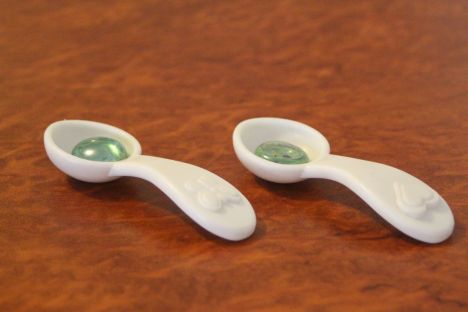
When more experience is needed with a concept, he works on Montessori style trays such as the one above, giving him lots and lots of repeated practise of the same skill over and over again until it becomes second nature. We made up little stories about customers in restaurants who were sometimes greedy (according to the numbers on the spoons) and he enjoyed choosing the food (jewels) to serve.

With the combination of bookwork plus hands-on trays, my 6 years olds feel that they are doing real “school” like their older brothers and sisters and all ability levels are being catered for. One is zipping through the book at a great rate (she LOVES book work!) and the other is taking a more leisurely course with lots of hands-on experiences along the way. Individual children,  individual abilities, individual learning styles. This is one of the reasons why we homeschool after all isn’t it?

Next up: Homeschooling 6 year olds – reading and writing


Sensory tubs for babies and young toddlers

Our 17 month old is staying with her Grandparents (along with some of her brothers and sisters) for 4 days and they have requested some playpen toys to use while she is there. This sensory tub or “pile of entertainment” is what I came up with. Perfect for highchair, mat or playpen times, these household objects will keep her going longer than the flashiest new toy ever could. (See this post for more info on flexible routines and links for training little people to sit and concentrate for lengthy periods.)

IMG_9494

Containers filled with interesting things are always a hit with this age. Check for choking hazards and make sure nothing is easily breakable. Include objects to open and close, lids to take off and put on, things to fill and spill, stack and fiddle with.

IMG_9498

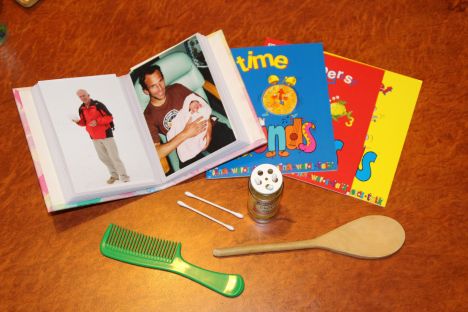
A pile of plastic picnic plates to stack, old jewellery containers to open and shut, play keys, magnetic wooden ice-cream cone, pretend food, magnetic construction blocks, swizzle sticks in a jar, T/spoon and cup. Wander around the house and pile stuff in. Check the older kid’s toys for anything suitable such as the potato head toy. While she won’t be able to build it, she will take a couple of minutes to pull it to pieces and examine it.

IMG_9500

Take notice of what they pick up and walk around with when on the loose around the house. Mum’s cooking spoon, sister’s comb, brother’s hat, Dad’s shoe – chuck them in.

Poking Q-tips into a spice jar takes some doing at this age (Montessori small spaces activity) and bright books are good, along with a small photo album of family members and other common objects (pets etc.)

All of my children have rejected baby board books at this age but have been particularly interested in paper books. Perhaps because they see everyone around them reading them all the time? I set aside some paper paged books that are not particularly loved in case they get wrecked and give them to the little ones. I find if they are in perfect condition they will rarely be torn, but the moment there is even a small tear it will have a powerful draw and little fingers will have that page ripped out in a flash. It’s irresistible, they just can’t help themselves!


Preschool at our house: Workbox system for 5 year olds

IMG_1612

Here is the latest workbox style arrangement for our 5 year old preschoolers which will allow them to get the direct instruction from me that they need as they learn basic reading and writing skills, while at the same time having some degree of independence in their other work. I have always invested some time in one-on-one teaching at this age because helping each child to become a proficient reader is one of the keys to independent learning and self-educating later on (one of my goals for all my children.) The children have access to plenty of creative play opportunities and lots of great hands-on learning tools at other times in the day but this morning period is slightly more “bookish” as we step into more formalised learning.

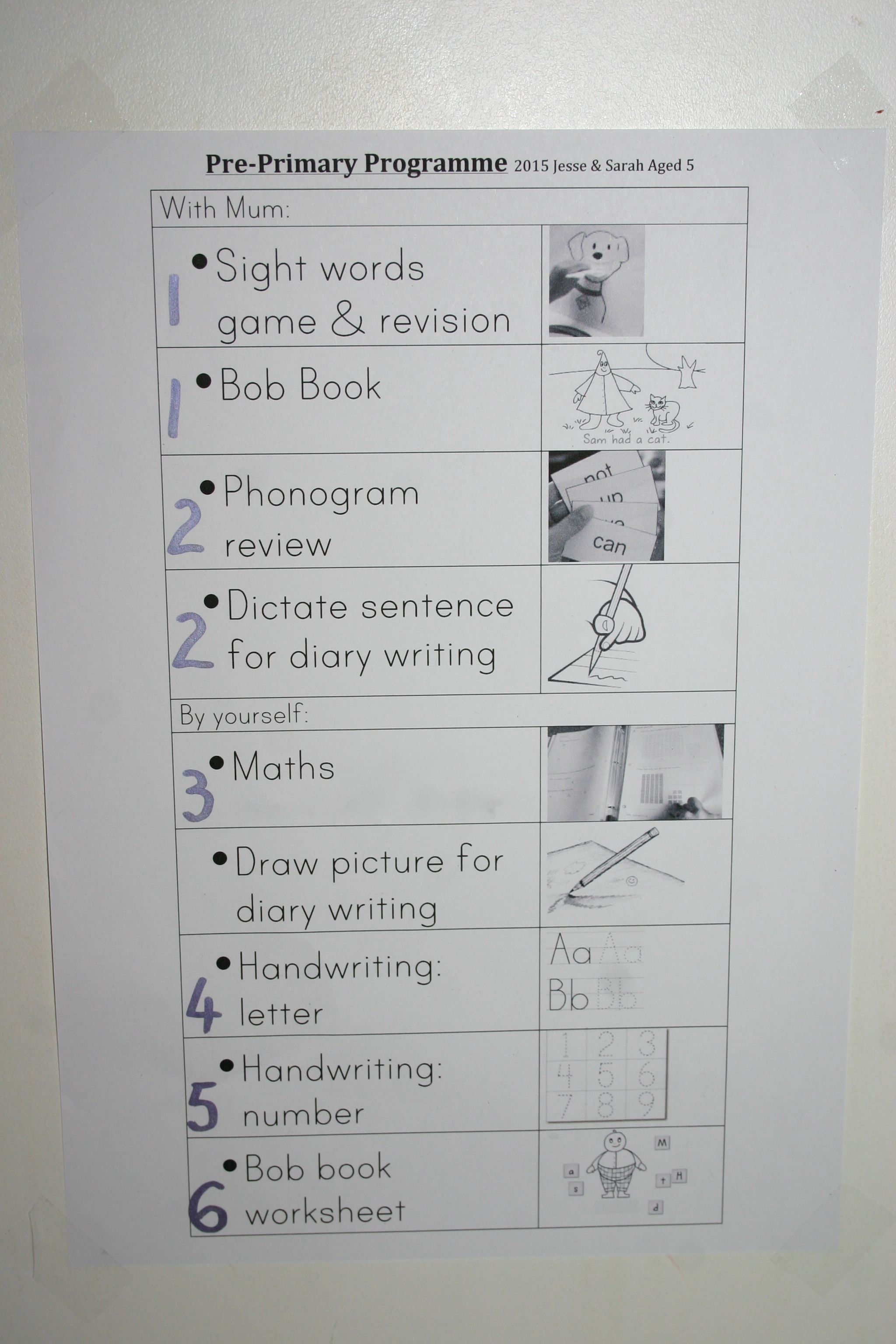
pp schedule

My older girls (7 and 9) both work from a written schedule for several reasons; they know exactly what to do, when to do it and how much they need to do before they are done for the day. My 11 year old son also works from a schedule, but is free to decide the “when” for himself, having shown responsibility in managing his time in the past. The twins (5 years) have a pictorial schedule to gently ease them into a more independent role in the future but don’t really need it because their boxes are numbered and they are under my direction anyway. (It’s more so that I can keep track of what they are supposed to be doing!)

I researched workbox homeschooling several years ago and most of the examples I found on the web involved nightly or at least weekly changing of the contents. I knew that wasn’t going to work for me so I devised a simple system that only needed to be changed out about once a month. (See details here.) There will be some items in the boxes that needs to be updated more regularly (Sight words as they are learnt for example) but this will require minimal effort as the sets of words etc. that I need are all ready to go.

Some advice that I always give beginner homeschoolers, especially those with a large family, is to set their homeschool up so that  it will continue to run without them as much as is possible. Life intrudes; an unexpected visitor, an unscheduled phone call, the baby is sick and on and on. Set things up so that you are not required to be “teaching” directly all the time or the pace may be too hard to keep up. With only one or two children you may be able to do it but not with the number of blessings we have!

So.. what’s in the boxes?

IMG_1614

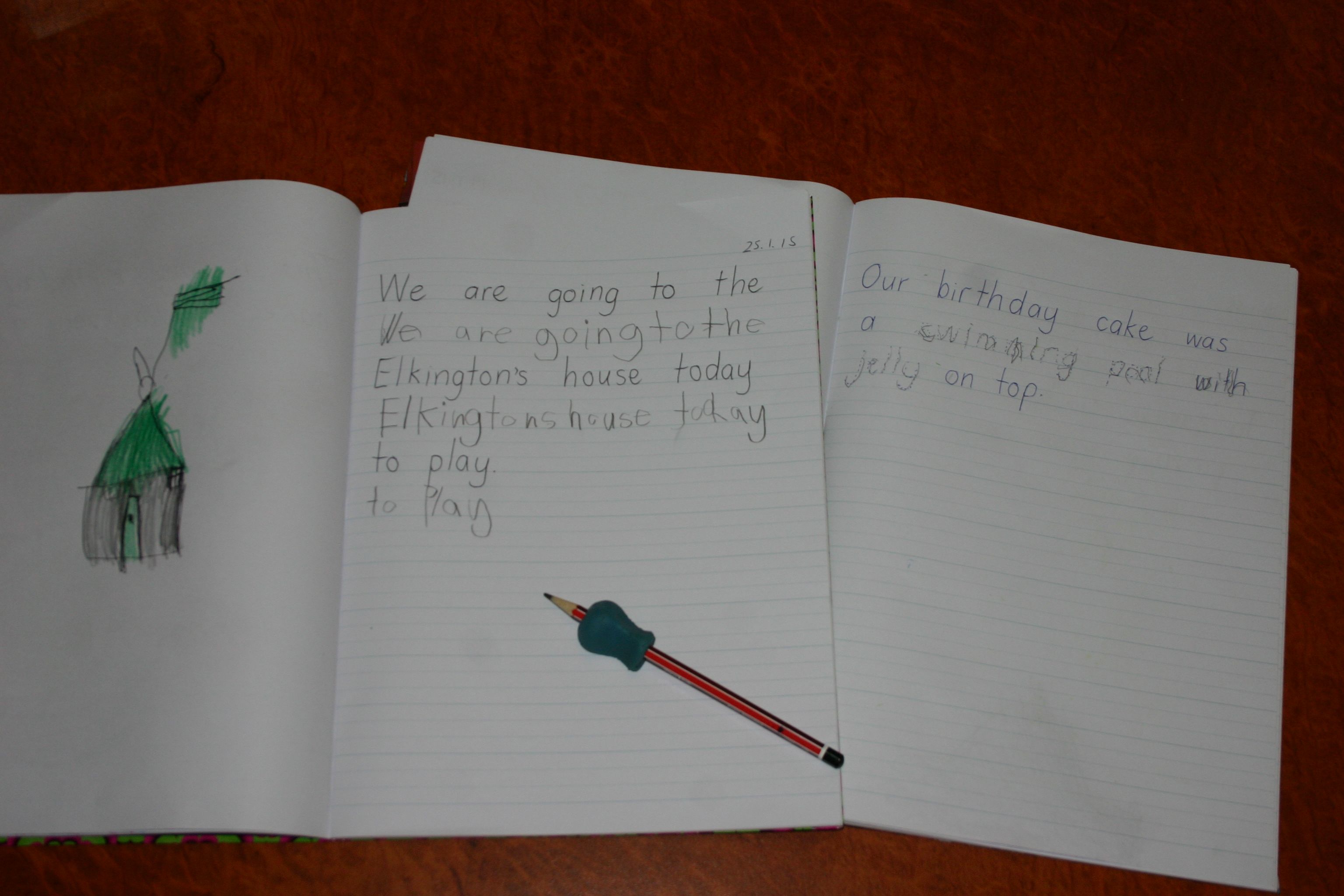
Daily diary writing (See full explanation here.)

IMG_1616

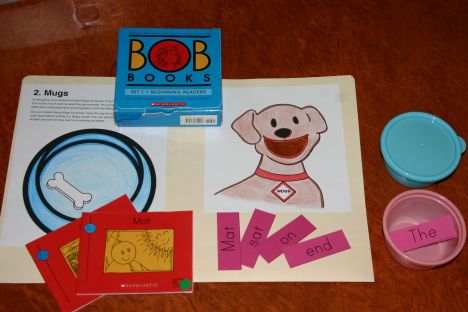
Bob Books and a file folder game to practise sight words. As the child chooses a word it is read and fed to Mugs the dog through the hole in his mouth. (See this post for how to teach children to read and this one for some info on beginner readers.)

IMG_1617

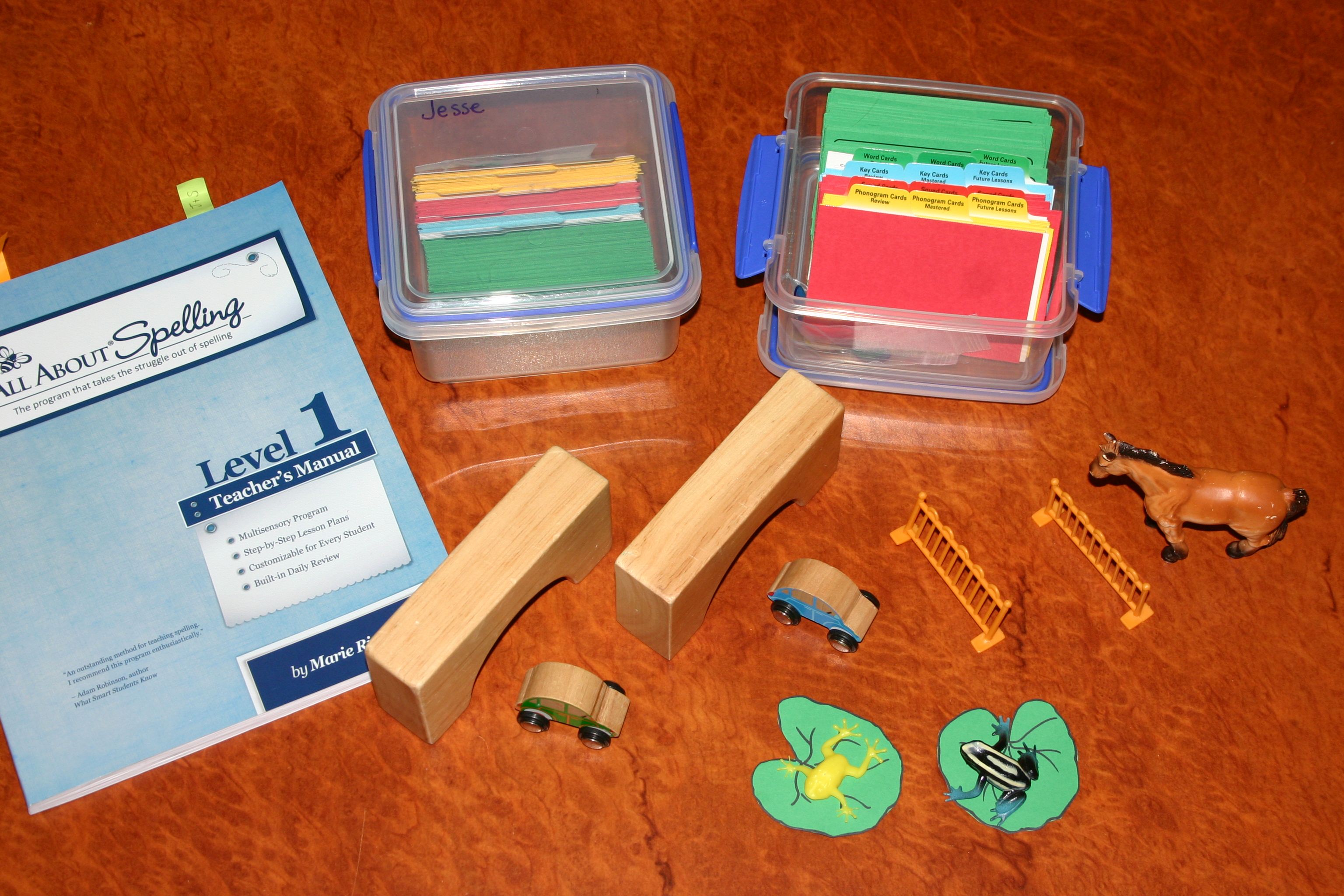
Segmenting words game based on All About Spelling level 1. I am using this programme as a rough guide at this stage. We will get into it more next year but for now our activities are loosely base around the progression in this book which is very thorough. We are using the flip boxes to review the single sounds we already know before moving on to more complex phonograms.

IMG_1618

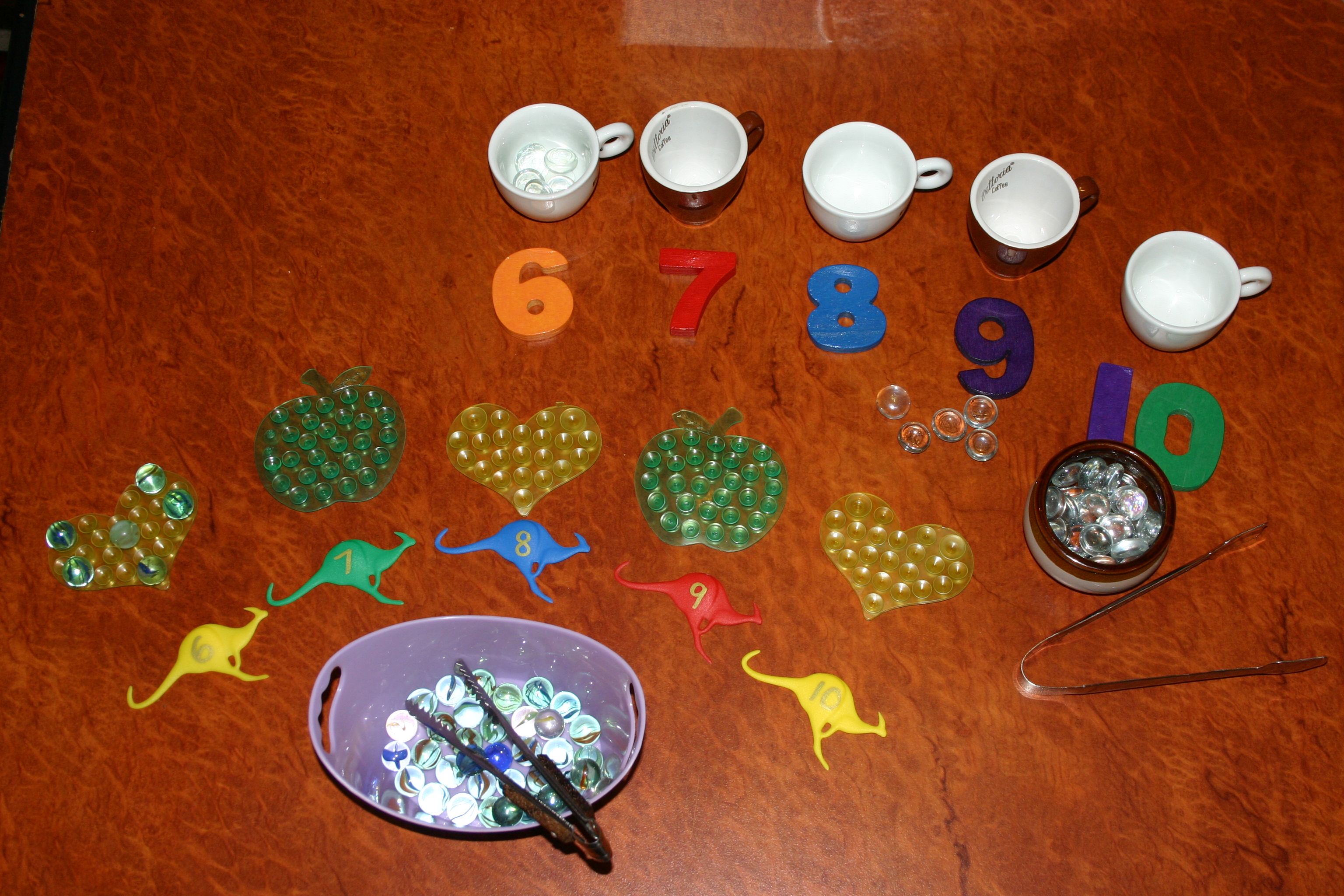
Montessori style counting activity tray. Developing one-to-one correspondence is crucial before any real maths skills can be developed and these simple counting activities give heaps of practise while also working on fine motor skills. In the top activity the expresso cups are set out with the numbers in order from 6 to 10 and the child uses the tongs to add the correct number of sugar lumps to each cup. In the second activity the small tongs are used to transfer the correct number of marbles to the suckers on these soap holding shapes – the kind that suction onto your sink to stop the soap slipping away.

IMG_1619

We use Math-u-see for the first couple of years and Primer is the first book in the series. I cover all of the concepts with  hands-on tray activities first and once they are well mastered the children can work through the book as a bridge to the bookwork they will be doing the following year. We also have the Dive CD’s which have videos for each lesson in the student books so some added “teacher” instruction is given as well to help fill any small gaps that may still be there.

IMG_1620

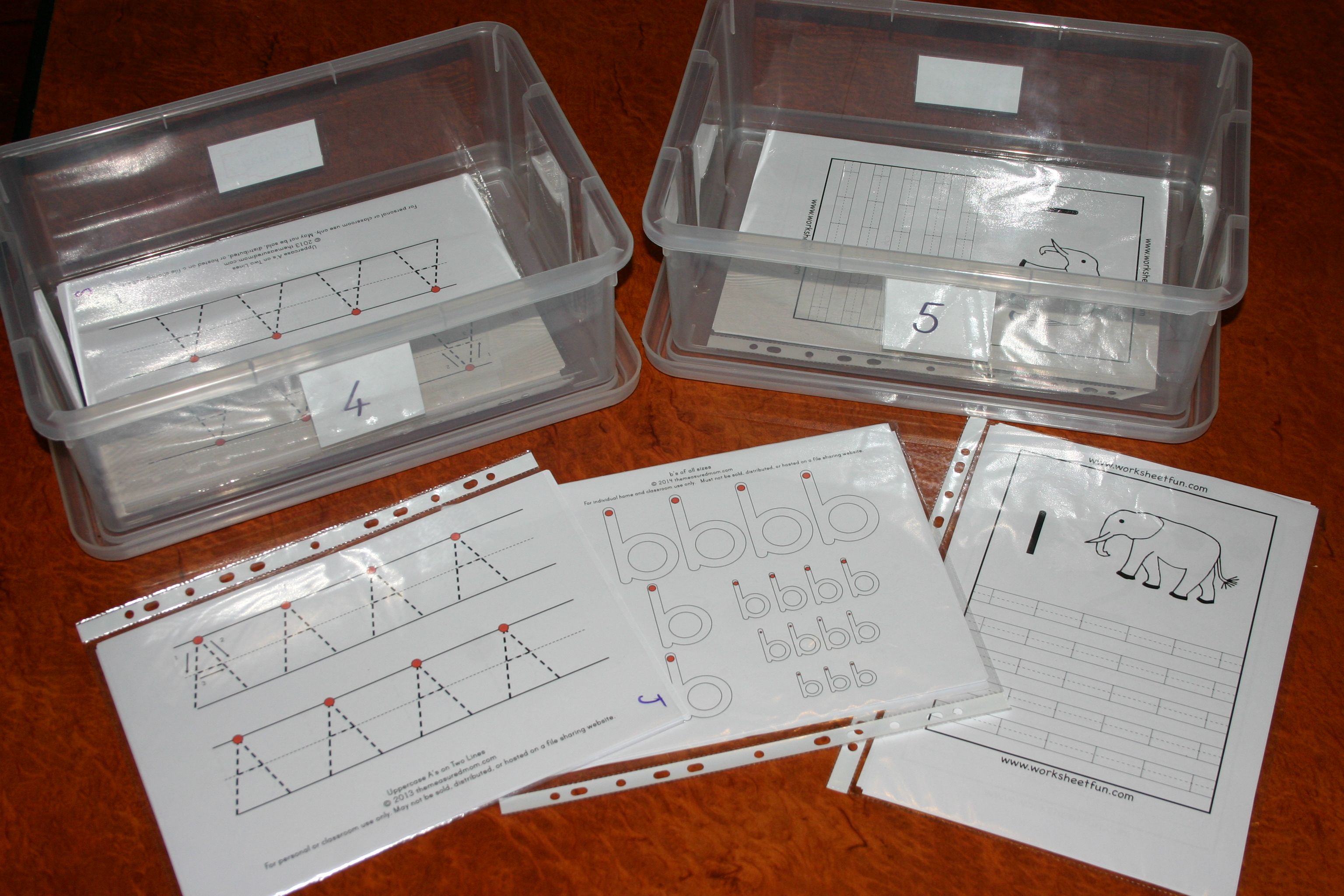
Tracing letters and numbers. I try to supervise handwriting practise to ensure that the correct letter formations are being made. There are heaps of free worksheets on the net. Look for some in your preferred font and laminate them if you choose for repeat practise. For children who find fine motor control difficult, the channel writing (bubble letter style) are the best because it allows more leeway than dotted letters for wobbly pencil paths. It can be very discouraging for children who try so hard and yet cannot stay on that dotted line. The “fat” letters to keep inside are somewhat more forgiving.

IMG_1621

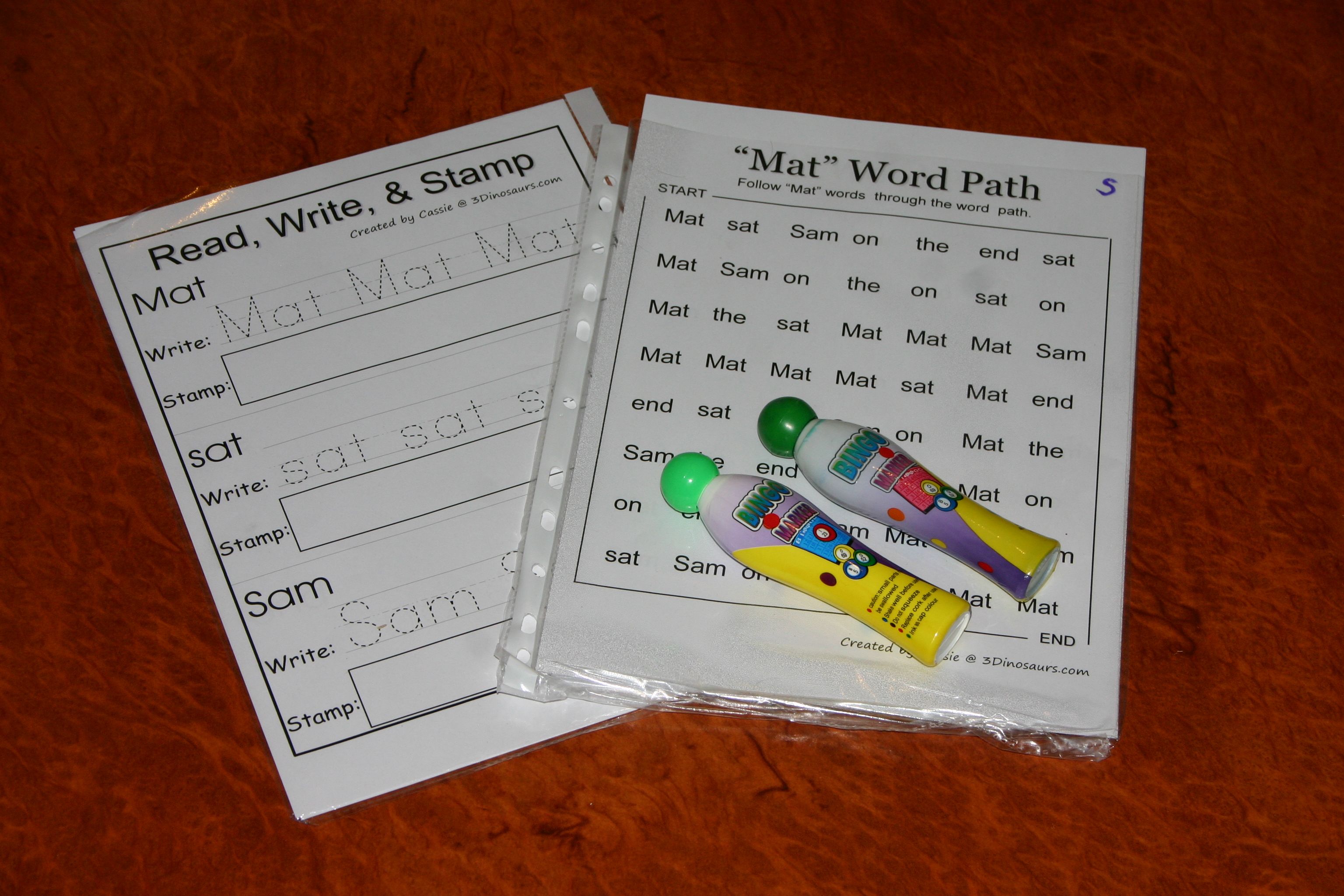
The last workbox contains a selection from some free printable worksheets to go with the Bob Books that I have found online, mainly for my daughter who finishes all her school work in nanoseconds and wants to know what else there is to do. She loves to do “real” school work like her older siblings so the more books and worksheets I supply her with the happier she is. My son will do them if he wants to which will translate to not doing any at all except possibly using the bingo dotters to follow the word paths simply because he wants to randomly dot paint everywhere 🙂


Teaching preschoolers to read

Homeschool has started for the year at our house and with it our routine. As always, there is some tweaking and re-arranging to make the new schedule work for us and I am reminded that flexibility is important, but am also enjoying the more peaceful atmosphere that being back on a schedule has bought.

As we continue the journey to reading proficiency I have also been reminded that learning to read is a process with several steps that need to be mastered before children will become strong readers. Ear training is so important in the early stages and while they have both memorised their letter sounds without any trouble, they are not yet proficient in the skill of segmenting words into their individual sounds so that is the next step for us. (See this post for an explanation of the steps to successful reading with ideas for teaching each stage along the reading ladder.)

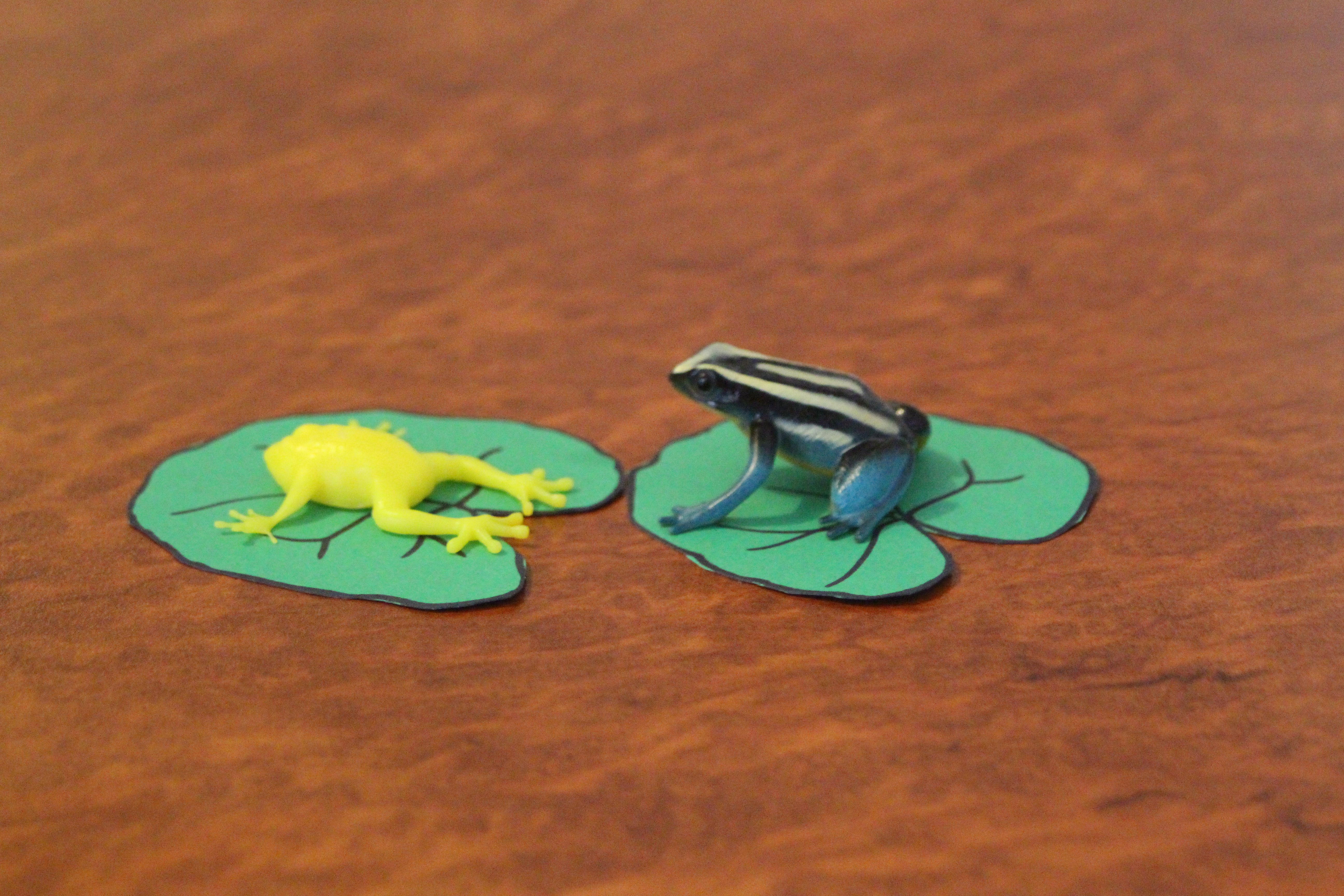
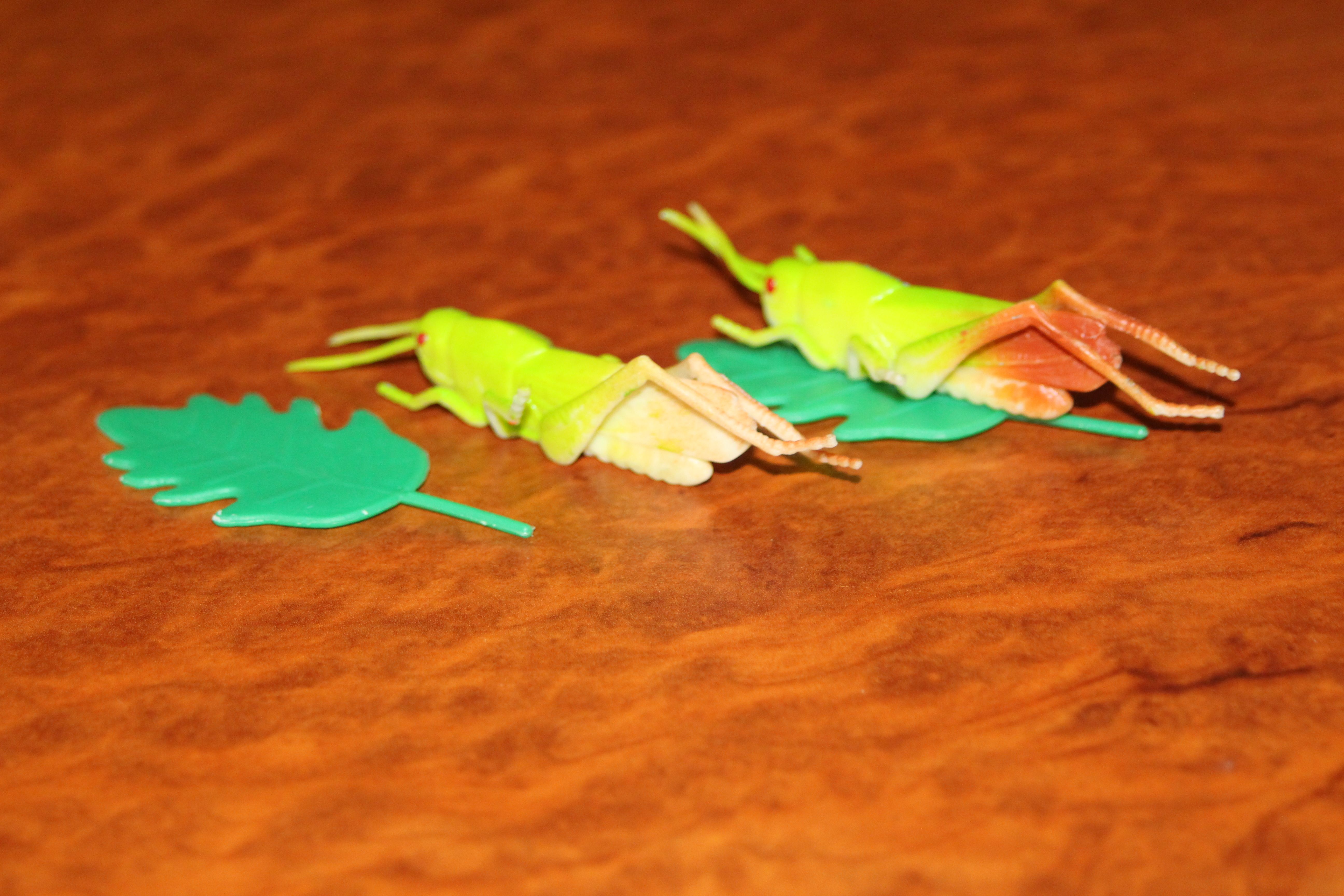
So here are a couple of ways to practise segmenting words; breaking them down into their component sounds or phonograms. These are for words which have two phonograms, but can be easily adapted to 3 letter words by moving 3 objects rather than 2.

IMG_5761

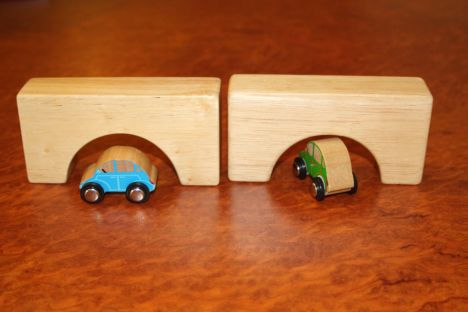
Parking the car into the garage. For example, the word “at” has two sounds or programs; “a” and “t.” Say the word slowly out loud, breaking it into 2 parts as each car is moved to represent the sounds heard.


IMG_5778

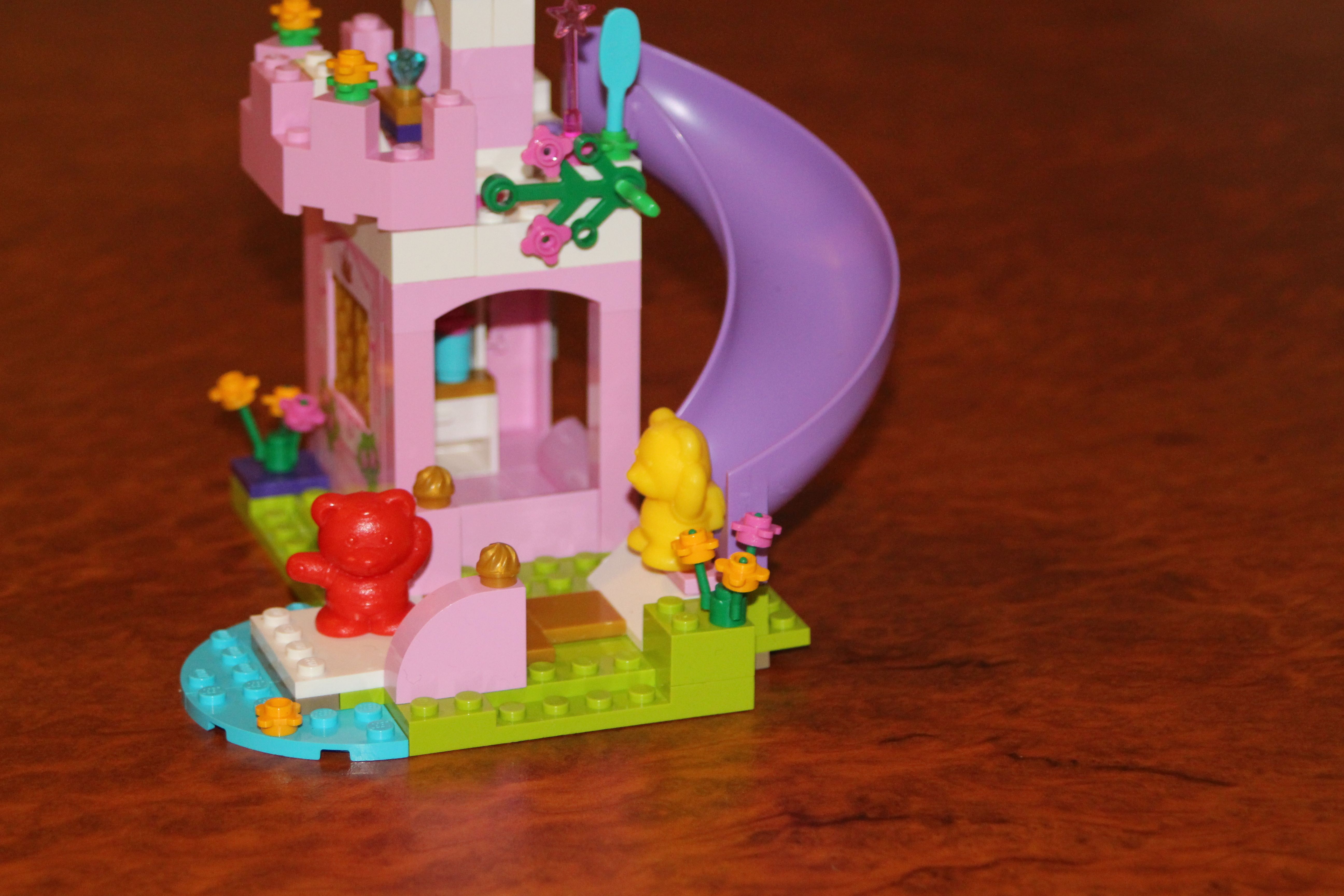
Sliding the sounds together; bears on a Lego slide.

IMG_5773

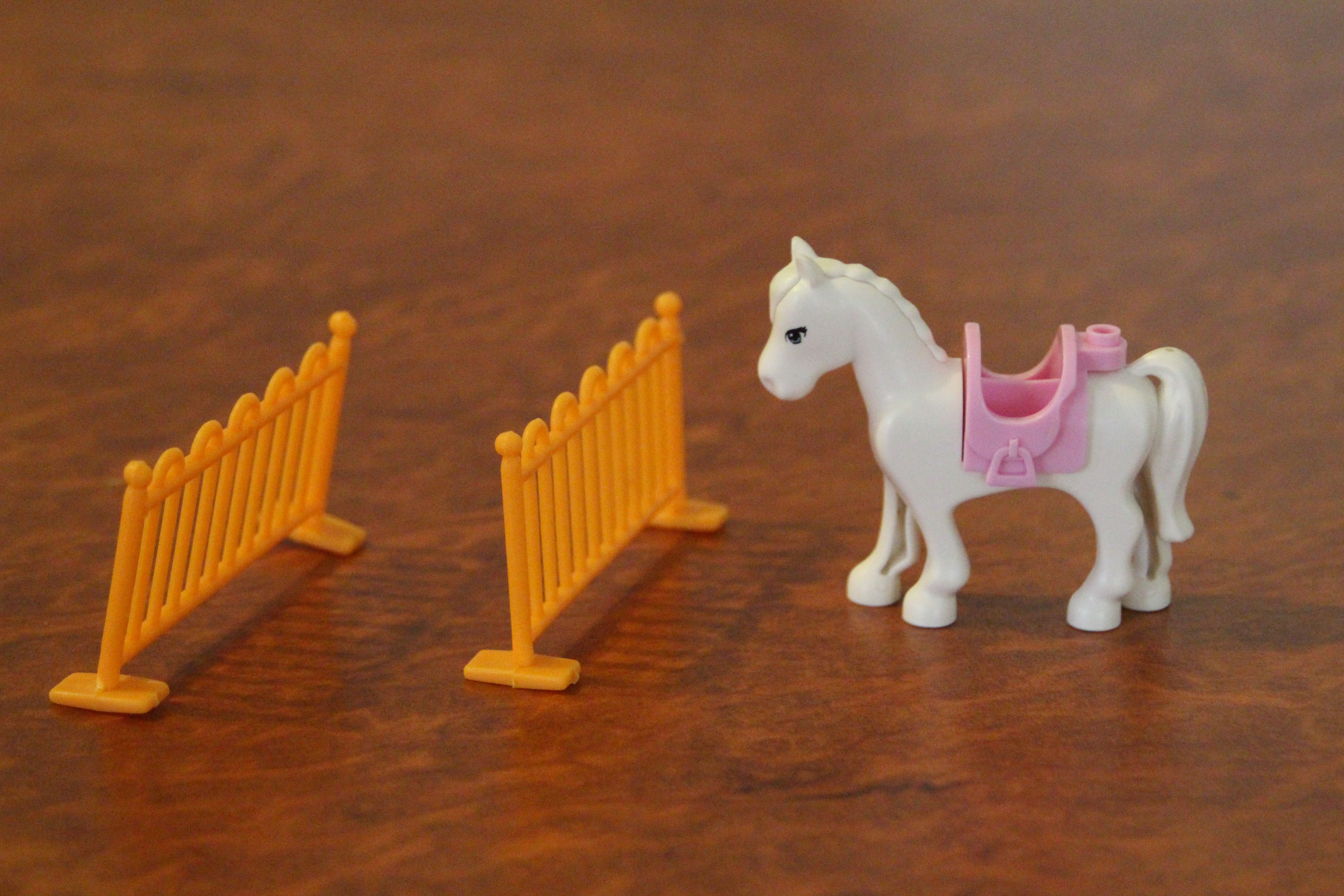
The horse jumps the gates as each sound is heard.

These ideas can also be used for learning how many syllables are in words. The word “candle” has 2 syllables; “can” and “dle” so the horse would jump 2 gates also. Don’t use the same game though interchangeably between syllables and sounding out phonograms as it may be very confusing to children. Candle has 5 sounds/phonograms; “c” “a” “n” “d” “l” (silent e), but only 2 syllables.

IMG_5771

Jump the frogs onto the lilipad.

IMG_5764

Jump the grasshoppers onto the leaves.

IMG_5772

Put the food onto the spoons.

After a 5 minute wander through the house I had a bag full of little objects that would do the trick. Even moving counters up and down the desk will do but I thought these were more fun.


A new year with 7 children

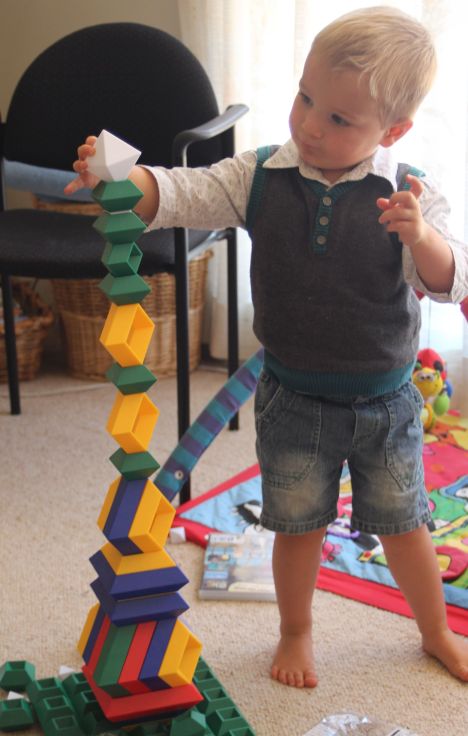
IMG_5588 Wedgits

Christmas is a time that I look forward to – making memories, continuing with traditions from previous years, special outings, celebrations, events and family times.  As I have found every year though, this special time comes with it’s own negatives. The freedom of unstructured days, lack of routine, too many choices, plenty of special events, junk food and late nights (this year coupled with sickness) has predictably resulted in tired, cranky children who are not getting along so well and are not using their free time wisely. What to do??

A new year begins, the celebration cycle eases off and ta da – enter ROUTINE!

I know from experience that the start of our homeschool year will solve many of these problems very quickly. The children’s days are filled with a balance of structured and unstructured times, responsibilities appropriate for their ages (chores) and a predictable flow of daily activities that allows me to get everything I need to do done in a timely manner as well. Less time together means that the children start to appreciate each other again and everything starts to run so much more smoothly. Life feels easier, the days are happier and we all benefit.


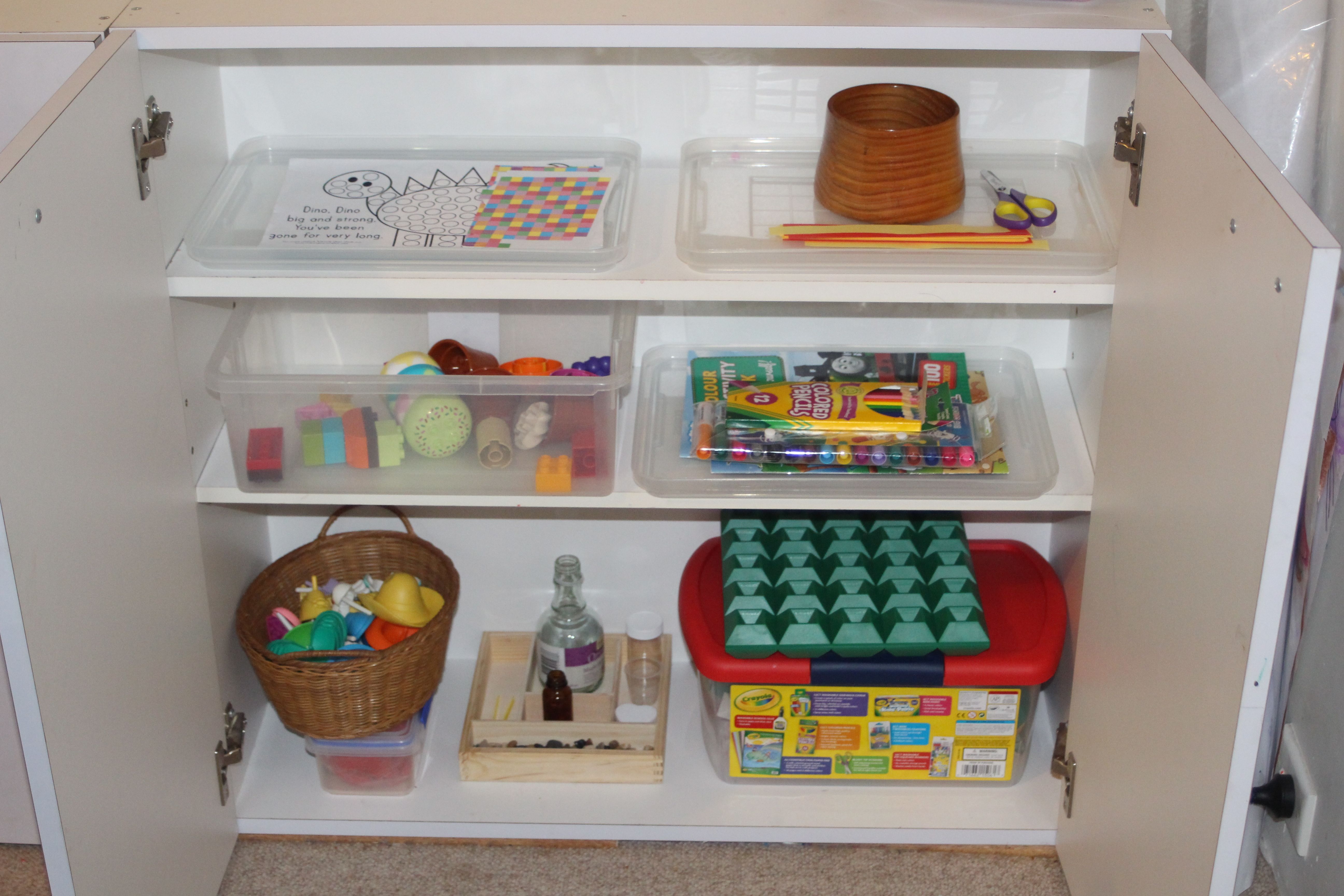
toddler school cupboard

Here is a peek into the newly sorted out activity cupboard for our 2 1/2 year old. We use these activities for table time straight after breakfast for around 30-45 minutes. In that time he will use 3 or 4 of the trays before heading off to room time for around an hour. It takes time, consistency and commitment on your behalf to teach a little boy (or girl) to sit and concentrate but it absolutely can be done. I do not have babies and toddlers who are/were just “naturally” able to sit and concentrate, it took work!

I have posted heaps of ideas for activities that work well for young children who are learning to sit and concentrate. Those pictured above are:

1. Do-a-dot printables with stickers to place inside the dots (or wherever!)

2. Beginner cutting tray (See my free Montessori style printable cutting patterns and how to teach a toddler to cut.)

3. Duplo ice-cream making set – a new Christmas gift

4. Textas, pencils and colouring books and paper

5. Potato head parts and playdough

6. A fine motor transferring activity tray (Small rocks, tweezers and a variety of bottles and containers to open, shut and fill)

7. Wedgits – another Christmas gift that I have had on my wish list for a while now. (See photo at top.)


What’s in the box? Christmas activities for preschoolers – part 4

Today is the fourth instalment of our “What’s in the box?” Christmas activities for toddlers and preschoolers. My 2 1/2 year old searches each morning to find his sparkly Christmas box filled with a new Christmas themed activity. He works on these after breakfast while his older siblings are preparing their Blessing Buddy acts of kindness for the day. Combined with room time, this highchair time gives me 1 1/2 to 2 hours of time to either homeschool the older children or in this case, complete some more complicated crafts that need me to be available. As each box is opened it is added to his “school” shelves and can be rotated with the other Christmas activities to extend the time.

If you have trouble getting your little one to sit and concentrate, have a read through this post for some tips on the practicalities of getting started. While some children are naturally better at sitting for longer lengths of time and focussing on a given task, all children can be taught to do this and will improve with consistency and training. I now have 6 children who are (or have been) old enough for highchair activities and I can assure you that they were not all on board with the idea of highchair time from the beginning!

IMG_1483

Day 16

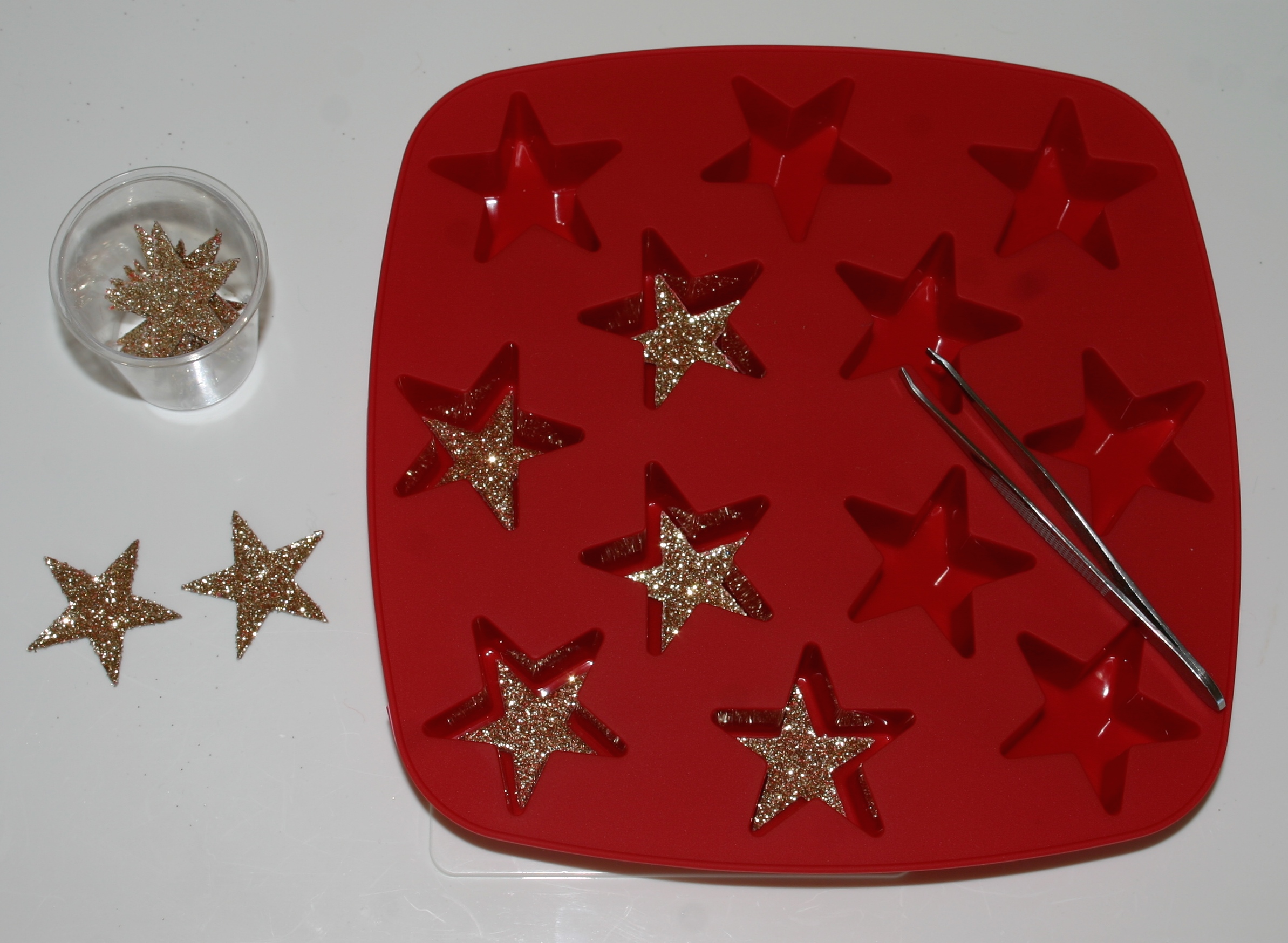
Tweezer star transfer. Practising pincer grip is important for young children who will need the finger strength and dexterity this develops later as they begin to write and draw. The card stars will be presented in a small container that holds them upright to make it easier to grasp the edges with the tweezers as they are transferred into the ice block tray segments.

 IMG_1502

Day 17

These oversized popsicle sticks, pompoms and stars have magnets on the back so that they will stick to the baking tray.

IMG_1490

Day 18

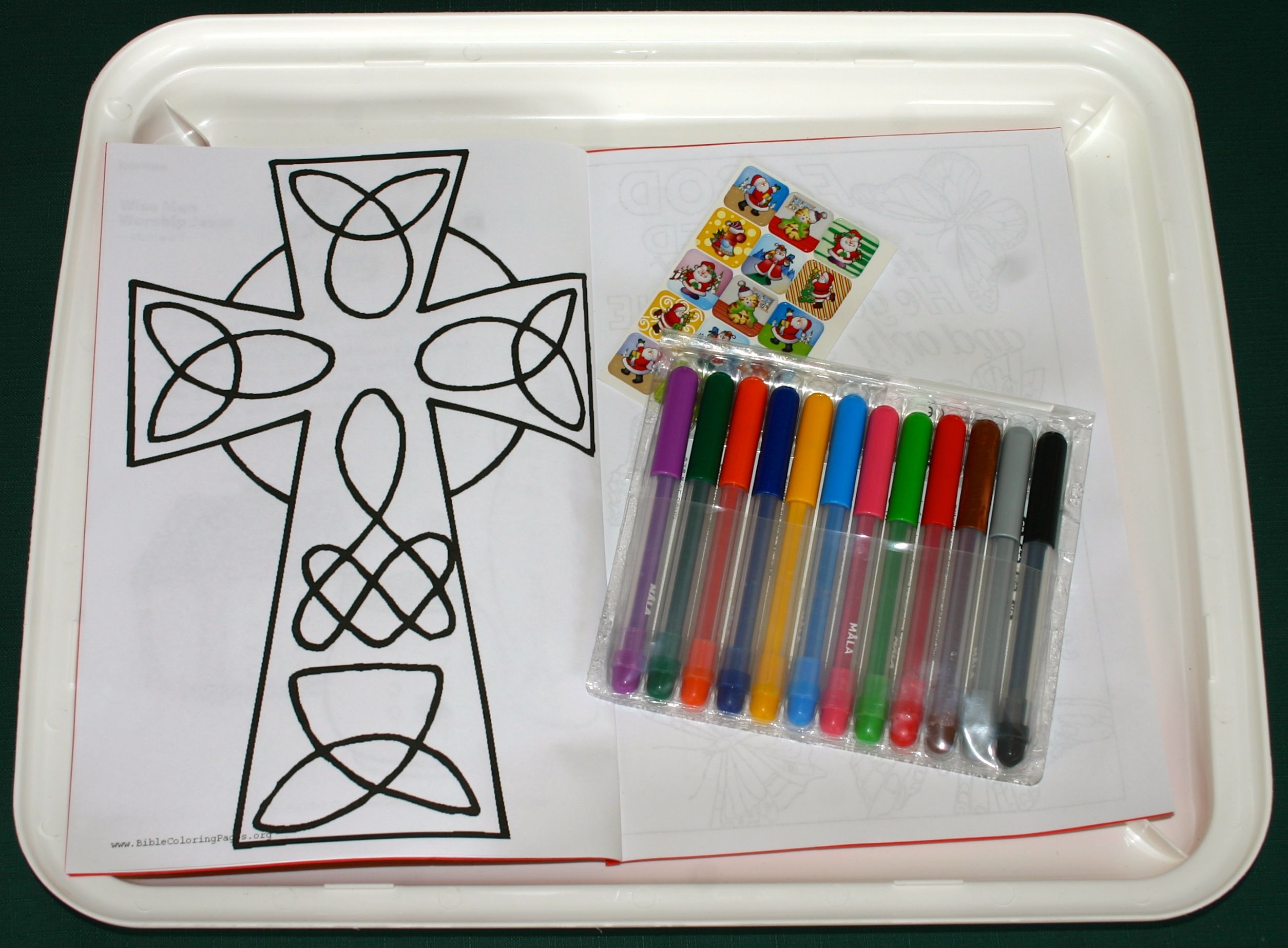
All the children have quiet time books filled with dot-to-dots, colouring pages, puzzles and assorted activities. This is a toddler version of the same with stickers, stamps and texts for free creating.

IMG_1501

Day 19 

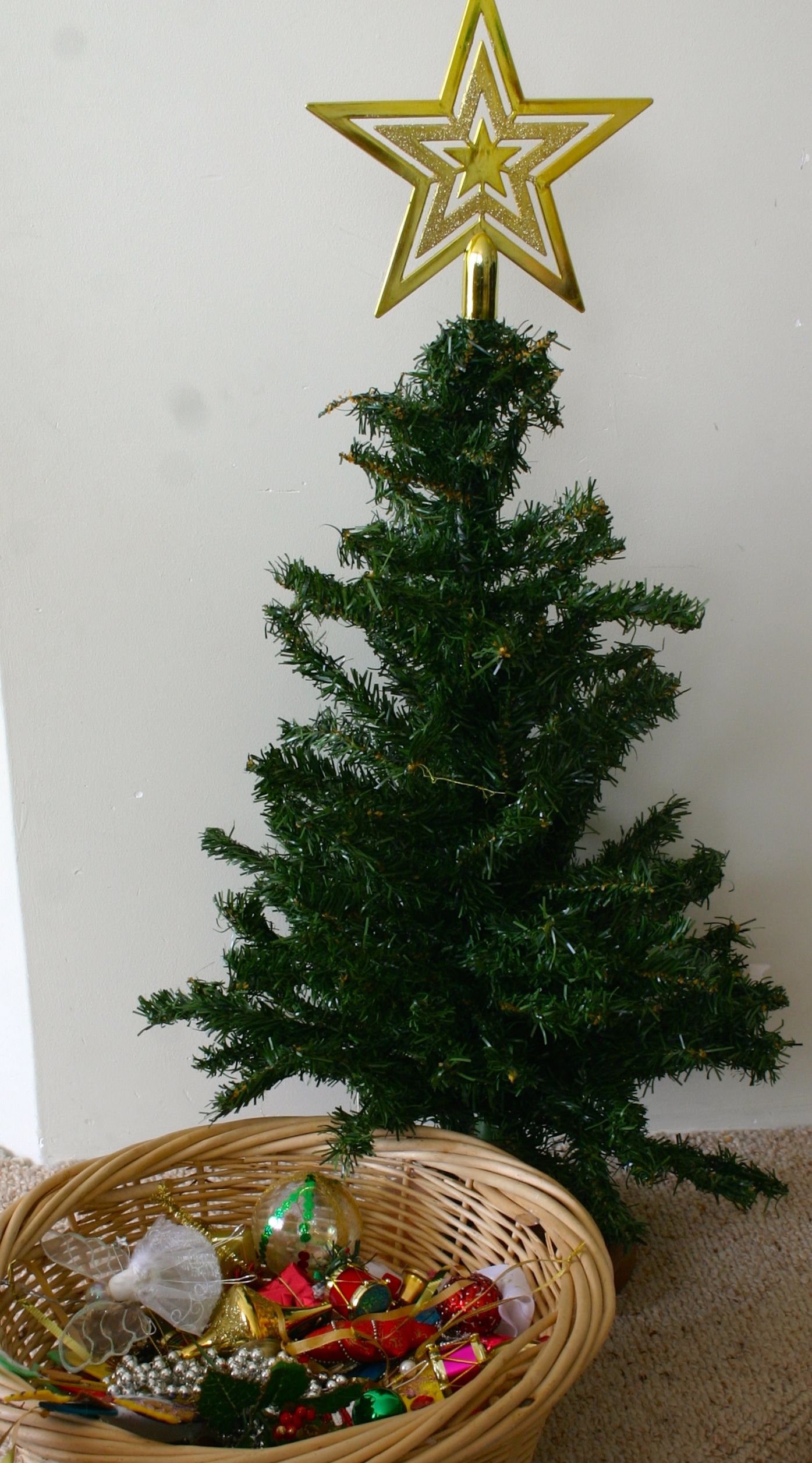
Even though this is day 19 of my activities, I actually introduced it right at the beginning of December when we decorated our large Christmas tree. Little children love to decorate without having to do it a certain way so we have this little tree set aside with a bunch of assorted decorations for the children to add on and take off as often as they like.

IMG_1494

Day 20

Poking toothpicks into the foam tree and adding large beads to decorate the tree will allow latitude for fine motor skills, colour sorting and matching and one-to-one correspondence.


What’s in the box? Christmas activities for preschoolers – part 3

Our first “What’s in the box?” Christmas highchair time activity was revealed today to our 2 1/2 year old who was excited to search for his hidden sparkly Christmas box. He enjoyed his Christmas sensory tub activity and will be keen to see what tomorrow’s box reveals. He played with his new activity while his older siblings worked on their act of kindness for the day, which came with the much anticipated arrival of our Blessing Buddies.

Here are 5 more of the Christmas activity trays for toddlers and preschoolers that I have prepared, ready to be revealed one at a time each morning in the special sparkly Christmas box.

IMG_1488

Day 11

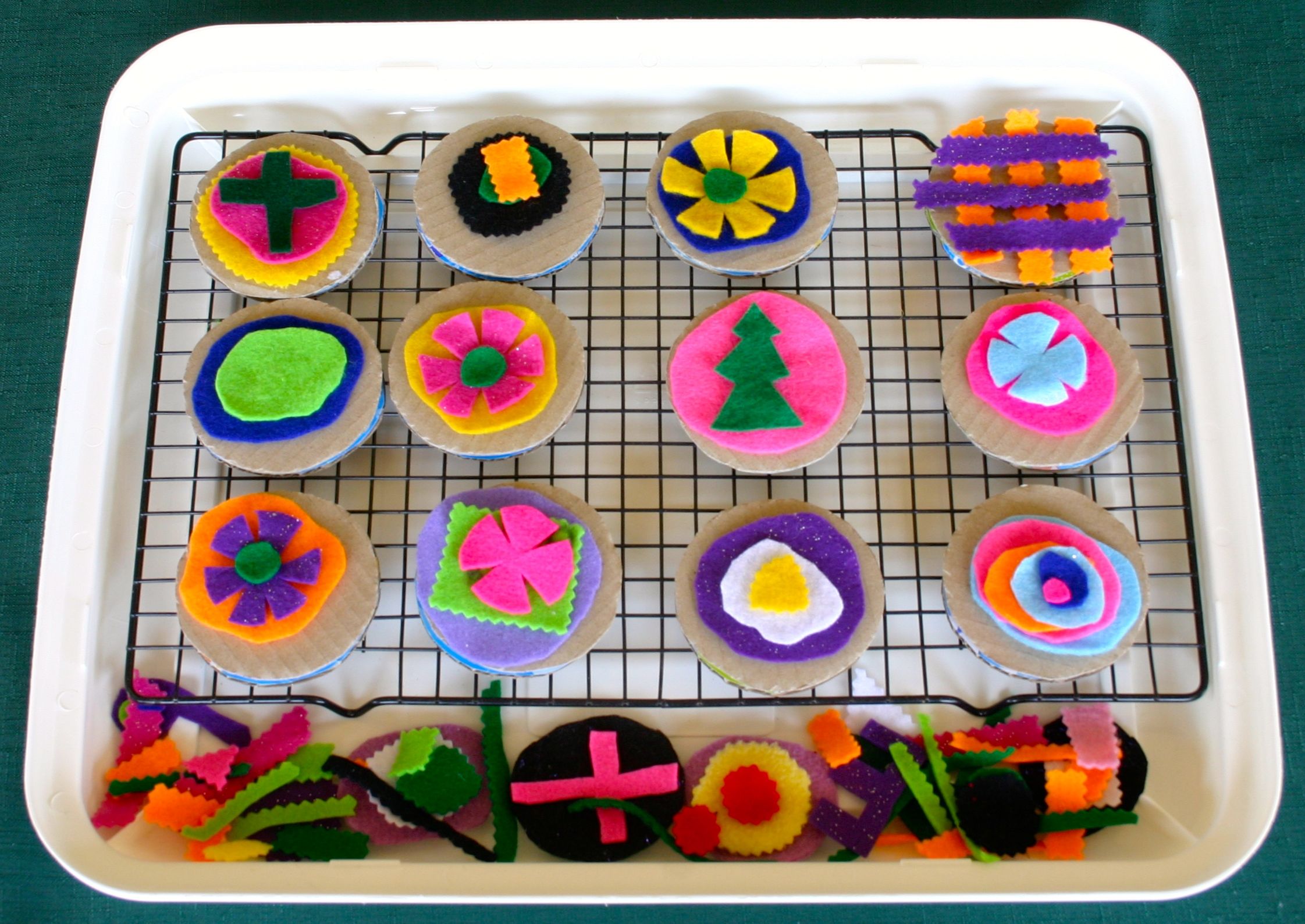
These cookies are simply 2 circles of cardboard from a nappy box glued together (picture side in) with a variety of felt shapes to add as icing.

IMG_1486

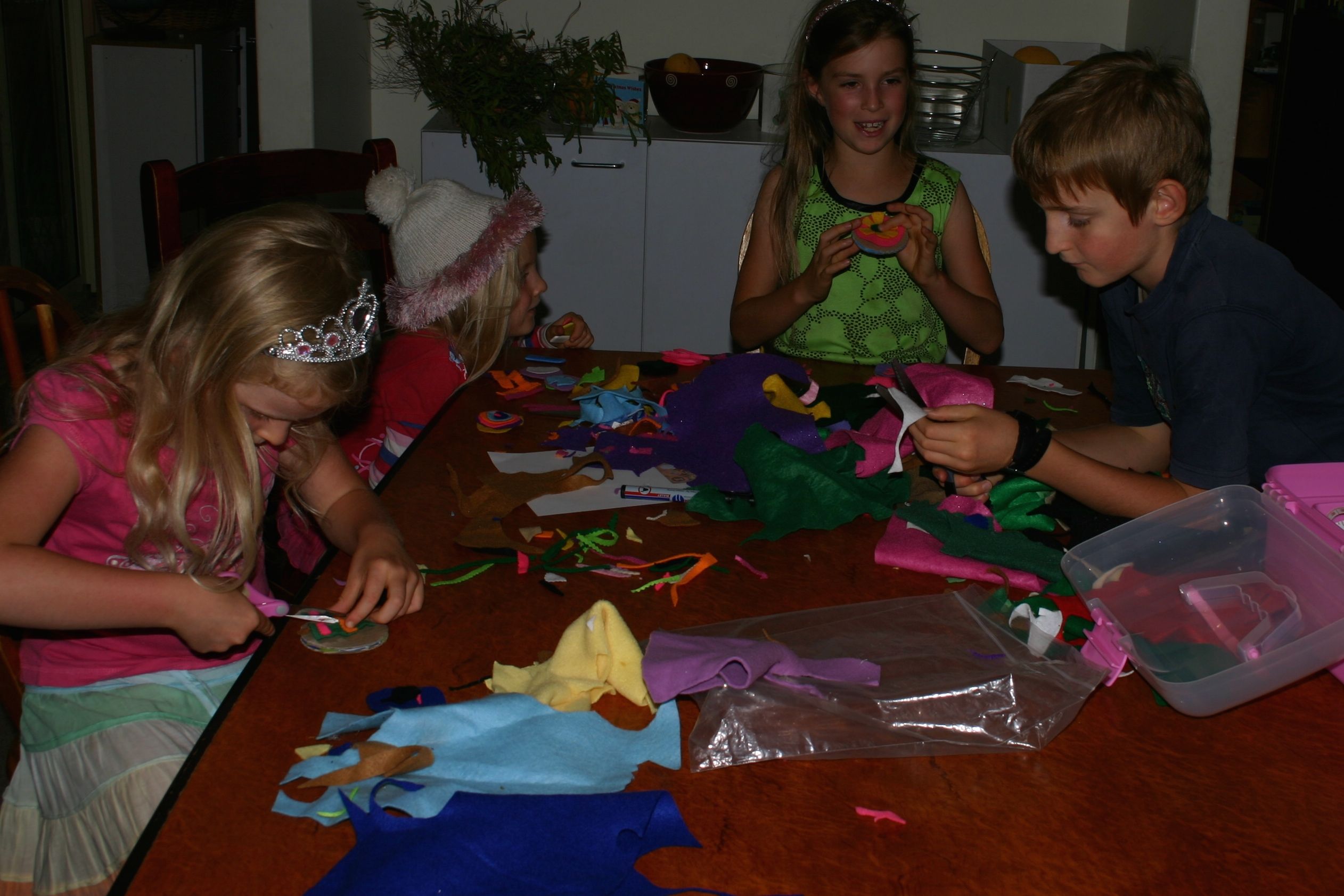
The older children saw what I was doing and begged pestered asked me to let them have a go. They did such a good job that I handed the project over to them and went on to prep some other activities. Other than the flowers and a couple of bits and pieces, the designs in the photo above are all theirs. They can’t wait to play with them!

IMG_1442

 Day 12

A sensory tub filled with macaroni pasta and a variety of interesting bits and pieces to sort, scoop, tong, tip, pour and transfer.

IMG_1459

Day 13

One of our Christmas traditions is to purchase a new nativity set each year. This one we purchased a few years ago and has been well used. I will be putting a different new wooden set into the sparkly box but as the older kids are about while I am photographing I didn’t want to spoil the surprise!

IMG_1469

Day 14

Do-a-dot printables with stickers to place inside each circle. Great for fine motor skills and one-to-one correspondence. I will need to get some larger stickers though as these are too small for very little fingers to manipulate easily. You could add some stamps and drawing items to this box.

IMG_1474

Day 15

Pretend food play and colour sort tonging activity. A muffin tray filled with coloured silicone pattipan wrappers with pompoms and jewels etc. to manipulate and “cook.”


What’s in the box? Christmas activities for preschoolers part 2

image002

Today is the second instalment of our planned “What’s in the box?” activities for advent as we count down to Christmas. Our hopefully very excited toddler will search the house for this sparkly Christmas box each morning which will contain his morning table activity. Previous activities will be available in his “school” cupboard for use while his siblings are working on their Blessing Buddy act of kindness for the day.

IMG_1483

Day 6

Using tweezers to transfer stars into an ice cube tray will be new to him so I’m not sure whether he has the dexterity for the tweezers or not. The tweezers can be easily swapped with small tongs if need be.

IMG_1475

Day 7

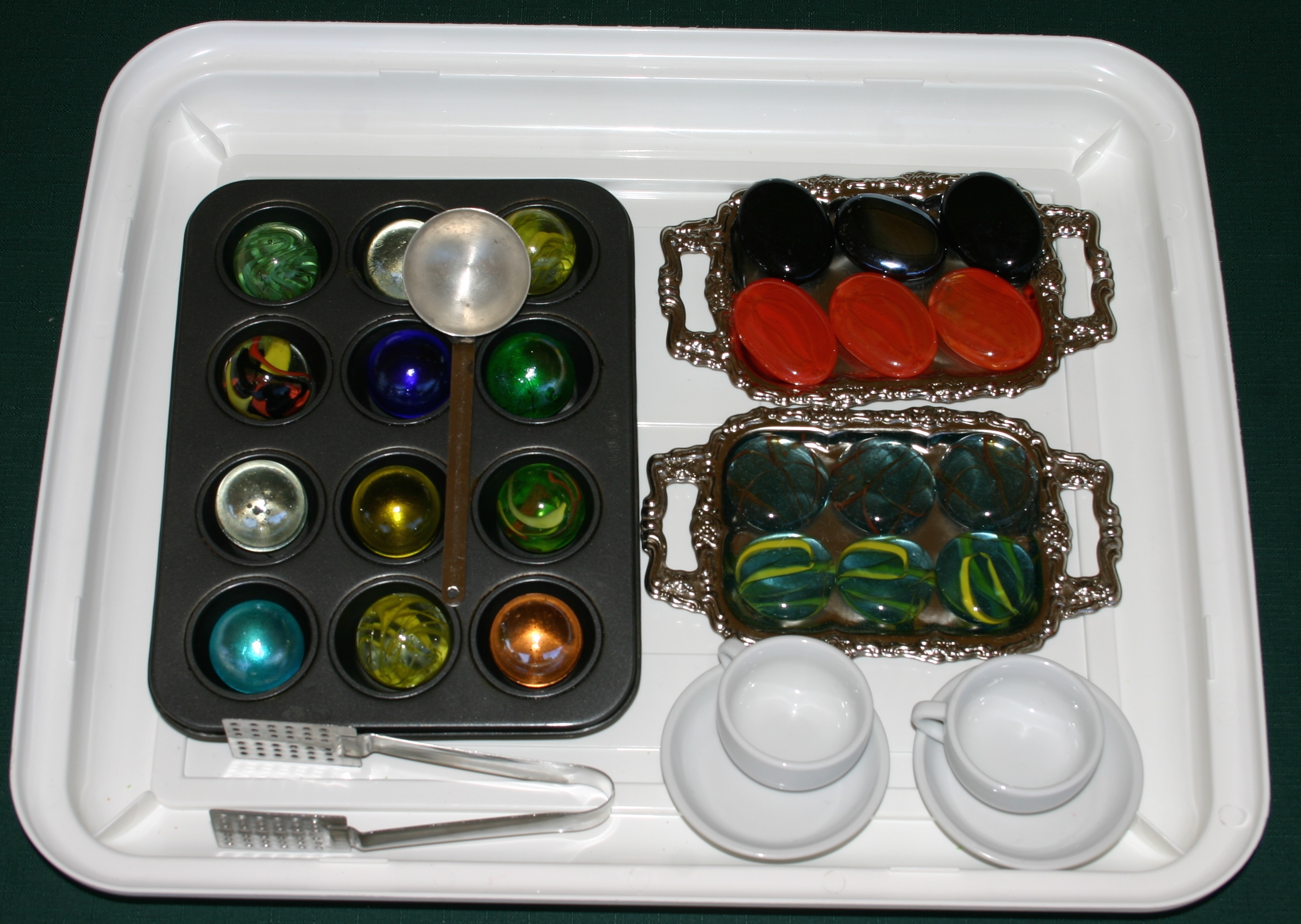
Pretend cooking play is always popular, especially if I come over for a taste of Christmas cookies now and then. These large coloured glass stones and oversized marbles are from our local discount variety store. A mini muffin tray and tea bag tongs promote one-to-one correspondence practise and transferring skills.

IMG_1466

Day 8

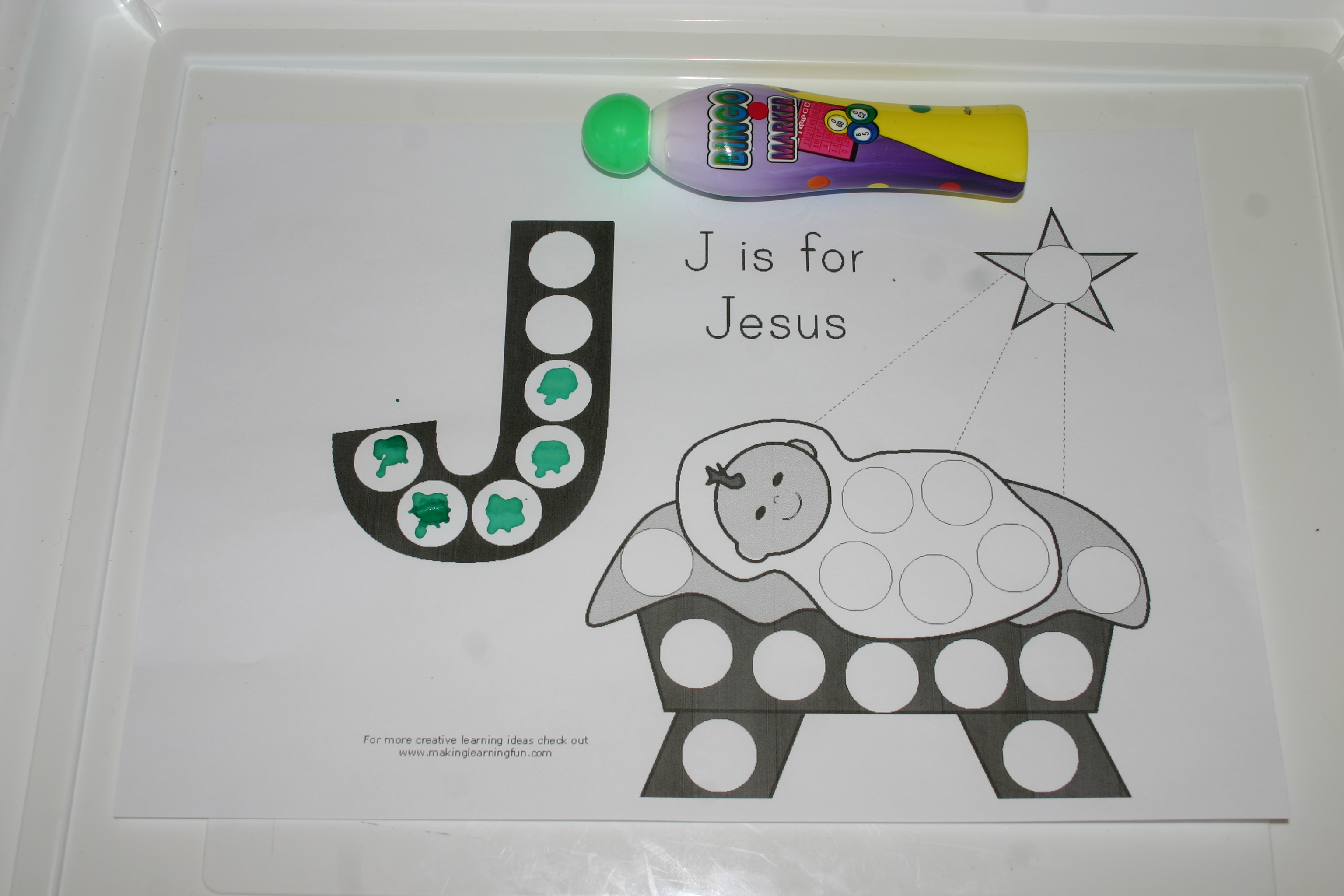
Dotting with bingo markers inside do-a-dot pictures is a semi-controlled way to present a painting experience. I am quite certain however that dotting in the circles will not be satisfying enough and that the final product will be well and truly smeared with paint! (Better cover the tray with newspaper for this one.) Free printable pictures to dot are here and here or google do-a-dot for hundreds.

IMG_1454

Day 9

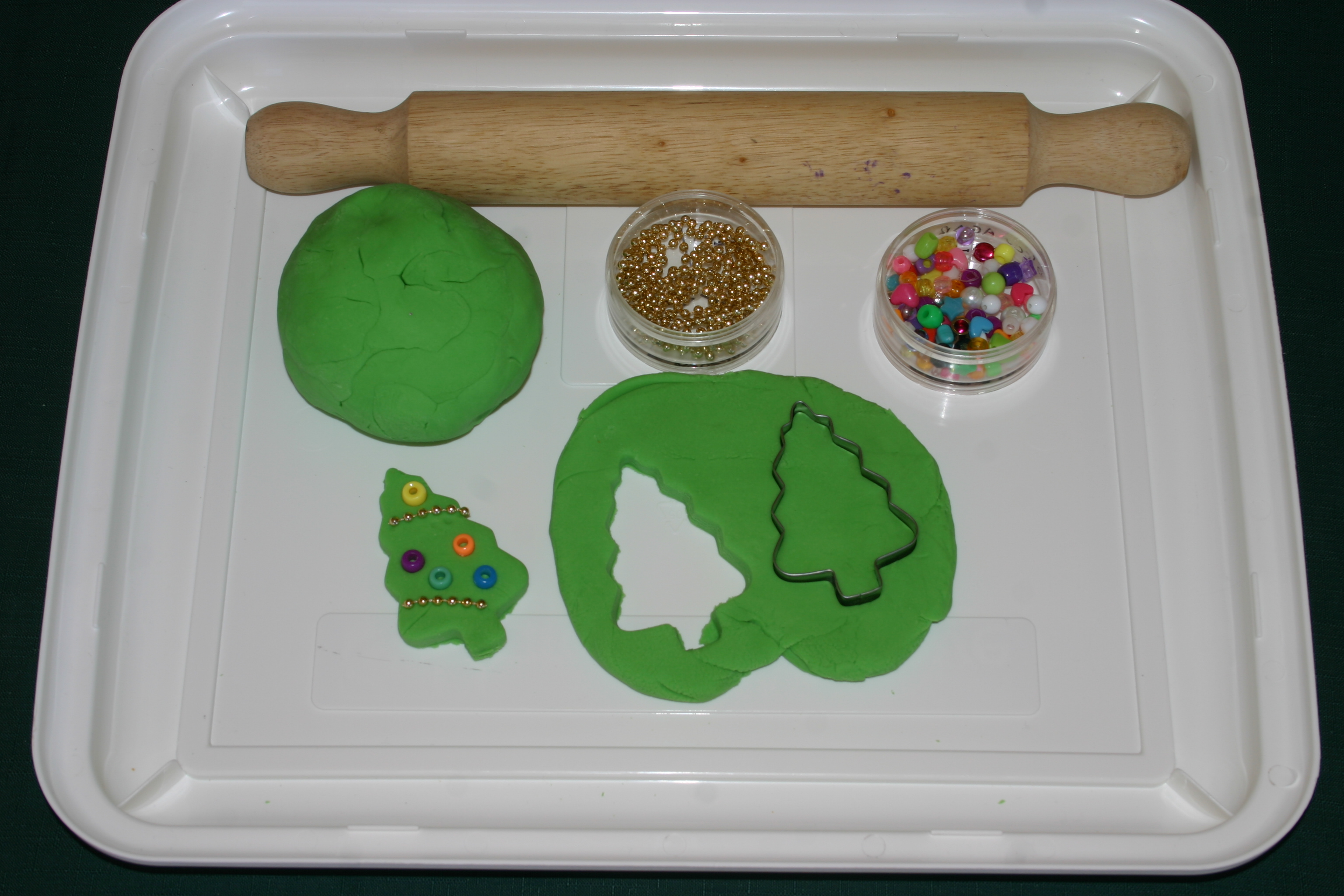
Decorating playdough Christmas trees with beads and tiny bead strings will be fun. Toddlers find it very difficult to roll out dough though and may also need assistance with the cutter. Be prepared to cut a bunch out for them if necessary.

IMG_1462


Day 10

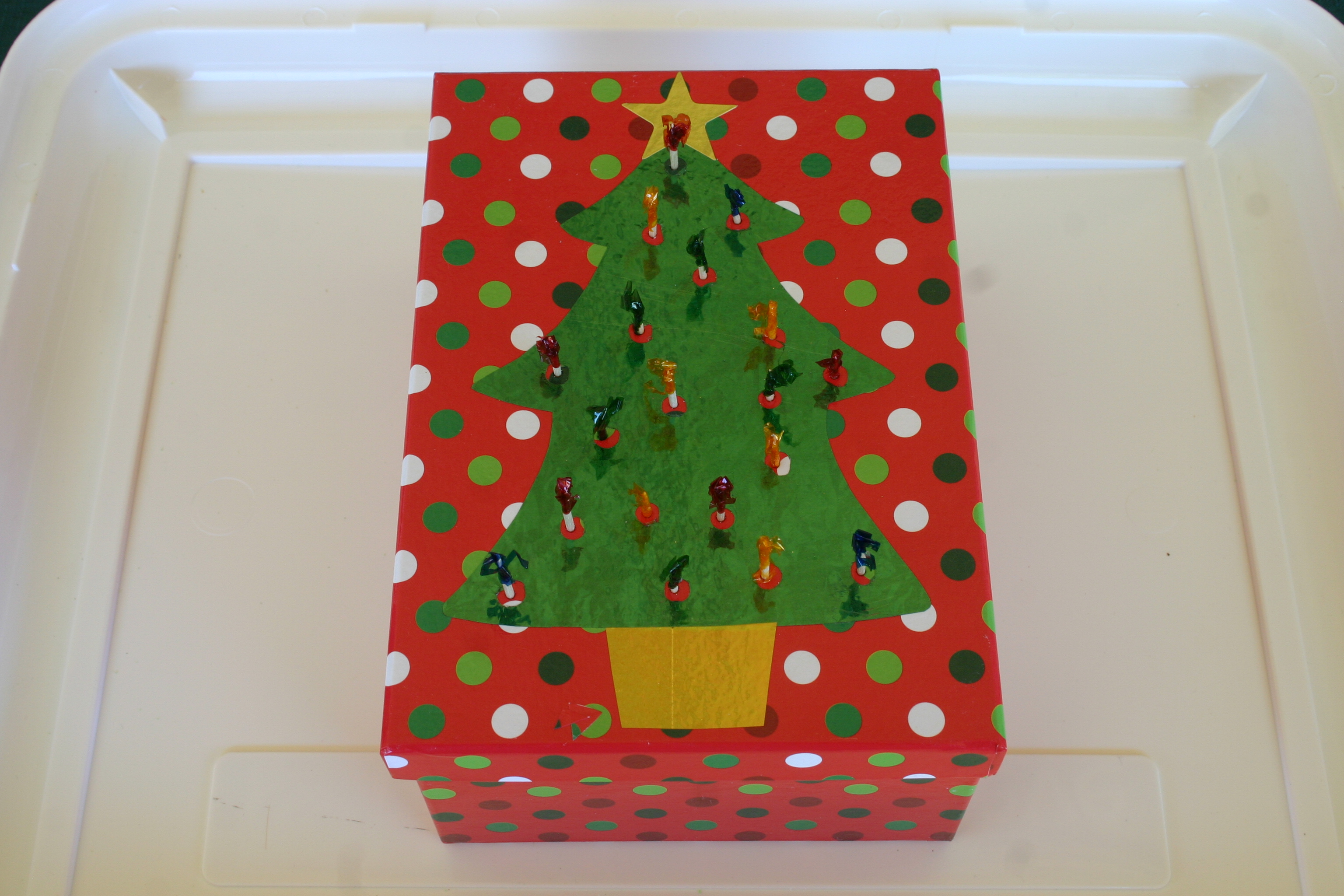
This toothpick Christmas tree is great for fine motor skills. The child pokes toothpicks with coloured ends into holes in the top of the box lid (use a skewer to poke them through.) I used coloured contact for the tree and punched holes with a single hole paper punch before sticking it onto the box lid as I know from experience that poking holes through contact on cardboard can be difficult and doesn’t always leave a nice clean hole.

How is your Christmas planning going?

What’s in the box? Christmas activities for preschoolers part 1

image002

Our “What’s in the Box?” advent count down of Christmas preschool activities is a new tradition for us. While the older children are working on other projects for our Blessing Buddies acts of kindness, our toddler will be opening his special Christmas box to find his table activity for the morning. The sparkly box will be hidden somewhere around the house for him to find each day and will contain a new and exciting challenge for him to work on independently while I help with the older children’s more complicated projects.

Here are the first 5 days of “What’s in the box?”

IMG_1447

The first activity needs to be one that is guaranteed to hold his attention for a longer time span as it will be the only one available. As each new activity is introduced, I will place it onto our toddler activity shelves so that I can rotate between them when interest in the new tray for the day has worn off.

Day 1

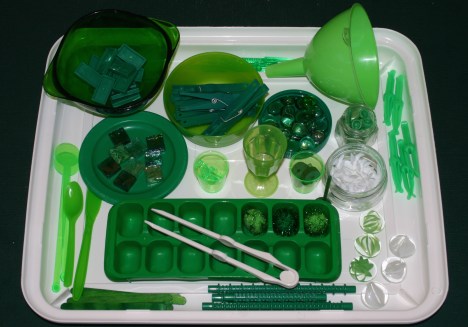
This Christmas sensory tub will be filled with all the wonderful “Christmas” items in the photo above. (If it’s green it’s Christmassy right?) The items can be sorted, transferred with tongs or cutlery, hidden and found, tipped and poured and generally fiddled about with.

IMG_1453

Day 2

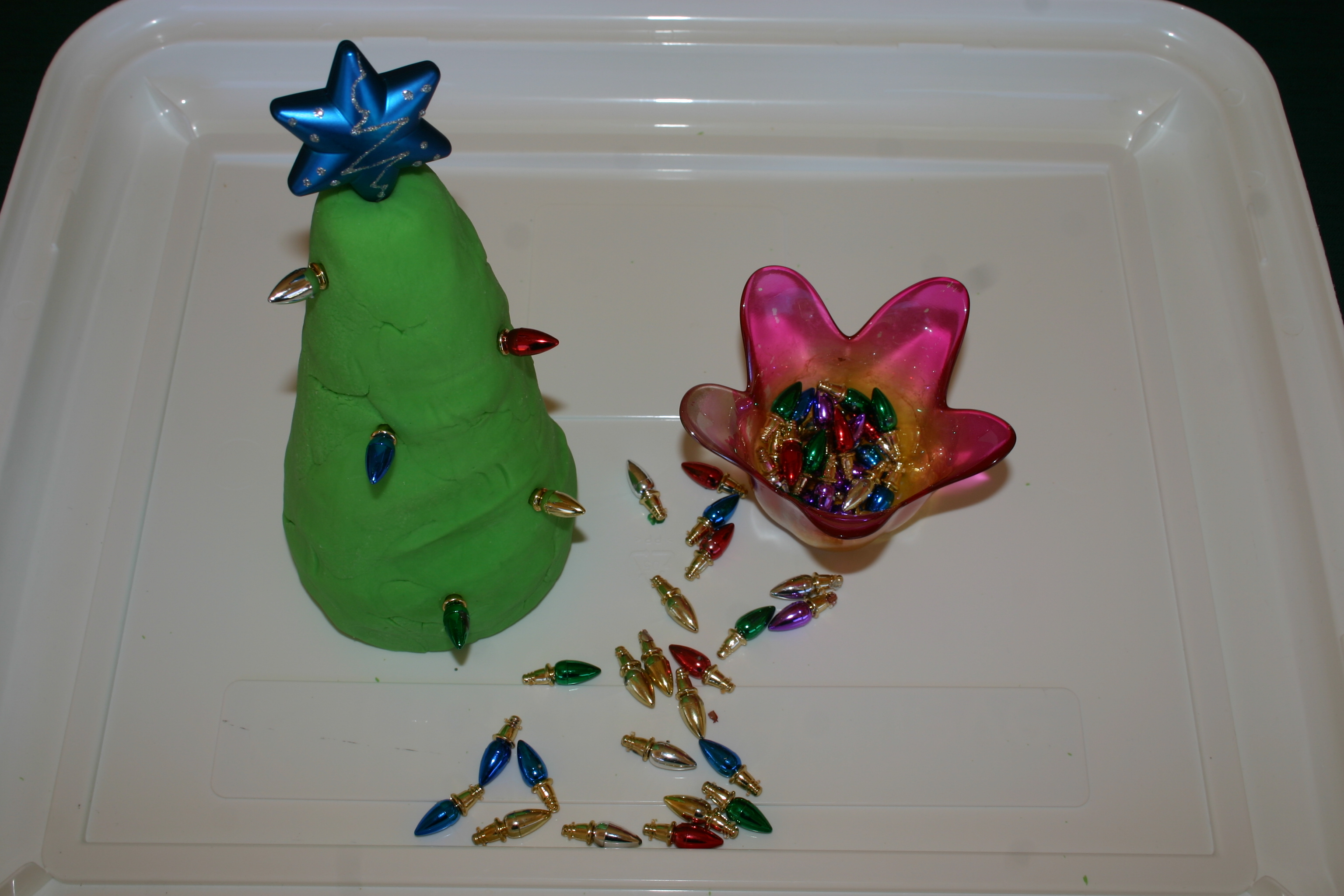
A new batch of green playdough formed into a rough Christmas tree with small lights cut from a plastic Christmas garland to poke into the dough. You could also use beads or any other small decoration.

IMG_1480

Day 3

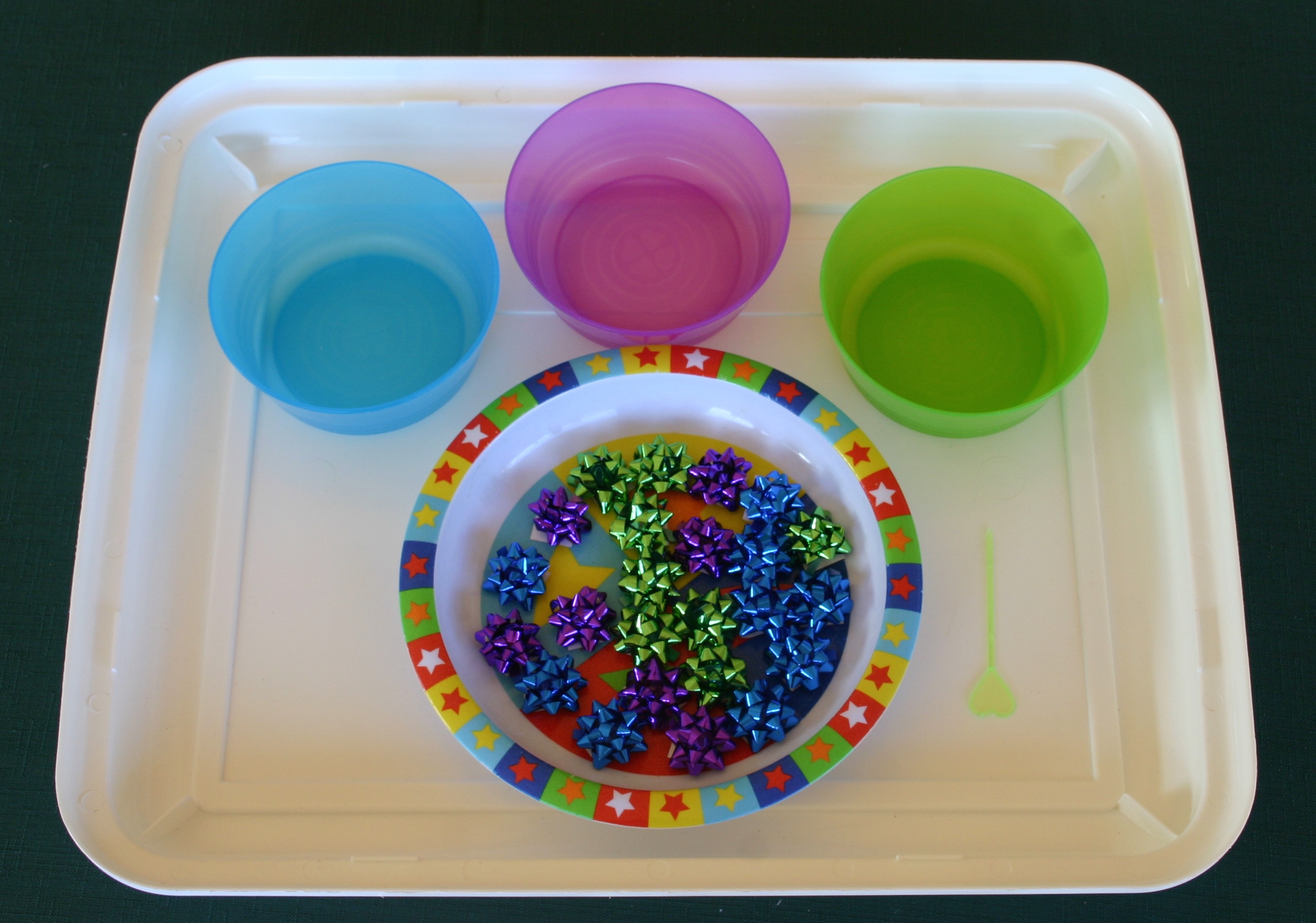
A colour sorting activity with 3 colours of Christmas bows. I have included a toothpick with a large flat end to hold while sliding it into one of the loops of the bows to transfer them into the matching coloured bowls. We’ll see how difficult this is for him – it may be quickly changed to small tongs.

IMG_1478

Day 4

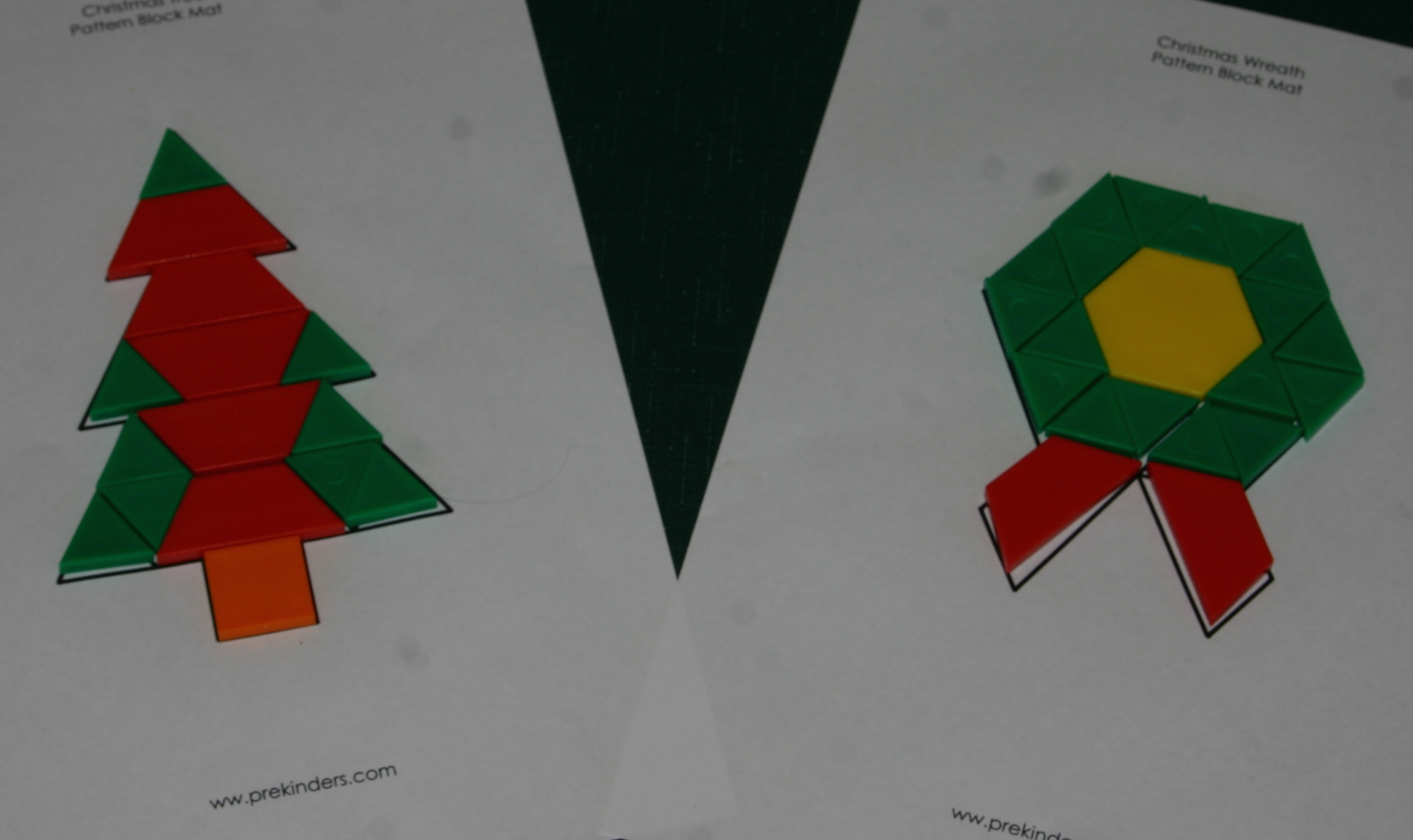
Simple pattern block puzzles.These free printable patterns are available here. I intend to laminate these for greater durability. My older children all jumped at the chance to fill these out for the photos and after watching me prep these trays throughout the day, my 11-year-old commented that he almost wished he was a toddler again, just so he could do the activities!

IMG_1464

Day 5

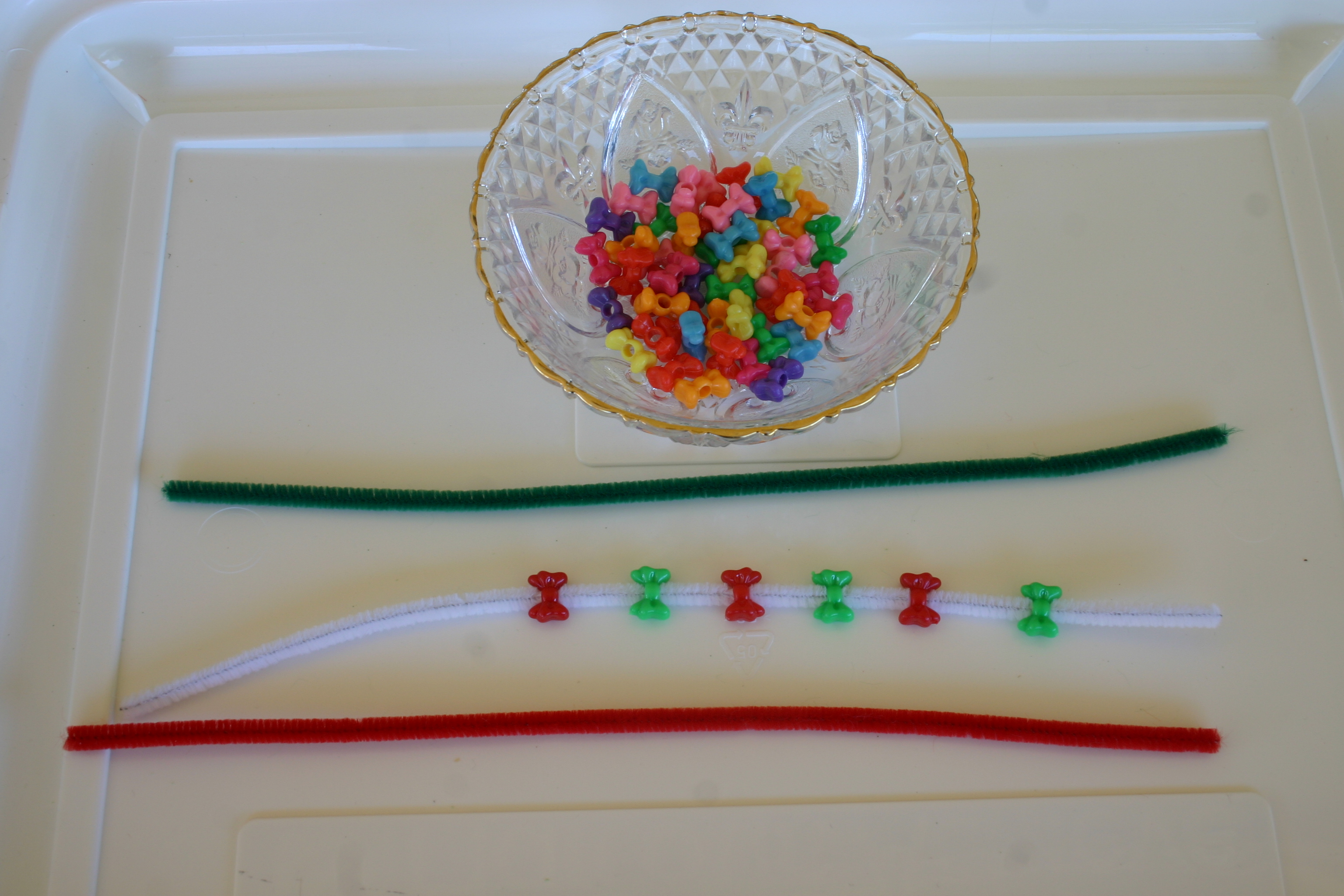
Threading bow-shaped beads onto coloured chenille sticks (pipe cleaners.) Make sure the holes are large enough so that this is not too difficult for little fingers. Older children could make patterns with the colours.

Stay tuned for days 6 to 24.

What are your toddler’s favourite Christmas activities?


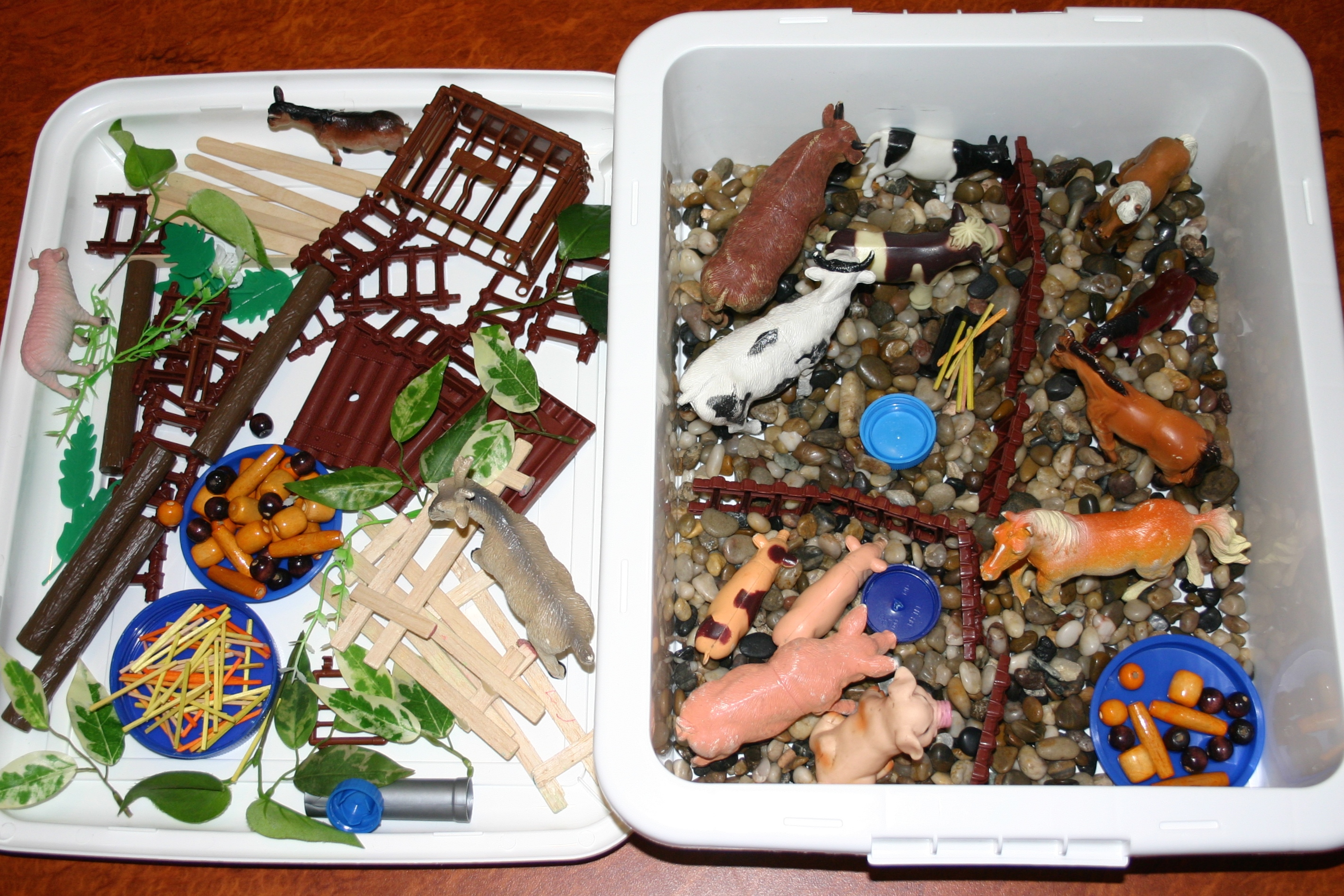
Farm sensory tub – toddler and preschooler fun

IMG_0885

Our rocks sensory tub has been available for a month or so now and interest has waned, so it was time for a change. Within a matter of 10 minutes I had thrown together the farming bits and pieces we have around the place, (most of which were in our playdough toys) resulting in a new and exciting activity to keep my little ones interested and playing quietly during one of the many breastfeeding sessions that now take up much of my day.

Sensory tubs are great for a wide variety of ages (my 2 to 9 year olds LOVE them and even the 11-year-old boy will sit down and have a fiddle) and they are an excellent activity to assign an older child to do with a younger sibling for some brother and sister time. I find pairing the older and younger children means that the youngest learns how to play with the materials and I will often see them imitating the play of their older sibling when using the materials independently later on. I remember being quite surprised to find that my first child didn’t know how to play with some of the activities I gave him. I actually had to sit down and model pretend play with him to teach him what to do. Now, with so many older siblings, I no longer have this role – it is well and truly filled with the modelling of the older children for the younger ones.

A quick trawl of the web or an online site like Pinterest will give you an abundance of ideas and with a few tucked in the back of your mind you can keep an eye out for suitable materials whenever you happen to be out at the local discount store, op shop or supermarket. At the most, these tubs cost me $10 or so in loose materials to fill them (the rocks, pasta, oats, rice base etc.) and I then store these to be re-used in the future, with a different play accessory to keep it fresh. It is well worth the small investment for the peaceful play that results, allowing me to get the dinner cooked or feed our baby without interruption.

Our farming sensory tub includes plastic farm animals, plastic and popstick fences, milk bottle and yoghurt container lids for water holes and food dishes, craft matchsticks (hay), wooden beads (as corn cobs etc.)  plastic logs, wall panels, artificial leaves and the rocks themselves.