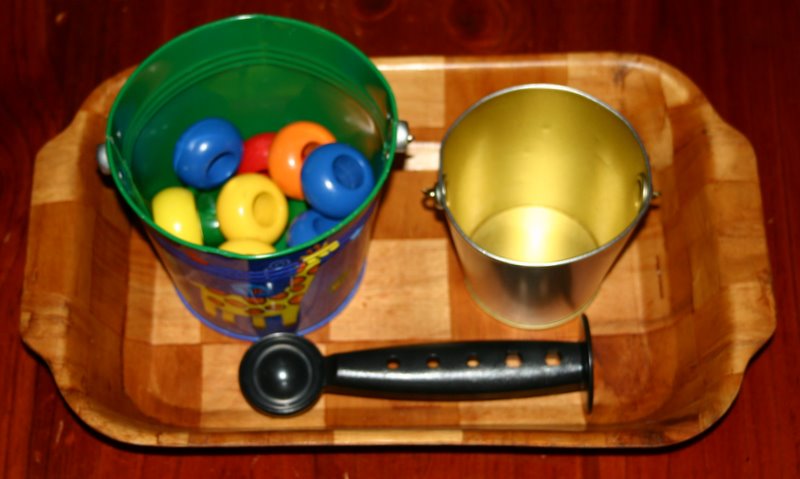
Montessori style tray activity for toddlers: Bucket of giant beads

Today I’m moving away from water transfer for all those who can’t stand the mess or have little ones who are just not ready for that yet! This is the second Montessori style tray activity for toddlers that I ever introduced, to follow on from the mega marbles transfer. Both require less fine  motor control and can be completed successfully by young toddlers. Easy to set up and adapt to the materials you have on hand, you can get this one together in minutes. A great highchair or table activity, it works well for keeping little ones occupied while homeschooling and can easily be carried to the Montessori mats traditionally used to delineate each child’s work-space.

DESCRIPTION:

  • The child uses the scoop provided to transfer the large wooden beads from one bucket to the other and back again.

CATEGORY/SUBJECT AREA:

  • Practical life: dry transfer

CONCEPT/SKILL:

  • Fine motor development
  • Control of ladle or scoop
  • Transferring dry materials

EQUIPMENT & MATERIALS:

  • Ladle (scoop, icecream scoop, measuring spoon, large spoon, pasta spoon or any other utensil that fits one bead at a time into it. Choose a short-handled utensil for ease of manipulation.)
  • Large beads or alternative material to transfer
  • 2  containers (metal containers make a pleasing sound as the beads drop in.)
  • Tray

Please see my articles titled “Workjobs and Learning Styles” and “Brief Montessori Overview” for more information.

Montessori style water transfer tray activity for toddlers

For those of you who like water activities, scooping water is another basic Montessori style tray activity for toddlers. Great for the sensory table, as a table activity or perhaps even a highchair activity if you can fit it on. Most toddlers love to play with water and this gives them a contained way of enjoying water while practising a worthwhile skill at the same time. If you are not afraid of colouring clothes then a few drops of food colouring adds interest. Ice blocks can also be added, as can a variety of floating objects to scoop out.

DESCRIPTION:

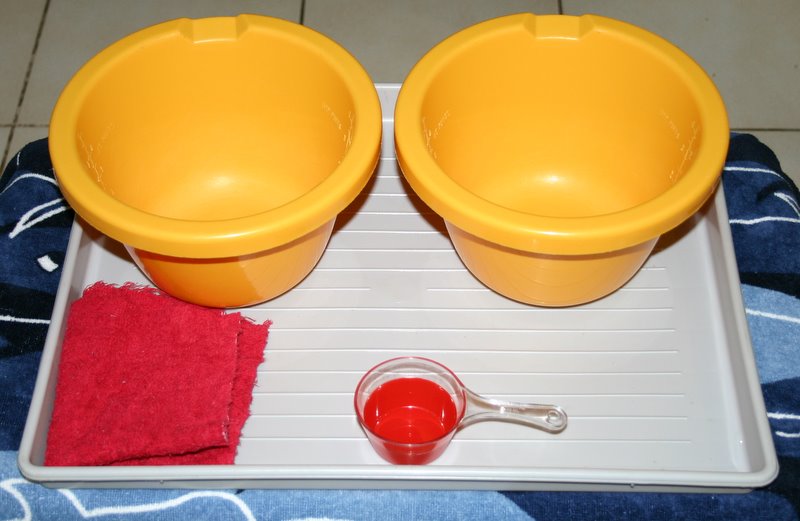
The child uses the scoop provided to transfer the water from one bowl to the other and back again. I normally include a small sponge to use for soaking up spills and squeezing the water back into the bowls. The cloth is for drying up the scoop and tray when the activity is done. A variety of scoops and containers can be used to keep the activity fresh and interesting over time.

CATEGORY/SUBJECT AREA:

  • Practical life (liquid transfer)

CONCEPT/SKILL:

  • Fine motor development
  • Control of scoop/ladle/spoon etc.

EQUIPMENT & MATERIALS:

  • Scoop (or other transfer utensil)
  • 2  stable containers for water
  • sponge
  • cloth
  • tray with a lip to contain spills (a baking tray or biscuit tray would do)

Please see my articles titled “Workjobs and Learning Styles” and “Brief Montessori Overview” for more information.

Montessori style toddler tray activities: Water transfer

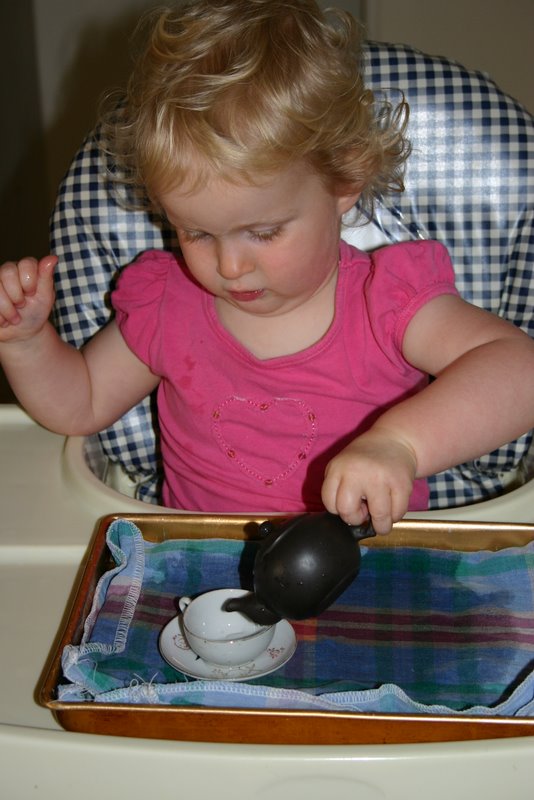
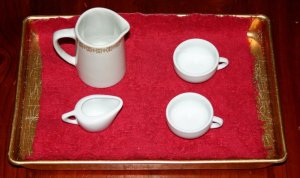
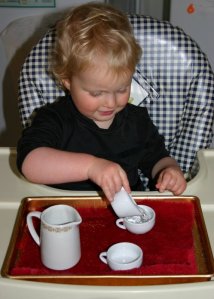
A basic Montessori style practical life tray activity to set up for your toddlers or preschoolers is water pouring. A tray with low edges will contain any spills and little ones will have a great time pouring themselves cups of pretend tea and up their water intake for the day dramatically!

Start simple, with two small tumbler style cups that fit neatly into the hand for your toddler to pour from one to the other. Next try a small jug for pouring and finally introduce a teapot. Teapots are more difficult to manage as it is harder to judge the distance the water will pour out from the spout.

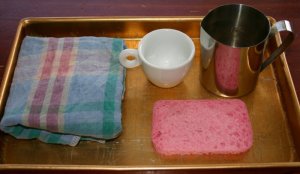
A good introduction to water pouring - a small jug (not too heavy for little hands) with a sponge to squeeze spilt water back into the jug and a tea-towel for the final drying up of the tray and dishes

For older toddlers more accessories and little tea-sets can be included with perhaps a dolly to hold tea parties with. An activity that is useful for highchair time and as a table activity, I prefer to use it at the highchair so that my younger toddlers can have a go without trailing water behind them.

Homeschooling with toddlers: Duplo copy and build

Here’s another fun yet educational activity for your toddlers or pre-schoolers to do while you homeschool the older children (or just get some dinner cooked!) It works as a Montessori style tray activity, table activity, playpen activity or mat time (blanket time) activity and can be adapted in difficulty to suit a wide range of ages.

Assuming you own Duplo (or any other suitable construction toy) and a digital camera, it costs almost nothing to make and is simple to put together. Older children could be enlisted to make the models required.

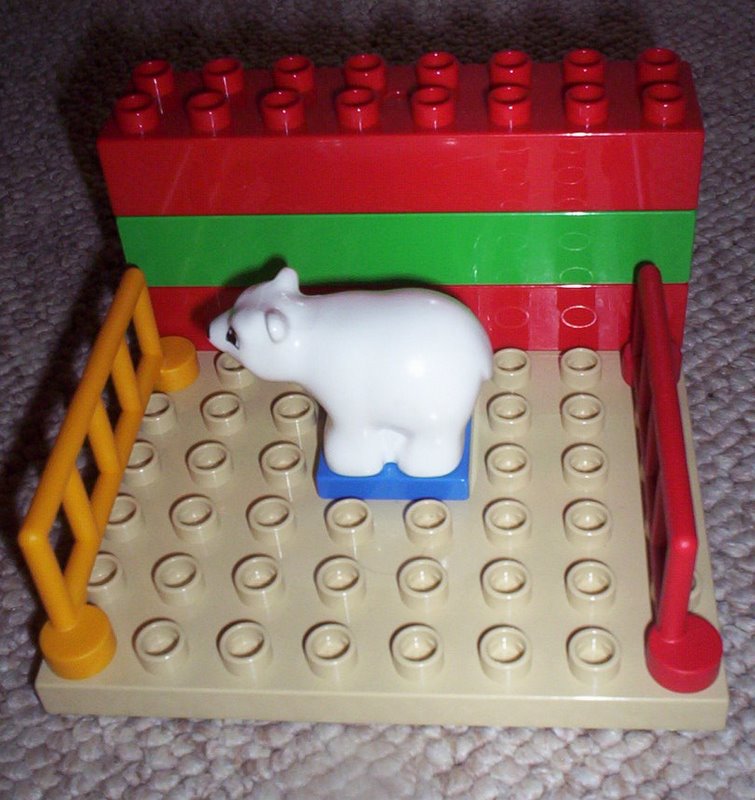
Simply make a selection of small models, photograph them individually and put only the pieces needed to construct each one into separate containers. Print the photos (laminate if you want them to last) and put them with the corresponding model and that’s it! The child simply uses the blocks supplied to copy the photo. The activity is self-checking in that there will be no spare blocks left at the end if they have copied correctly.

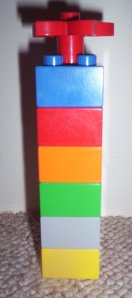
The easiest model for a 2 year old to copy might simple be a stack of 3 or 4 square Duplo blocks. Each set given from then on can increase in difficulty by adding more blocks and changing the complexity of the designs. It may need some teaching at first for the very young children to grasp the concept, but once they understand what to do they will be off and running. After each model is created children can play with the little set of bricks and try to make something different with it. Little boys in particular love to build, however my girls have enjoyed the challenge of making the colours and shapes of the blocks match exactly.

Make your own toddler toys: teddy food play


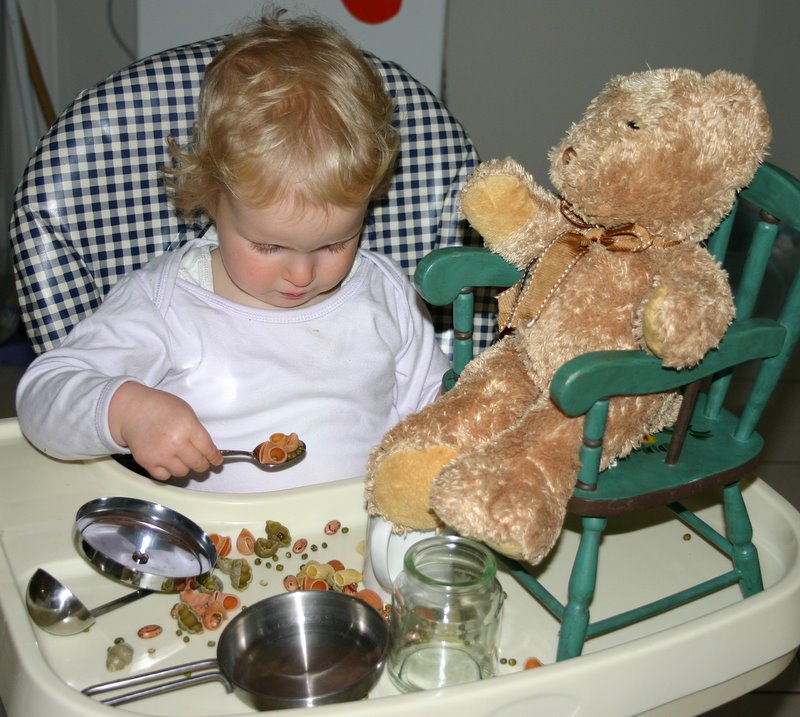
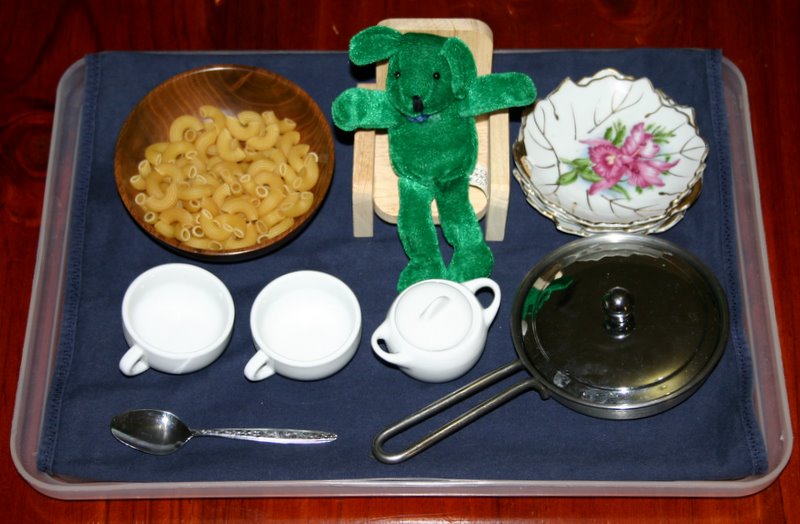
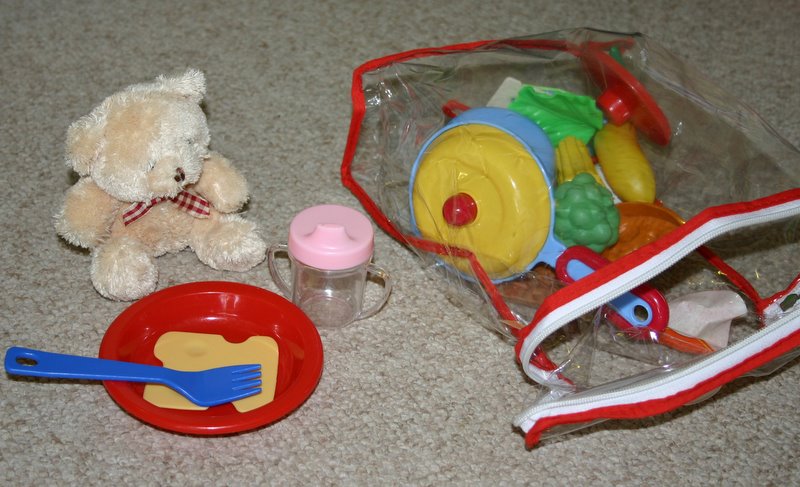
Teddies, cooking equipment and food are such an easy activity to put together for toddlers. Little boys and girls love to pretend cook and feed their willing teddy companions. I use this kind of activity for highchair time, mat timeplaypen time or as a table activity and it’s open-ended nature lends itself to long periods of concentration.

It is easily updated and kept fresh by simply adding some different containers, cooking equipment, food or teddy. It can be a “new” activity every week without much work on your behalf.

Simply look around the house, gather up some interesting containers, plates, cups, cutlery and the like, some kind of “food”, a teddy and you are set. Keep in mind the age of the child and choking hazards. Beans, pasta and jewels are best used under supervision or not at all if a child is very tempted to stick them in ears, noses and mouths or anywhere else they shouldn’t be!

Sometimes I use doll-house sized teddies and doll-house furniture so the teddies can eat at the table, go to sleep in a little bed afterwards and even sit on the couch to relax. I have used plastic food, felt food, wooden food, dry pasta and beans, jewels and rocks and even pictures of food glued onto card from junk mail.

As soon as your little one has begun use their imagination (pretend play) you can introduce this activity. For the very little children, you might even sit and play with it with them first, teaching by your example what to do with each item. Children with older siblings have had this modelled extensively, but a first child will not always know how to play unless you show them. They will of course work it out for themselves, but if you want a young child to use this kind of activity enthusiastically for an extended time, some modelling will go a long way to extending their play.


Routines: Table activity ideas

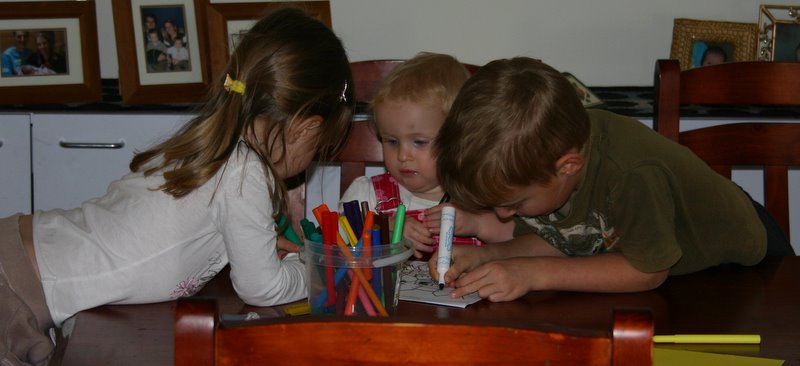
Following on from my post on table activities, I thought it might be helpful to include some ideas of the kinds of things I give my children to do at table time. The toddlers sit in their highchairs to do theirs (see highchair activities) and the older children sit at a variety of tables and occasionally on the floor.

  • Drawing
  • Playdough
  • Stamping (stamp pads and ink stamps)
  • Lacing, threading or beading
  • Puzzles
  • Books
  • Felt board
  • Construction toys
  • Pattern blocks
  • Contact collage
  • Water colour painting
  • Paper craft
  • Sticker books
  • Tea sets and teddies
  • Finger puppets
  • Mini whiteboard and eraser
  • Small chalk board and duster
  • Peg boards
  • Board games
  • Tap tap
  • Scrapbooking
  • Contact pictures
  • Dot-to-dots
  • Mazes
  • Magnadoodle
  • Colour-by-number
  • Stencils

I like to keep table activities separate from our other activities for a couple of reasons:

  • the children only use them during table time, which keeps interest levels high
  • they do not request activities that I do not want them to do at this time; those they may choose from are already set aside for this purpose
  • when I am choosing activities for the toddlers and younger children I don’t have to think of what to get or wander around looking for inspiration, I simply open the cupboard and choose from the selection there, rotating through those that are appropriate
  • the children have ready access and can pack up after themselves
Another time that we find table activities very useful is when we have visitors. We love having friends and family around but the children do get very excited. After some time to talk and play with the visitors (depending on who it is of course) I often direct the children to get out a table activity. It provides a focus, quiets down the excited behaviour and allows the adults to have a conversation. Sometimes Grandparents or other visitors will do the activities with the children (which of course they love) but we find it just gives them a great way to be around the adults and interact appropriately without dominating the entire evening.

Teaching Toddlers to Cut

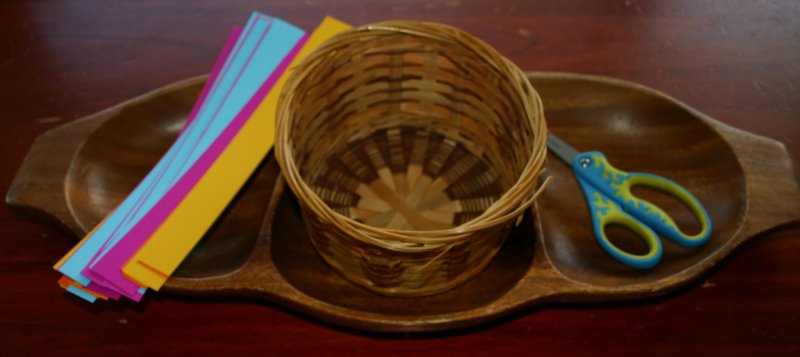
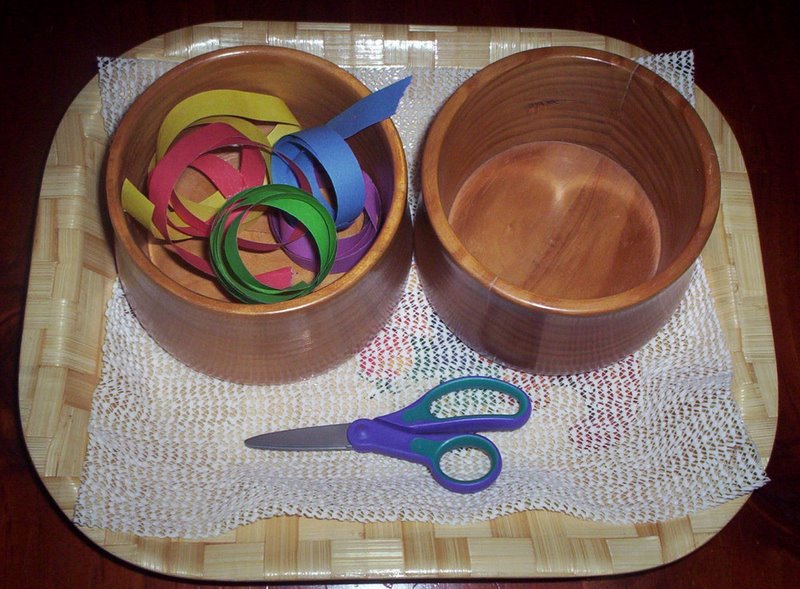
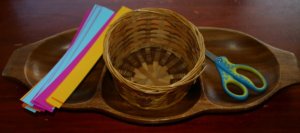
Thin card strips (about one inch) are a good first cutting experience. Parallel and diagonal lines can be added to the strips for a new challenge once random snipping has been mastered.

With older siblings to watch, the littlies are always very keen to cut. Rather than have them constantly nag me or try to grab those scissors and have a go on whatever is handy when I’m not looking, I prefer to spend some time and teach them to cut safely – under supervision! It is great for long stints of uninterrupted school time with older children while young ones are happily occupied on a purposeful and satisfying activity.
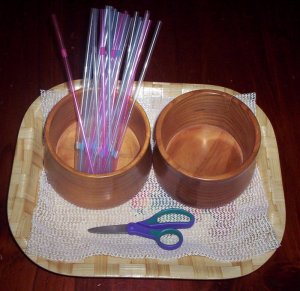
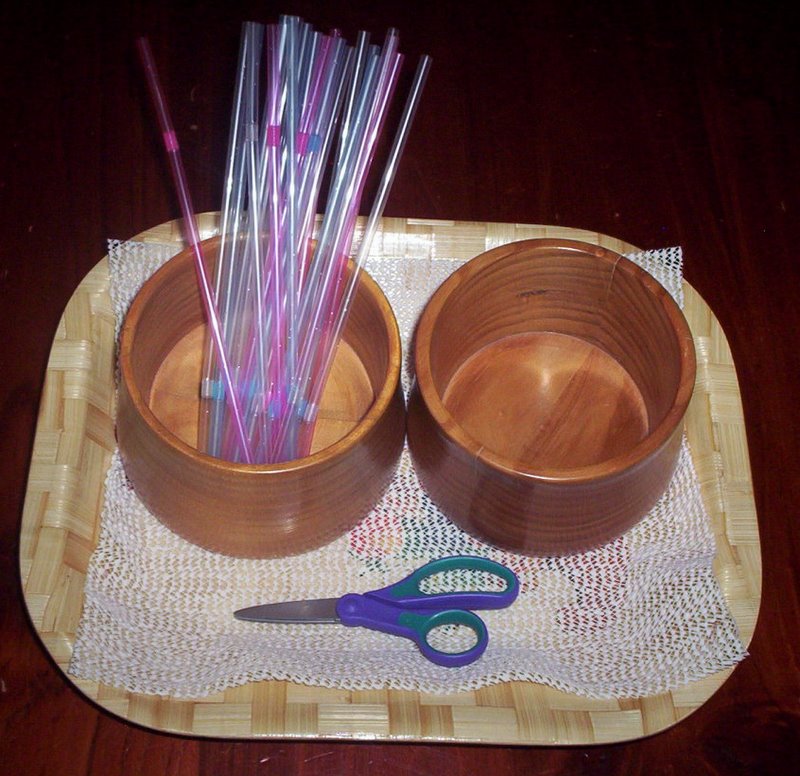
The stiffness of straws makes them easy to hold and cut. Cut straw pieces can be used for threading activities.

A good pair of child-sized scissors is important. Make sure that they have a larger hole in one side of the handle so the all of the child’s fingers can fit inside, rather than the kind that have two equal sized small handle holes. (See the pair in the photo.) I also buy proper scissors straight away, rather than safety scissors, simply because of the frustration children feel when scissors are not sharp enough to cut well. The initial paper based cutting experiences outlined here would be fine with safety scissors, but once they move on to the straws and other materials they may not be sharp enough.
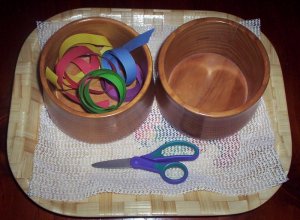
Streamers are more difficult to cut because they do not stand stiffly out from the "holding hand."

Cutting strips should be about one inch wide so that the child can cut completely through the strip in one snip. Sliding scissors forward and making a second snip to cut through paper is a more difficult skill and should be introduced later. Show your child which hole is for the thumb and check that they continue to hold the scissors correctly with the blades facing away from them. Young children tend to turn their hands around, rather than the object they are cutting, which causes them to end up in all sorts of interesting and uncomfortable positions.
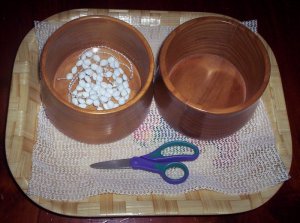
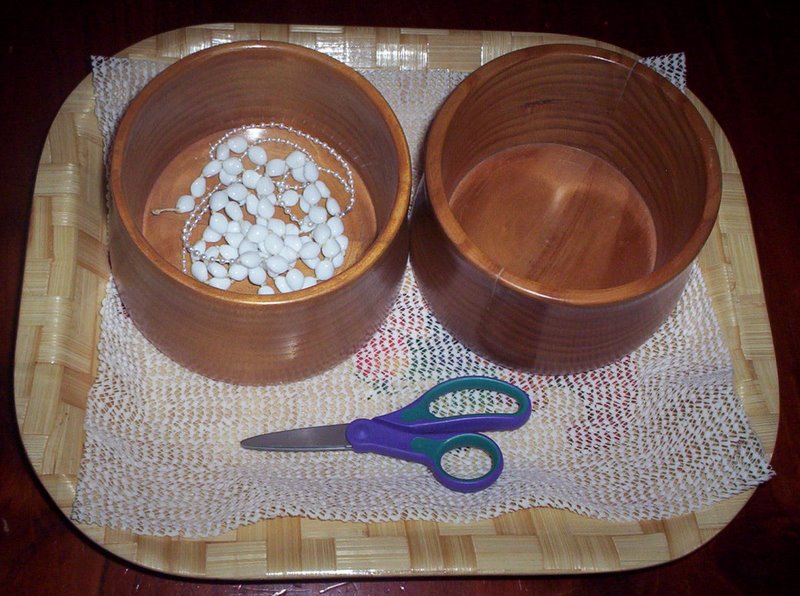
A new level of difficulty. Use cut beads for various craft projects later.

The first material to present is the easiest to cut – one inch strips of thin card stock. Regular paper is too thin and does not stand out stiffly from the child’s hand, flopping down and making it difficult to cut. Remind your child to keep moving their holding hand away from the scissors as they go.
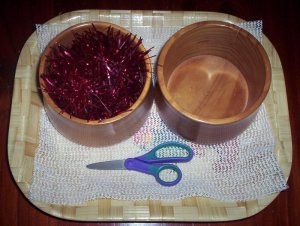
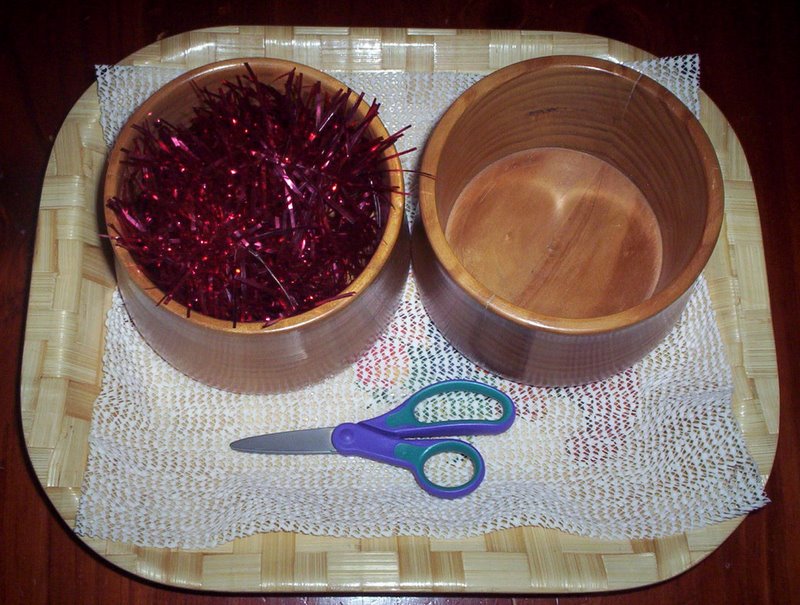
Tinsel makes pretty off-cuts for craft projects. It is quite difficult to handle for beginner cutters though.

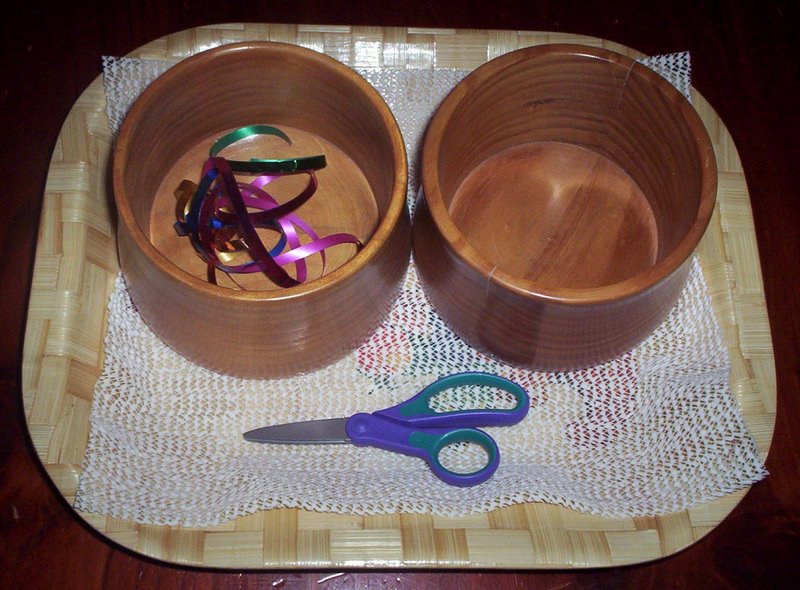
I usually set my cutting activities up in the same format (same tray with basket or two wooden bowls) so that once familiar with the task, there is no need to re-explain what to do when a new material is introduced. Scraps are caught in the empty bowl or basket and can be collected and used for art activities such as gluing or collage.
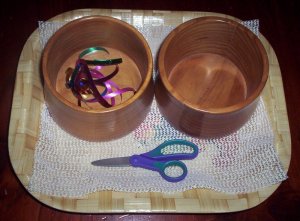
Curling ribbon is also quite difficult to cut because it curls! Add snippets to your collage or other crafty supplies.

When the first cutting experience is presented I demonstrate first, explain what they need to do, then supervise very closely for a time, until I am sure that the child has mastered holding the scissors correctly, points them away from their body, moves their holding hand while cutting, collects their scraps in the container provided and is generally using the scissors in a responsible manner. I am then able to relax my supervision a little and begin to vary the materials once interest in those already available is beginning to wane.

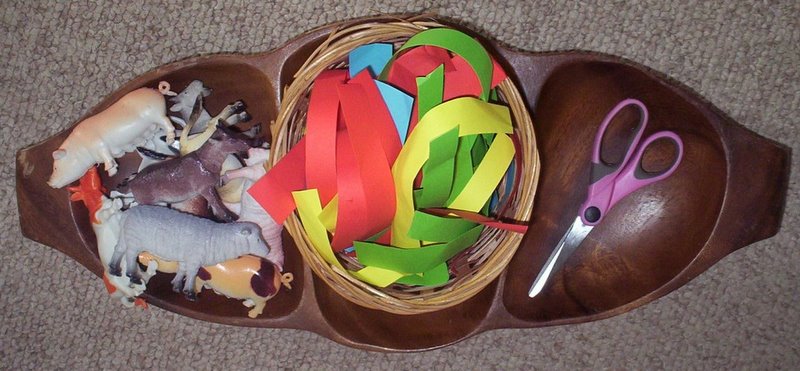
The photographs throughout this article are in a suggested order of difficulty. Stick with thin card strips until the skill is well mastered, moving to thin card strips with straight and diagonal lines to cut along, before introducing the other suggested materials. Moving too fast will simply result in frustration as the material proves too difficult for the child to manipulate and cut successfully. Other items (such as the animals pictured below) can be added to keep interest levels high. Following on from here, a variety of interesting papers, shapes and other materials can be presented, including those that require the child to slide the scissors along and make several cuts. Start with free cutting, straight lines, then curves and other shapes.
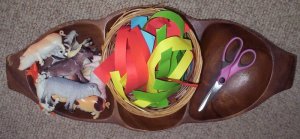
My toddlers love this activity. They focussed for an incredibly long time, cutting the streamers into food for the animals to eat. (The scissors should be presented on the tray with the blades facing away from the child.)

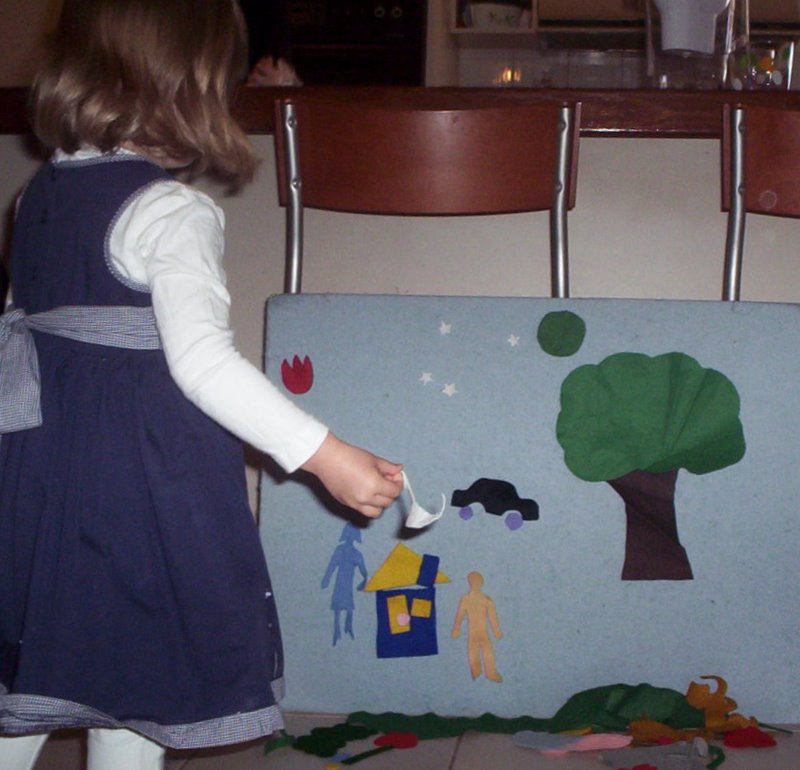
Felt boards

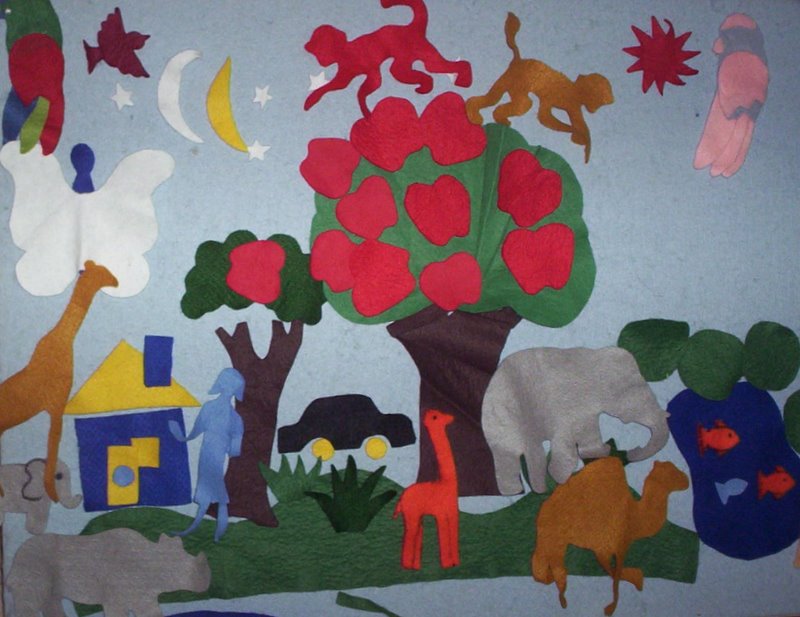
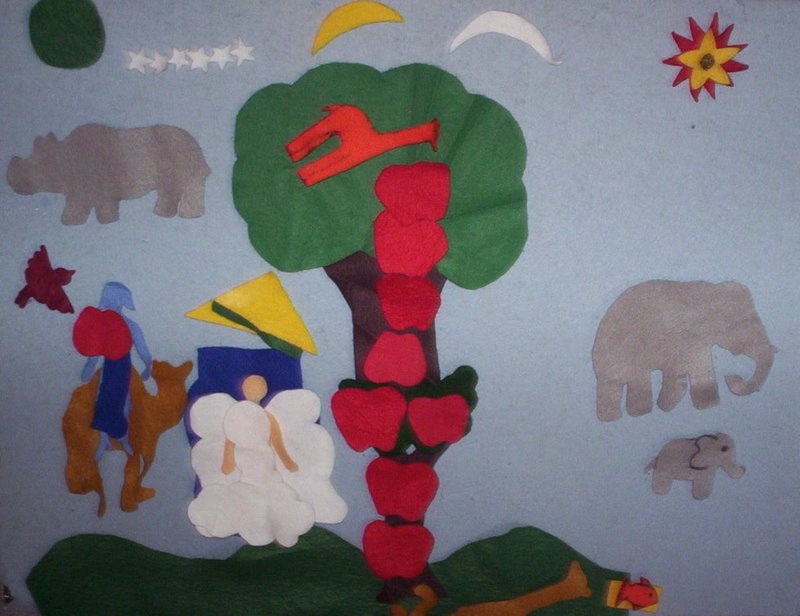
Felt boards are an excellent independent activity. They make great table activities (although usually they use it up against the wall rather than actually at the table) and if you have a small version can also be used for highchair time. They require no special skills and are completely open-ended. Language development is enhanced as children create and tell their own stories using the pieces provided and they will keep a child’s attention for an extended period of time. The children in my family have enjoyed using the felt board and still choose to do so even as they grow older.

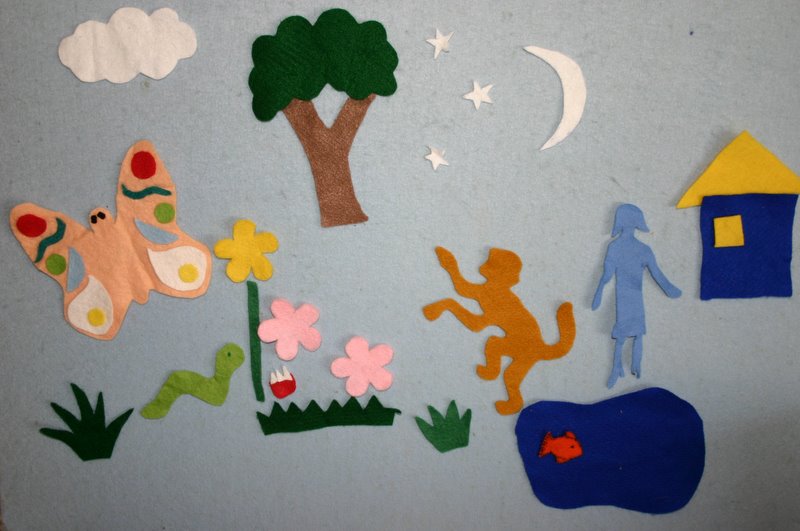
I made this felt board at Uni as a mini assignment and almost failed because the lecturer thought it was too big to be easily portable!! Now I use it all the time and love the fact that it is large enough for one child to set up a large scene or even for two children to play side by side.

To make a felt board, all you need is a very light piece of plywood or very strong piece of card. Box card is no good as it usually has corrugations and will tend to crease along these. Mine is strong card and has stood the test of time, although the corners are getting a little dog-eared now. If I was making it again I’d go for thin, light wood. Buy a large enough piece of felt to cover the board, with enough overlap to stretch around and glue (hot glue gun is ideal) to the back.

Use your imagination to cut out any number of felt shapes. You may like to have a mixture of animals, people and recognizable characters, as well as an assortment of shapes for building houses, gardens and whatever the child thinks up (i.e. squares, circles, triangles, grassy clumps, stems, petals, tree trunks, leaves, circles for flower centres etc. The possibilities are endless)

Basic colouring books are a great source of simple shapes that you can trace and transfer onto the felt pieces to cut out. I also have several sets of felt figures that go with specific stories which allow the children to re-tell these favourites to themselves.

It is helpful to have the board on a slight lean to help the pieces to stick and some people even stick Velcro dots (hook side) on the back side of each piece for extra grip.

That’s it! Easy to make and hours of play for your child. As with most of these activities, start simple. Put out a few basic shapes to begin with, or just the garden pieces, or animals and fences etc. Older children like to have them all at once and create complicated scenes but the toddlers will be more focussed with less to choose from and rotating pieces to keep their interest levels high.

Toddler and table activities: Playdough


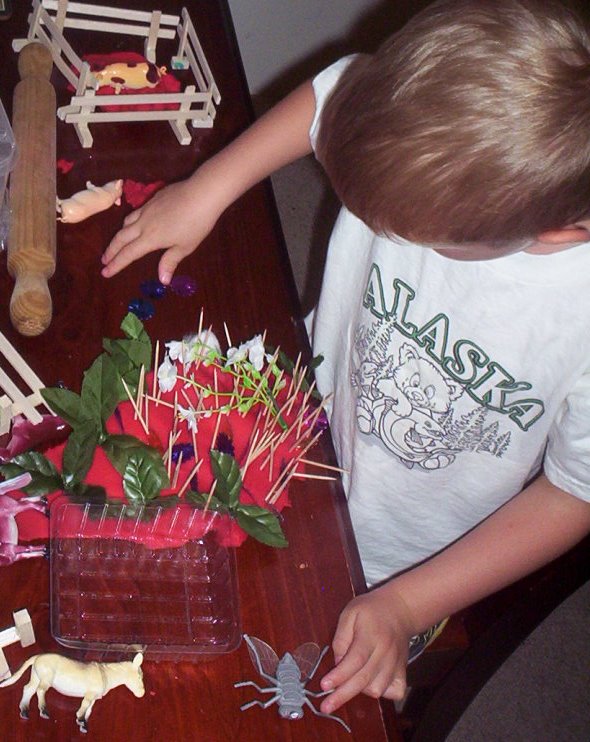
Playdough is a timeless activity that is loved by children of all ages. Whether you buy commercial playdough or make your own, it is an open-ended activity that is suitable for a variety of ages. With the addition of a few new accessories every now and again interest will stay high and children from toddlers upwards will have a ball. I even know a Mum or two who like to get in there and do some modelling of their own!

The highchair is a good place for playdough as the mess is easily cleaned up. A child getting up and down from the table will have dough mashed everywhere. Do not leave the dough out in the air when it is not in use. If it is re-wrapped in a plastic bag and stored in an airtight container it will last for ages. In really hot weather it may need to be stored in the fridge. My last home-made recipe batch would easily be 6 months old and still soft. I have had some batches last almost a year.

One of the biggest readiness factors for playdough is whether your toddler has developed the self-control not to eat it! I make my own so I know at least there is nothing harmful in it, however gobs of salty dough can’t be that good for them so until my children are generally able to resist the urge to put it in their mouth I refrain from letting them use it. (I say generally because surprisingly even an older child will occasionally be caught with that giveaway playdough eating smile!)

Initially, just the experience of touching and squeezing the dough, flattening and pulling it apart and so on will be interesting. Keep it simple and introduce new accessories only when interest has waned and then only one or two items at a time. Biscuit cutters are not very successful until the child has the dexterity to roll out the dough and press the cutter into it – a surprisingly difficult task for a toddler. If you are sitting and playing together with the child they will probably enjoy this but will not be able to do it alone. Store accessories in small containers and rotate to keep interest levels high.

Here is the recipe I use. I couldn’t tell you where it came from but it is a great recipe. Cooked dough always lasts longer than cold mixtures but it does make a mess of your pots. Choose a very large pot, and stir continuously throughout the process. It starts off very liquidy and nothing happens for a while, but once the dough begins to form it will solidify quite quickly. I usually enlist my husband’s help towards the end as it gets very difficult to stir once the dough is forming. Keep going until the dough has lifted away from the edges and there are no wet looking patches left. When you have finished, tip the dough out to cool and fill the pot with water. If you leave it overnight to soak, the next day it will all just lift off. If you try to scrub it clean you will be there for ages.This I know from experience!

Playdough

4 cups flour
1 cup salt
2 tbsp cream of tartar
1 tbsp oil
3 cups water
food colouring – add to water.
  • Mix dry ingredients before adding wet.
  • Heat in saucepan and stir continuously over low heat until a large doughy ball forms.
  • Turn out and roll in a little flour if sticky.
  • Allow to cool. Store in the fridge in an airtight container.

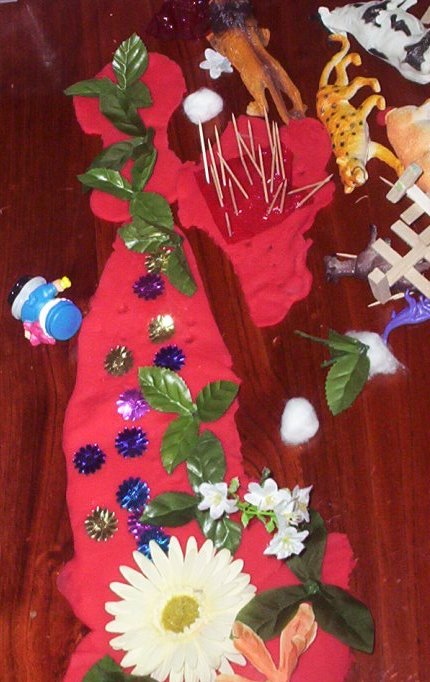
Below is a suggested list of items to add to the dough, beginning with the first toddler introduction and on through to any age child. The order isn’t important, although toddlers are fairly limited as to what they can do alone so I usually stick to this order to begin with. Older children will use whatever is of interest to them.

Toddlers:

  • plain dough
  • dough with glitter in it
  • a bunch of popsticks to poke into it
  • coloured craft matchsticks, also for poking
  • cotton reels, corks, film canisters, lids and other random bibs and bobs
  • plastic farm animals, fences and trees
  • dinosaurs and plastic eggs
  • plastic sea creatures and boats
  • shells
  • plastic bugs and rocks
  • artificial flowers
  • cars and road signs
  • plastic or lightweight hammers
  • rolling pins
  • biscuit (cookie) cutters
  • plastic plates, spoons and cups. (Do not give these to a child who is already tempted to eat the dough!)
  • playdough stamping tools
  • garlic press
  • many other store-bought playdough accessories

Routines: Introducing table activities

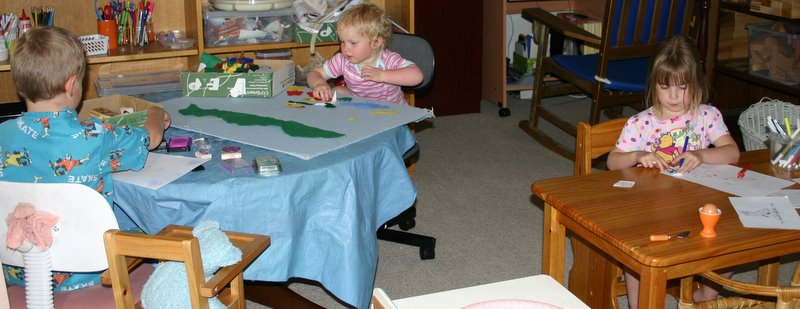
Table time is a valuable addition to any flexible routine. Simply put, it is a time when the children sit at the table (or desk or kitchen bench or wherever) and work on a quiet activity. It is a time set by the parent for this to happen and the activities used are those that are previously approved and designated as table activities.

I choose the activities for my toddlers and younger children and set them out, the middlies usually get to choose between a limited number of activities (“Would you like drawing or felt board today?”) and the older children choose for themselves from activities that they know are already approved table activities. I chat to the children while they play at the table and am able to get the dinner made and served at the same time.

While my routines have changed over the years, for the majority of the time I have used table activities after bath and shower time and just before dinner time. This allows me to get everyone finished in the bathroom and send them to their activities as they are done – no roaming about the house getting into mischief.

I find that it is the transition times, the few minutes here and there between activities, that cause the most trouble and produce the most accidents. Left to their own devices, even for just a few minutes at this time of day, a cranky, tired, hungry toddler or child will rarely make good choices with their time!

The possibilities for table time activities are virtually unlimited. I have a cupboard with shelves that is designated for table activities which makes it easy for the children to see what they can do. Anything you have that can be used independently while sitting at the table is a suitable activity. Some families like to use this time for homework. I’ll be posting some table time ideas soon and of course, any of the toddler, workjob or Montessori ideas I post would be suitable, as long as your child can do them without assistance.