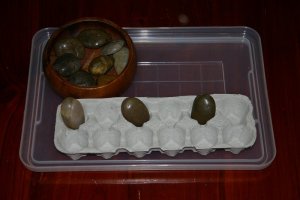
5 Category Sorting: A Montessori style tray activity

(For a detailed introduction on how to introduce sorting to toddlers, it may be helpful to read this post first.)
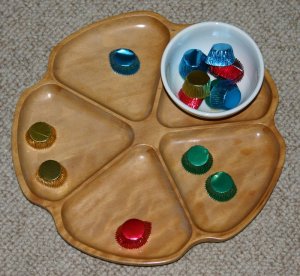
4 colour metal patty-pan sorting.

After my toddlers have been introduced to sorting and have extended their skills to independently identifying 4 or 5 attributes or more, I continue to swap the materials that they sort, but keep the base tray or sorting containers the same. This means that I can change the material and present a “new” tray activity with little or no explanation. The children are immediately familiar with the type of activity and therefore already know what to do.

This is important for when I am teaching older children at the same time as a toddler is working on their Montessori style activities so that I am not constantly interupted. It also means that I am not having to demonstrate or “teach” every single new tray activity – once the format is familiar, I can change materials and off they go.

I set up each term’s worth of tray activities with chosen categories (transferring, sorting, matching, counting, pouring etc.) and simply update the materials as necessary without having to re-introduce each activity.

This wooden tray lends itself well to 4 or 5 attribute sorting and by simply changing the materials I can easily update it throughout a term with very little effort. I also add a pair of tongs, tweezers, scoop or spoon to incorporate fine motor skills and turn it into a transferring activity at the same time, which adds an extra level of challenge to the activity.
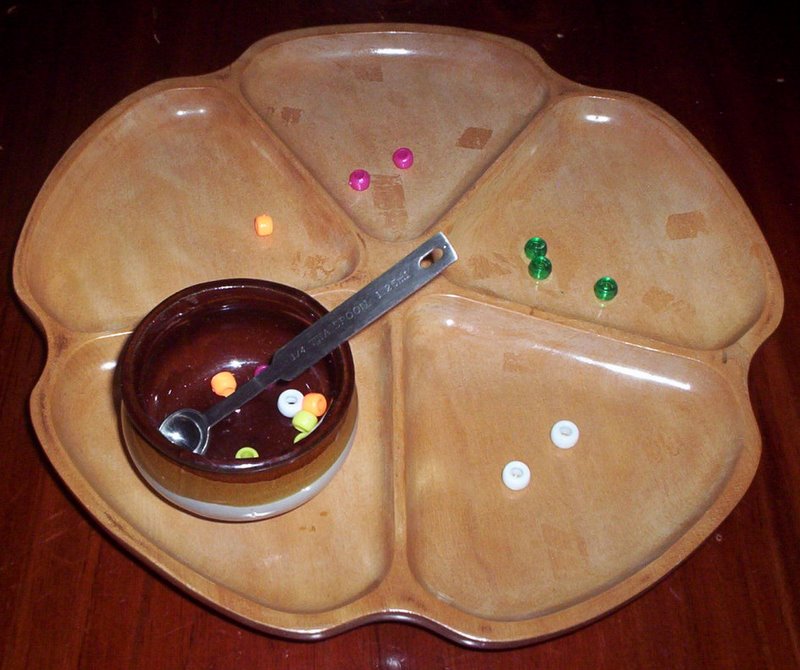
5 colour pony bead sorting. (The bowl needs to be moved off to the side to provide room for the 5th colour.)

5 colour jewel sorting. Most of these objects pose a choking hazard so take care with young children who still like to put things in their mouths. Jewels are so tempting for toddlers to suck on.
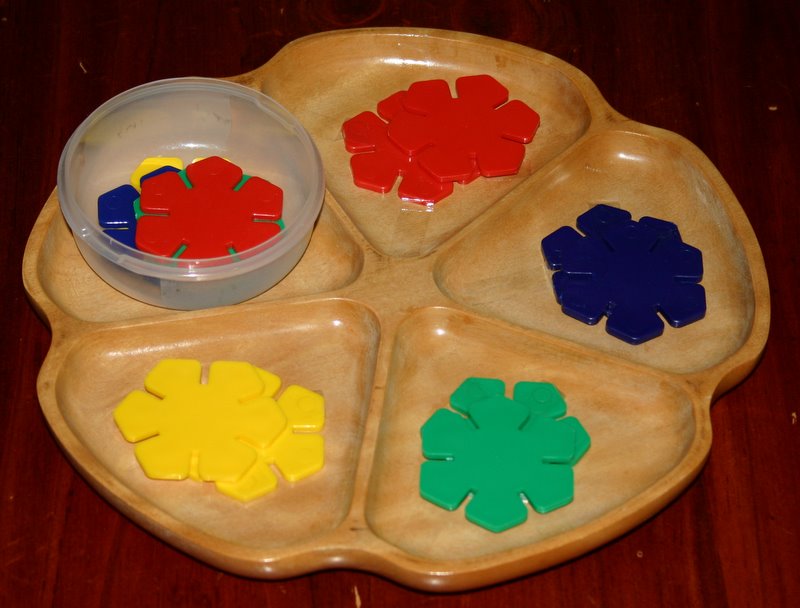
4 colour plastic flower sort.
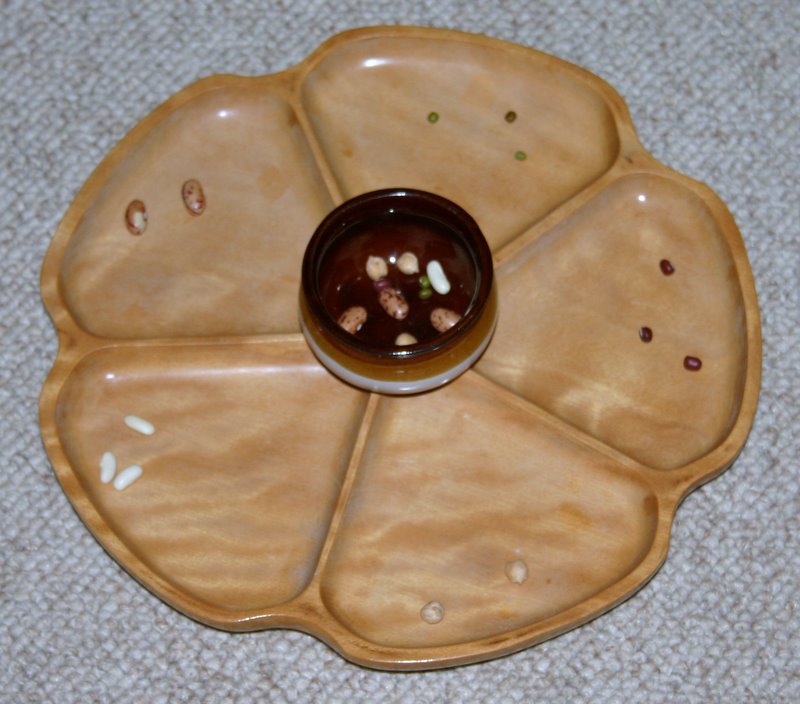
5 types of dried beans.

5 kinds of buttons.
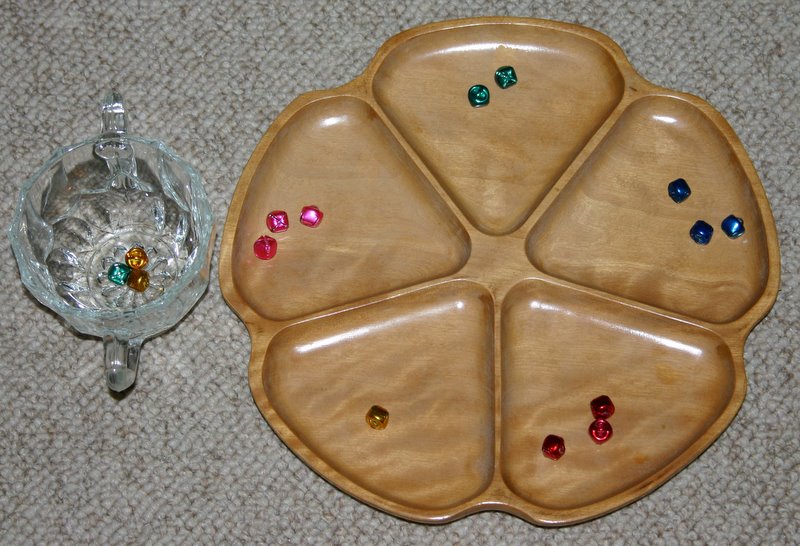
5 colours of Christmas craft bells.

5 kinds of pasta and dried beans.
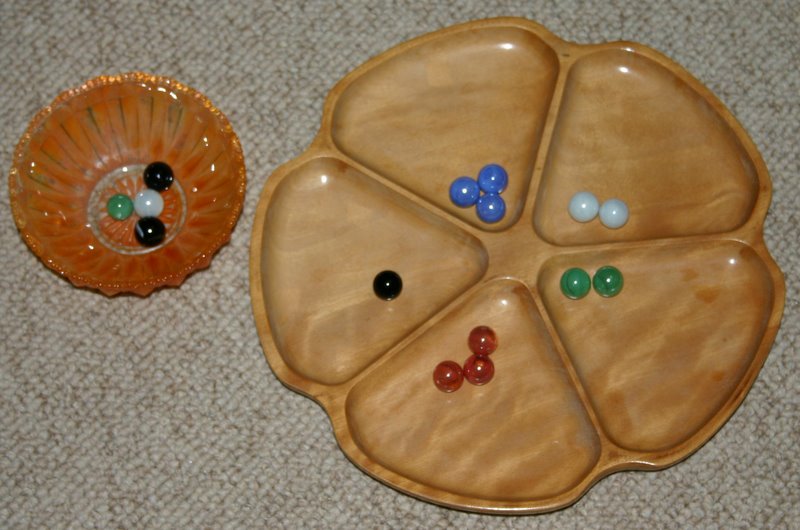
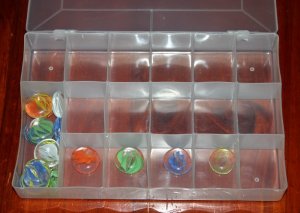
5 coloured marble sort.
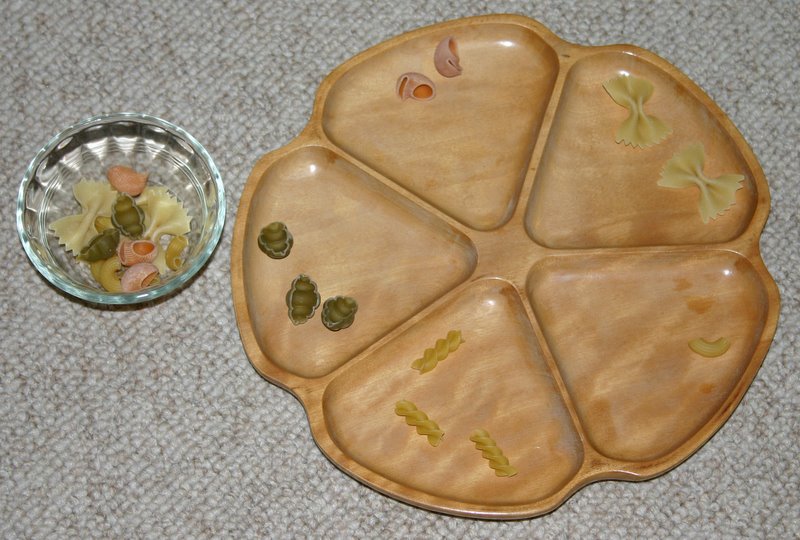
5 kinds of pasta.
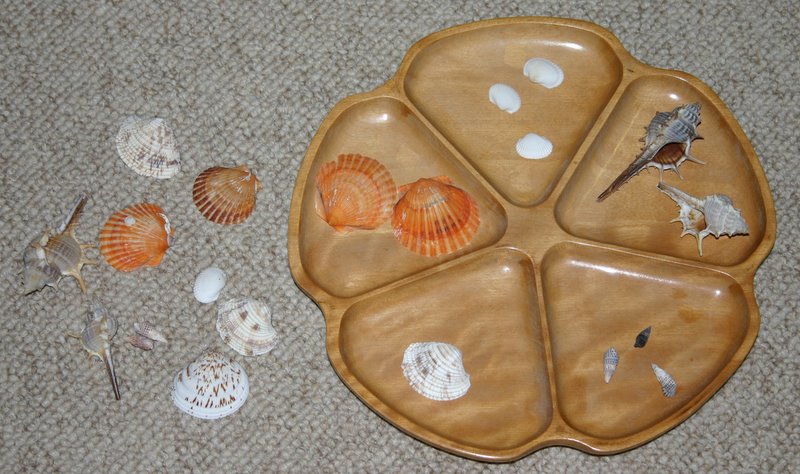
5 kinds of shells.

5 kinds of farm animals.


An introduction to Sorting: A Montessori Style Tray Activity

Two colour bead sort with attribute or category already given. The first exposure to sorting for my toddlers.

Sorting is an important foundational skill requiring reasoning, logic and mathematical thinking. It enables children to be able to look at a group of objects and identify similarities and differences and to make logical decisions as to how to categorise the objects. Sorting skills will transfer into other academic subjects such as science and mathematics later in life.

Sorting frequently covers other basic skills such as colour recognition and counting and if combined with some kind of transfer tool such as tongs, spoons, tweezers or scoops, will develop fine motor skills at the same time.

I usually tape a peg to the top of each container to designate the attribute category until the child is able to determine a category independently.

I present sorting to my toddlers with only 2 categories to begin with, in the form of a Montessori style tray activity. In other words, only 2 attributes are present. These attributes could be the colour of the object, the shape, size, length or thickness etc. but whatever it is, there are only 2 possible ways to sort them. I also tape or glue one of each kind of object to the sorting container so it is essentially a matching activity as well as sorting for their first experience.

Once they are able to look at the objects (in this case beads) and identify the similarities (all beads of the same size and shape) and differences (colour) they are ready to sort according to the attribute they have identified without a pre-determined category to guide them.

We talk about the objects; what they are, what colour, size, shape etc and focus on what is the same and different about them. I then sort the first few objects (talking about their attributes) while the child watches and ask them to see if they can tell why I am separating them as I am. If they are able to tell me, I ask them to see if they can sort the rest or simply explain why I have sorted as I did and demonstrate further before asking them to have a go.

Once they are able to sort by the two attributes with a category already given (one of each object taped to the container) I present two attribute sorting again without the categories already chosen and help the child to identify the two attributes themselves and sort accordingly.

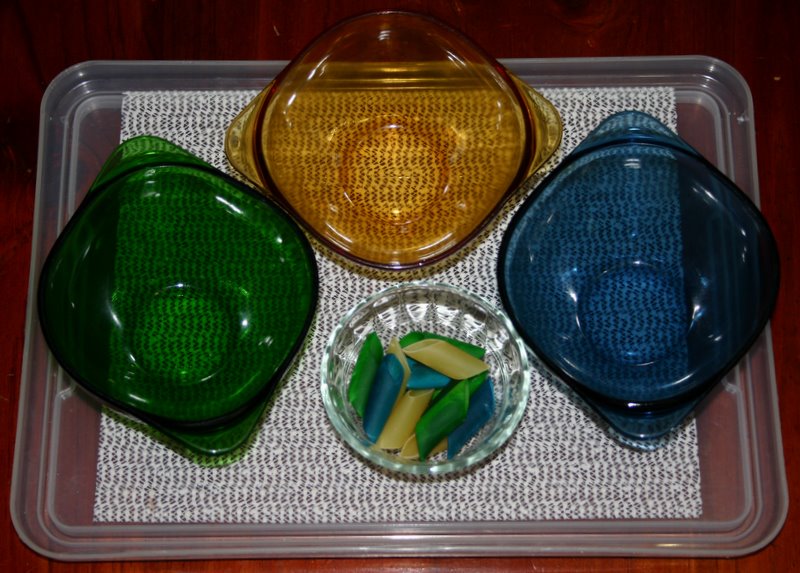
An example of 3 category/attribute sorting. Generally colour is an easy way for toddlers to sort as a beginning skill. More abstract attributes can be introduced later.

After they have mastered sorting 2 attributes with a variety of objects, I extend the possible attributes or categories to 3, 4, 5 or more attributes, until they are able to sort any objects set before them and justify their reasoning.

In this example the coloured bowls determine the category or attribute so it doubles as a matching activity also.

Routines: Table activity ideas

Following on from my post on table activities, I thought it might be helpful to include some ideas of the kinds of things I give my children to do at table time. The toddlers sit in their highchairs to do theirs (see highchair activities) and the older children sit at a variety of tables and occasionally on the floor.

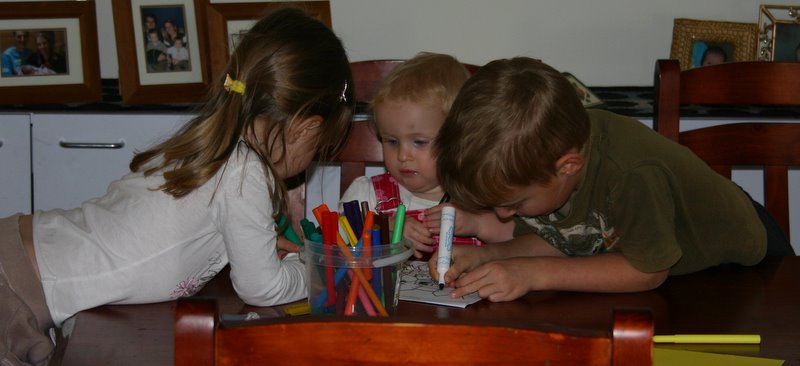
  • Drawing
  • Playdough
  • Stamping (stamp pads and ink stamps)
  • Lacing, threading or beading
  • Puzzles
  • Books
  • Felt board
  • Construction toys
  • Pattern blocks
  • Contact collage
  • Water colour painting
  • Paper craft
  • Sticker books
  • Tea sets and teddies
  • Finger puppets
  • Mini whiteboard and eraser
  • Small chalk board and duster
  • Peg boards
  • Board games
  • Tap tap
  • Scrapbooking
  • Contact pictures
  • Dot-to-dots
  • Mazes
  • Magnadoodle
  • Colour-by-number
  • Stencils

I like to keep table activities separate from our other activities for a couple of reasons:

  • the children only use them during table time, which keeps interest levels high
  • they do not request activities that I do not want them to do at this time; those they may choose from are already set aside for this purpose
  • when I am choosing activities for the toddlers and younger children I don’t have to think of what to get or wander around looking for inspiration, I simply open the cupboard and choose from the selection there, rotating through those that are appropriate
  • the children have ready access and can pack up after themselves
Another time that we find table activities very useful is when we have visitors. We love having friends and family around but the children do get very excited. After some time to talk and play with the visitors (depending on who it is of course) I often direct the children to get out a table activity. It provides a focus, quiets down the excited behaviour and allows the adults to have a conversation. Sometimes Grandparents or other visitors will do the activities with the children (which of course they love) but we find it just gives them a great way to be around the adults and interact appropriately without dominating the entire evening.

Make your own toddler toys: Jar of spoons

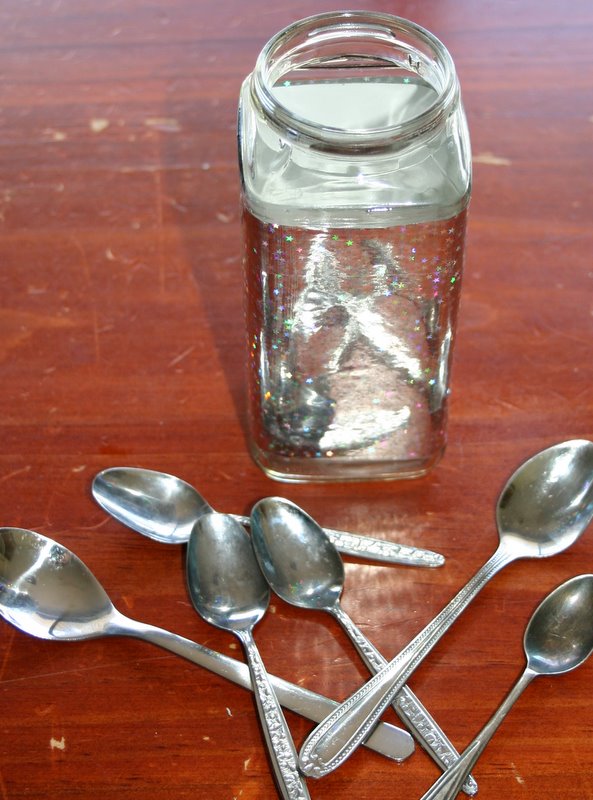
I love this kind of activity. It takes approximately 30 seconds to put together and older babies and toddlers love it! Obviously being glass, care must be taken so that it will not drop onto a hard surface. I use my jar for highchair time, in the playpen or for mat time as these all occur over carpeted floors. You may prefer to replace the glass with something metal but make sure it makes a great sound as that is part of the attraction.

DESCRIPTION:

  • The child drops the spoons into the jar which makes a satisfying jangle and tips them back out again. That’s it!

CATEGORY/SUBJECT AREA:

  • Baby and toddler toys – beginning posting

CONCEPT/SKILL:

  • Fine motor development
  • Concentration

EQUIPMENT & MATERIALS:

  • 1 jar
  • a bunch of small spoons

Toddler and table activities: Playdough


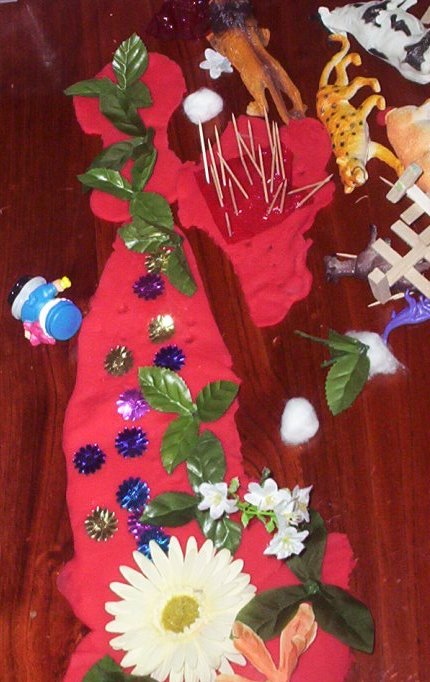
Playdough is a timeless activity that is loved by children of all ages. Whether you buy commercial playdough or make your own, it is an open-ended activity that is suitable for a variety of ages. With the addition of a few new accessories every now and again interest will stay high and children from toddlers upwards will have a ball. I even know a Mum or two who like to get in there and do some modelling of their own!

The highchair is a good place for playdough as the mess is easily cleaned up. A child getting up and down from the table will have dough mashed everywhere. Do not leave the dough out in the air when it is not in use. If it is re-wrapped in a plastic bag and stored in an airtight container it will last for ages. In really hot weather it may need to be stored in the fridge. My last home-made recipe batch would easily be 6 months old and still soft. I have had some batches last almost a year.

One of the biggest readiness factors for playdough is whether your toddler has developed the self-control not to eat it! I make my own so I know at least there is nothing harmful in it, however gobs of salty dough can’t be that good for them so until my children are generally able to resist the urge to put it in their mouth I refrain from letting them use it. (I say generally because surprisingly even an older child will occasionally be caught with that giveaway playdough eating smile!)

Initially, just the experience of touching and squeezing the dough, flattening and pulling it apart and so on will be interesting. Keep it simple and introduce new accessories only when interest has waned and then only one or two items at a time. Biscuit cutters are not very successful until the child has the dexterity to roll out the dough and press the cutter into it – a surprisingly difficult task for a toddler. If you are sitting and playing together with the child they will probably enjoy this but will not be able to do it alone. Store accessories in small containers and rotate to keep interest levels high.

Here is the recipe I use. I couldn’t tell you where it came from but it is a great recipe. Cooked dough always lasts longer than cold mixtures but it does make a mess of your pots. Choose a very large pot, and stir continuously throughout the process. It starts off very liquidy and nothing happens for a while, but once the dough begins to form it will solidify quite quickly. I usually enlist my husband’s help towards the end as it gets very difficult to stir once the dough is forming. Keep going until the dough has lifted away from the edges and there are no wet looking patches left. When you have finished, tip the dough out to cool and fill the pot with water. If you leave it overnight to soak, the next day it will all just lift off. If you try to scrub it clean you will be there for ages.This I know from experience!

Playdough

4 cups flour
1 cup salt
2 tbsp cream of tartar
1 tbsp oil
3 cups water
food colouring – add to water.
  • Mix dry ingredients before adding wet.
  • Heat in saucepan and stir continuously over low heat until a large doughy ball forms.
  • Turn out and roll in a little flour if sticky.
  • Allow to cool. Store in the fridge in an airtight container.

Below is a suggested list of items to add to the dough, beginning with the first toddler introduction and on through to any age child. The order isn’t important, although toddlers are fairly limited as to what they can do alone so I usually stick to this order to begin with. Older children will use whatever is of interest to them.

Toddlers:

  • plain dough
  • dough with glitter in it
  • a bunch of popsticks to poke into it
  • coloured craft matchsticks, also for poking
  • cotton reels, corks, film canisters, lids and other random bibs and bobs
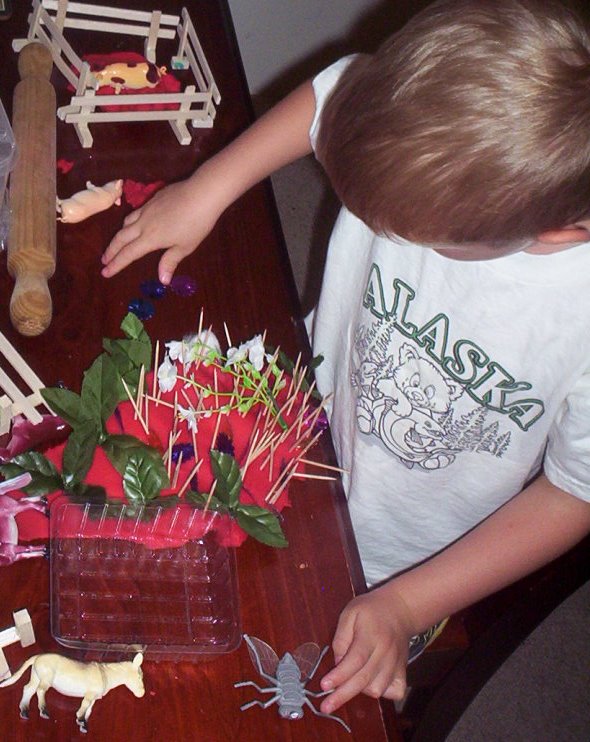
  • plastic farm animals, fences and trees
  • dinosaurs and plastic eggs
  • plastic sea creatures and boats
  • shells
  • plastic bugs and rocks
  • artificial flowers
  • cars and road signs
  • plastic or lightweight hammers
  • rolling pins
  • biscuit (cookie) cutters
  • plastic plates, spoons and cups. (Do not give these to a child who is already tempted to eat the dough!)
  • playdough stamping tools
  • garlic press
  • many other store-bought playdough accessories

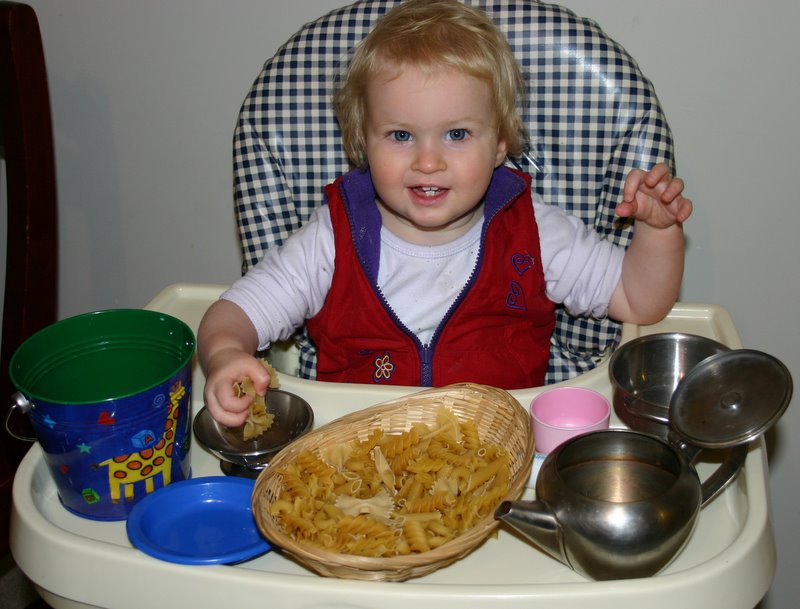
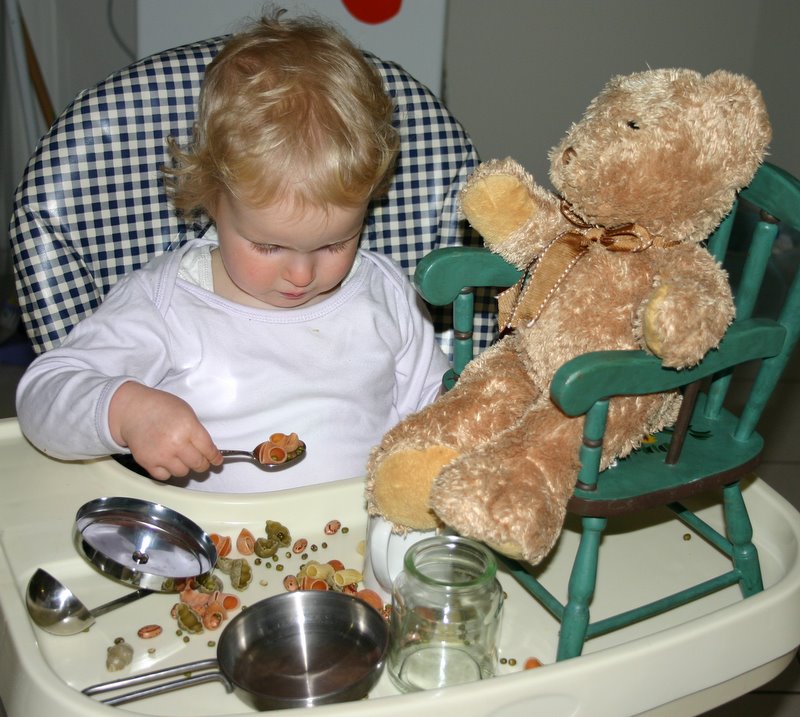
Highchair time: home-made toddler activities – pasta play

One of the easiest “home-made” toddler activities for high-chair time is pasta play. Raid the pantry for some interesting pasta shapes and gather a bunch of little containers of different varieties and you’re done. While most toddlers will have the self-control not to put the pasta in their mouths, keep an eye on them simply because of the choking hazard it could pose. As far as them having a bit of a chew though, there’s really no problem – it is just pasta!

If you start simply, changing materials as interest wanes, there are unending ways to extend this kind of play. Some ideas are:

  • a cup of pasta and cake tin to tip it into. (Tipping out and refilling a cup is surprisingly absorbing for a toddler and a good introduction to dry pouring.) The tin also makes a satisfying  sound as the pasta is poured.
  • a cup of pasta, cake tin and scoop. The child now learns how to scoop the pasta back into the cup from the tin.
  • a container of pasta and a second container to transfer it into. Transferring is another practical life skill that develops fine motor control. Vary this by changing the kid of tool used for the transfer (spoons, scoops, tongs, ladles etc.)
  • a jug and something to pour into.
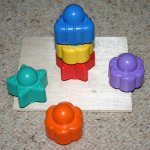
  • a variety of different sized containers
  • glass containers (It is interesting for the child to be able to see the container filling up from the outside.) Think about the floor underneath – glass and tiles do not mix!
  • add a teddy with a plate and spoon
Pasta play is an open ended activity that can be independently accomplished and will keep a toddler’s interest for a significant length of time, particularly if you are regularly training them to expect high-chair time throughout the day. Use the time to wash the dishes, make the dinner, homeschool your older children or whatever it is you need to get done.

Routines: Commercial activities for highchair time

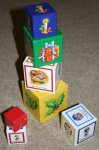
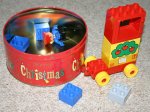
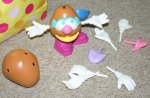
Following on from this weeks posts about highchair time and highchair time activities for babies, here are some pictures of commercial toys I use with my babies and toddlers for highchair times. Go for a walk around the house and see what there is to collect. If you have older siblings, you’ll be surprised what you can borrow from them to keep a toddler happily playing.

(Home-made practical life and other toddler activities will be posted individually from time to time under workjobs and Montessori activities.)

Routines: Highchair time activities for babies

After the post about highchair time yesterday, I thought it would be timely to follow-up with some suggestions as to what to give an older baby or toddler in a highchair to hold their attention and promote the concentration and patience we are working on.

I like to think of toy types in phases of development:

1 to 12 month old babies love toys that are good to mouth and sensory based toys that make sounds, feel interesting and look visually stimulating. Obviously within this age range there is a big difference in the kind of baby toy they are interested in, but in essence they are all “baby” toys for holding, touching, pulling, sucking, crinkling etc.

12 to 20 months olds enter the transition zone. Over the next few months the baby toys begin to lose their appeal and imaginative play has not yet kicked it properly. This means that the shiny red car is looked at, possibly mouthed for a minute or two, shaken, the wheels are spun around a couple of times, possibly pushed along and interest is gone. It doesn’t DO anything exciting and the child does not yet identify it as a small version of a car and drive it around making car noises because the pretend play element is not there yet. What they do like are toys that respond to their actions – that DO something. Pull a lever and an animal pops out, pop a ball in and music plays, tap the pegs and the turtle’s head pops out. This is the hardest age to supply toys for, because interest dies very quickly and those bright, colourful and interactive toys are expensive. You can join a toy library, swap with friends or make your own. (Lots of ideas coming soon.)

20 to 24 month olds and up are beginning to use their imagination, especially if they have siblings or a willing parent to show them how to play. They will begin to have tea parties, feed a teddy, set up the train tracks and create their own pretend play situations. The possibilities open up enormously and this age is so much easier to cater for.

In general, there are some great baby and toddler toys that can be purchased, however interest in most is short-lived as the child moves on to the next developmental level or simply has seen it enough to no longer be attracted to it.

Why not capitalise on the toddler’s natural attraction to learning new skills, copying Mum and Dad and using “real” things around the house to put together your own activities. They are cheap to make and can be disassembled once interest has passed. Important practical life skills can be introduced that will be used every day, many of them developing fine motor skills that will be vital for pencil grip and general hand control later on.

Here is my list of activities to make for babies with instructions for each. Practical life and general toddler activities will be posted individually from time to time and categorized under workjobs and Montessori activities so keep an eye out for them.

Routines: Highchair time

Do you want your baby or toddler to be able to sit and focus for an extended length of time? Do you want them to be able to sit and wait patiently during an unexpected delay in a public situation? Do you want time to tidy up the kitchen after meals, clear and wipe down the table and move to the next activity of the day without leaving a trail of devastation that needs to be cleaned up later?

Like all behaviours and character traits, we must actively work to build patience and concentration in our children. Highchair time is a practical way to achieve this goal with our little ones. It is easy to consistently implement and work into the daily routine without having to change much at all.

After each meal is finished, simply wipe up your child and hand them a book to read or small toy to play with. Around 20 minutes is a good time to aim for and if put into place after breakfast, lunch and dinner, gives you three daily training periods to work on these skills.

Initially, your little one may not be thrilled with Mum’s new plan and a common response will be to cry, complain, whine, throw the books and toys down and other such behaviours. If you ignore this kind of behaviour and simply go about cleaning up the kitchen, you will find that over the next few days, your child will be showing great strides towards happily sitting and concentrating on whatever it is you have chosen to give them.

If you pick up toys that are thrown down, then a very amusing game of fetch will be instigated. You may leave a child for 5 minutes and then return a dropped toy, instructing them that they need to stay in the highchair until Mummy is ready to get them down. If it is dropped again, leave it there. They will soon come to the conclusion that it is better to have something to do than nothing at all and keep what they have been given.

You may need 3 or 4 little toys or books and change them over every 5 minutes or so to keep their interest,  however this should be in Mum’s timing, not the child’s.

If you have heard about the 4 personality types, you will know that a choleric child loves to be in charge. A lot of the battles you have throughout the day and at bedtime with any child, particularly the choleric child, will be eliminated by instigating a parent led routine throughout the day, rather than allowing your young child to plan their own day or giving them large blocks of free time to fill.

An excellent resource for routine planning is Terrific Toddlers by Mel Hayde. It is my “must have” toddler and young child training book and I have gone back to it over and over. It is an easy read but is full of wisdom and excellent advice that will enable you to love the toddler years and eliminate the “terrible two” syndrome that everyone talks about. I will be posting ideas of activities to give your little one during highchair time over the next couple of days.

One-to-one correspondence

One-to-one correspondence is a basic mathematical skill and without it children are unable to count accurately. To be able to say one number to one object seems very simple, but anyone who has ever watched a child who is in the very beginning stages of counting will have seen them saying numbers out loud while pointing or touching objects, without those numbers actually matching up with the objects being counted!

Another simple developmental counting error you will see is a child who counts the same object more than once or skips objects entirely. Presenting activities that allow opportunity in a self-correcting way to practise this one-on-one correspondence helps put in place the experience necessary for successful counting.

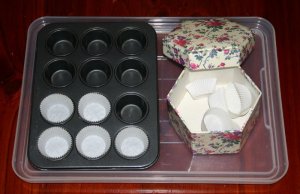
They are self-correcting in that there should be only one object in each compartment and running out or having some left over allows the child to see that an error has been made. These activities can be presented to children anywhere from around 18 months and upwards, depending on the developmental level of the child.