

After updating our preschool activities last week it was time to do the same for my two-and-a-bit year old. I was so thrilled when he was old enough to use some of our many table activities and they did keep him going for ages, but after almost two months with the same tubs, he was ready for a change.
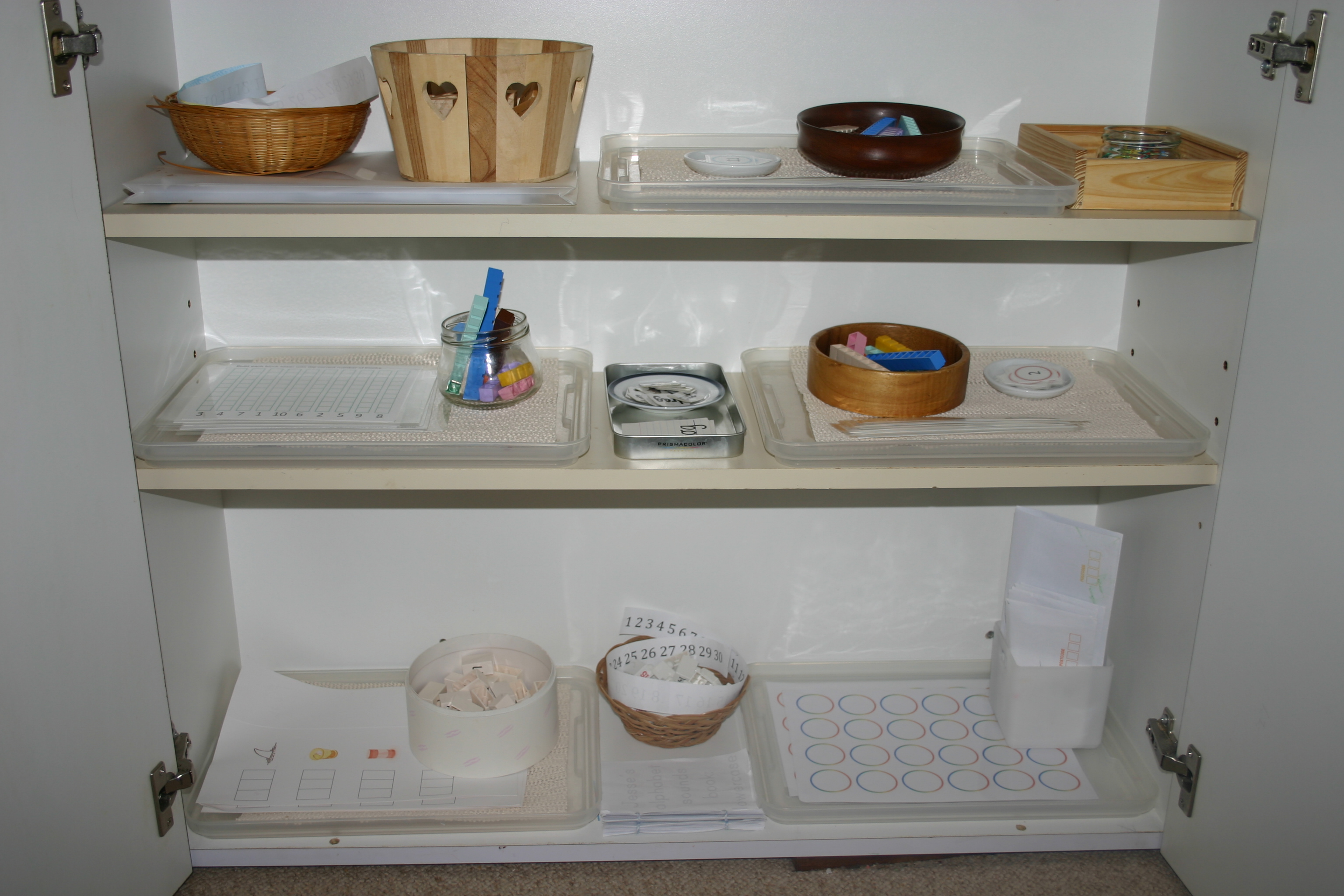
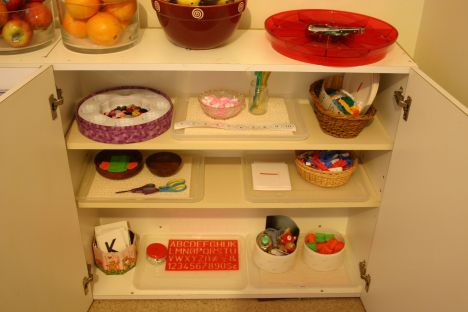
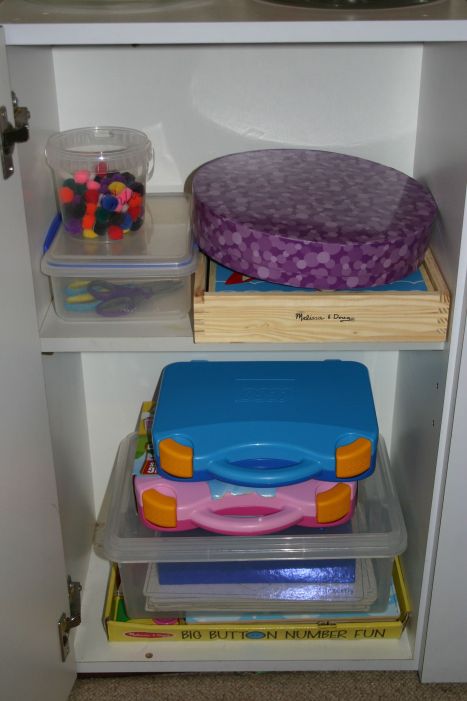
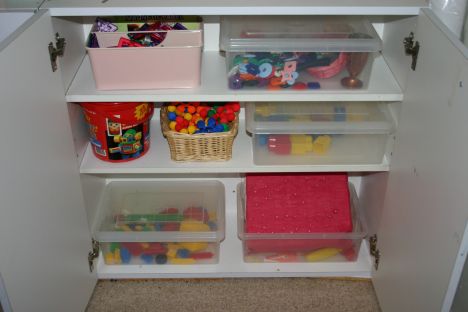
This is his activity cupboard after the change-over. We use these activities after breakfast while he is still in his high-chair and occasionally before dinner, also in the highchair. Learning to sit, focus and concentrate for an extended period is such a valuable skill for later in life and so helpful for those situations when you need a toddler to stay in one place and play quietly (think restaurant.) See this post for more information on highchair time.
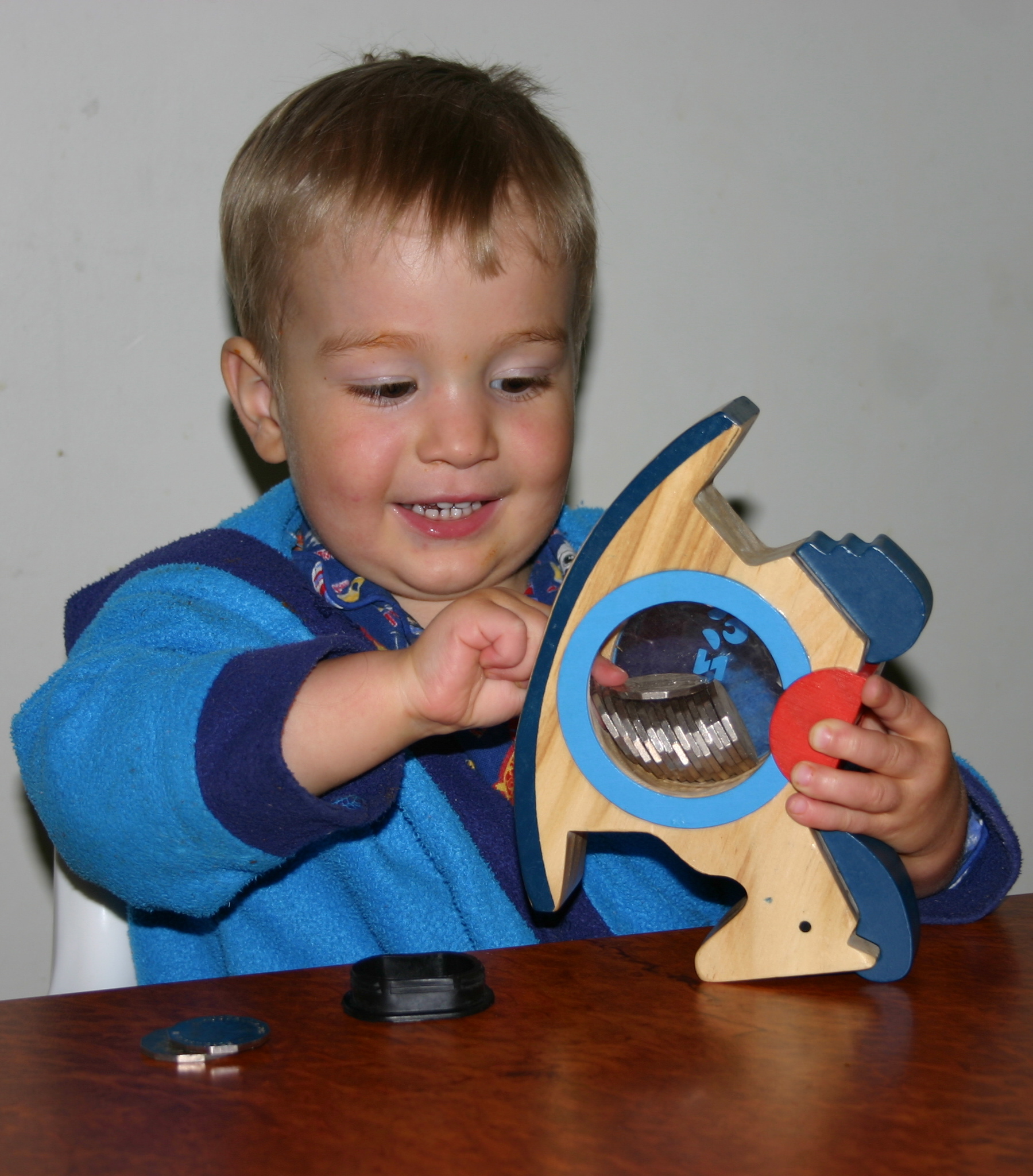
A gift from Nan and Grandad became our first new activity. Posting 50 cent pieces through the money-box slot, then removing the rubber stopper and taking them out again was a hit.
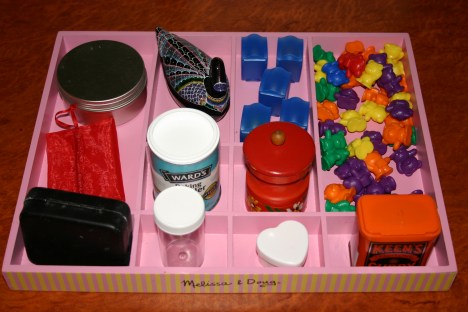
This opening and closing containers activity tray was my favourite so I was pleased to see he like it too. Open-ended play opportunities will keep a toddler going for quite some time.
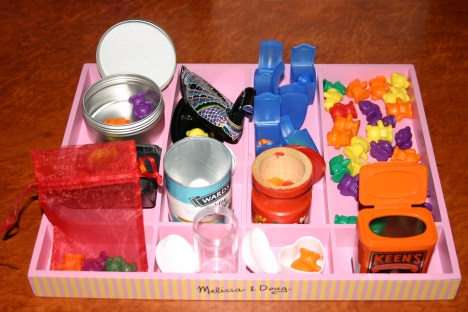
I had placed a couple of the counting bears in each container to start with and part of the fun was opening each one to discover the bear hiding there.
This tub holds different kinds of pegs to slide or peg on to containers or place into the popsicle mold. Pegging is another great fine-motor skill. Be sure to choose pegs that do not have a stiff spring or little ones will not have the strength to open them.
(This activity did not grab my little guy at all. Activities that are too easy or too hard will not keep young children going for long. Knowing where your child is at developmentally is important. If you aren’t sure, try it anyway but be prepared to leave it for later. I have tried certain skills that didn’t work at all, but within just a few months the same child found it riveting. This one will come back out in a little while.)
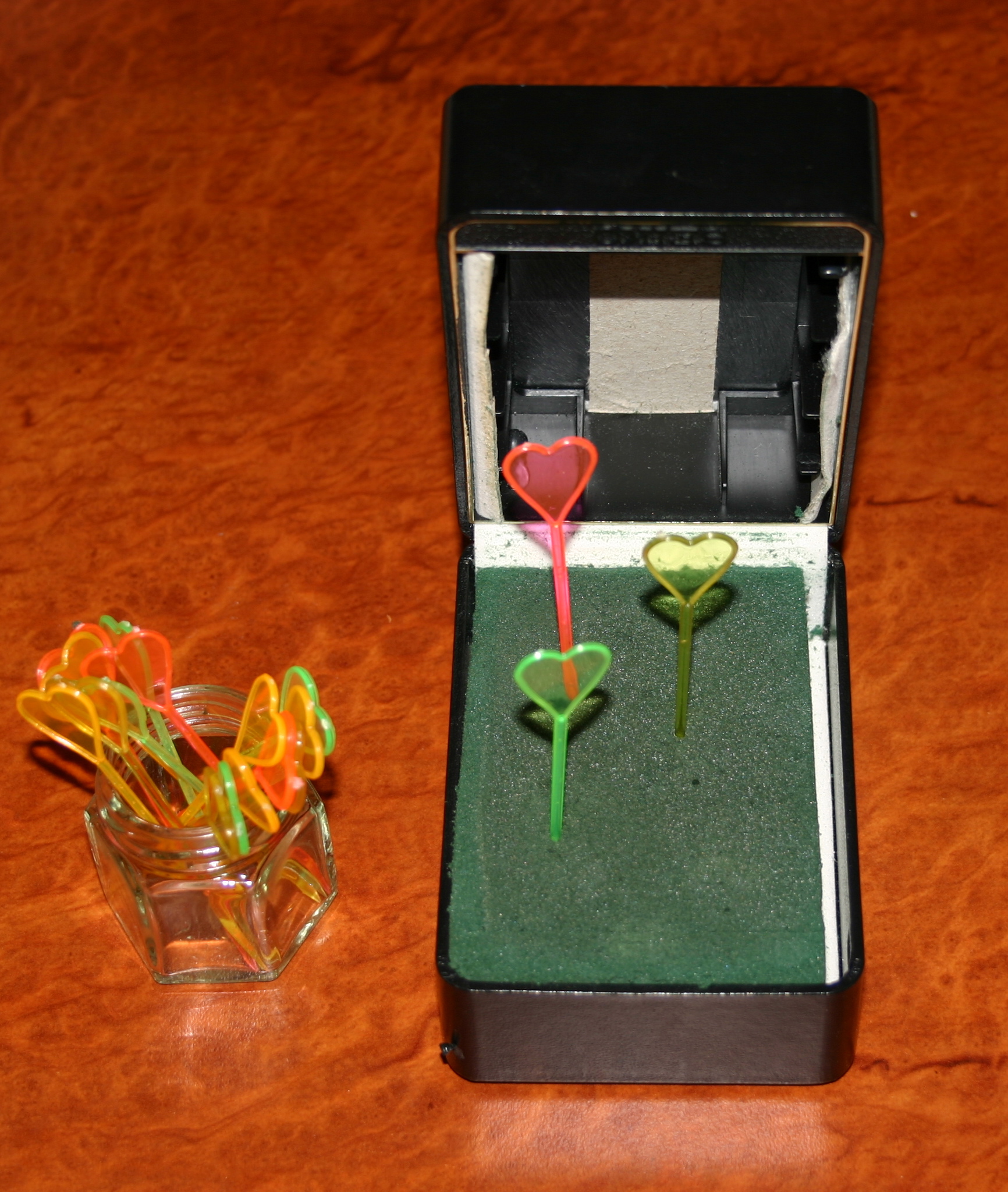
Poking toothpicks into florist’s foam. I have since been told that the grey foam should crumble less so if you are purchasing it specially for this purpose, then go grey! The green block I have is slowly disintegrating and does shed green dust.
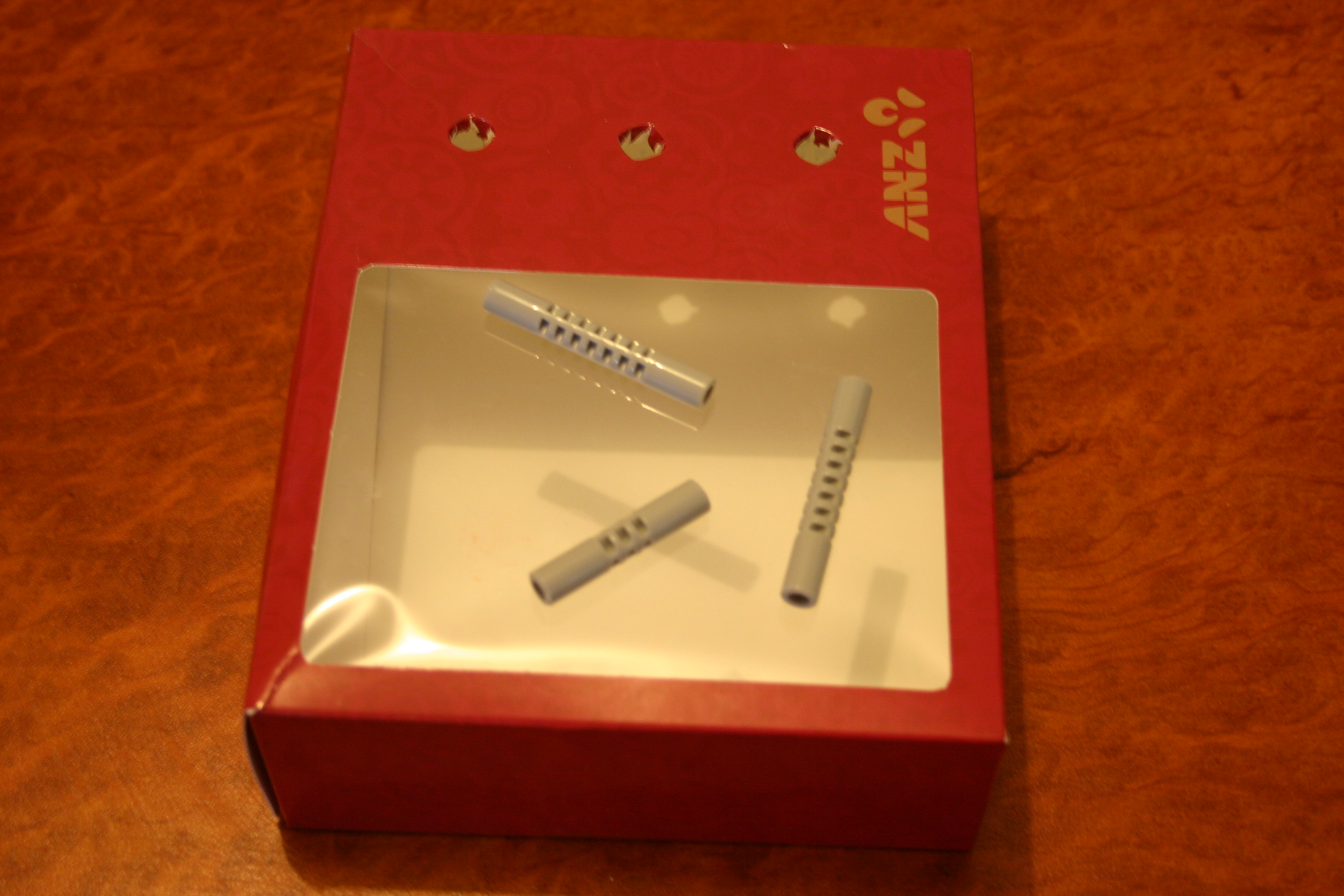
This activity is a little young for him but as the money-box packaging was perfect I decided to introduce it again. All he needs to do is poke the plastic sticks (penne pasta, straws etc.) through the holes then tip them out of the box and go again. This is fascinating for babies once they have the hand control to do it and will keep a toddler interested for a little while. The fact that the box has a window adds so much more to the interest level as they can watch the items drop into the box.
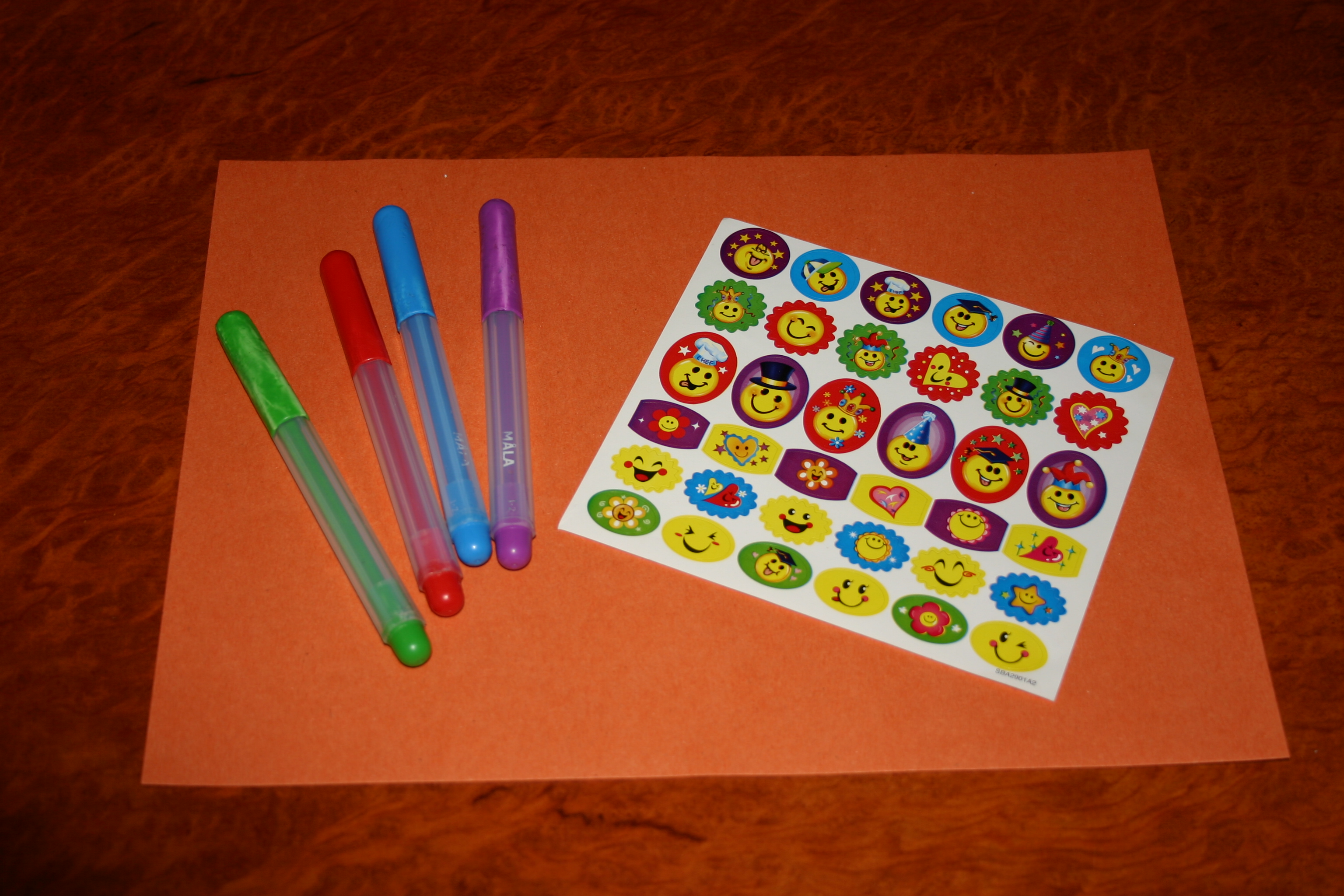
After watching older siblings draw and use stickers, he has an early interest in these.
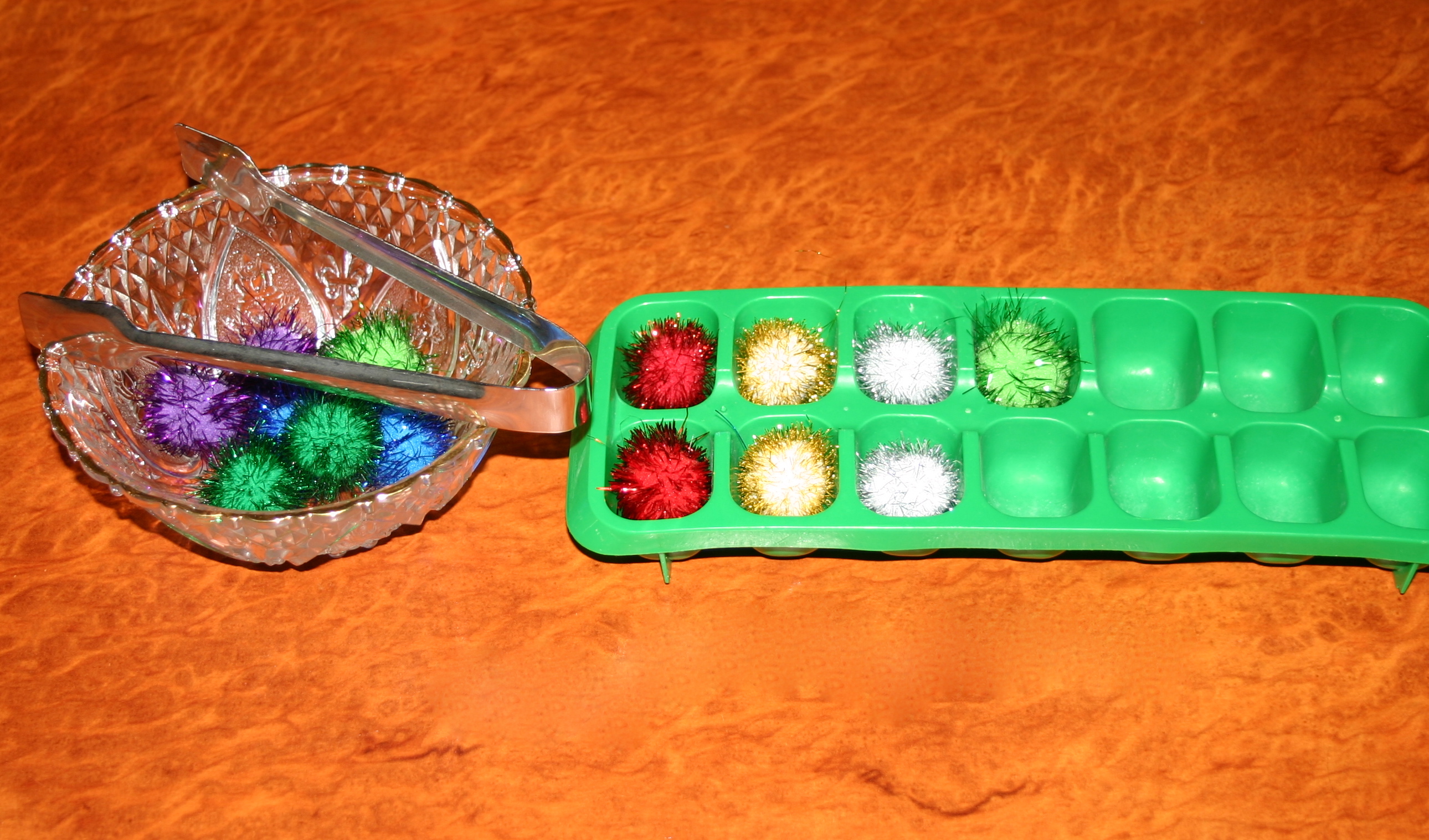
Tong transfer activities are another hand strengthening pastime that will help make pencil grip a breeze later on. Placing pompoms into a container like this ice block tray also develops an understanding of one-to-one correspondence.
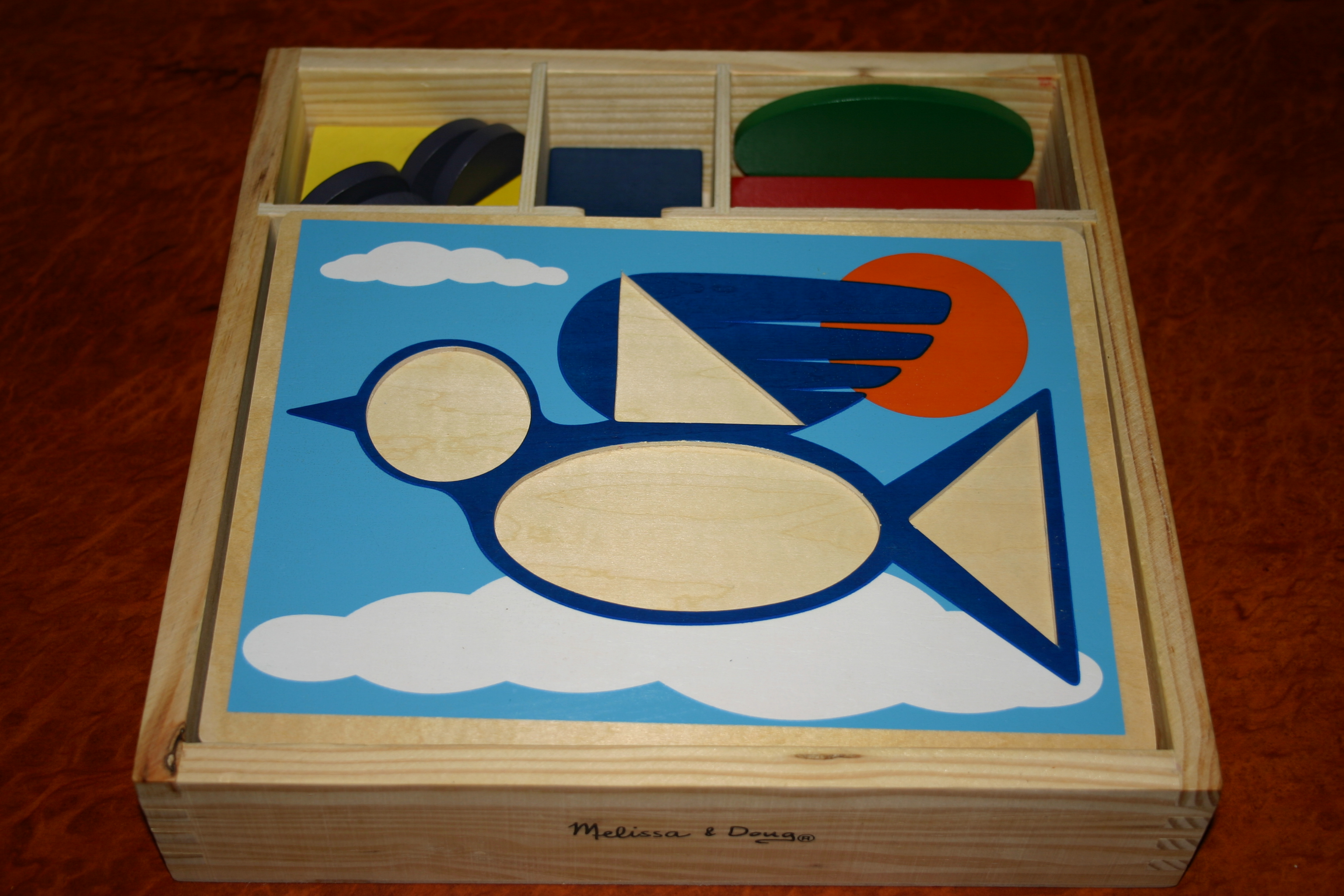
Similar activity – tong transfer – but these toast tongs are a little harder to manipulate.
Two hands proved necessary to achieve the task.
This wooden puzzle set from Melissa and Doug uses basic geometric shapes to complete simple pictures. They are a bit easy for my little guy so are not holding his attention like they probably would have a few months ago.
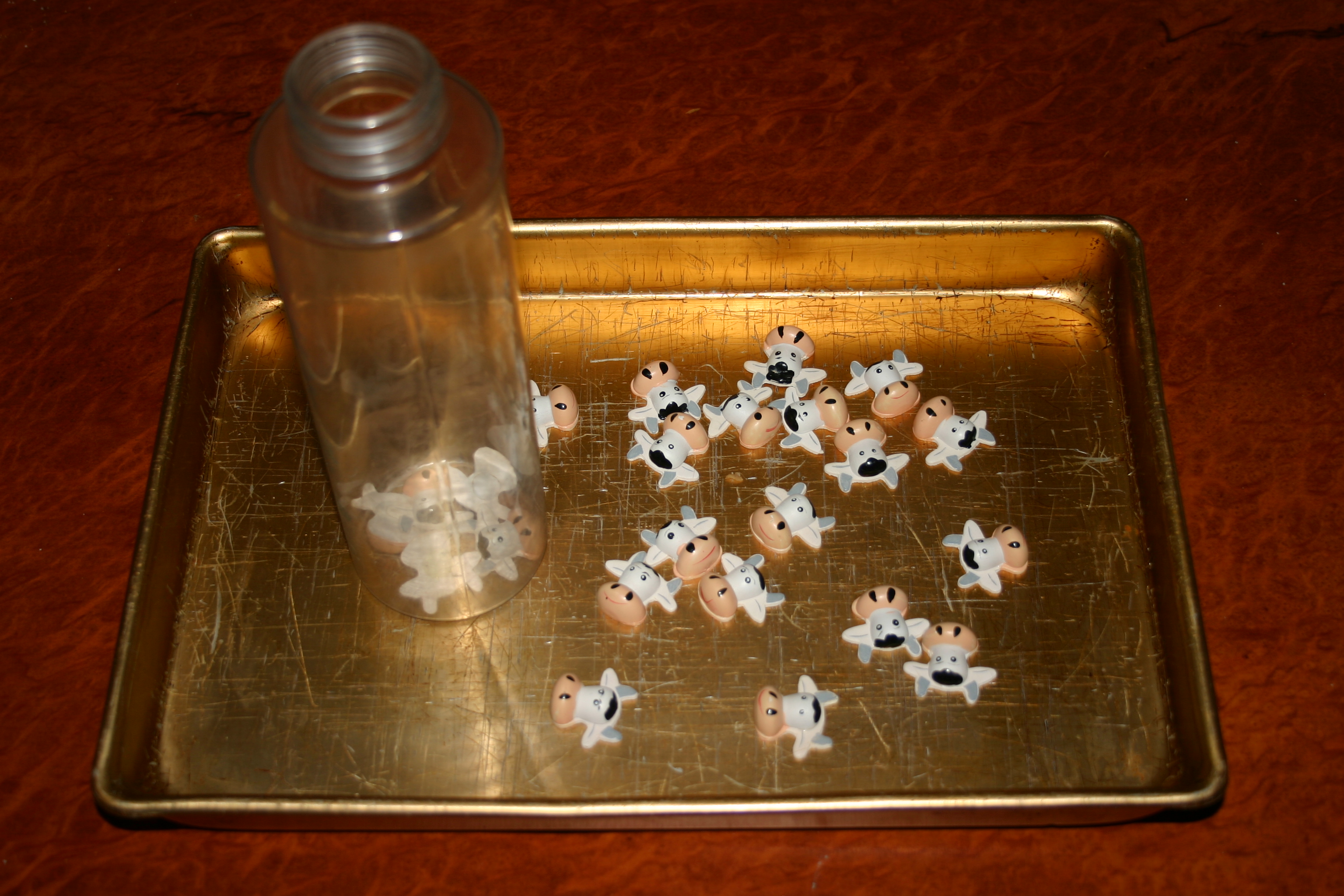
Fill and spill bottles are wonderful for younger babies. They just love to plop items in and tip them out again. At two, our toddler will still do this but it won’t keep him going for long.
While our two-year-old works on his activities after breakfast, the older children start their independent homeschool work and I work with the 2 preschoolers. The toddler then moves to playpen time and I work with the older children while the preschoolers do their independent activities on their mats. We all (except the toddler) get together then for circle time before the younger 3 head outdoors and the older 3 finish up their schoolwork if they haven’t already. All up, we are going for about 2 to 2 1/2 hours. I am often asked how I manage such a large family and homeschool. This is how folks!
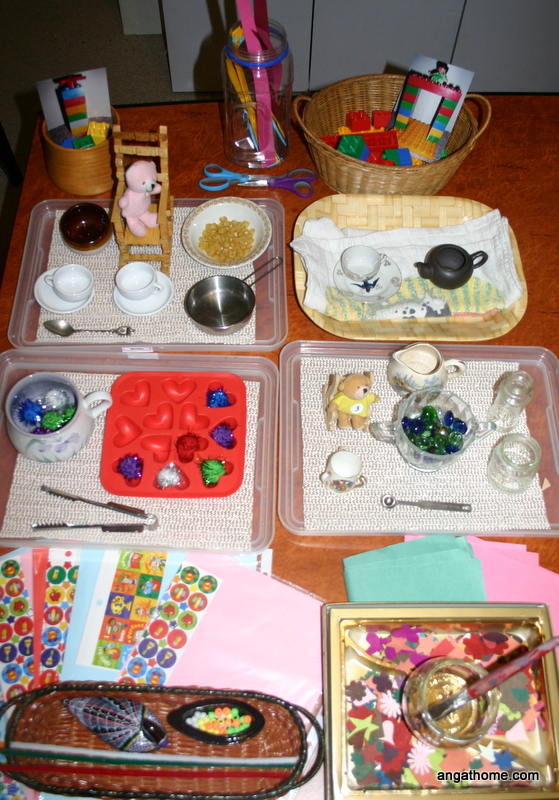
This set of activities will need to be changed fairly quickly (possibly after two weeks?) as there is no way they are going to keep his attention for a whole month. Next month I will move to more involved tasks that take more time and provide open-ended options. With my basic categories in mind, it’s really very easy to come up with a new set of tasks and the beauty of this style of play is that often the toddler and the preschoolers can share the same activity. This will definitely be the case with our next change-over when I get ready for our new baby with activities that do not need to be changed frequently or have help to complete. Stay tuned!
Filed under: Homeschooling | Tagged: highchair activities, home-made Montessori, homeschooling with toddlers, Montessori style tray activities for toddlers, routines, table activities, toys, transfer tongs pegging | 4 Comments »
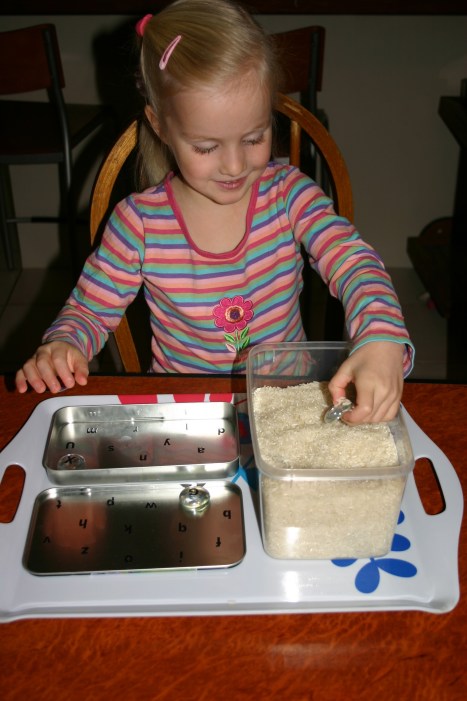
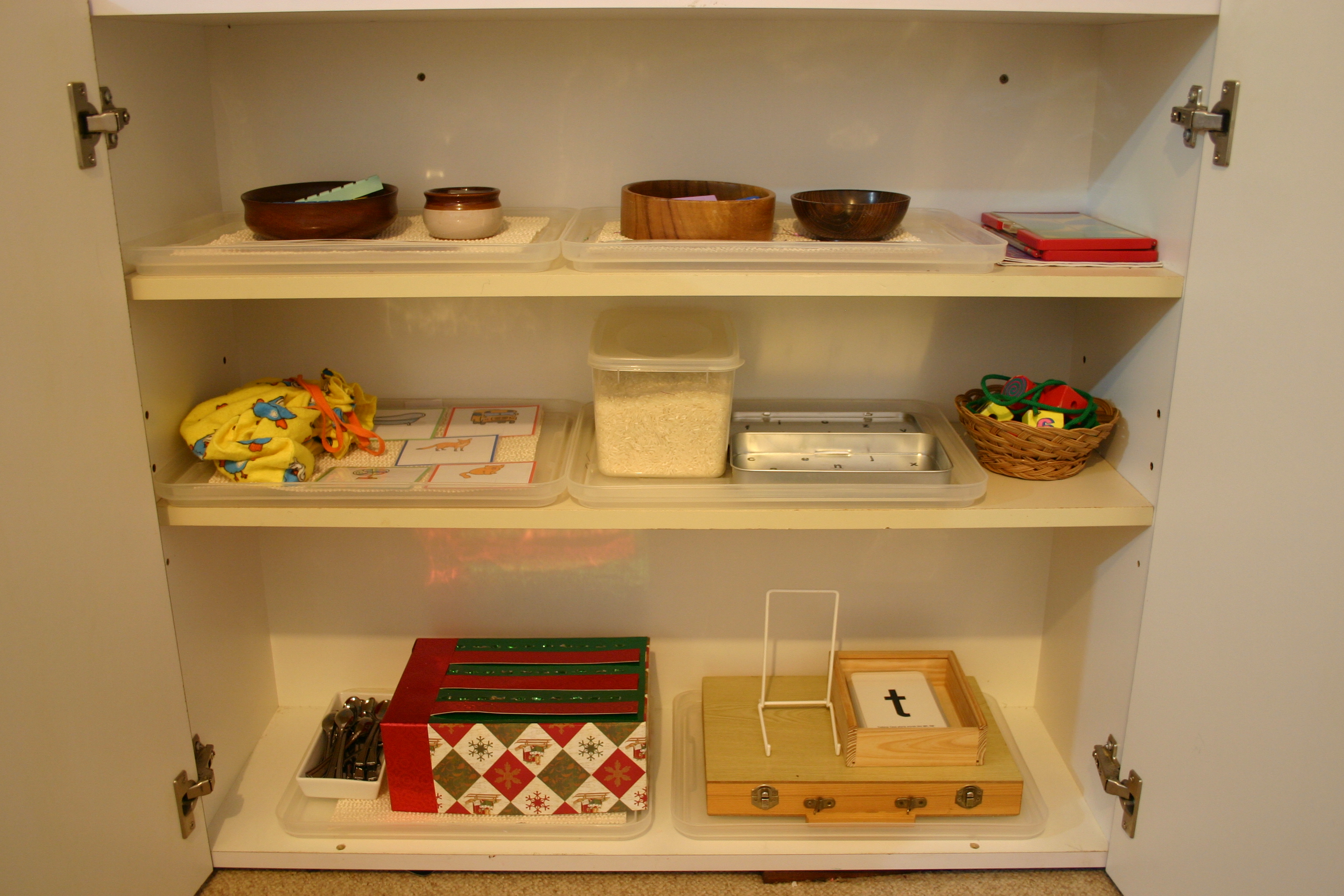
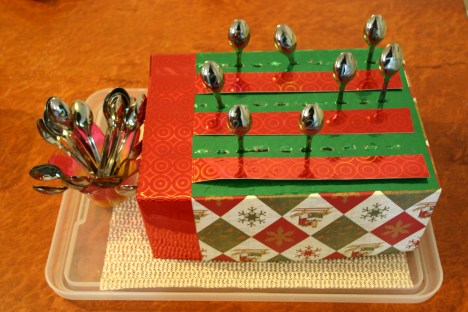
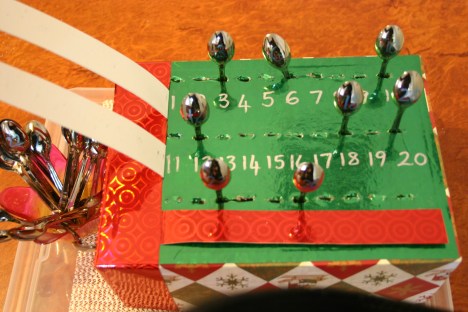
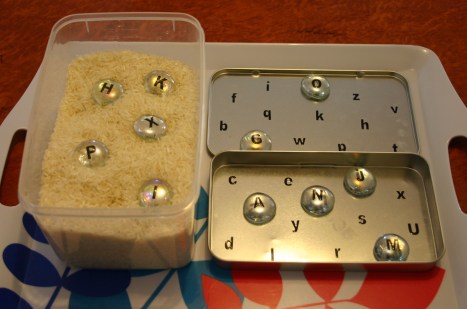
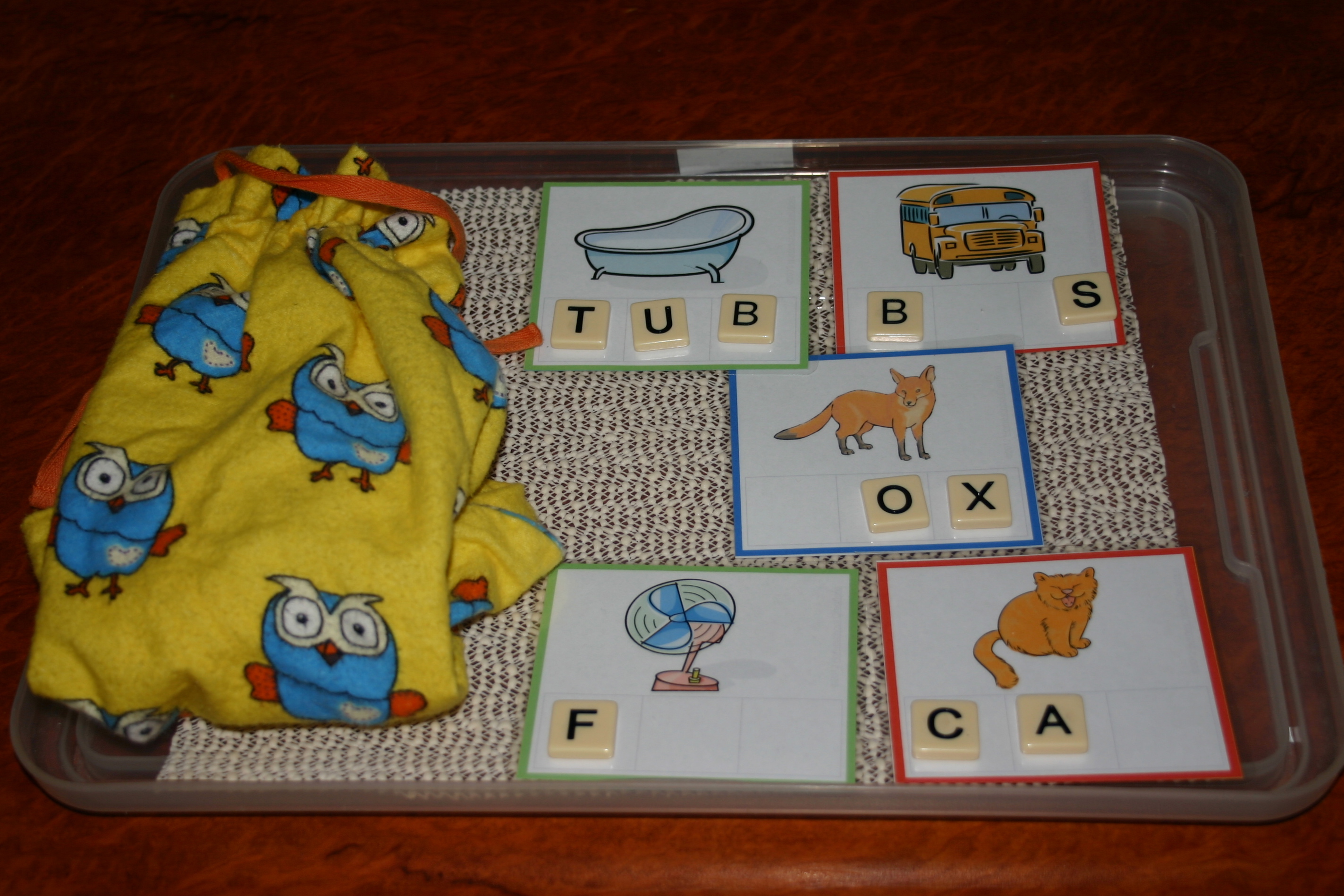

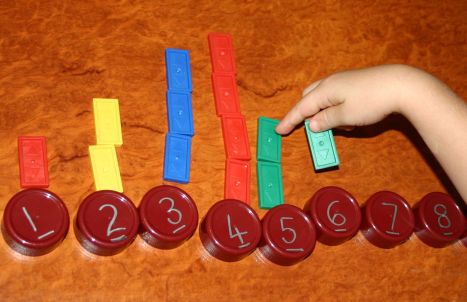
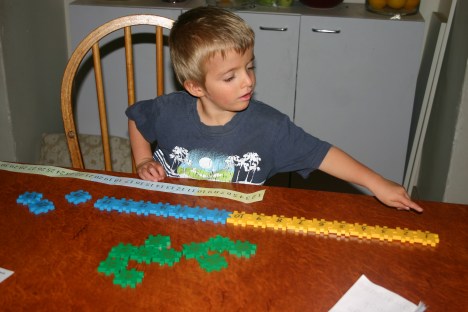 I found these plastic tiles at an op shop. I have no idea what their original use was, however they link together nicely for this number sequencing activity. Having 3 colours meant I could quickly separate out only the 1 to 10 blocks, then add the 11 to 20 and finally 21 to 30 as they were able to complete the “path” as we called it. I provided a coloured number strip to use as a guide while they were still learning the numeral sequence.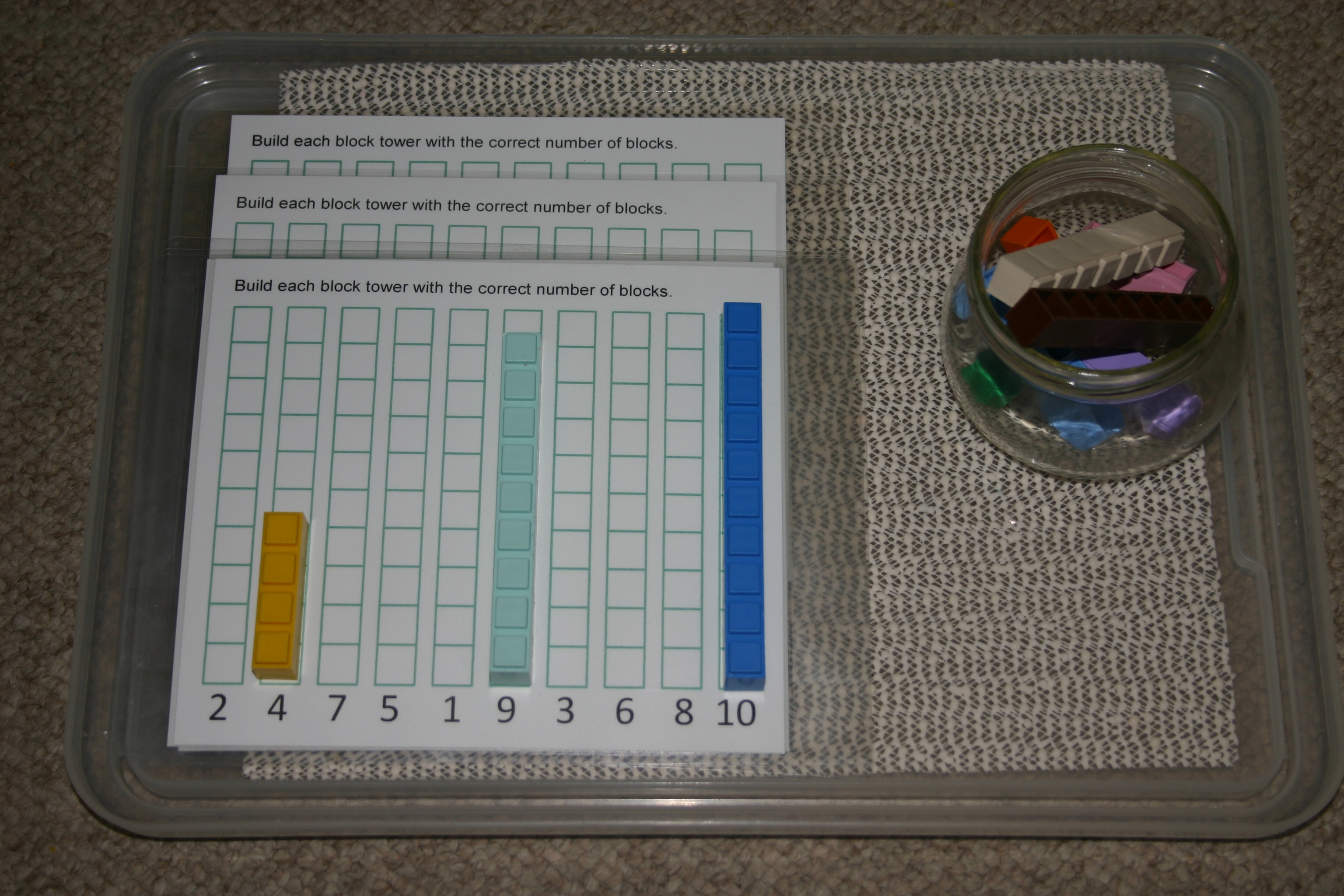
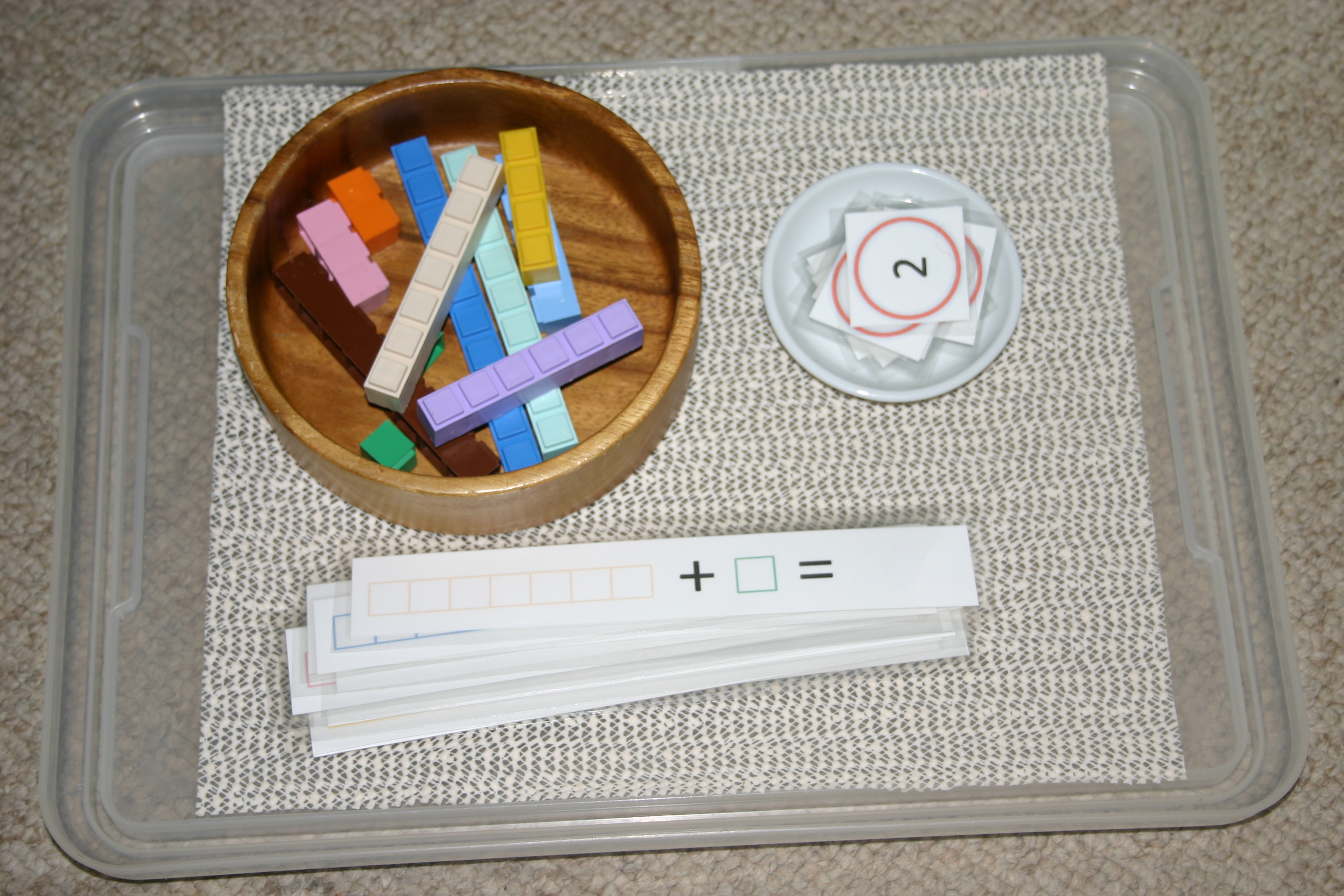
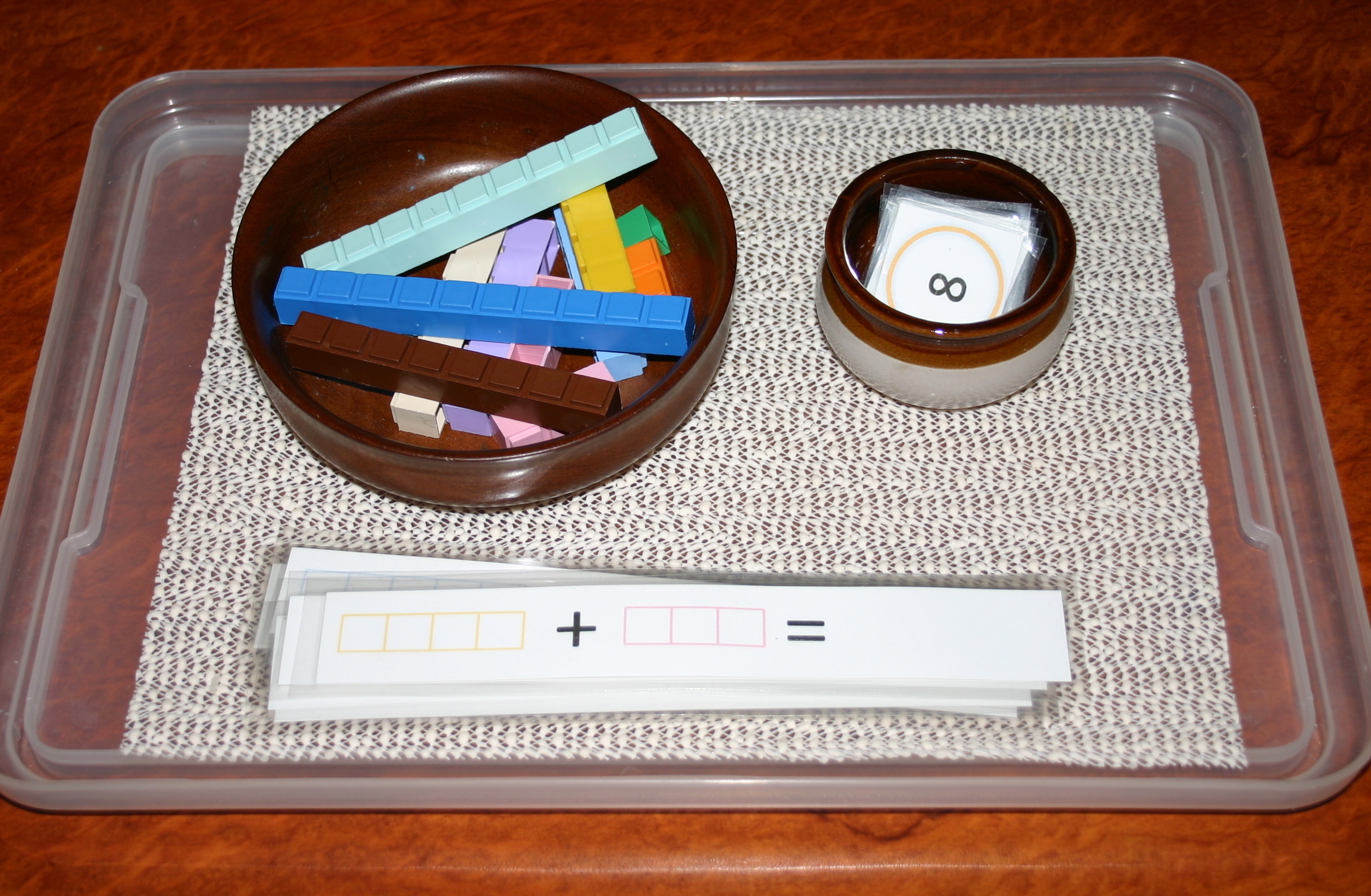
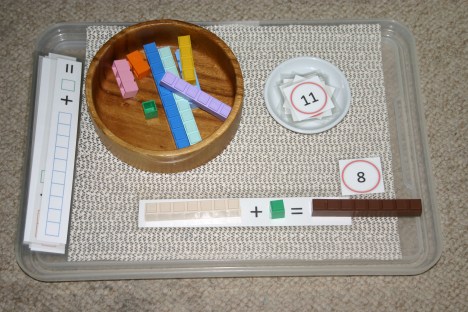 Another Mathusee based activity; basic addition facts using the manipulatives and numeral answers. The number strips I have out at the moment are plus 1 and plus 2. Learning basic addition facts now will help with more difficult mathematical skills later on. Click the links below for
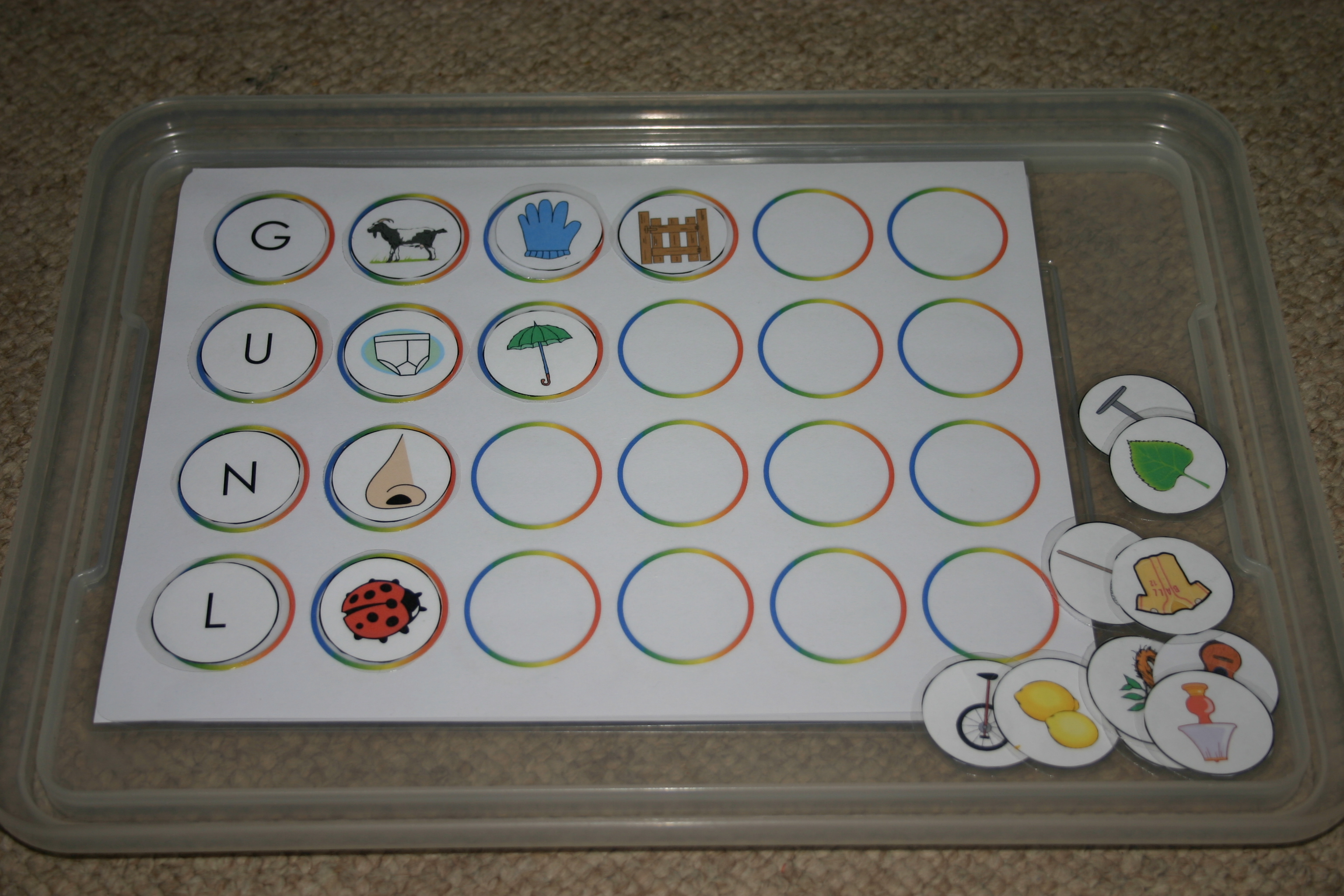
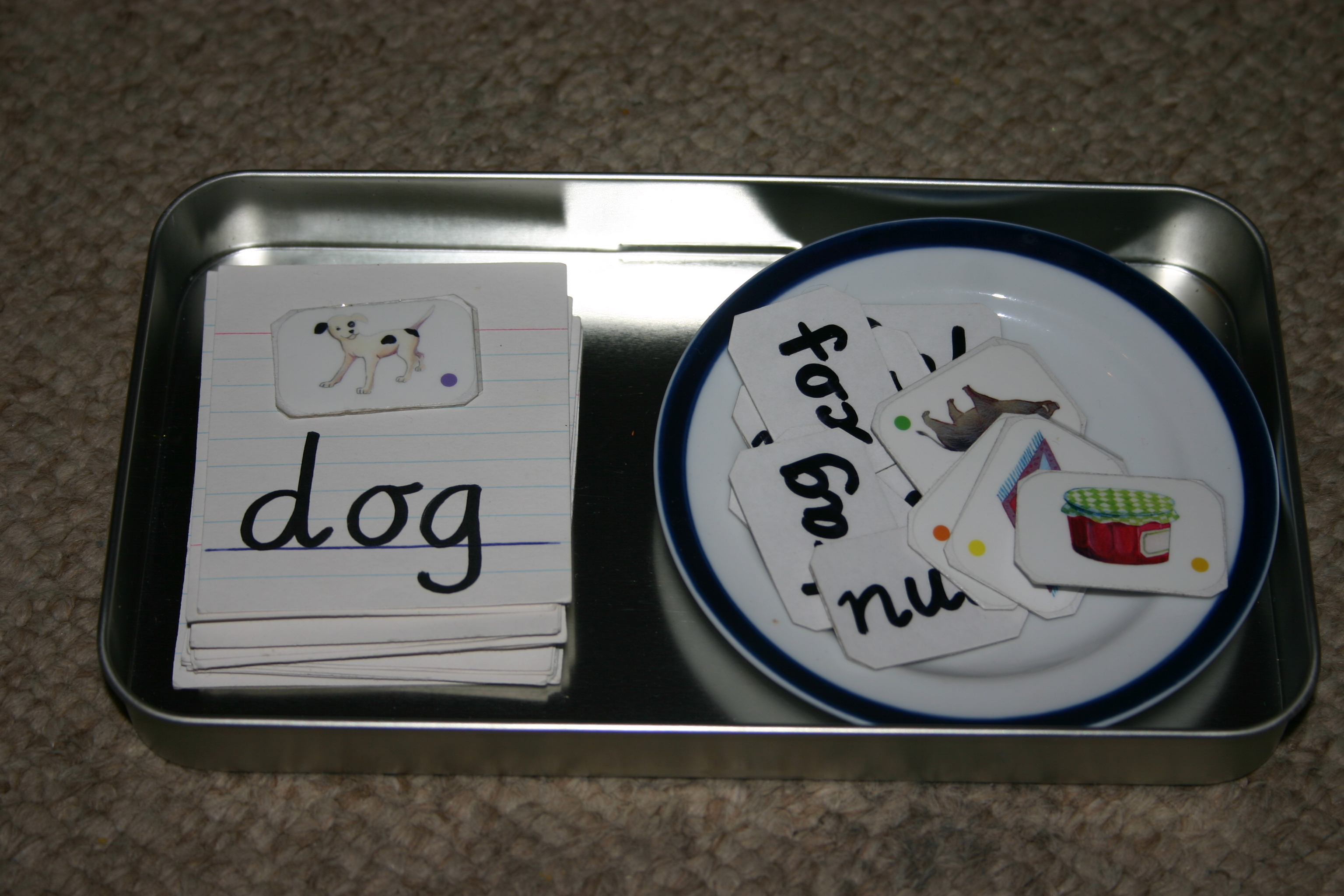
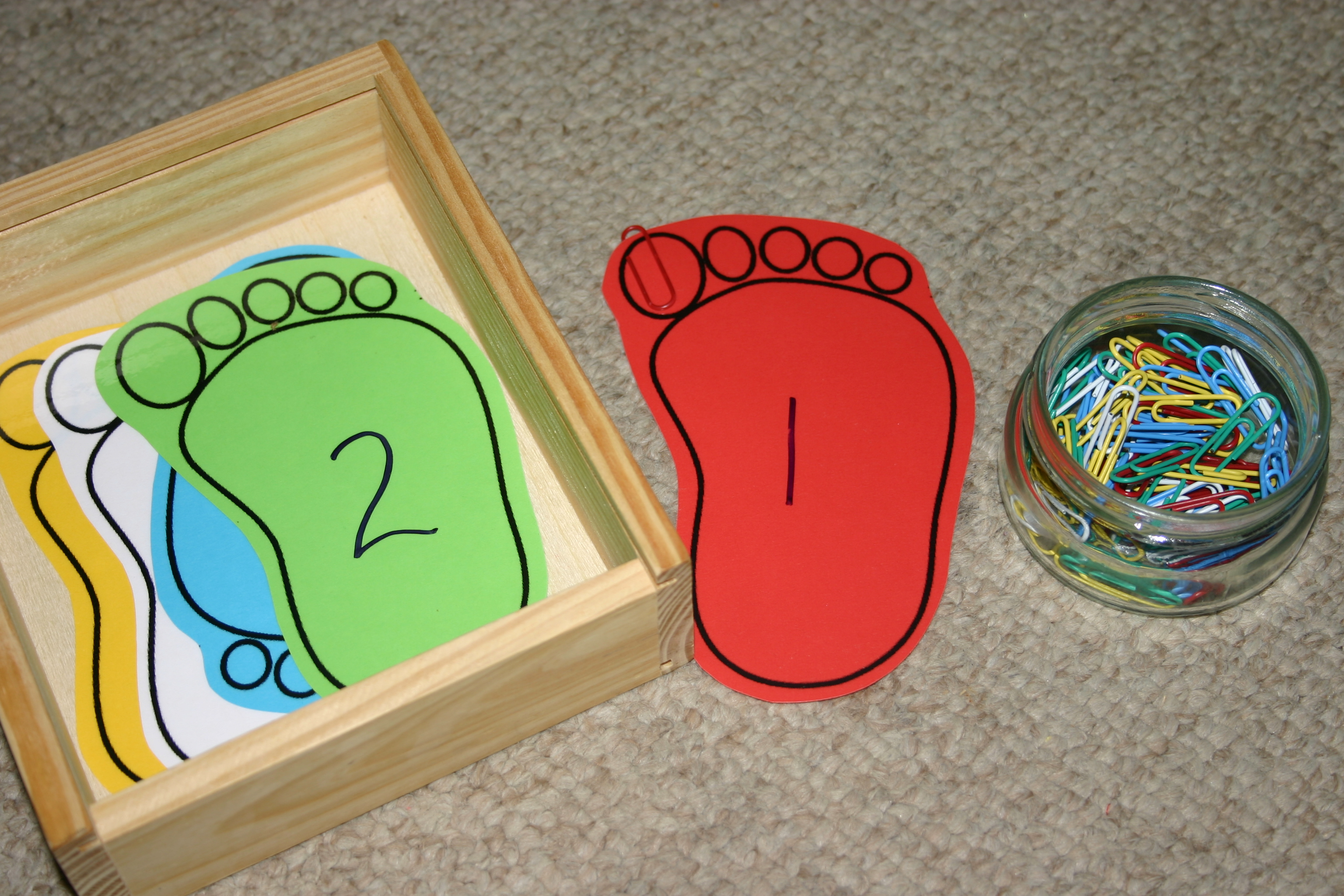
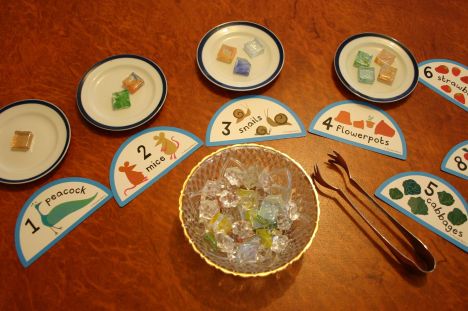
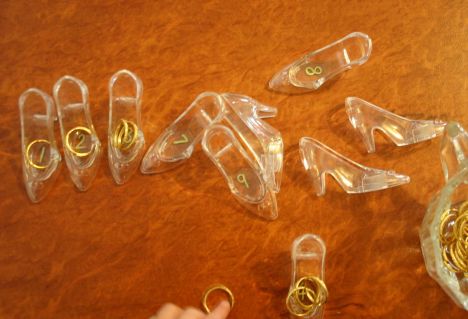
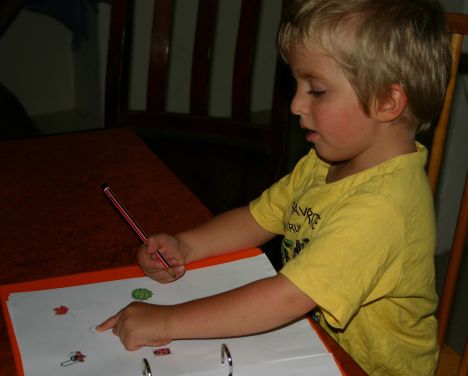
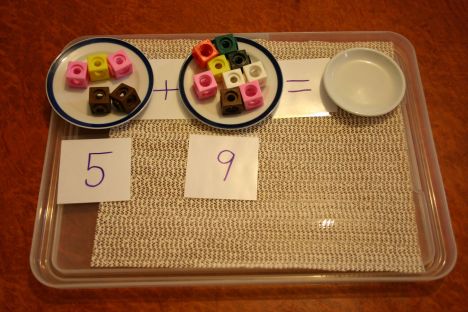
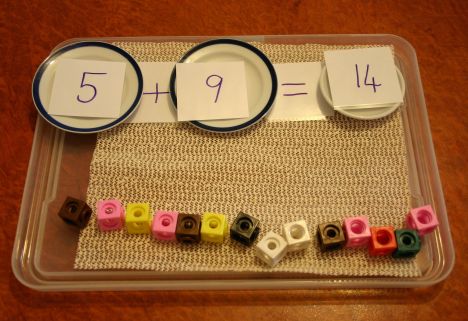
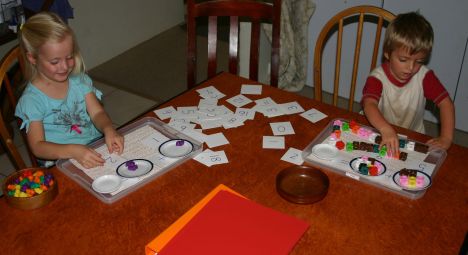
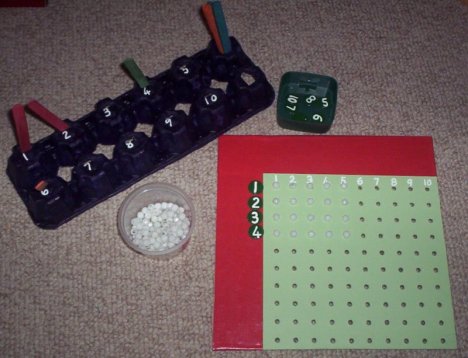

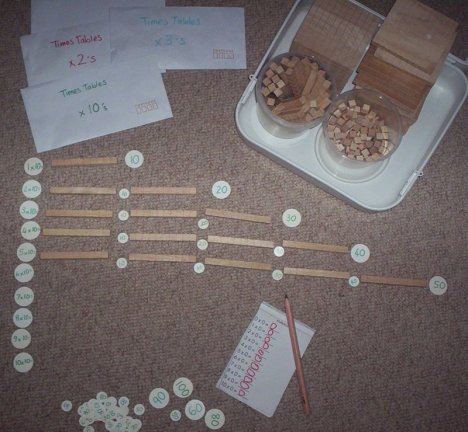
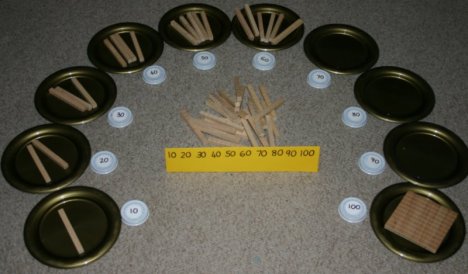
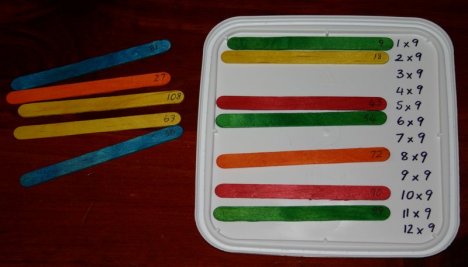
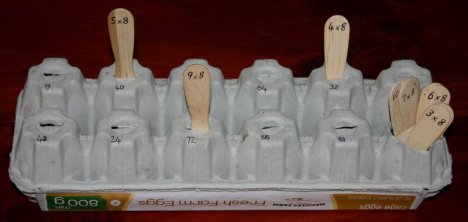
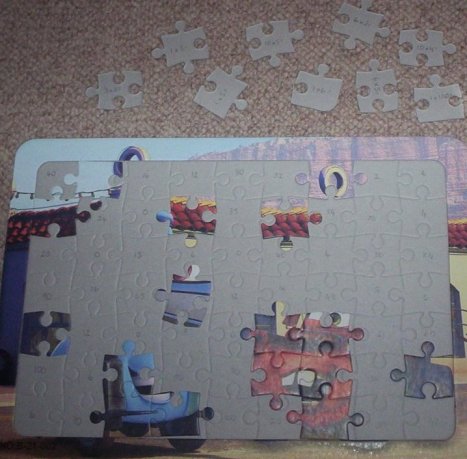
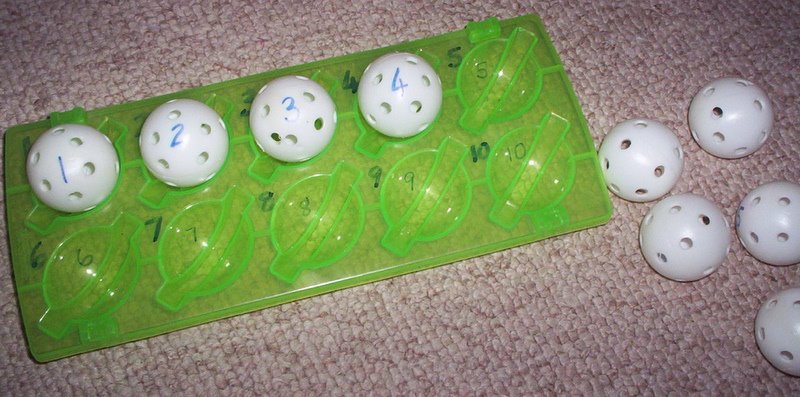
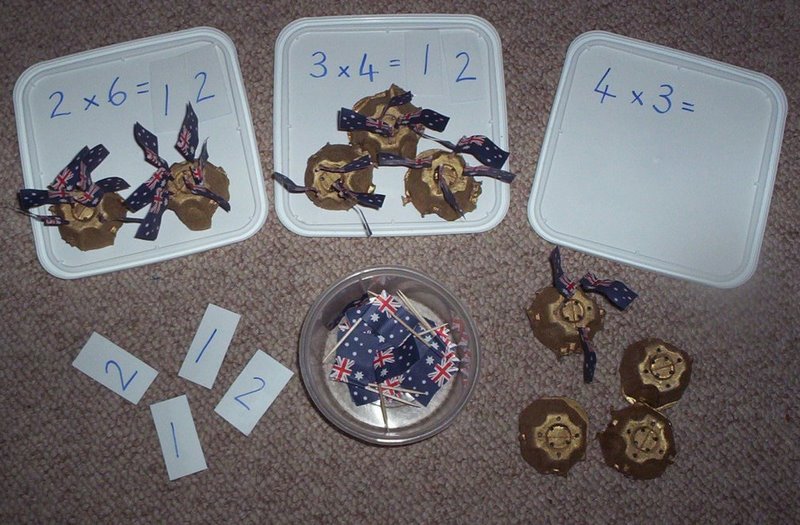
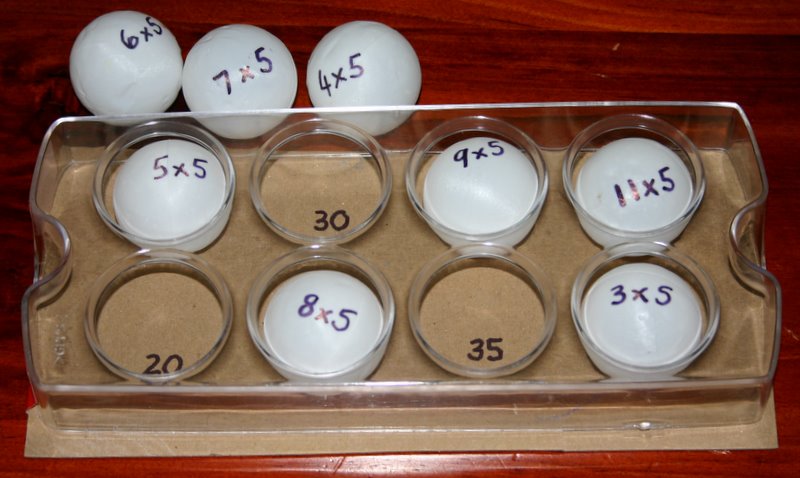

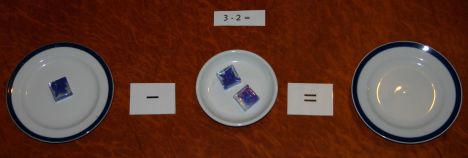


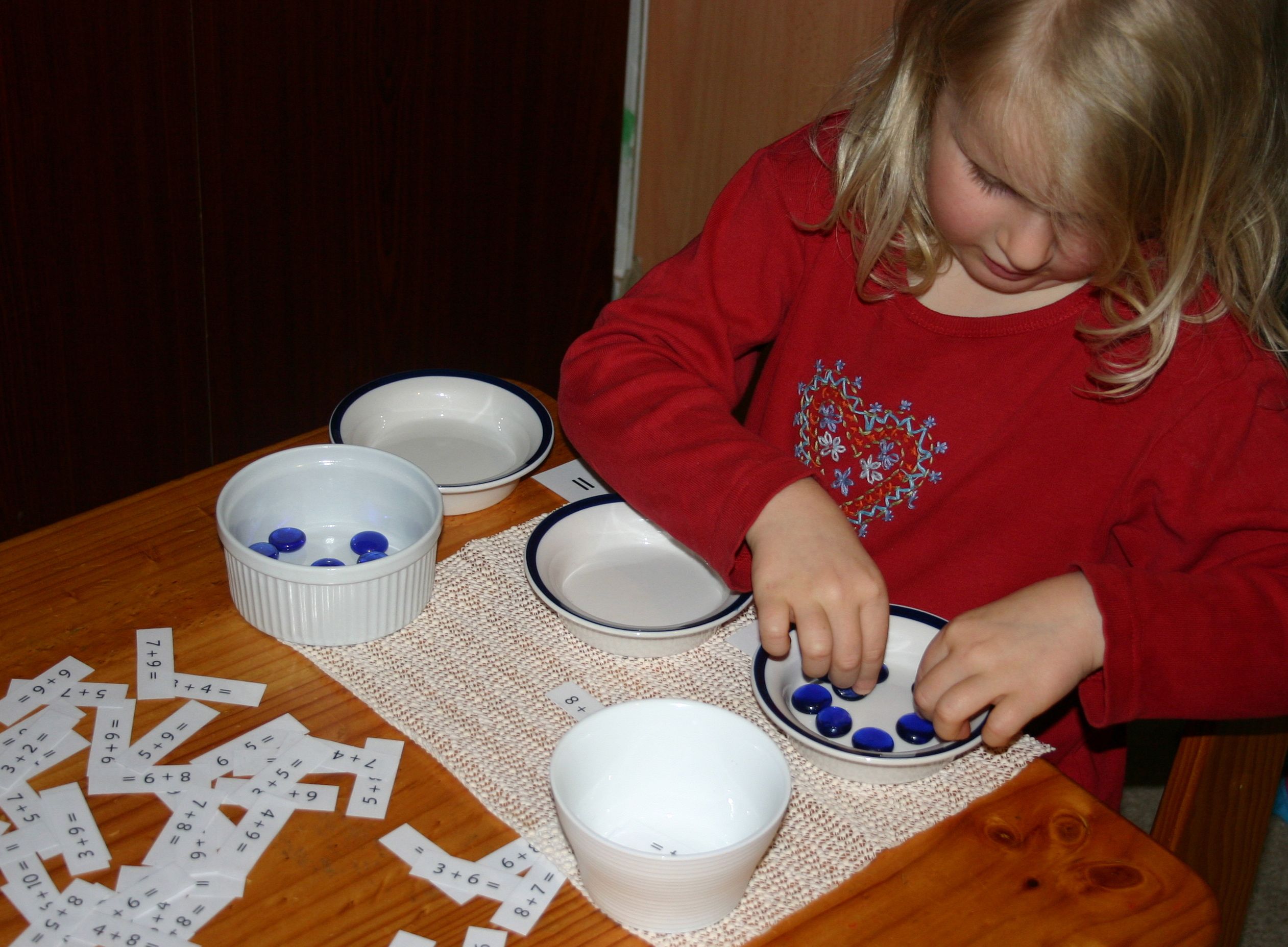
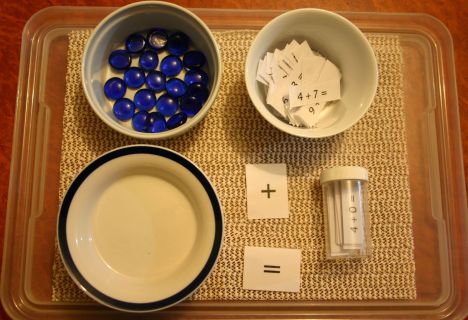 This is how our addition tray looks on the shelf. Only one child at a time is using it, so it is set up in such a way as to mark their individual progress. Every week or so I “test” their mastery of the addition facts and those problems that they are able to solve mentally (without thinking time) are placed into the screw-top container. They are pulled out for occasional review, but no longer need daily practise. This provides some intrinsic motivation as they see the pile in the dish growing smaller and smaller and the container getting fuller and fuller. They love it when we exclaim over how many they know now.
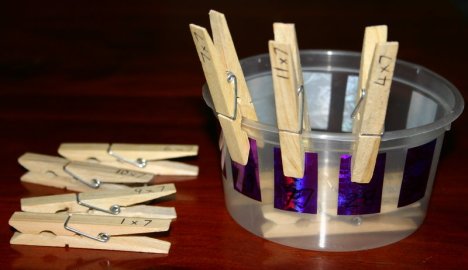
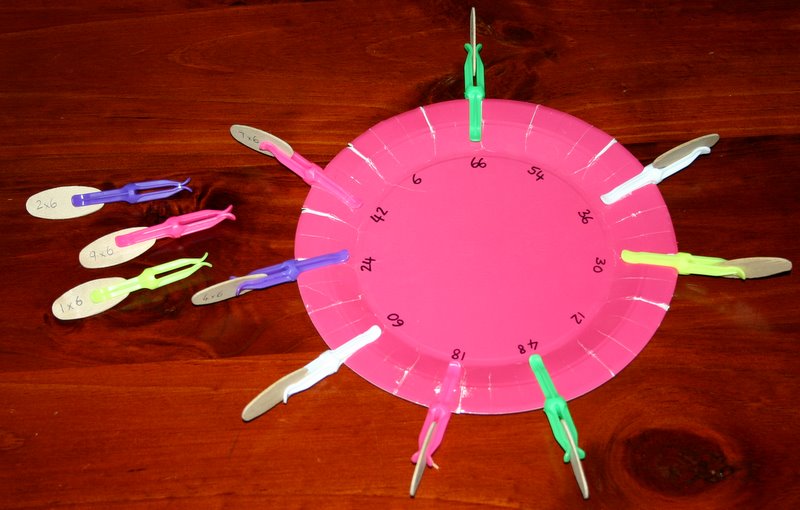
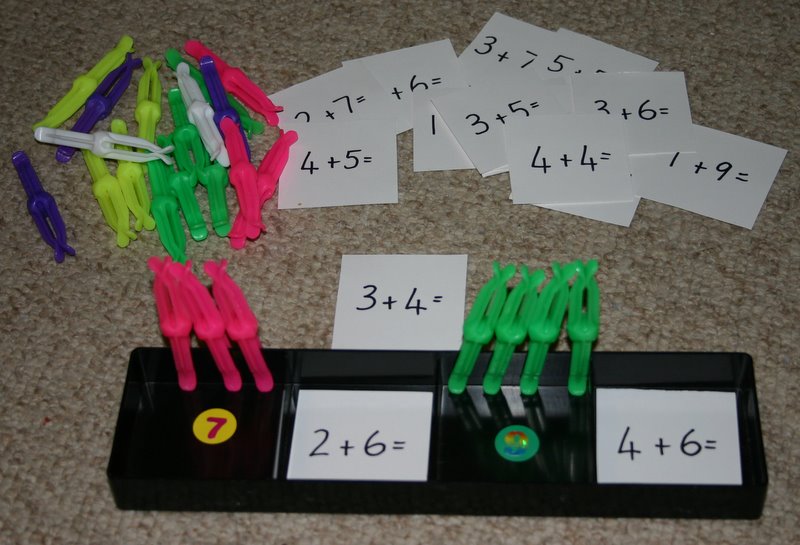
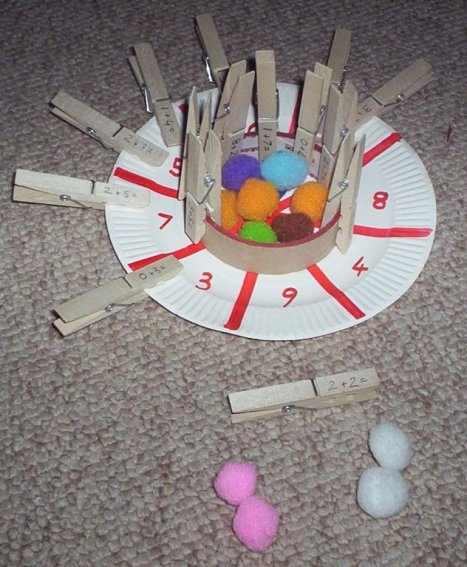 These pegs are labelled with the addition facts and the pompoms serve as the counting material. Once the child has found the answer, the peg is clipped onto the correct segment of the paper plate. It is self-checking as there is only one peg for each segment – any double-ups means that they need to redo those pegs to discover the correct answer. The holder for the pegs is the centre from a used roll of masking tape.
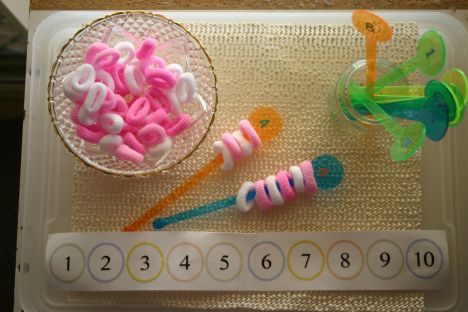
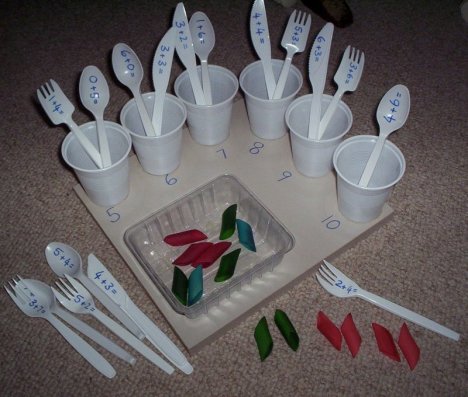 This was a favourite with my children. As always, making up a funny story to go with the activity turned it into something really fun. Those greedy restaurant patrons were at it again and the children had to figure out who’s cutlery was whose and put it into the correct cup. Only one knife, spoon and fork should be in each cup, so again, any double-up means that the child needs to redo the problem. The noodles serve as the counting material.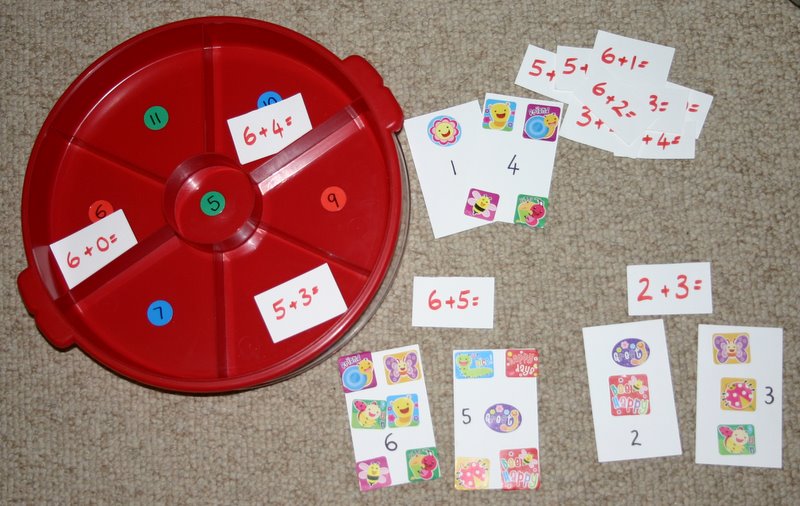
 angathome